
Helen Phillips Awarded 2026 Climate Fiction Prize for AI-Infused Dystopian Novel ‘Hum’
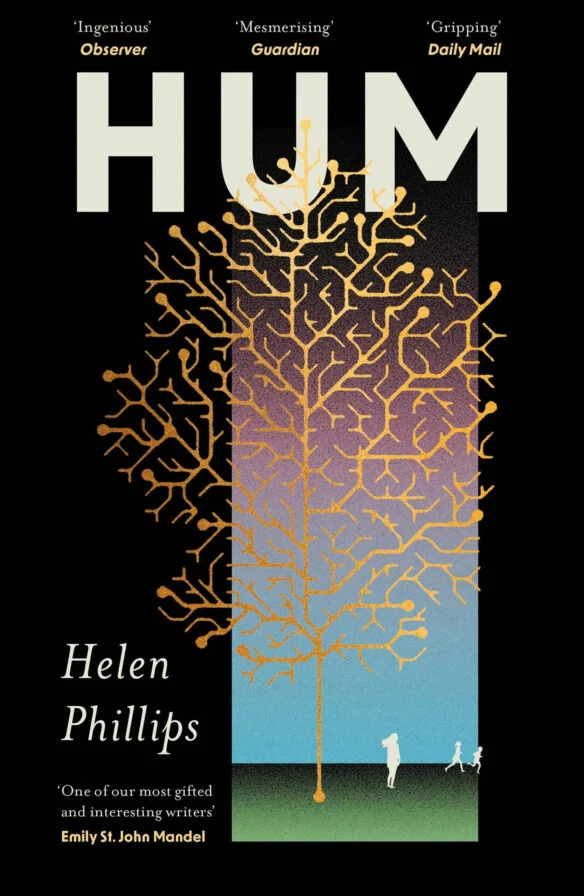
LONDON — In a ceremony that underscored the growing intersection between environmental collapse and technological overreach, American novelist Helen Phillips was named the winner of the 2026 Climate Fiction Prize. Phillips received the prestigious award for her latest work, Hum, a haunting exploration of a near-future world where the boundaries between artificial intelligence, surveillance capitalism, and ecological decay have become dangerously blurred.
The announcement was made on the evening of May 27 at Kings Place, London’s premier cultural hub, before an audience of literary critics, environmental activists, and industry leaders. The prize, which includes a £10,000 endowment, marks Phillips as the second recipient of the award, further cementing the Climate Fiction Prize’s status as a critical barometer for contemporary literature’s response to the Anthropocene.
Main Facts: A Narrative of Surveillance and Survival
Hum tells the story of May, a mother struggling to provide for her family in a city choked by the fallout of climate change and dominated by "hums"—highly advanced, ubiquitous robots that have rendered much of the human workforce obsolete. After losing her job to an AI system, May undergoes an experimental surgical procedure to alter her face, a desperate attempt to evade the omnipresent surveillance state that tracks every citizen’s movement and consumer habits.
With the settlement money from the procedure, May takes her family on a rare excursion to one of the world’s last remaining botanical gardens—a manicured, artificial sanctuary that serves as a bitter reminder of the natural world that has been lost. The novel has been praised for its claustrophobic tension and its refusal to offer easy answers to the dual threats of ecological collapse and digital dehumanization.
The judging panel, comprised of environmental scientists and literary scholars, noted that Hum stood out for its "profoundly human" core. While many climate fiction (cli-fi) novels focus on the macro-level disasters of rising tides or scorched earth, Phillips focuses on the domestic and psychological toll of a world that has traded its biological heritage for a digital facade.
Chronology: The Journey to the 2026 Accolade
The path to Phillips’ victory began in late 2025, when the longlist for the prize was first announced. The Climate Fiction Prize, established to encourage writers to grapple with the complexities of the global climate crisis, has seen a rapid rise in prestige since its inception.
- September 2025: The Prize committee received over 400 submissions from 30 countries, highlighting the global reach of climate-centric narratives.
- January 2026: A shortlist of six novels was released, featuring a diverse array of perspectives ranging from "solarpunk" optimism to "hard" sci-fi realism. Hum was immediately identified by bookmakers and critics as a frontrunner.
- April 2026: Helen Phillips embarked on a multi-city reading tour in the UK and US, where she discussed the inspiration behind Hum, citing the rapid advancement of generative AI and the increasing privatization of green spaces as her primary catalysts.
- May 27, 2026: The final ceremony at Kings Place. Phillips was presented with the award by the inaugural winner of the prize, marking a symbolic "passing of the torch" for this burgeoning literary genre.
Supporting Data: The Rise of Climate Fiction in the 2020s
The success of Hum and the growing profile of the Climate Fiction Prize are reflective of a broader shift in the publishing industry. According to data from the Global Literary Trends Report 2026, "Climate Fiction" has seen a 35% year-over-year increase in sales since 2022.
| Metric | 2024 | 2025 | 2026 (Projected) |
|---|---|---|---|
| Cli-Fi Titles Published | 1,200 | 1,650 | 2,100+ |
| Average Advance for Climate Novels | £15,000 | £22,000 | £30,000 |
| Prize Submissions | 280 | 340 | 412 |
Furthermore, the "AI-Climate" subgenre—books that specifically address how technology manages or accelerates environmental change—has become the fastest-growing segment within speculative fiction. Analysts suggest that readers are no longer looking for "disaster porn," but rather for stories that investigate the social and political structures that persist during a slow-motion catastrophe.
Phillips’ win also highlights the economic viability of literary fiction that tackles "difficult" subjects. Hum has already been translated into 14 languages and is currently being adapted for a major streaming service, indicating that the themes of climate anxiety and AI-driven displacement have universal resonance.
Official Responses: Voices from the Ceremony
During her acceptance speech, Helen Phillips spoke with a mixture of gratitude and urgency. "I wrote Hum not as a prophecy, but as a question," she told the audience. "What parts of our humanity are we willing to sacrifice to survive in a world that feels increasingly inhospitable? To receive this prize is an honor, but it is also a reminder that the fiction we write today is being written against the clock of our reality."
A spokesperson for the Climate Fiction Prize Board of Trustees emphasized the importance of the award’s mission:

"The 2026 prize celebrates a work that does not blink in the face of our current trajectory. Helen Phillips has captured the specific, grinding anxiety of the 21st century—the feeling that while our environment is failing, we are being watched more closely than ever. Hum is a masterpiece of modern speculative fiction."
Dr. Aris Thorne, a climate scientist and guest judge for this year’s prize, remarked on the novel’s scientific and social accuracy: "What Phillips gets right is the ‘normalization’ of the crisis. In Hum, the world hasn’t ended; it has just become more expensive, more artificial, and more unequal. This is the reality many climate models predict for the coming decades."
Implications: The Future of the Genre and the Planet
The recognition of Hum carries significant implications for both the literary world and the broader discourse on climate change.
1. The Intersectionality of Crisis
Phillips’ win signals a shift in how climate change is portrayed in art. By weaving AI and surveillance into the narrative, Hum argues that the environmental crisis cannot be solved in a vacuum. It suggests that our technological tools—often marketed as solutions—can just as easily become instruments of control and distraction, alienating us further from the natural world we are trying to save.
2. Speculative Fiction as a Policy Tool
In recent years, "world-building" in fiction has begun to influence real-world policy discussions. Think tanks and environmental NGOs have increasingly turned to cli-fi authors to help visualize the social impacts of proposed climate strategies. The success of Hum is expected to spark further dialogue regarding the "right to the outdoors" and the ethics of using AI to manage dwindling resources.
3. The "Cure" for Climate Fatigue
Psychologists have noted a growing phenomenon of "climate fatigue," where the sheer scale of the ecological crisis leads to apathy. Professional critics argue that books like Hum provide an essential service by centering the crisis on individual emotions and family dynamics. By making the global personal, Phillips allows readers to process their anxieties through a narrative lens, potentially fostering a more profound engagement with environmental advocacy.
4. Encouraging New Voices
The £10,000 prize and the accompanying media attention are designed to encourage more authors to pivot toward environmental themes. With the 2026 win, the prize organizers have announced an expansion for the 2027 cycle, including a "Young Climate Writer" category and a series of workshops aimed at writers in the Global South, where the effects of climate change are most acute.
As the ceremony at Kings Place concluded, the atmosphere was one of somber celebration. Helen Phillips’ Hum serves as a stark reminder that the future is already here, layered in digital noise and rising temperatures. Yet, by naming and exploring these fears, the Climate Fiction Prize continues to provide a platform for the stories that might just help us navigate the storm.
About the Author: Helen Phillips is the author of six books, including the National Book Award longlisted novel The Need. Her work has appeared in The New York Times, The Paris Review, and Tin House. She currently resides in Brooklyn and teaches at Brooklyn College.
About the Climate Fiction Prize: Founded in 2024, the Climate Fiction Prize is awarded annually to a novel that addresses the theme of climate change in a significant and artistic way. It is funded by a coalition of environmental philanthropists and literary organizations.


Leave a Comment