
The 2026 Prix Imaginales: Celebrating the Pinnacle of Speculative Fiction in Épinal
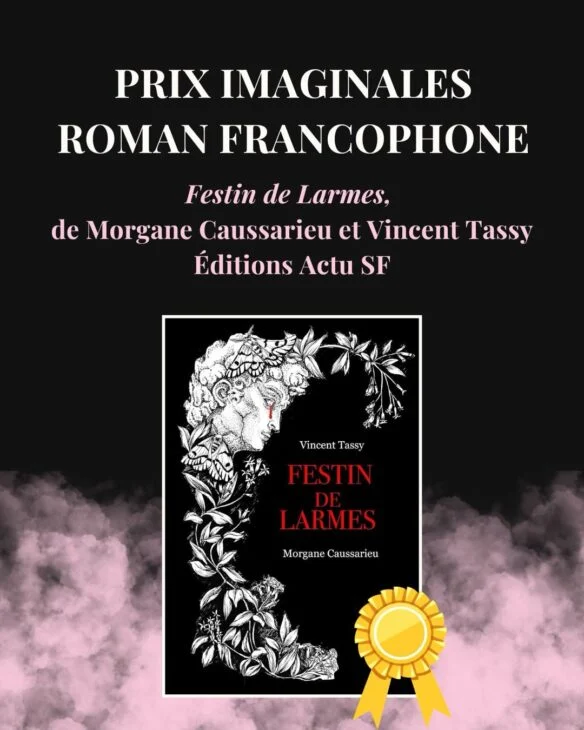
On May 29, 2026, the global speculative fiction community turned its eyes toward the picturesque commune of Épinal, France, for the announcement of the 2026 Prix Imaginales. Held annually during the Imaginales festival, this prestigious award remains one of the most significant honors in the world of l’imaginaire—a broad French term encompassing fantasy, science fiction, and the supernatural. The 2026 ceremony, staged against the backdrop of the "Cité des Images," underscored the enduring vitality of French and international fantasy literature.
The Prix Imaginales is unique in its focus. While other awards might lean heavily toward hard science fiction or general literature, the Imaginales prizes are rooted in the "Imaginary" in its most expansive sense, with a historical preference for high fantasy, magical realism, and mythic storytelling. This year’s winners represent a diverse cross-section of voices, ranging from seasoned veterans of the genre to groundbreaking new illustrators and youth authors.
Chronology: A Legacy of the Imaginary
To understand the weight of the 2026 awards, one must look at the evolution of the Imaginales festival itself. Founded in 2002 by the City of Épinal, the festival was envisioned as a way to celebrate the literary genres that often sit on the periphery of the "literary" establishment. Over two decades, it has grown into one of the premier SFF (Science Fiction and Fantasy) events in Europe, attracting tens of thousands of visitors annually.
The selection process for the 2026 awards began nearly a year prior. A permanent jury of experts—comprising critics, librarians, and specialists in the field—monitored the year’s publications across the French-speaking world. Shortlists were traditionally finalized in the early spring, leading to the intense deliberations that culminated in the May 29 announcement.
The 2026 edition is particularly noteworthy as it reflects a post-digital era where the boundaries between media—novels, graphic novels, and digital illustration—are increasingly porous. The chronology of this year’s event also highlighted a shift toward "inclusive fantasy," with the jury prioritizing works that re-examine historical narratives through a speculative lens.
Supporting Data: The 2026 Winners and Categories
The Prix Imaginales recognizes excellence across six distinct categories. Each category is designed to capture a different facet of the "Imaginary" ecosystem.
1. Prix Imaginales du Roman Francophone (French Novel)
Winner: Festin de Larmes by Jean-Laurent Del Socorro (Éditions ActuSF)
The top honor for a French-language novel was awarded to Festin de Larmes. The jury praised the work for its intricate world-building and its masterful blend of historical rigor and fantastical elements. Del Socorro has long been a staple of the French fantasy scene, known for his "historical fantasy" style. Festin de Larmes continues this tradition, offering a narrative that is as much a political thriller as it is a magical epic. The novel’s win cements Del Socorro’s status as a leading voice in contemporary French speculative fiction.
2. Prix Imaginales du Roman Étranger Traduit (Foreign Novel Translated into French)
Winner: The Spear Cuts Through Water by Simon Jimenez (Translated by Patrick Dechesne)
In the category of translated works, the jury selected Simon Jimenez’s acclaimed epic. The French translation was lauded for maintaining the lyrical, experimental prose of the original English text. The award highlights the festival’s commitment to bringing global perspectives to French readers, emphasizing that fantasy is a universal language that transcends geographical borders.
3. Prix Imaginales de la Jeunesse (Youth Category)
Winner: Les Sentinelles du Vide by Marine Carteron
The youth category is often a bellwether for the future of the genre. Marine Carteron’s Les Sentinelles du Vide was recognized for its sophisticated approach to young adult fantasy, dealing with themes of environmental collapse and ancestral memory. The jury noted that the work does not "talk down" to younger readers but instead invites them into a complex, morally grey world.
4. Prix Imaginales de l’Album (Picture Books/Ages 3-6)
Winner: Le Gardien des Brumes by Amélie Sarn and lllustrated by Juliette Brocal

This category focuses on the youngest readers, proving that the "Imaginary" starts in early childhood. Le Gardien des Brumes was selected for its evocative storytelling and its ability to introduce high-concept fantasy themes to a preschool audience through stunning visual narratives.
5. Prix Imaginales de l’Illustration (Illustration)
Winner: La Sorcière by Yoann Lossel
Illustration has always been at the heart of the Épinal festival, given the city’s history with the "Imagerie d’Épinal" (a famous printing house). Yoann Lossel’s work on La Sorcière was described by the jury as "transcendental." His use of gold leaf and classical techniques to depict fantastical subjects creates a bridge between fine art and genre illustration.
6. Prix Imaginales de la Bande Dessinée (Comics and Graphic Novels)
Winner: L’Ombre de la Chimère by Sylvain Runberg and Rochebrune
Recognizing the massive influence of Bandes Dessinées (BD) in French culture, this award spans fantasy, sci-fi, and "anticipation." L’Ombre de la Chimère was honored for its cinematic pacing and its gritty, realistic take on a world where biological experimentation has gone awry.
Official Responses and Jury Insights
The announcement was met with widespread acclaim from the French publishing industry. In an official statement, the festival organizers emphasized that the 2026 winners reflect a "maturation of the genre."
"The Prix Imaginales is more than just a trophy," said a spokesperson for the jury. "It is a recognition of the labor required to build new worlds. In 2026, we saw a significant trend toward ‘Ecological Fantasy’ and ‘Historical Subversion.’ Our winners this year did not just provide escapism; they provided a mirror to our own world’s challenges through the lens of the fantastic."
It is important to distinguish, as the festival organizers often do, the Prix Imaginales from the Grand Prix de l’Imaginaire (GPI). While the GPI is often seen as the "French Hugos," covering the entire spectrum of SFF and being the oldest such award in France, the Prix Imaginales is more closely tied to the specific culture of the Épinal festival. It is often viewed as the more "public-facing" and "curated" award, deeply connected to the aesthetic and artistic values of the festival’s attendees.
Authors and illustrators present at the ceremony expressed a collective sense of resilience. Jean-Laurent Del Socorro, upon receiving his award, noted that "fantasy is the literature of the possible," a sentiment that resonated with the hundreds of fans gathered in the festival’s central marquee.
Implications: The Future of French Fantasy
The results of the 2026 Prix Imaginales have several long-term implications for the literary market. First, the success of Jean-Laurent Del Socorro and ActuSF signals a continued appetite for "Historical Fantasy" in the Francophone world. This subgenre, which blends meticulously researched history with supernatural elements, has become a hallmark of French speculative fiction, distinguishing it from the often more "secondary world" focused fantasy of the Anglosphere.
Furthermore, the inclusion of Simon Jimenez’s work in the translated category suggests that French publishers are becoming more daring in the types of international works they choose to localize. Jimenez’s prose is notoriously difficult to translate, and the success of this edition may encourage more experimental translations in the future.
The emphasis on illustration also reinforces Épinal’s position as the "Capital of the Image." By elevating illustrators like Yoann Lossel to the same prestige as novelists, the Prix Imaginales maintains a holistic view of storytelling where the visual is as vital as the textual.
Finally, the 2026 awards highlight a growing demographic shift. The "Youth" and "Album" categories saw record-breaking engagement, suggesting that the next generation of French readers is deeply invested in speculative fiction. This bodes well for the longevity of the festival and the health of the "Imaginary" industry in France.
As the 2026 festival concludes, the winners will embark on a series of tours and signings across Europe. For the winners, the Prix Imaginales is often a career-defining moment, leading to increased print runs, international interest, and a permanent place in the canon of French speculative literature. In a world that often feels increasingly unpredictable, the 2026 Prix Imaginales has proven once again that the human imagination remains our most powerful tool for exploration and understanding.


Leave a Comment