
Beyond the Riff: Jimmy Page’s Experimental Embrace of the Theremin
Introduction
Led Zeppelin, a band whose sonic legacy is etched in the annals of rock history, is often reduced to a few potent descriptors: stadium-filling anthems, groundbreaking guitar solos, and a potent blend of blues and hard rock. However, to confine their influence to these familiar territories is to overlook the band’s relentless pursuit of sonic innovation. For Jimmy Page, the architect of Led Zeppelin’s signature sound, this pursuit extended far beyond the conventional six-string guitar. A lesser-known but profoundly significant facet of his artistry lies in his fascination with and mastery of the theremin, an early electronic instrument that allowed him to sculpt soundscapes previously unimagined. This article delves into Jimmy Page’s experimental embrace of the theremin, exploring its introduction into Led Zeppelin’s music, its evolution in his live performances, and its enduring impact on his reputation as a sonic pioneer.
The Theremin: A Soviet Enigma Enters the Rock Pantheon
The theremin, an instrument born from the fertile mind of Russian physicist Léon Theremin in 1919, stands as a testament to early electronic innovation. Its unique mechanism, where proximity to two antennas controls pitch and volume without physical contact, captivated audiences and musicians alike. This "ether wave organ," as it was sometimes called, produced ethereal, often haunting, high-pitched tones that were unlike anything heard before. While its initial reception was met with a mixture of awe and bewilderment, the theremin found its way into classical music, film scores, and eventually, the experimental fringes of popular music.
It is within this context of sonic exploration that Jimmy Page, a guitarist already renowned for his technical prowess and adventurous spirit, discovered the theremin. While Led Zeppelin’s primary sonic identity was forged in the crucible of blues-infused hard rock, Page consistently pushed the boundaries of studio production and live performance. His interest wasn’t merely in replication but in invention, in conjuring new sounds that would elevate the band’s already formidable music. The theremin, with its otherworldly timbre and unconventional playing method, offered Page precisely the kind of sonic palette he craved to expand Led Zeppelin’s already diverse musical vocabulary.
Chronology of Page’s Theremin Odyssey
Jimmy Page’s engagement with the theremin wasn’t a fleeting experiment; it was a deliberate and evolving integration into his musical arsenal. This journey can be traced through key periods and recordings:
-
Early Explorations and Studio Wizardry (Late 1960s – Early 1970s): The most iconic instance of the theremin’s presence in Led Zeppelin’s discography is undoubtedly its integral role in the groundbreaking track "Whole Lotta Love" from the 1969 album Led Zeppelin II. Page envisioned the song’s extended, psychedelic middle section as an "avant-garde" sonic tapestry. He famously described his intention: "The Theremin generates most of the higher pitches and my Les Paul makes the lower sounds." This studio creation was not merely an embellishment but a foundational element, contributing significantly to the song’s surreal and disorienting atmosphere. The theremin’s wailing, distorted tones, coupled with Page’s guitar work, created a sonic vortex that remains a hallmark of psychedelic rock.
-
Live Performances and Amplified Experimentation (1970s): Page didn’t confine his theremin mastery to the studio. He famously utilized a Sonic Wave Theremin, often running it through a Maestro Echoplex and Orange amplifiers and cabinets, to replicate and even expand upon the studio sounds in live settings. This approach allowed him to imbue his live performances with the same sense of sonic adventure. Video evidence from a 1995 French television broadcast showcases Page reviving this technique, demonstrating his continued proficiency and enthusiasm for the instrument. For several months in 1971, according to fan site Achilles Last Stand, Page employed a "double-stacked Theremin," doubling the sonic assault and further pushing the instrument’s capabilities.
-
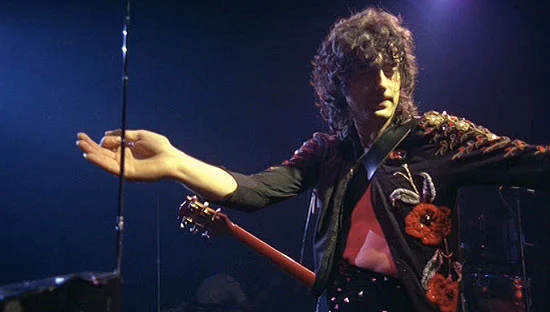
Revival and Contemporary Performances (Post-Led Zeppelin): Page’s connection to the theremin persisted long after Led Zeppelin’s initial run. His appearance in the 2009 film It Might Get Loud provided a contemporary glimpse into his ongoing relationship with the instrument. In a demonstration, Page, with a characteristic blend of humility and passion, remarked, "It hasn’t got six strings, but it’s a lot of fun." This sentiment underscores his enduring appreciation for the theremin’s unique expressive potential. During the film’s filming, Page utilized a Sonic Wave Theremin, showcasing how he could still evoke the screaming, feedback-laden bends reminiscent of his Les Paul solos. The video segment from It Might Get Loud embedded in the original article highlights his ability to coax a powerful, almost vocal quality from the instrument, a testament to his refined technique.
-
The "Whole Lotta Love" Solo – A Visual and Sonic Spectacle: The live performance of "Whole Lotta Love" from 1973, featured in one of the embedded videos, is a particularly compelling example of Page’s theremin mastery. Here, the theremin isn’t just an accompaniment; it’s a co-lead instrument. Page seamlessly transitions between the theremin and his Les Paul, creating a dialogue between the two. The visual aspect of his performance, amplified by psychedelic video effects, elevates the experience to a level of "mystical planes of rhythmic abstraction." The theremin’s contribution to the solo is not merely tonal but textural, adding a layer of ethereal chaos that complements the raw power of his guitar.
Supporting Data: The Technical Virtuosity and Sonic Palette
Jimmy Page’s use of the theremin was not a mere novelty; it was an extension of his already formidable technical skills and his deep understanding of sonic manipulation.
-
Beyond Conventional Guitar Techniques: The theremin demands a different kind of dexterity than the guitar. Controlling pitch and volume with hand movements in the air requires an acute sense of spatial awareness and fine motor control. Page’s ability to translate the aggressive, biting tones he produced on his Les Paul to the theremin suggests a remarkable adaptability and a sophisticated understanding of how to shape electronic sound. His "screaming, feedback-laden bends" on the theremin were not accidental; they were deliberate choices to replicate and extend the emotional intensity of his guitar playing.
-
Pioneering Effects and Amplification: Page’s approach to the theremin was characteristically innovative. By routing it through a Maestro Echoplex and Orange amplification systems, he was essentially treating the theremin as another source of raw sonic material to be manipulated and amplified. This was a departure from how the instrument was typically used, often for more delicate, ambient effects. Page embraced its potential for distortion, sustain, and feedback, integrating it into a rock music context with a ferocity rarely heard. The "double-stacked Theremin" used in 1971 is a prime example of his willingness to experiment with the instrument’s configurations to achieve a more powerful sonic output.
-
The Avant-Garde Vision: Page’s conceptualization of the theremin’s role in "Whole Lotta Love" is crucial. He envisioned a middle section that was "quite avant-garde," and the theremin became the instrument to realize that vision. This demonstrates a deliberate artistic choice to incorporate sounds that were outside the established norms of rock music. The theremin’s ability to produce "evil sounds," as he alluded to in discussions about the track, was a key element in creating the song’s unsettling and captivating atmosphere.
-
Comparison to Contemporary Experimental Music: The description of Page’s theremin performances, with their "long stretches of the kind of droning experimental noise one would expect to find onstage at an early Kraftwerk show," places his work within the broader context of experimental and electronic music. This highlights that Page was not just dabbling in the avant-garde but actively contributing to its development within a rock framework.
Official Responses and Critical Reception
While there may not be direct "official responses" to Jimmy Page’s theremin usage in the traditional sense, the critical reception and enduring legacy of Led Zeppelin’s music serve as a powerful testament to its impact.
-
Critical Acclaim for "Whole Lotta Love": The enduring acclaim for "Whole Lotta Love" is a de facto endorsement of Page’s innovative use of the theremin. Music critics and fans alike have consistently praised the song’s sonic adventurousness and its groundbreaking production. The theremin’s contribution is widely recognized as a vital component of the track’s unique identity.
-
Fan Recognition and Appreciation: Fan sites and dedicated Led Zeppelin forums frequently discuss Page’s theremin work, highlighting its significance in the band’s artistic evolution. The fact that this aspect of his playing continues to be a topic of discussion and admiration among fans speaks to its impact and the appreciation for his experimental spirit.
-
Documentary and Film Appearances: Page’s willingness to showcase his theremin skills in documentaries like It Might Get Loud and in various live performance recordings further solidifies its place in his musical narrative. These appearances provide direct evidence and context for his relationship with the instrument, offering insights into his approach and passion.
Implications and Enduring Legacy
Jimmy Page’s experimental embrace of the theremin carries several significant implications for his musical legacy and the broader landscape of rock music:
-
Expanding the Sonic Boundaries of Rock: Page’s integration of the theremin demonstrated that rock music was not limited to traditional instrumentation. He showed that electronic instruments, even those considered unconventional, could be powerfully incorporated into the genre, paving the way for future sonic explorations by other artists.
-
Elevating Studio Production to an Art Form: The use of the theremin in "Whole Lotta Love" exemplifies Led Zeppelin’s commitment to pushing the boundaries of studio production. It wasn’t just about capturing a live performance; it was about meticulously crafting a sonic experience that could only be achieved through innovative studio techniques.
-
A Testament to Page’s Artistic Vision: Page’s continued engagement with the theremin throughout his career underscores his relentless pursuit of musical innovation. He was not content to rest on his laurels; he constantly sought new ways to express himself sonically. His willingness to experiment with an instrument as unique as the theremin highlights his adventurous spirit and his dedication to artistic growth.
-
A Precursor to Electronic Music’s Mainstream Integration: While the theremin remained a niche instrument, Page’s bold use of it within a globally successful rock band helped to normalize the idea of electronic instrumentation in popular music. It served as an early example of how synthesizers and other electronic devices would eventually become ubiquitous in the music industry.
-
Redefining the Guitar Hero: Page’s ability to transcend the traditional role of a guitarist and master an instrument as alien as the theremin further cements his status as a truly multifaceted musical genius. He wasn’t just a virtuoso on his primary instrument; he was a sonic sculptor capable of extracting profound musicality from diverse sources.
In conclusion, Jimmy Page’s journey with the theremin is far more than a footnote in Led Zeppelin’s storied history. It is a powerful testament to his unwavering commitment to sonic exploration, his technical brilliance, and his visionary approach to music creation. By embracing this early electronic marvel, Page not only enriched Led Zeppelin’s already groundbreaking sound but also left an indelible mark on the evolution of rock music, proving that the most electrifying sounds can often be found in the most unexpected places. His theremin escapades serve as a reminder that true artistry lies in the courage to experiment, to push boundaries, and to find the music within the unseen currents of sound.


Leave a Comment