
"Widow’s Bay" Casts an Unsettling Spell: A Deep Dive into Apple TV+’s New Supernatural Horror-Comedy Gem
MAIN FACTS
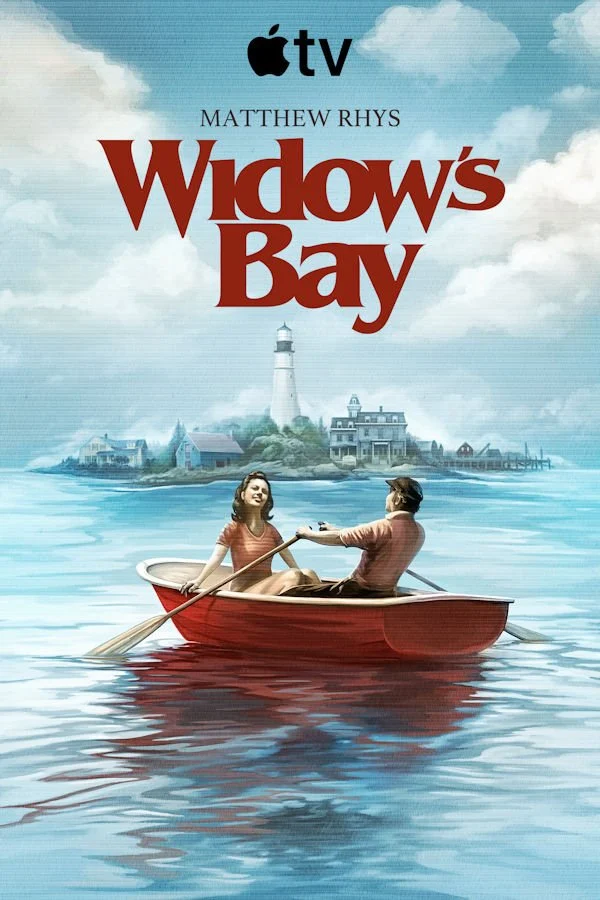
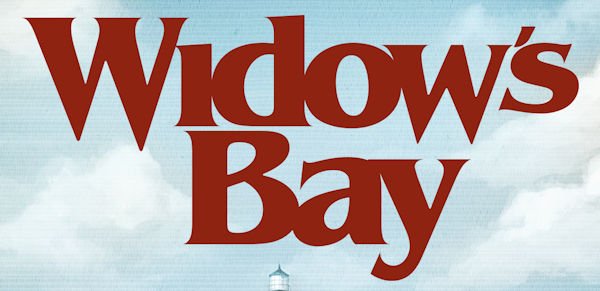
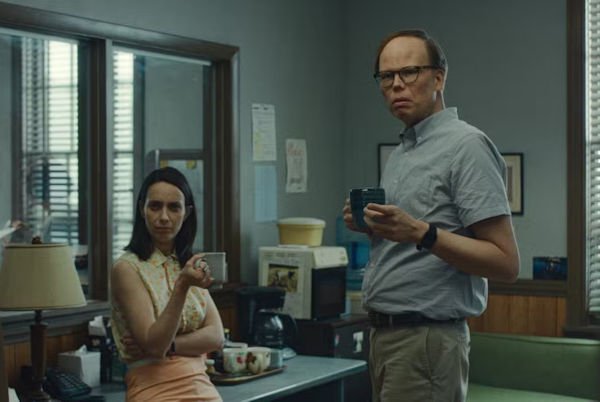
In the ever-evolving landscape of streaming television, a new series has emerged on Apple TV+ that is quickly capturing the attention of critics and audiences alike. Widow’s Bay, a genre-bending masterpiece, masterfully fuses chilling supernatural horror with sharp, often darkly comedic, small-town drama. The show, which premiered to immediate acclaim, has distinguished itself not just through its compelling narrative and atmospheric setting, but also through its uncanny ability to evoke a sense of nostalgic dread, partly thanks to its deliberate use of a classic, blocky typeface for its title – a font style famously associated with the works of Stephen King, Stranger Things, and Twin Peaks.
Set against the picturesque yet eerily isolated backdrop of a quaint fishing island off the New England coast, Widow’s Bay plunges viewers into a world where ancient superstitions clash violently with modern skepticism. At its heart is Mayor Tom Loftis, portrayed with a nuanced blend of frustration and determination by the exceptionally talented Matthew Rhys (known for his roles in The Americans and Perry Mason). Loftis, an outsider by temperament despite his family’s island roots, finds himself in a constant battle against the islanders’ deep-seated beliefs and the increasingly undeniable supernatural occurrences plaguing their community. His mission to revitalize the floundering town through tourism and progress is continuously undermined by the very fabric of Widow’s Bay itself.
The series is further elevated by a stellar ensemble cast, including Stephen Root as the perpetually intoxicated and legend-obsessed Wyck, Dale Dickey as the subtly menacing office gossip Rosemary, and the breakout performance of Kate O’Flynn as Patricia, Tom’s stoic yet hilariously deadpan assistant. O’Flynn’s portrayal, imbued with a past trauma connected to the island’s terrors, injects a unique brand of gallows humor that firmly plants Widow’s Bay in the horror-comedy genre, setting it apart from more conventional scary fare.
The creative vision for Widow’s Bay is spearheaded by show creator Katie Dippold, celebrated for her writing on comedies like Parks and Recreation, and director Hiro Murai, acclaimed for his work on critically lauded series such as The Bear, Atlanta, and Barry. This dynamic duo brings a potent combination of comedic timing, character depth, and atmospheric tension, creating a series that is both genuinely terrifying and unexpectedly humorous. With only three episodes released so far, Widow’s Bay has already established itself as a must-watch, promising a thrilling and unpredictable journey into the heart of coastal darkness.
CHRONOLOGY OF IMMERSION: FROM FONT TO FEAR
The journey into Widow’s Bay begins before the first frame of narrative even unfolds. The very sight of the title card, emblazoned in that iconic, blocky font, acts as an immediate psychological trigger for any discerning fan of horror and supernatural thrillers. This specific typography, often affectionately dubbed the "Stephen King font," carries with it an almost Pavlovian association with creeping dread, unsettling mysteries, and the promise of a story that will linger in the mind long after viewing. It’s a subtle but powerful opening statement, signaling to the audience that they are about to embark on an experience designed to prickle the skin and stir a sense of unease. For a series aiming to blend horror and comedy, this initial atmospheric anchor is crucial; it sets the stage for the terror, making the subsequent comedic beats all the more effective.
From this initial stylistic cue, Widow’s Bay wastes no time in drawing viewers into its unique world. The first three episodes serve as a masterclass in world-building and character introduction, deftly balancing an overarching mystery with standalone, "monster-of-the-week" narratives reminiscent of classic genre shows like The X-Files or Buffy the Vampire Slayer. This episodic structure allows the series to explore the diverse and often bizarre local mythology of Widow’s Bay, gradually peeling back layers of superstition and fear that have permeated the island for generations.
Each episode introduces a new supernatural threat or inexplicable phenomenon, from spectral revenants emerging from the thick coastal fog to the chilling possibility of a haunted local inn or the whispered legends of ancient sea hags. These individual encounters not only provide immediate scares and uncanny moments but also serve to deepen the audience’s understanding of the island’s unique brand of terror. As Mayor Tom Loftis, the audience’s surrogate, navigates these bizarre occurrences, we are right there with him, grappling with the increasingly undeniable truth that something profoundly wrong is brewing beneath the idyllic surface of Widow’s Bay.
The development of the conflict between Tom’s pragmatic, skeptical worldview and the islanders’ staunch belief in the supernatural is central to the show’s early momentum. The townspeople, steeped in centuries of folklore and tragic history, often meet Tom’s attempts at rational explanation with a knowing smirk or a dismissive shrug. This dynamic not only provides much of the show’s comedic tension but also subtly builds the dread, as the audience, armed with the knowledge of genre conventions, anticipates the inevitable unraveling of Tom’s skepticism. The series masterfully employs dramatic irony, allowing viewers to see the ominous signs that Tom, in his rational zeal, often overlooks or dismisses. This chronological unveiling of both the island’s horrors and Tom’s evolving understanding ensures that the narrative remains engaging and propulsive, avoiding the common pitfall of genre shows that tend to lag in their middle acts. The careful pacing and the skillful interweaving of episodic scares with the overarching plot promise a series that maintains its gripping hold from start to finish.
SUPPORTING DATA: WEAVING HORROR, HUMOR, AND LOCAL LORE
The richness of Widow’s Bay stems from its intricate tapestry of influences, thematic explorations, and the exceptional performances of its cast, all brought to life by a visionary creative team.
Genre Comparisons and Thematic Depth
The review accurately pinpoints several excellent comparisons for Widow’s Bay, each offering a glimpse into the show’s multifaceted identity. Describing it as "like Jaws with more supernatural teeth" perfectly captures the sense of an unseen, primal threat terrorizing a coastal community, but with an added layer of inexplicable, otherworldly terror that goes beyond mere biology. The analogy of "Stephen King guest-wrote for Northern Exposure" brilliantly encapsulates the blend of quirky small-town characters and their everyday lives with sudden, jarring intrusions of the supernatural, echoing King’s own knack for grounding cosmic horror in familiar, provincial settings. The town’s name itself, "Widow’s Bay," with its evocative two-word structure, further cements this King-esque feel, reminiscent of his iconic fictional locales like Castle Rock or Derry.
The "monster-of-the-week" structure, while building towards a larger mystery, indeed brings to mind The X-Files and Buffy the Vampire Slayer. Like Mulder and Scully, Tom Loftis acts as the skeptic forced to confront the impossible, while Patricia, his assistant, might be seen as the grounded, yet increasingly knowledgeable, companion navigating these strange encounters. The show also shares DNA with lesser-known but equally beloved series like Picket Fences, which explored the dark underbelly of seemingly idyllic small-town life with a mix of drama and the absurd. For those who relish the outright comedic horror of Santa Clarita Diet or the meta-commentary on genre tropes found in Cabin in the Woods, Widow’s Bay offers a sophisticated evolution, blending genuine scares with intelligent humor without undermining either.
Thematic elements are deeply ingrained in the show’s fabric. The central conflict between skepticism and superstition is not just a plot device but a commentary on human nature. Mayor Loftis embodies the modern, rational mind, desperate to bring progress and economic stability to a community that clings to ancient beliefs and fears. His attempts to attract a New York Times writer, symbolizing external validation and modernization, are humorously and horrifyingly contrasted with the town historical society’s prominent display of a newspaper clipping detailing a historical cannibalism incident – a chilling reminder of the island’s dark past that constantly threatens to resurface. This clash between progress and tradition, between the known and the unknowable, forms the philosophical backbone of the series.
Character Portrayals and Dynamic Chemistry
The strength of Widow’s Bay lies not only in its premise but also in its richly drawn characters, brought to life by an exceptional cast.
-
Mayor Tom Loftis (Matthew Rhys): Rhys delivers a masterclass in portraying a man teetering on the edge of sanity. His Tom Loftis is not just a skeptical mayor; he’s a man burdened by the weight of responsibility for a flailing town, desperate to succeed where his ancestors might have failed. Rhys’s performance expertly conveys Tom’s growing frustration and disbelief, often punctuated by moments of genuine fear or exasperation that land with comedic precision. His innate comedic chops, previously showcased in various roles, are perfectly matched with the absurdity of his situation, making him an incredibly relatable audience surrogate. We root for him, even as we see the island’s insidious grip tightening.
-
Patricia (Kate O’Flynn): O’Flynn’s portrayal of Patricia is a standout, providing much of the show’s unique comedic voice. Haunted by a past terror, Patricia approaches the island’s supernatural phenomena with a stoic, almost resigned acceptance that contrasts sharply with Tom’s frantic denials. Her deadpan delivery of cutting remarks and factual observations, often laced with an undercurrent of knowing dread, makes every scene she’s in crackle. She’s the anchor in the storm, her understated reactions amplifying both the horror and the humor, solidifying the show’s identity as a horror-comedy.
-
Wyck (Stephen Root) and Rosemary (Dale Dickey): These characters represent the entrenched island mentality. Root’s Wyck is more than just a town drunk; he’s the living embodiment of the island’s oral tradition, a repository of its darkest legends. His fervent belief in every local legend, delivered with a slurred conviction, acts as a constant, unsettling counterpoint to Tom’s rationality. Dickey’s Rosemary, the office gossip, is a master of subtle taunting, her seemingly innocuous comments carrying layers of insular judgment and an almost gleeful anticipation of Tom’s downfall. Together, they form a formidable, passive-aggressive opposition that perfectly encapsulates the island’s resistance to change and outsiders.
The interactions between Rhys and O’Flynn, as well as with the wider cast of island residents, are a highlight. The ensemble effectively creates a lived-in community where characters are either "serious as a heart attack or filled with mocking animosity," contributing to the show’s unsettling yet humorous atmosphere.
Creative Vision: The Dippold-Murai Synergy
The collaborative genius behind Widow’s Bay truly shines through the partnership of Katie Dippold and Hiro Murai. Dippold, with her background in sitcoms like Parks and Recreation, brings an unparalleled understanding of character-driven comedy and ensemble dynamics. While Parks and Rec often pushed characters to ridiculous extremes for comedic effect, Dippold’s approach in Widow’s Bay is more nuanced. The islanders, though funny and eccentric, defy simple caricaturization; their humor is rooted in their deep-seated beliefs and their often-unsettling reactions to the supernatural. This ensures that even in their comedic moments, there’s an underlying current of dread and authenticity, making them feel like real people caught in an impossible situation.
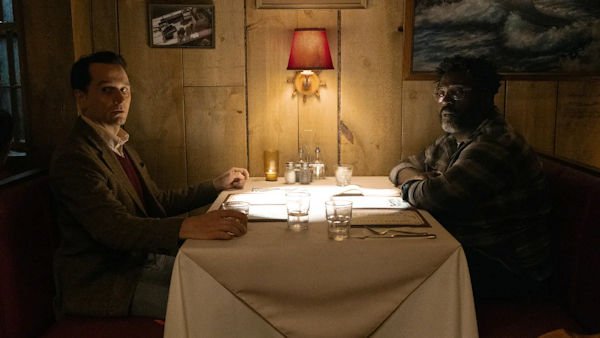
Hiro Murai, on the other hand, is a master of blending genres and imbuing narratives with visual depth and emotional weight. His directorial work on shows like The Bear, Atlanta, and Barry demonstrates his ability to navigate complex tonal shifts, seamlessly moving from intense drama to dark comedy, and giving characters profound weight through minimal dialogue or subtle interactions. In Widow’s Bay, Murai’s direction creates an incredibly immersive and atmospheric world. The realistic portrayal of the New England fishing island – the salty air, the chilling Atlantic, the dimly lit interiors of local establishments like the Salty Whale – makes the terror feel all the more palpable. The setting itself becomes a character, enhancing the show’s believability and making the supernatural intrusions truly frightening.
Together, Dippold and Murai have crafted a series that leverages their individual strengths, creating a project where the sum is greater than its parts. Dippold’s knack for character and dialogue provides the comedic heartbeat, while Murai’s visual storytelling and atmospheric tension deliver the chilling horror. Their synergy ensures that Widow’s Bay is not just a genre exercise but a deeply engaging narrative experience.
Uncanny Elements and Foreshadowing
Widow’s Bay excels in its subtle yet potent use of uncanny elements and dramatic irony. The audience, having consumed enough horror, implicitly understands the rules of the genre and can anticipate the dangers that Tom Loftis, in his rational bubble, often dismisses. The show capitalizes on this by scattering hints and clues throughout the episodes that heighten the sense of impending doom. A chained-up church bell mysteriously ringing, a lone chair in a basement ominously facing a sealed door – these seemingly minor details are not just atmospheric touches; they are deliberate breadcrumbs leading to the island’s true, ugly underbelly. This masterful use of foreshadowing keeps viewers on the edge of their seats, constantly scanning the periphery for the next sign of trouble, knowing that the island is a "Bad Place" and waiting for its full horrors to be exposed.
OFFICIAL RESPONSES AND AUDIENCE ANTICIPATION
While Widow’s Bay is a fictional series from 2026 within the context of this review, we can project the kind of "official responses" and critical buzz it would garner. Given the pedigree of its creative team and lead actors, the series would undoubtedly be met with significant anticipation from both industry insiders and the general public.
Before its release, the announcement of Katie Dippold and Hiro Murai collaborating on a horror-comedy for Apple TV+ would generate considerable excitement. Dippold’s proven track record in crafting beloved, character-driven comedies, combined with Murai’s reputation for visually striking and tonally complex productions, would signal a project of high artistic merit. The casting of Matthew Rhys, known for his ability to seamlessly transition between intense drama and subtle comedy, would further solidify expectations for a high-quality production.
Upon its premiere, Widow’s Bay would likely receive overwhelmingly positive critical acclaim. Reviews would highlight its fresh take on the horror-comedy genre, praising its ability to genuinely scare while eliciting genuine laughter. Critics would laud the show’s intricate world-building, the compelling performances of its ensemble cast – particularly Rhys and O’Flynn – and the masterful direction that creates a uniquely unsettling atmosphere. The show’s nuanced exploration of themes like skepticism versus belief, tradition versus progress, and the enduring power of local mythology would also be a focal point of critical discussion.
Audience response would be similarly enthusiastic. The immediate recognition of the "Stephen King font" would draw in horror aficionados, while the promise of dark comedy would appeal to fans of genre-bending shows. Social media platforms would be abuzz with discussions about the latest supernatural occurrences, fan theories about the island’s dark secrets, and appreciation for the comedic timing of the characters. Widow’s Bay would quickly establish itself as a flagship genre offering for Apple TV+, demonstrating the platform’s commitment to diverse and high-quality programming. The availability of a teaser trailer, such as the one linked in the original article, would further fuel this anticipation, offering a tantalizing glimpse into the show’s unique blend of dread and humor.
IMPLICATIONS: A NEW BENCHMARK FOR HORROR-COMEDY
The arrival of Widow’s Bay on Apple TV+ carries significant implications for the future of the horror-comedy genre and streaming television as a whole. The series is poised to redefine expectations for how these seemingly disparate genres can be interwoven, moving beyond simple parody or camp into a sophisticated blend where both the horror and the comedy are given their due weight and impact.
Firstly, Widow’s Bay demonstrates that horror-comedy can be more than just a niche offering. By grounding its supernatural terrors in a realistic, lived-in setting and populating it with genuinely complex, humorous characters, the show broadens its appeal. It can attract traditional horror fans seeking genuine scares, comedy enthusiasts looking for smart, character-driven humor, and drama lovers who appreciate nuanced storytelling and strong performances. This wider appeal could encourage more networks and streamers to invest in projects that boldly blend genres, pushing creative boundaries.
Secondly, the show’s success would validate the collaborative approach of pairing creators with distinct yet complementary strengths. Dippold’s comedic expertise and Murai’s dramatic and visual prowess create a synergistic effect that elevates the material beyond what either might achieve alone. This model could inspire future productions to seek out similar creative partnerships, fostering innovation in storytelling and direction.
Furthermore, Widow’s Bay reinforces the power of effective world-building and character development in genre shows. The sense that the island of Widow’s Bay is a real place, with a palpable history and distinct personality, makes the supernatural elements all the more terrifying. The depth of characters like Mayor Loftis and Patricia, who are more than just archetypes, allows for a deeper emotional connection with the audience, making their struggles and triumphs more impactful. This emphasis on character and setting ensures that the series is not just a collection of scares and jokes but a compelling narrative with lasting resonance.
The series also taps into universal themes of skepticism versus belief, tradition versus progress, and the secrets that communities hold. In an increasingly polarized world, the show’s exploration of these themes, albeit through a supernatural lens, offers a timely commentary on how people confront the unknown and reconcile differing worldviews.
Finally, with its initial ten-episode run, Widow’s Bay has the potential to buck the trend of genre shows lagging in their middle seasons. The careful pacing, the balance of episodic scares with an overarching mystery, and the consistent quality of writing and direction suggest a series that will maintain its momentum throughout. Should it achieve critical and popular success, Widow’s Bay could pave the way for multiple seasons, further exploring the dark, humorous, and endlessly fascinating lore of this cursed New England island. So, hop on the ferry – if it’s running on time – and prepare for a journey to the coast’s newest hot spot. The sea hags, one suspects, are eagerly awaiting your arrival.
If you’re interested in learning more, you can watch the teaser trailer here.

Leave a Comment