
A Digital Time Warp: Modder Replicates Fallout 1 on Fallout 4’s Pip-Boys, Pushing the Boundaries of Gaming Nostalgia
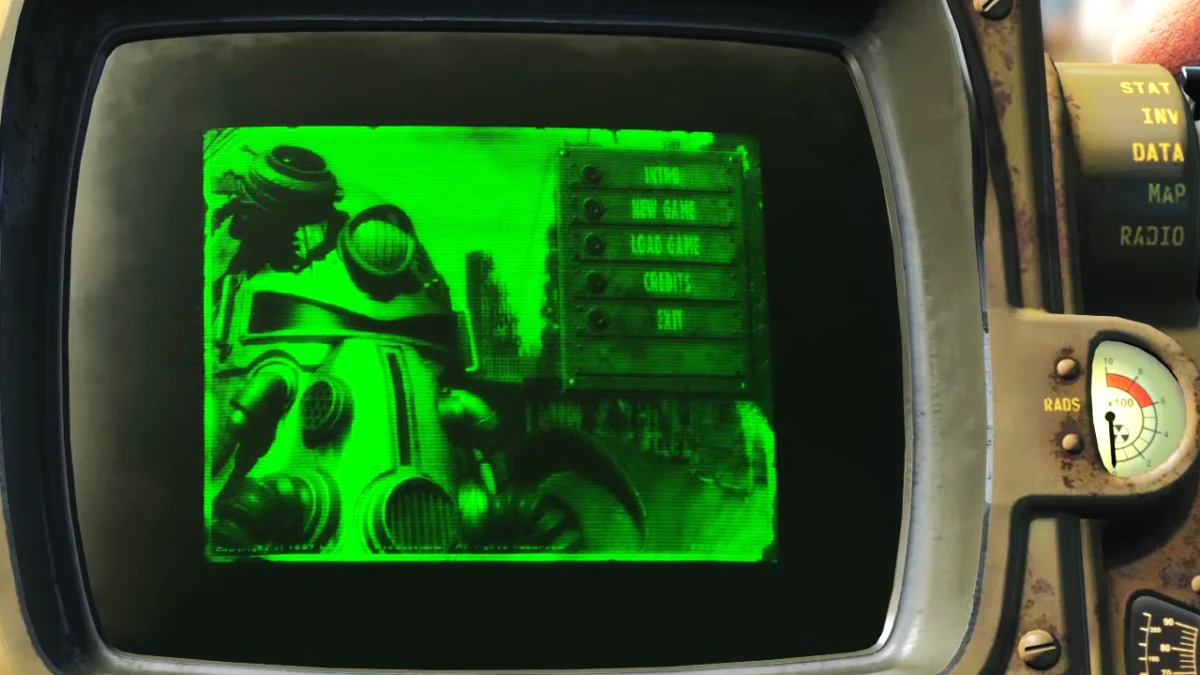
In a remarkable feat of technical prowess and sheer dedication, modder RPGKing117 has once again captivated the gaming community with his ambitious project: bringing the entirety of the original Fallout experience to life within the confines of Fallout 4‘s iconic in-game computer terminals and Pip-Boy devices. This latest endeavor follows a series of equally audacious modifications that have cemented RPGKing117’s reputation as a master of digital cross-pollination.
A Month of Unprecedented Modding Achievements
The past month has been nothing short of revolutionary for RPGKing117, a testament to his relentless pursuit of pushing the boundaries of what’s possible in game modding. His journey began with a move that many might consider sacrilegious within the fervent Elder Scrolls fanbase: transplanting Skyrim‘s user-friendly quest markers into the notoriously obtuse world of Morrowind. While initially met with a mixture of awe and playful outrage, the "blasphemy" ultimately proved to be a functional enhancement, offering a more accessible way for players to navigate Vvardenfell’s sprawling landscapes.
Hot on the heels of this Morrowind overhaul, RPGKing117 achieved another astonishing milestone: successfully integrating the entirety of The Elder Scrolls III: Morrowind into Fallout 4. This complex mod allowed players to experience the classic RPG not just as a separate game, but as a fully functional element within Fallout 4‘s own game engine, accessible through its in-game Pip-Boy. This feat demonstrated an incredible understanding of how to bridge disparate game architectures and control schemes.
Now, with the dust settled from these groundbreaking projects, RPGKing117 has returned with yet another ambitious undertaking. His latest creation aims to replicate the original Fallout experience, complete with its distinctive monochrome, vacuum-tube aesthetic, directly onto the screens of Fallout 4‘s in-game terminals and Pip-Boys. This latest project, while not yet publicly released, promises to be a significant addition to the growing list of mods that blend classic gaming experiences with modern titles.
The Genesis of a Retro Revival: A Chronological Look at RPGKing117’s Work
To fully appreciate the magnitude of RPGKing117’s latest achievement, it’s essential to understand the progression of his recent modding efforts. Each project has built upon the technical foundations laid by its predecessor, showcasing a clear evolution in his skill and vision.
The Skyrim Quest Markers for Morrowind Mod: This initial foray into cross-game functionality was a relatively direct application of modern UI design principles to a classic RPG. By porting the intuitive quest marker system from Skyrim into Morrowind, RPGKing117 addressed a long-standing point of contention for many players who found Morrowind‘s journal entries and lack of explicit directional guidance to be a significant barrier to entry. The mod likely involved a sophisticated understanding of Morrowind‘s scripting and object manipulation capabilities, allowing for the dynamic placement and display of markers that corresponded to in-game quest objectives. The reaction from the community, while initially dramatic, highlighted the enduring appeal of Morrowind and the desire for more accessible ways to experience its rich content.
The Morrowind on Fallout 4‘s Pip-Boy Mod: This was a far more complex undertaking, requiring the creation of a sophisticated bridge between two fundamentally different game engines. The core of this mod relied on a dual-engine approach. Firstly, the Fallout 4 Script Extender (Fallout4SE) was utilized. This powerful tool allows for the extension of Fallout 4‘s scripting capabilities, enabling the execution of more complex commands and the manipulation of game elements beyond what is normally possible. Through Fallout4SE, RPGKing117 was able to initiate the launch of Morrowind from within Fallout 4 and, crucially, to pass player control inputs through both games simultaneously. This meant that actions taken by the player in Fallout 4 could be interpreted and executed within Morrowind.
Secondly, a custom version of the OpenMW source port for Morrowind played a pivotal role. OpenMW is an open-source engine recreation for Morrowind that aims to improve performance, stability, and compatibility. RPGKing117’s modification involved a custom build of OpenMW that could stream its framebuffer – the digital data representing the rendered image that is sent from the graphics card to the display – onto the in-game screens of Fallout 4. Essentially, the Morrowind game was being rendered in real-time and its visual output was being displayed on the virtual screens within the Fallout 4 world, creating a convincing "game within a game" illusion. This required intricate knowledge of graphics rendering pipelines and inter-process communication.
The Fallout 1 on Fallout 4‘s Pip-Boys Mod: This latest project, while still under wraps, is understood to follow a similar technical paradigm to the Morrowind mod. The key difference lies in the target game: the original Fallout, released in 1997. For this, RPGKing117 is presumed to be leveraging a source port for Fallout 1. The most likely candidate is Alex Batalov’s Community Edition, a well-regarded open-source project that aims to enhance the original Fallout experience with modern compatibility and features. The principle would remain the same: using Fallout 4‘s Script Extender to launch the Fallout 1 Community Edition and then capturing and displaying its framebuffer onto Fallout 4‘s Pip-Boys and computer terminals. The challenge here lies in replicating the distinct retro aesthetic of Fallout 1‘s user interface and graphics, ensuring it appears authentic on the simulated monochrome screens.
Technical Foundations: The Pillars of RPGKing117’s Innovations
The success of RPGKing117’s mods hinges on a sophisticated understanding of underlying game technologies and robust community-developed tools.
The Role of Script Extenders
For Bethesda Game Studios titles like Fallout 4 and Skyrim, script extenders are indispensable tools for advanced modding. The Fallout 4 Script Extender (Fallout4SE) is a prime example. It provides a significantly expanded set of commands and functionalities that are not available in the base game’s scripting language. This allows modders to implement complex logic, interact with game systems in novel ways, and even launch external applications or processes. In the context of RPGKing117’s work, Fallout4SE is crucial for orchestrating the launch of other games and for managing the input and output streams between them. Without such a tool, the concept of running an entirely different game within Fallout 4‘s framework would be largely impossible.
Source Ports: Breathing New Life into Classics
Source ports are community-driven projects that recreate or significantly enhance the engine of classic video games. These projects often involve reverse-engineering the original game’s code and rebuilding it using modern programming languages and techniques. This allows for improved compatibility with current operating systems, better performance, and the implementation of new features.
For the Morrowind mod, the OpenMW project was instrumental. OpenMW’s goal is to provide a complete, open-source re-implementation of the Morrowind engine, offering a stable and performant platform for the game. RPGKing117’s innovation lay in customizing OpenMW to not only run Morrowind but also to output its graphical data in a format that Fallout 4 could display.
Similarly, for the Fallout 1 mod, Alex Batalov’s Community Edition is the likely foundation. This source port aims to bring the original Fallout to modern systems with numerous improvements, including widescreen support, bug fixes, and enhanced graphics options. By leveraging these existing source ports, RPGKing117 can focus on the intricate task of integrating them into Fallout 4, rather than having to rebuild entire game engines from scratch.
Framebuffer Streaming: The Illusion of Integration
The core of the "game within a game" illusion is achieved through framebuffer streaming. The framebuffer is essentially the memory buffer that holds the image data that your graphics card is rendering. This data is then sent to your monitor to be displayed. RPGKing117’s mods intercept this framebuffer data from the emulated or source-ported game (Morrowind or Fallout 1) and then inject it as a texture or overlay onto the virtual screens within Fallout 4. This requires sophisticated understanding of graphics APIs and how to manipulate them to render external content within the host game’s environment. The result is a seamless visual integration, making it appear as though the classic game is running directly on Fallout 4‘s in-game hardware.
A Glimpse into the Past: The Fallout 1 Mod in Action
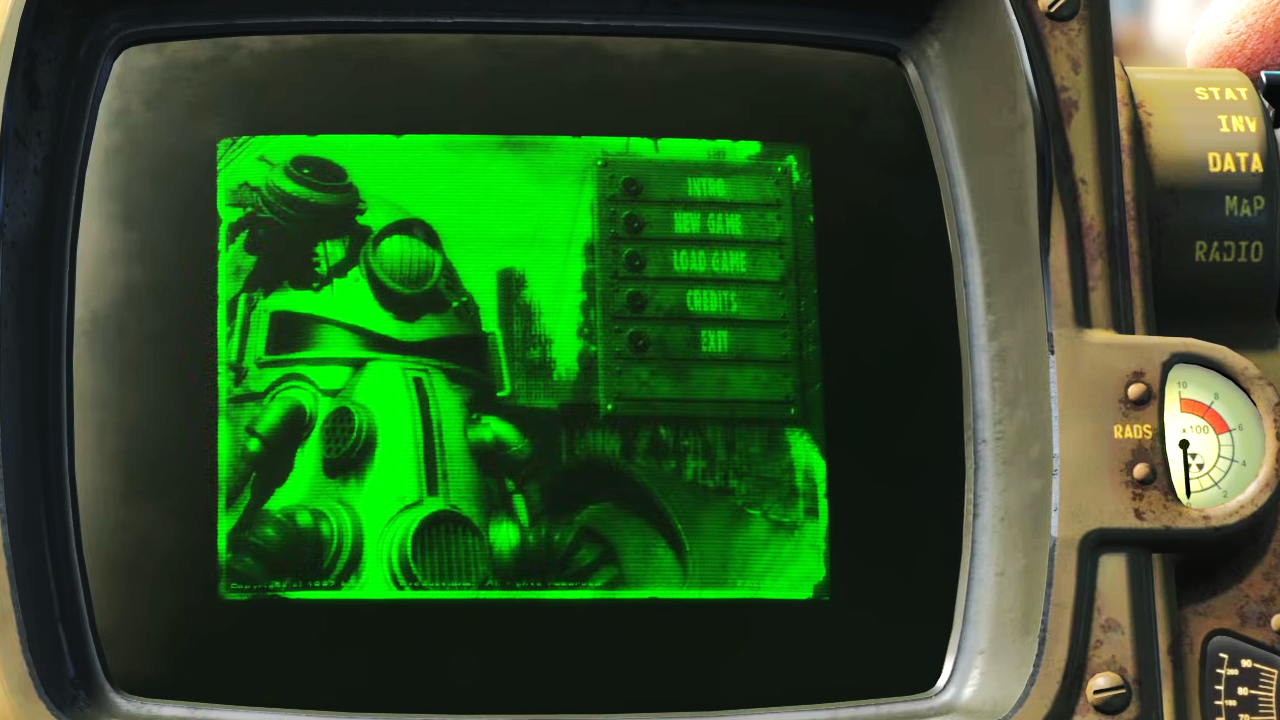
While a full public release is still pending, RPGKing117 has provided the community with a tantalizing preview of his Fallout 1 mod through a YouTube video. This short demonstration offers a clear insight into the mod’s functionality and aesthetic. The footage showcases the classic, stark monochrome interface of Fallout 1 faithfully rendered on the glowing screens of Fallout 4‘s Pip-Boys and various crude computer terminals scattered throughout the wasteland.
The video likely highlights the core gameplay loop of the original Fallout, including character creation, exploration of the desolate Californian wasteland, and interactions with the game’s iconic inhabitants. The visual fidelity of the Fallout 1 interface, with its pixelated graphics and distinct font, is preserved, while the context of its presentation within the more graphically advanced Fallout 4 creates a unique and nostalgic juxtaposition. The control scheme, as mentioned previously, is expected to be managed through Fallout 4‘s input system, allowing players to navigate the world of Fallout 1 with familiar controls.
The implications of this mod are far-reaching for players who cherish the history of gaming. It offers a way to revisit a seminal title in the RPG genre, experiencing its groundbreaking mechanics and atmospheric storytelling through a modern lens. The mod not only serves as a technical marvel but also as a profound act of preservation and celebration of gaming heritage.
The Future of Retro Integration: Implications and Community Response
RPGKing117’s relentless innovation in modding has significant implications for the gaming community and the future of retro game integration.
Pushing the Boundaries of Nostalgia
The "game within a game" concept, while not entirely new, has been elevated to an unprecedented level by RPGKing117. His ability to not just run but fully integrate classic titles into modern game environments taps into a deep vein of nostalgia for older games. This allows players to experience beloved classics in entirely new contexts, often with enhanced accessibility or a novel presentation. The Fallout 1 mod, in particular, appeals to a generation of gamers who might not have had the opportunity to play the original title or who wish to revisit it with a fresh perspective.
A Testament to Community-Driven Innovation
The existence and success of these complex mods are a testament to the power of the modding community. Tools like the Fallout 4 Script Extender and source ports like OpenMW and the Fallout 1 Community Edition are born from the dedication and expertise of countless developers who contribute their time and talent to enhance and preserve classic gaming experiences. RPGKing117’s work builds directly upon this foundation, demonstrating how these community-driven projects can be synergistically combined to create something truly extraordinary.
Potential for Further Integration and Preservation
The techniques employed by RPGKing117 could pave the way for even more ambitious cross-game modding projects. Imagine experiencing The Legend of Zelda: Ocarina of Time within Red Dead Redemption 2, or playing Doom on the in-game computers of Cyberpunk 2077. The possibilities are virtually limitless. Beyond pure entertainment, these mods also serve as a form of digital preservation, ensuring that classic games remain accessible and playable on modern hardware, even as original platforms and software become obsolete.
A "Game-ception" Phenomenon
The appeal of these mods lies in their inherent absurdity and the sheer technical artistry involved. It’s a phenomenon that taps into a playful spirit within the gaming community, a desire to see the farthest frontiers of absurdity reached. Much like the enduring fascination with running Doom on every conceivable device, RPGKing117’s work demonstrates a broader trend of exploring and recontextualizing gaming history. It’s a celebration of the evolution of video games and a recognition of the enduring impact of titles that have shaped the medium.
As RPGKing117 prepares to release his Fallout 1 mod, the gaming community eagerly anticipates the opportunity to delve into the wasteland once more, this time through the digitized, monochrome lens of Fallout 4. His work continues to inspire, challenge, and entertain, solidifying his position as a pivotal figure in the ever-evolving landscape of PC game modding. Players are encouraged to keep a watchful eye on RPGKing117’s Nexus Mods and GitHub pages for the official release, marking another significant chapter in the ongoing saga of digital retro integration.



Leave a Comment