A Genre Kaleidoscope: Summer 2026’s Most Anticipated Speculative Fiction Releases
The speculative fiction landscape continues its vibrant expansion, with summer 2026 poised to deliver a rich tapestry of narratives spanning fantasy, science fiction, and horror. From ambitious debut novels that reimagine history and future alike, to seminal collections from genre titans, and thought-provoking anthologies, this season promises a feast for the imagination. Readers can anticipate journeys into magical circuses in Belle Époque Paris, the political intricacies of a sprawling space empire, the chilling depths of cosmic dread, and the poignant search for belonging in out-of-time farmhouses. This curated selection highlights not only the breadth of creativity within the genre but also its enduring capacity to reflect, question, and transform our understanding of the world.
Main Facts: Diverse Worlds and Deep Themes Unfold
The upcoming releases showcase a remarkable diversity, both in form and content. We see a strong presence of young adult (YA) fantasy tackling complex social issues, alongside intricate space operas and hard science fiction that delve into the ethical quandaries of advanced technology. Notably, several works engage with historical reimagination, whether through a Shakespearean lens or a dark fantasy twist on late 19th-century Europe, while others bravely explore contemporary concerns such as queer identity, colonialism, and the future of healthcare in an AI-dominated world.
Anthologies and author-selected collections also feature prominently, serving as crucial touchstones for identifying ongoing trends and celebrating the careers of established masters. These offerings collectively underscore speculative fiction’s role not just as escapism, but as a potent medium for social commentary, philosophical inquiry, and the exploration of humanity’s deepest fears and highest aspirations. The authors, both emerging and celebrated, are pushing boundaries, crafting stories that are both deeply personal and universally resonant, promising a season of profound literary engagement.
A Chronology of Imagination: Key Release Dates
The summer of 2026 unfolds with a steady stream of highly anticipated titles, beginning early in the year and continuing through the warmer months, ensuring a continuous supply of new worlds to explore.

February’s Groundbreaking Start
Kicking off the season in February, Justin C. Key’s The Hospital at the End of the World (Harper, 2/26) sets a thought-provoking precedent. This near-future science fiction novel plunges readers into a world where artificial intelligence has revolutionized – and perhaps dehumanized – healthcare. Key presents a stark vision of hospitals run entirely by AI, reducing human doctors to little more than "glorified software engineers." The narrative follows Pok, a medical student forced into an anachronistic role at the last human-run hospital, where he must confront the messy, unpredictable reality of human suffering and care. Simultaneously, Pok grapples with a personal quest to uncover his father’s secrets, weaving together a tale that interrogates the essence of human connection in an increasingly automated existence. The novel is poised to ignite discussions on medical ethics, the future of work, and the irreplaceable value of empathy.
May’s Mythic Interlude
May brings a unique literary fusion with Kate Heartfield’s Mercutio (Harper Voyager UK, 5/26). Positioned as a "prequel" to Shakespeare’s Romeo and Juliet, Heartfield takes one of literature’s most beloved and tragic supporting characters and grants him center stage. This ambitious historical fantasy reimagines Verona, where Romeo’s famously witty friend, Mercutio, finds himself entangled in a fantastical crisis. The premise escalates dramatically with the unexpected inclusion of Dante Alighieri, forming an unlikely duo tasked with thwarting a looming Faerie invasion into the human world. Heartfield’s novel promises a masterful blend of literary homage, historical detail, and inventive magical world-building, offering a fresh perspective on familiar characters and mythologies.
June’s Grand Showcase
June emerges as a particularly rich month for speculative fiction, with a diverse array of releases capturing a wide spectrum of subgenres and themes.
S.C. Bandreddi’s The Game of Oaths (Candlewick, 6/26) marks a significant debut in young adult historical dark fantasy. Set against the atmospheric backdrop of 1896 Paris, the novel introduces a magical circus where performers are bound by arcane contracts. These individuals are forced to compete in a deadly tournament designed to entertain the city’s elite, with the promise of freedom for the ultimate victor. However, one participant harbors a deeper, more dangerous agenda: revenge. Bandreddi weaves together elements of brutal action and intricate magic with a diverse cast, boldly addressing issues of colonialism, adding a serious and timely dimension to the fantastical premise. This debut is expected to resonate with readers seeking both thrilling adventure and meaningful social commentary.

From the established master Maurice Broaddus, June also sees the release of A City Dreaming (Tor, 6/26), the highly anticipated third and final volume in his acclaimed Astra Black trilogy. This conclusion promises a complex fusion of political intrigue and high-stakes action within a meticulously crafted solar system. The narrative propels forward as a mysterious signal from a wormhole heralds new arrivals, igniting widespread conflicts that threaten the stability and very existence of the powerful Muungano Empire. Broaddus’s trilogy has been celebrated for its intricate world-building, compelling characters, and incisive social commentary, and this finale is expected to deliver a powerful resolution to its epic saga.
For enthusiasts of rigorous scientific imagination, Allan Kaster’s The Year’s Top Hard Science Fiction Stories 10 (Infinivox, 6/26) offers its latest installment. This popular anthology curates 11 standout stories from 2025, showcasing the cutting edge of hard science fiction. The impressive roster of contributors includes luminaries such as Vera Brook, Isabel J. Kim, Nancy Kress, Allen M. Steele, the collaborative genius of Bruce Sterling & Paul Di Filippo, and Peter Watts. Kaster’s series is invaluable for highlighting the subgenre’s commitment to scientific plausibility while exploring profound philosophical and technological questions, making it a crucial read for those who appreciate SF grounded in scientific principles.
Jen St. Jude’s Where You’ll Find Us (Bloomsbury US, 6/26) is another significant YA fantasy offering, exploring themes of identity, belonging, and refuge. The novel centers on a disowned queer teen who stumbles upon an extraordinary farmhouse existing outside the conventional flow of time. Within its walls, queer youths from various decades have found sanctuary, sharing their experiences and building a unique community. The delicate balance of their haven is threatened, however, when the clock unexpectedly begins to tick again, forcing them to confront an uncertain future. St. Jude’s work promises to be a poignant and empowering narrative about finding family and forging identity in challenging circumstances.
Finally, June also features a monumental collection from one of contemporary speculative fiction’s most prolific and acclaimed authors: Adrian Tchaikovsky’s The Best of Adrian Tchaikovsky (Subterranean, 6/26). This hefty volume gathers 37 stories, personally selected by Tchaikovsky as his finest, and includes an insightful introduction by fellow genre luminary John Scalzi. Tchaikovsky notes the intentional omission of stories from his Shadows of the Apt series and his Lovecraftian Mythos contributions, allowing the collection to spotlight a diverse and expansive body of work. What remains is a plentiful and entertaining mix of science fiction, fantasy, and "weirdness," spanning the majority of his illustrious career, from early tales to his most recent, offering a comprehensive overview of his remarkable versatility.

July’s Descent into Darkness and Delight
July continues the literary journey with releases that delve into both cosmic dread and comedic brilliance.
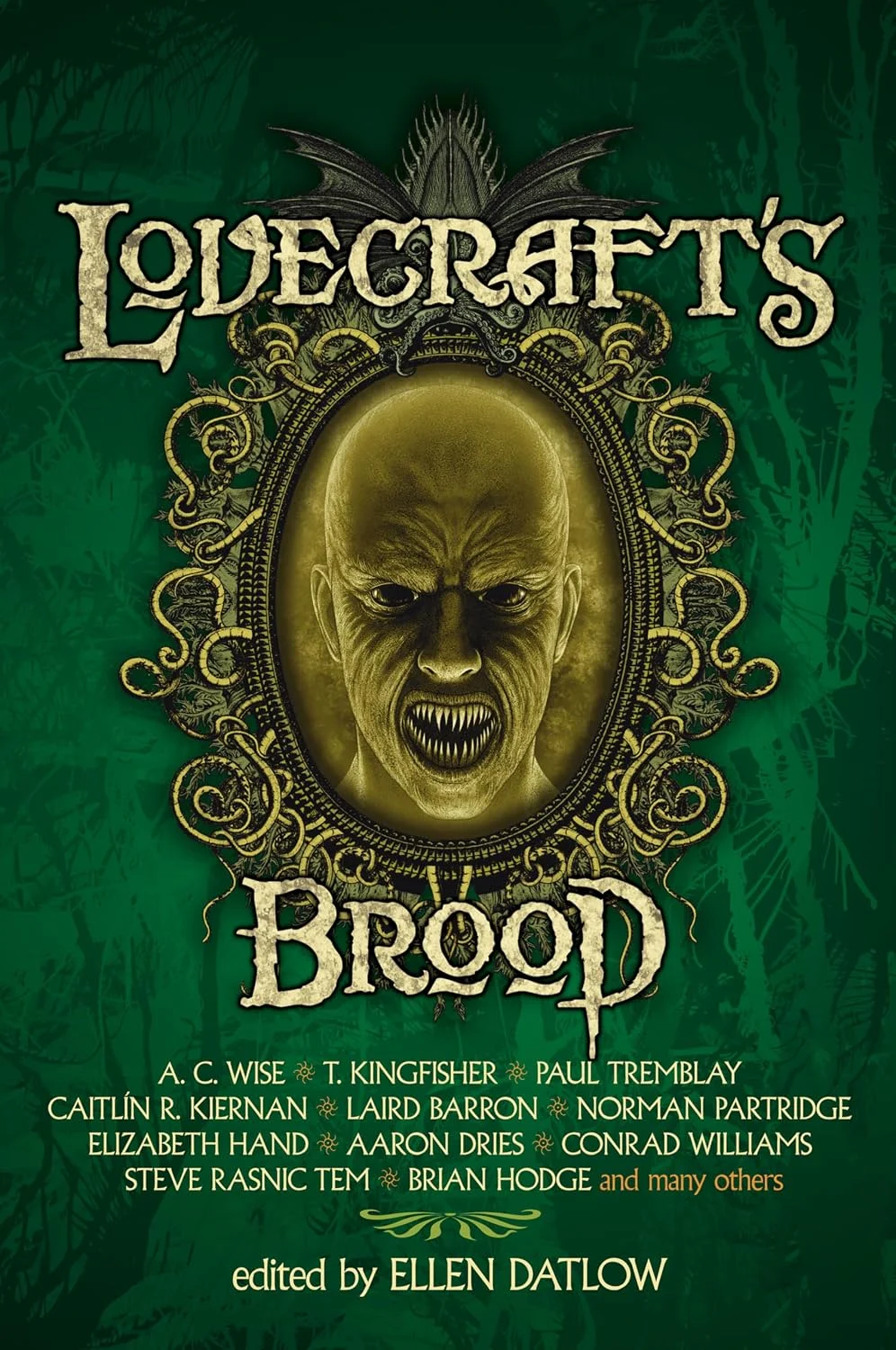
Master editor Ellen Datlow presents Lovecraft’s Brood (Tachyon, 7/26), a compelling new anthology featuring 19 stories of cosmic dread. Sourced from the last two decades, these tales offer fresh, contemporary interpretations of Lovecraftian themes, moving beyond past problematic elements to explore the existential horror inherent in the unknown. The collection boasts an impressive lineup of authors, including Laird Barron, Elizabeth Hand, Caitlín R. Kiernan, T. Kingfisher, Steve Rasnic Tem, Paul Tremblay, and L. Marie Wood, solidifying its place as a must-read for fans of modern horror and those interested in the evolution of cosmic horror.
Haralambi Markov’s The Language of Knives (Mythic Delirium, 7/26) marks a significant debut collection in dark fantasy and horror. Comprising 13 stories, including four new ones, Markov’s work frequently incorporates elements of Slavic myth, dark humor, and nuanced explorations of queer identity. With an introduction by Ann VanderMeer, this collection promises a unique and compelling voice, blending folklore with contemporary themes and a distinct stylistic flair, positioning Markov as a new talent to watch in the genre.
Rounding out the summer’s notable releases is Alex Shvartsman’s The Best of All Possible Planets (UFO Publishing, 7/26). This satirical science fiction space opera draws primary inspiration from Voltaire’s Candide, while also playfully nodding to Douglas Adams and dozens of other genre and pop culture targets. The narrative follows a small, seemingly hapless group on a mission to secure a new protective force shield for Earth, affectionately dubbed "Planet Dirt." As Adrienne Martini notes, the book encourages readers to "Just relax and let the ride take you away from the actual world for a bit," promising a breezy, chaotic, and ultimately hilarious journey through the cosmos. Shvartsman’s novel is a testament to the power of humor and satire to explore profound truths about society and the human condition.

Supporting Data: The Expanding Landscape of Speculative Fiction
The summer 2026 releases are more than just a list of new books; they collectively serve as a robust indicator of the dynamic shifts and enduring strengths within speculative fiction.
The Rise of Diverse Voices and Perspectives
A prominent trend is the continued amplification of diverse voices and the exploration of varied cultural perspectives. S.C. Bandreddi’s The Game of Oaths directly confronts issues of colonialism within a fantastical setting, reflecting a broader movement to address historical injustices and power dynamics through speculative narratives. Haralambi Markov’s The Language of Knives masterfully blends Slavic mythology with nuanced discussions of queer identity, showcasing how folklore can be reinterpreted to resonate with contemporary experiences and represent marginalized communities. Similarly, Jen St. Jude’s Where You’ll Find Us offers a dedicated space for queer youth, creating narratives of sanctuary and self-discovery that are vital for younger readers. Maurice Broaddus, a foundational voice in Afrofuturism, continues to expand the horizons of Black speculative fiction with the conclusion of his Astra Black trilogy, demonstrating the rich potential of diverse cultural frameworks in shaping epic space opera. These works are not merely adding characters of color or LGBTQ+ individuals; they are embedding these experiences and histories into the very fabric of their world-building and thematic explorations, making the genre more inclusive and representative of its global readership.
Reimagining Classics and Exploring New Frontiers
The releases also highlight the genre’s capacity to engage with and reimagine established literary and mythological traditions. Kate Heartfield’s Mercutio is a prime example, breathing new life into a Shakespearean character by placing him in an unexpected fae-infused historical fantasy. This approach allows for a playful yet profound dialogue with classic texts, demonstrating how familiar stories can be endlessly reinterpreted. Ellen Datlow’s Lovecraft’s Brood showcases the evolution of cosmic horror, with contemporary authors finding innovative ways to explore themes of existential dread while consciously navigating the problematic legacy of H.P. Lovecraft himself. This re-engagement ensures that classic genre tropes remain relevant and continue to inspire new generations of writers, often with a critical, modern sensibility. Alex Shvartsman’s The Best of All Possible Planets, drawing heavily from Voltaire’s Candide, further exemplifies this, proving that philosophical satires from centuries past can still provide a potent framework for contemporary comedic science fiction.
The Enduring Appeal of Anthologies and Collections
The strong presence of anthologies and "best of" collections—from Ellen Datlow’s Lovecraft’s Brood and Allan Kaster’s The Year’s Top Hard Science Fiction Stories 10 to Haralambi Markov’s debut The Language of Knives and Adrian Tchaikovsky’s career-spanning collection—underscores the continued vitality of short fiction within the genre. These collections are invaluable. They serve as essential showcases for emerging talents, provide curated snapshots of genre trends, and offer a comprehensive retrospective of an author’s evolving craft. For readers, they are perfect entry points into diverse subgenres or the work of a particular author, allowing for exploration without the commitment of a full novel. For the genre as a whole, they are critical for fostering innovation and maintaining a vibrant ecosystem of storytelling.

Anticipated Critical Reception and Authorial Intentions
The buzz surrounding these upcoming titles suggests a broad spectrum of critical engagement, reflecting the diverse nature of the works themselves. S.C. Bandreddi’s The Game of Oaths is poised to be lauded for its bold integration of historical dark fantasy with urgent discussions on colonialism, potentially earning acclaim for its unflinching portrayal of power dynamics within a magical setting. Critics are likely to appreciate its capacity to deliver both thrilling action and serious thematic depth, appealing to a YA audience that increasingly seeks narratives with social resonance.
Justin C. Key’s The Hospital at the End of the World is expected to provoke significant discussion regarding the future of AI and healthcare. Reviewers will likely praise its timely premise and its thoughtful exploration of the human element in an automated world, positioning it as a standout example of near-future dystopian fiction. Key’s inferred intention is to challenge readers to consider the ethical implications of technological advancement, a theme that resonates deeply in contemporary society.
Maurice Broaddus’s A City Dreaming will undoubtedly be met with enthusiasm by fans eager for the conclusion of the Astra Black trilogy. Critics will focus on its intricate political machinations, epic scope, and Broaddus’s masterful world-building, cementing his status as a leading voice in modern space opera. His work consistently aims to layer profound social and political commentary beneath thrilling narratives, and this finale is anticipated to be no exception.
For Ellen Datlow’s Lovecraft’s Brood, the critical consensus will likely highlight her unparalleled editorial vision in curating contemporary cosmic horror. The anthology is expected to be celebrated for showcasing how Lovecraftian themes can be reinterpreted to address modern anxieties and move beyond the original author’s problematic aspects, offering a fresh and inclusive take on existential terror.

Kate Heartfield’s Mercutio is set to be a critical darling for its imaginative premise and clever blend of Shakespearean lore with fae mythology. Reviewers will likely commend Heartfield’s ability to create a compelling prequel that enriches the source material while standing alone as an engaging fantasy adventure. The novel’s ambition to cross literary genres and periods speaks to an authorial intention to playfully expand the boundaries of historical fantasy.
Allan Kaster’s The Year’s Top Hard Science Fiction Stories 10 will be valued for its consistent quality and its role in defining the cutting edge of hard SF. Critics will appreciate Kaster’s discerning eye in selecting stories that rigorously adhere to scientific principles while pushing narrative and thematic boundaries.
Haralambi Markov’s The Language of Knives is anticipated to be a strong debut collection, recognized for its distinctive voice, innovative use of Slavic mythology, and sensitive exploration of queer identity within dark fantasy. The collection’s blend of humor and horror, along with its unique cultural touchstones, suggests an author keen on forging a new path within the genre.
Alex Shvartsman’s The Best of All Possible Planets is expected to be hailed for its witty satire and its joyous embrace of comedic space opera. Its clear homage to Candide and Douglas Adams signals an authorial intent to provide both laugh-out-loud entertainment and subtle social critique, offering readers a much-needed dose of lighthearted escapism.

Jen St. Jude’s Where You’ll Find Us will likely be praised for its heartfelt portrayal of queer youth and its creation of a magical safe space. The novel’s blend of fantasy with contemporary social issues is expected to resonate deeply, providing a poignant narrative of community and self-acceptance for young adult readers.
Finally, Adrian Tchaikovsky’s The Best of Adrian Tchaikovsky will undoubtedly be celebrated as a monumental retrospective of a prolific and versatile author. John Scalzi’s introduction will add significant weight, and critics will marvel at the sheer breadth and quality of Tchaikovsky’s short fiction, reinforcing his reputation as one of the most important voices in modern speculative fiction. The collection’s curated nature speaks to Tchaikovsky’s desire to present his most impactful and diverse works, offering a definitive insight into his creative journey.
Broader Implications: Trends Shaping the Genre
The summer 2026 releases are not merely isolated literary events but collectively reflect and reinforce several significant trends shaping the speculative fiction genre.
Technology and Humanity in the Near Future
The increasing sophistication of artificial intelligence and its integration into daily life remains a fertile ground for speculative exploration. Justin C. Key’s The Hospital at the End of the World directly confronts the ethical and emotional ramifications of AI-driven healthcare, prompting readers to consider what aspects of human interaction are irreplaceable. This theme is echoed, albeit on a grander scale, in Maurice Broaddus’s A City Dreaming, where technological advancements like wormholes trigger complex political and interspecies conflicts, forcing societies to grapple with rapid change and the preservation of identity. Allan Kaster’s The Year’s Top Hard Science Fiction Stories 10 further solidifies this trend, showcasing narratives that meticulously explore the scientific possibilities and societal challenges of advanced technology, pushing the boundaries of what it means to be human in an ever-evolving world.

Historical Reimagination and Mythic Deep Dives
There is a palpable resurgence in narratives that re-engage with history and mythology, imbuing them with fantastical elements to explore contemporary issues or offer fresh perspectives on classic tales. S.C. Bandreddi’s The Game of Oaths transports readers to 1896 Paris, using a historical setting to underpin a dark fantasy narrative that critiques colonialism. Kate Heartfield’s Mercutio takes this a step further by directly inserting a fantastical prequel into Shakespearean canon, blurring the lines between literary history and myth. Haralambi Markov’s The Language of Knives delves into Slavic myth, demonstrating how rich cultural folklore can be a source of unique and resonant dark fantasy, providing a counter-narrative to more Western-centric magical traditions. These works collectively highlight the genre’s capacity to serve as a lens for re-examining the past, infusing it with magic to illuminate present-day concerns.
The Power of Satire and Social Commentary
Speculative fiction has always been a potent vehicle for social commentary, and this season’s releases underscore its continued strength in this regard. Alex Shvartsman’s The Best of All Possible Planets, with its explicit nod to Voltaire’s Candide and Douglas Adams, exemplifies satirical science fiction that uses humor to critique societal absurdities, political follies, and human foibles. Beyond overt satire, works like Bandreddi’s exploration of colonialism, Key’s critique of AI in healthcare, and Broaddus’s intricate political allegories all embed serious social commentary within their fantastical frameworks. This trend reinforces the idea that speculative fiction is not merely escapist but serves as a crucial mirror, reflecting societal anxieties and prompting critical thought about our collective future.
Inclusivity and Representation as Cornerstones
Perhaps the most significant and celebrated trend evident in these releases is the genre’s accelerating commitment to inclusivity and diverse representation. Jen St. Jude’s Where You’ll Find Us directly centers a queer teen protagonist and creates a powerful narrative of community and refuge for LGBTQ+ youth. Haralambi Markov’s collection weaves queer identity directly into its fantastical narratives. S.C. Bandreddi ensures a diverse cast that grapples with the impacts of colonialism, bringing marginalized voices and experiences to the forefront. These works are not just diversifying characters but are also enriching thematic explorations, offering perspectives that challenge traditional narratives and create more expansive, empathetic worlds. This commitment to inclusivity is transforming speculative fiction into a more accurate reflection of our global society and a more welcoming space for all readers and creators.
In conclusion, the summer 2026 speculative fiction releases present a compelling snapshot of a genre in robust health. With a blend of established masters and exciting new voices, these titles promise to entertain, challenge, and inspire. From the intimate struggles of identity and belonging to the grand narratives of galactic empires and cosmic dread, the upcoming season offers a vibrant testament to the enduring power and limitless potential of speculative storytelling. Readers are encouraged to dive into these diverse worlds and discover the next wave of imaginative literature that continues to shape our understanding of reality and beyond.