
A Surrealist Renaissance: Jonathan Burton Reimagines Fortnum & Mason’s Iconic Parlour
The intersection of luxury retail and fine art has long been a hallmark of London’s cultural landscape, but few institutions command the heritage and prestige of Fortnum & Mason. Founded in 1707, the Piccadilly flagship store has served as a beacon of British refinement for over three centuries. Within this hallowed ground lies The Parlour—a destination synonymous with decadence, famous for its towering ice cream sundaes and nostalgic afternoon teas.
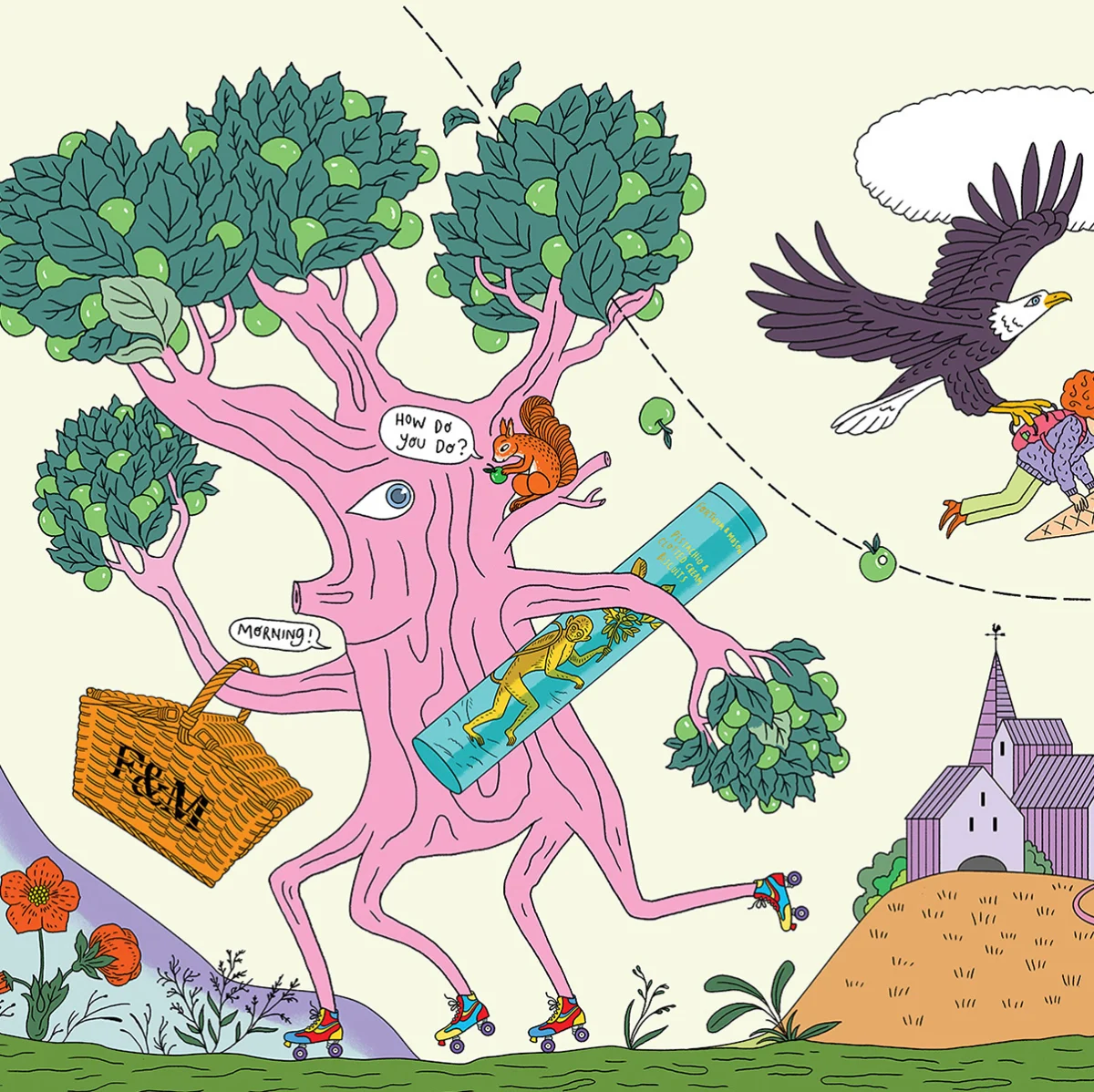
In a bold move to modernize its aesthetic while honoring its whimsical roots, Fortnum & Mason has unveiled a total reimagining of The Parlour. The space has been transformed into an immersive, surrealist landscape by the acclaimed illustrator Jonathan Burton. Moving beyond mere decoration, Burton has created a narrative-driven environment titled "Surreally Nice To Meet You," where hidden details and playful storytelling invite patrons into a world that defies the conventional laws of nature and hospitality.
Main Facts: The Artistic Overhaul of an Iconic Space
The transformation of The Parlour represents a significant shift in how luxury heritage brands approach interior design. Rather than opting for traditional Victorian motifs or minimalist modernism, Fortnum & Mason commissioned Jonathan Burton to create a 360-degree illustrated experience.
Burton, an illustrator celebrated for his vintage-inspired color palettes and intricate world-building, has utilized the walls of the restaurant as a sprawling canvas. The resulting artwork is a pastel-hued dreamscape characterized by:
- Surrealist Characters: The landscape is populated by bizarre yet charming entities, including a giant pink tree on roller skates navigating a mountain range and a flying caterpillar that undergoes a mid-air metamorphosis into a butterfly.
- Immersive Storytelling: Unlike traditional murals that act as a backdrop, Burton’s work is designed to be "read" by the diners. The characters interact with the architecture of the room, creating a sense of movement and discovery.
- A Signature Palette: Utilizing a soft, sophisticated color scheme, the artwork maintains the "Eau de Nil" elegance associated with the Fortnum & Mason brand while introducing vibrant, candy-colored accents that reflect the playful nature of a dessert parlor.
- The Concept of "Non-Literal" Design: Burton intentionally avoided depicting people eating or large dining tables—motifs he described as "too on the nose." Instead, the focus is on the emotional resonance of the space, evoking a sense of wonder that mirrors the indulgence of the menu.
Chronology: From Heritage Brand to Surrealist Canvas
The evolution of The Parlour from a traditional tea room to an avant-garde art installation followed a meticulous creative process that began with a desire to refresh the brand’s visual identity without alienating its loyal, multi-generational customer base.
Phase 1: The Commission and Conceptualization
The project began when Fortnum & Mason’s creative directors sought an artist who could bridge the gap between "Old World" London and contemporary illustration. Jonathan Burton, whose previous portfolio includes high-stakes collaborations with Hermès, The Ritz, and The Folio Society, was selected for his ability to weave complex narratives into single images.
During the initial briefing, the focus was on the "experience" of The Parlour. The goal was to move away from the static, often stuffy atmosphere of traditional luxury dining and toward something more dynamic and "Instagrammable," albeit with a sophisticated, hand-crafted edge.
Phase 2: Design and Iteration
Burton’s process began with sketches that focused on character development. He sought to create a "spark of an idea" by composing characters in unexpected ways. This phase involved balancing the surreal elements with the physical constraints of the room—ensuring that the artwork complemented the furniture, lighting, and the flow of service.
Burton noted that the breakthrough occurred when he stopped thinking about the room as a restaurant and started thinking of it as a storybook. By removing the "literal" elements of dining, he opened the door for a more whimsical, imaginative landscape.
Phase 3: Implementation and Unveiling
The final artwork was translated into large-scale wall coverings and integrated into the physical space. The installation was timed to coincide with a broader push by Fortnum & Mason to revitalize its Piccadilly flagship, ensuring that The Parlour remained a "must-visit" destination for both international tourists and local Londoners.
Supporting Data: The Illustrator’s Pedigree and Brand Context
The choice of Jonathan Burton is a strategic one, backed by his extensive history in the luxury sector. His work for The Folio Society—specifically his illustrations for classic literature—demonstrates a mastery of tone and detail that aligns with Fortnum & Mason’s "storytelling" brand identity.
The Rise of "Retailtainment"
Data from the luxury retail sector suggests that "experience-led" design is no longer optional. According to recent market analysis, high-end consumers are increasingly spending on "moments" rather than just "goods."

- 73% of luxury consumers report that the atmosphere and aesthetic of a retail space significantly influence their purchasing decisions.
- Social Media Impact: Visual-first platforms like Instagram and TikTok have turned interior design into a primary marketing tool. A "surreal" environment like Burton’s Parlour provides the perfect backdrop for user-generated content, effectively turning every diner into a brand ambassador.
Fortnum & Mason’s Illustrative History
Fortnum & Mason has a long-standing relationship with the arts. From their iconic hampers to their seasonal window displays, the brand has historically employed artists to maintain a sense of "English Eccentricity." Burton’s work follows in the footsteps of Edward Bawden and other mid-century illustrators who defined the brand’s visual wit.
Official Responses: The Creative Philosophy
In a discussion with Creative Review (CR), Jonathan Burton elaborated on the philosophy behind the redesign. He emphasized the importance of creating a space that felt "fully immersive" rather than just a collection of "pictures on the wall."
"I knew I didn’t want to have people eating or show a big table; that felt too on the nose," Burton explained to CR. "As soon as I started to draw characters and compose them together, a spark of an idea happened."
This "spark" is what defines the new Parlour. By moving away from the literal, Burton has tapped into a more psychological form of hospitality—one where the environment stimulates the imagination just as the food stimulates the palate.
Representatives from Fortnum & Mason have echoed this sentiment, suggesting that the goal was to create a "joyous escape" from the bustle of Piccadilly. The brand aims to provide a "multi-sensory" experience where the visual narrative of the walls matches the artisanal quality of the ice cream and tea served at the tables.
Implications: The Future of Heritage Branding and Interior Design
The successful reimagining of The Parlour carries several implications for the future of luxury retail and interior design in metropolitan hubs.
1. The Death of the "White Box"
The trend toward maximalism and immersive illustration suggests that the era of minimalist, "safe" luxury design may be waning. Brands are now looking for "personality" and "soul," which can only be achieved through bespoke artistic commissions. Burton’s work proves that even a 300-year-old brand can be avant-garde without losing its heritage.
2. Illustration as Architecture
Burton’s approach treats illustration not as an accessory, but as a fundamental architectural element. The "Surreally Nice To Meet You" landscape changes the perceived dimensions of the room, using characters and perspectives to lead the eye and create a sense of depth. This suggests a future where illustrators will work more closely with interior architects from the earliest stages of a project.
3. The Emotional Economy
By focusing on "whimsy" and "surrealism," Fortnum & Mason is targeting the emotional well-being of its customers. In a post-pandemic world, the desire for "escapism" is at an all-time high. The Parlour offers a safe, beautiful space to indulge in fantasy, making it more than just a place to eat—it is a sanctuary of creativity.
4. Setting a Benchmark for Piccadilly
As Piccadilly continues to evolve as a luxury hub, the new Parlour sets a high bar for neighboring establishments. It challenges other heritage brands to take creative risks and to view their physical spaces as evolving galleries rather than static museums.
In conclusion, Jonathan Burton’s transformation of The Parlour at Fortnum & Mason is a masterclass in brand evolution. It honors the past by embracing the eccentricities of British culture while looking firmly toward a future where art and commerce are inextricably linked. For the visitor, it offers something rare in the modern world: a genuine sense of surprise and a reminder that, in the right hands, even a trip for ice cream can become a journey through a surreal and beautiful world.



Leave a Comment