"After Dark, My Sweet": A Bleak Noir Gem Shines Bright in the Shadow of 1990’s Hardboiled Renaissance
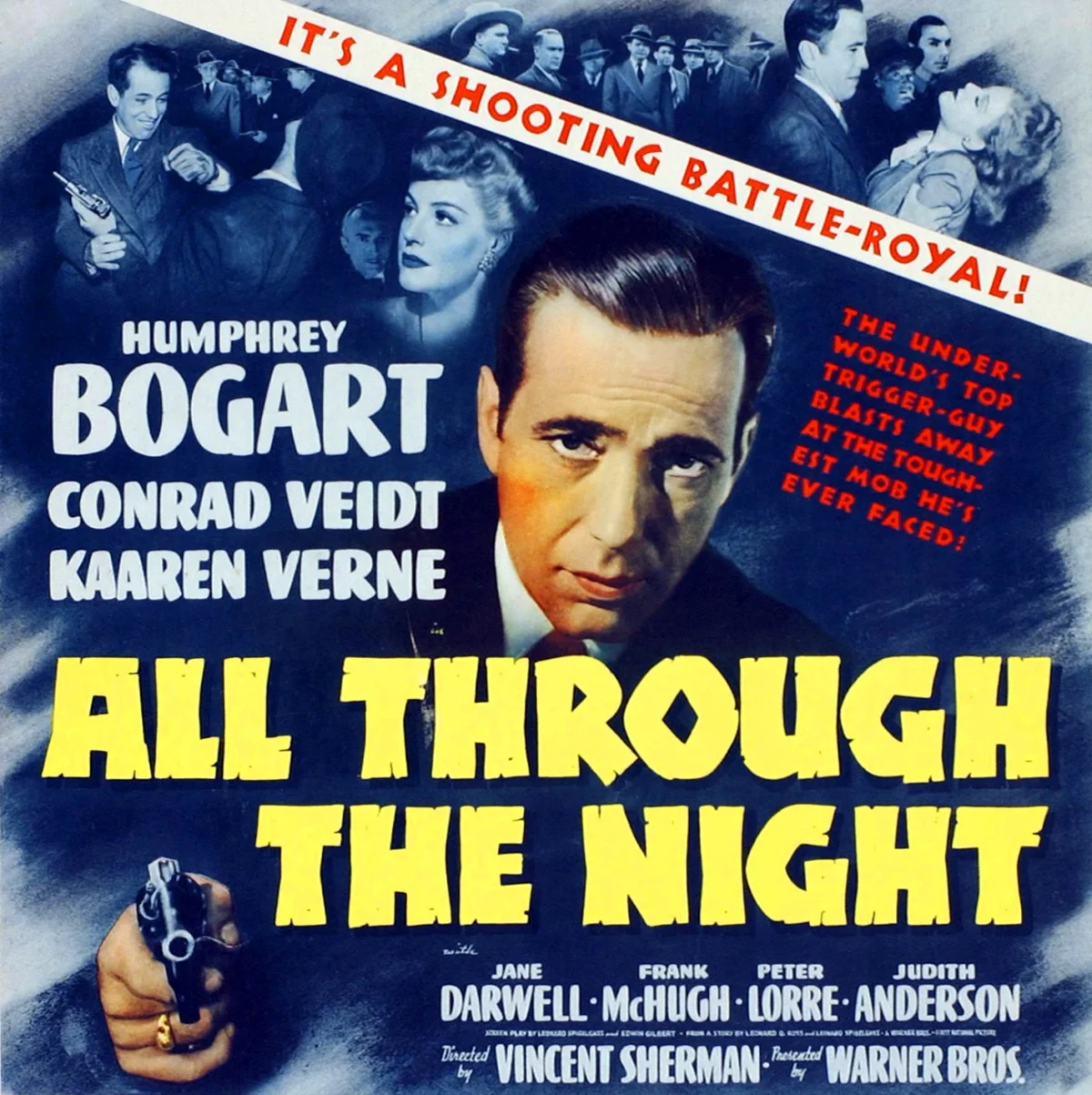
"You’re the second guy I’ve met within hours who seems to think a gat in the hand means a world by the tail."
— Phillip Marlowe in Raymond Chandler’s The Big Sleep
The year 1990 was, by many measures, a surprisingly robust period for the hardboiled and Neo-Noir genres on the big screen. Amidst a diverse cinematic landscape, several films emerged that either consciously echoed the grim fatalism of classic Noir or reinterpreted its tropes for a contemporary audience. While blockbusters dominated the box office, a distinct current of darker, more morally ambiguous storytelling captivated critics and a discerning segment of moviegoers. Yet, even within this resurgence, some genuine masterpieces, like James Foley’s adaptation of Jim Thompson’s After Dark, My Sweet, struggled to find their audience, destined instead for belated recognition as cult classics.
The Cinematic Landscape of 1990: A Year for Neo-Noir
The box office charts of 1990 reveal a fascinating interplay between commercial hits and critically acclaimed genre pieces. Pacific Heights, a psychological thriller starring Michael Keaton that leaned heavily into Noir suspense, secured a respectable 41st position in the year’s highest-grossing films. Following it at 83rd was Revenge, a passionate and violent tale based on a novella by the acclaimed James Harrison, which offered a potent blend of romance and hardboiled retribution. Both films, though distinct in their narratives, undeniably contributed to the Neo-Noir output of the year.
Further down the list, at 107th, was The Two Jakes, the long-anticipated and often-troubled sequel to Roman Polanski’s seminal 1974 Neo-Noir, Chinatown. Though it failed to capture the same critical or commercial heights as its predecessor, its very existence underscored Hollywood’s continued fascination with the genre. Close behind at 109th was Miami Blues, featuring Fred Ward as Charles Willeford’s eccentric and deeply flawed detective Hoke Moseley. This adaptation, celebrated by fans of Willeford’s distinctive literary voice, delivered a darkly humorous yet unsettling take on Floridian crime.
The Coen Brothers, already masters of their unique brand of cinematic eccentricity, contributed Miller’s Crossing to the 1990 lineup. Starring the impeccably cast Gabriel Byrne, this Prohibition-era gangster film, with its intricate plot and stylized violence, resonated deeply with hardboiled aficionados. For many, it ranked second only to The Maltese Falcon in its genre excellence, landing at 135th in box office performance. Rounding out the significant Noir offerings was a remake of the classic Humphrey Bogart flick, Desperate Hours, with Mickey Rourke delivering a commendable performance that further cemented the genre’s enduring appeal, albeit at 155th on the financial ladder.
"A Gat in the Hand" and the Enigmatic "After Dark, My Sweet"
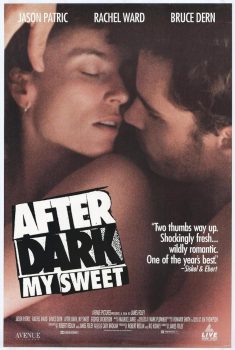
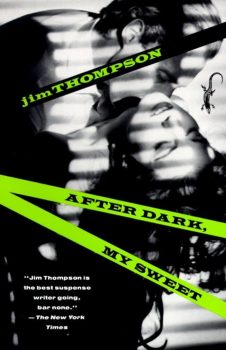
Yet, it is at 157th, almost an afterthought in the year’s cinematic accounting, that we discover what many consider to be an unheralded gem: After Dark, My Sweet. This film, a masterfully crafted adaptation of Jim Thompson’s chilling 1955 novel, sadly failed to recoup even half of its modest $6.5 million budget. Its commercial failure, however, belies its profound artistic merit and its status as a singularly effective piece of bleak, compelling Neo-Noir.
Thompson, a titan of American crime fiction, carved out a unique niche with his nihilistic worldview, unreliable narrators, and deeply disturbed characters. His novels are often brutal psychological dives into the minds of those teetering on the edge of sanity, driven by desperation, lust, and an inherent capacity for self-destruction. Adapting such dense, internal narratives for the screen is a formidable challenge, one that director and co-writer James Foley met with remarkable fidelity and insight.
James Foley’s Vision: From Pop Videos to Bleak Noir
The journey of After Dark, My Sweet to the screen is inextricably linked to its director, James Foley, whose career path was, to say the least, varied. Foley had previously directed Sean Penn in the critically well-received Neo-Noir At Close Range (1986), a film that showcased his knack for dark, character-driven narratives. This success, however, was paradoxically linked to his then-wife Madonna’s burgeoning music career, as Foley also directed several of her iconic music videos. The subsequent cinematic venture, Who’s That Girl (1987), a Madonna vehicle, proved to be a critical and commercial misfire, the kind of professional setback that could easily derail a promising career.
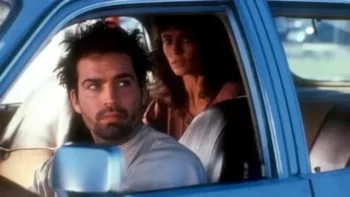
It was in the aftermath of this perceived failure that Foley sought a return to more personal, artistically driven filmmaking. He desired to make a "small film, his choice, his way," a project that felt like a deliberate act of artistic cleansing. His deep affection for the Noir genre naturally led him to Jim Thompson, a writer whose unflinching honesty about human depravity resonated with Foley’s own sensibilities. After Dark, My Sweet became that passion project, a testament to a director reclaiming his vision. The result is a lean, tight, and relentlessly dark film, clocking in at just under two hours, that delivers a consistent sense of dread and psychological tension.
Foley’s later career would continue its unpredictable trajectory. He directed the acclaimed 1992 adaptation of David Mamet’s Glengarry Glen Ross, a sharp, dialogue-driven drama that showcased his ability to handle complex character studies. However, his most recent films, the final two installments of the Fifty Shades franchise, represent a stark contrast to the gritty realism of his earlier work. James Foley’s passing last year from brain cancer left a void, particularly for those who admired his profound understanding and nuanced execution of the Noir genre, leaving one to wonder what other dark masterpieces he might have gifted us.
Character and Performance: A Trio in the Shadows
At the heart of After Dark, My Sweet are three exceptional performances that bring Thompson’s unsettling vision to life. Jason Patric stars as Kevin "Kid" Collins, a former boxer who escapes from a mental institution. His portrayal is a delicate balance of physical prowess, childlike naiveté, and simmering psychosis, making him an unpredictable and deeply unsettling protagonist. Collins’s journey is one of misguided intentions and a desperate yearning for connection, constantly undermining his own fragile grasp on reality.
Rachel Ward delivers a truly transformative, tour de force performance as Fay Anderson, a cynical widow whose life is a haze of alcohol and shattered dreams. Ward imbues Fay with a captivating blend of vulnerability, manipulation, and weary resignation. Her character, even more of a heavy drinker in Thompson’s novel, becomes the alluring, dangerous center of the trio, a femme fatale whose motives are as murky as the desert dust. Bruce Dern, as Uncle Bud, Fay’s shady acquaintance and the mastermind behind a kidnapping scheme, completes the unholy trinity. Dern, a veteran actor known for his unsettling portrayals, brings a sinister charm and calculating menace to the role, perfectly encapsulating the moral decay at the story’s core.
All three actors deliver what many consider to be among their finest performances, immersing themselves fully in the bleak, sun-baked landscape of the narrative. The film pulls the viewer into a vortex of bad decisions, constantly teasing the hope that someone might make the "right" choice before it’s too late, only to reinforce Thompson’s pervasive theme of self-destruction.
Jim Thompson’s Dark Legacy on Screen
Jim Thompson’s literary universe is characterized by its unsparing depiction of the human condition, particularly its darker impulses. His characters are often deeply flawed, morally compromised individuals caught in spirals of their own making. The "bleakness" of his writing is not merely a stylistic choice but a philosophical stance, questioning the very notion of heroism or redemption. It’s often a "safe bet" that a Thompson protagonist will not "make it," yet the inherent lure of his books lies in the agonizing suspense of watching them try.
After Dark, My Sweet faithfully translates this essence to the screen. The tension is palpable from beginning to end, with the script adhering remarkably closely to the novel’s structure and tone. For those familiar with other Thompson adaptations, such as Sam Peckinpah’s The Getaway (1972) or Stephen Frears’s The Grifters (1990 – another excellent Noir from the same year), the distinct flavor of his work is immediately recognizable. Films like The Killer Inside Me (adapted in 1976 and 2010) further exemplify the profoundly dark psychological depths Thompson was willing to plumb. After Dark, My Sweet stands as a testament to the fact that, when handled with care and respect for the source material, Thompson’s challenging narratives can yield powerful cinematic experiences.
A Cult Classic’s Enduring Appeal
Despite its initial commercial indifference, After Dark, My Sweet has steadily garnered critical acclaim and a devoted cult following over the years. Its failure at the box office can be attributed to several factors: a challenging subject matter, a relatively unknown cast at the time, and perhaps a lack of mainstream marketing push against flashier, more accessible thrillers. However, its artistic integrity, the strength of its performances, and Foley’s taut direction have ensured its enduring legacy.
It’s a "little movie" in scope, unburdened by glitzy production values (unlike, for instance, the more polished The Grifters, which also found its audience in 1990). Instead, it’s lean, tight, and focused, a pure distillation of Neo-Noir. This was a film born of a talented director’s admiration for a specific writer and a profound love for a genre, a million miles away from the commercial demands of pop-star vehicles. For viewers who appreciate dark, psychologically intense dramas that don’t shy away from the grittier aspects of humanity, After Dark, My Sweet is an essential watch, a stark reminder of the hidden treasures that often lie just beneath the surface of mainstream cinema.
About the Contributor: Bob Byrne
Bob Byrne is a respected voice in the world of hardboiled fiction and film criticism. His popular "A (Black) Gat in the Hand" series, which debuted on Black Gate in 2018 and has returned every summer since, consistently delves into the rich history of the genre, exploring iconic characters, celebrated authors, and critically examining both renowned and overlooked works. Byrne’s "The Public Life of Sherlock Holmes" column ran from 2014 through 2017, and he irregularly posts on Rex Stout’s Nero Wolfe. He is a member of the Praed Street Irregulars and founded www.SolarPons.com, the only website dedicated to the "Sherlock Holmes of Praed Street."
Byrne organized Black Gate’s award-nominated "Discovering Robert E. Howard" series, as well as the award-winning "Hither Came Conan" series, which has become a definitive guide to the iconic character. He also organized 2023’s "Talking Tolkien." His contributions extend to fiction, with stories appearing in The MX Book of New Sherlock Holmes Stories (Parts III, IV, V, VI, XXI, and XXXIII). He has also penned introductions for Steeger Books and his work has been featured in various magazines, including Black Mask, Sherlock Holmes Mystery Magazine, The Strand Magazine, and Sherlock Magazine. His insights and enthusiasm for the genre can also be experienced on Jason Waltz’s "24? in 42?" podcast.
Further Reading from "A (Black) Gat in the Hand"
For readers interested in delving deeper into the expansive world of hardboiled and Noir cinema, Bob Byrne’s "A (Black) Gat in the Hand" series offers a rich archive of critical explorations. A selection of recent contributions includes:
Prior Posts in A (Black) Gat in the Hand – 2026 (5)
- Ten Things I Think I Think (Gat Edition)
- Rory Gallagher & The Continental Op (again)
- Spider-Noir
- Elliott Gould Reads Chandler
- All My Steeger Books Intros
Prior Posts in A (Black) Gat in the Hand – 2025 (12)
- Will Murray on Dash(iell Hammet) and (Lester) Dent
- Shelfie – Dashiell Hammett
- Windy City Pulp & Paper Fest – 2025
- Will Murray on Who was N.V. Romero?
- Conan – The Phoenix in the Sword in Weird Tales
- More of Robert E. Howard’s Kirby O’Donnell
- More Weird Menace from Robert E. Howard – Conrad and Kirowan
- Hardboiled Gaming- LA Noire
- Western Noir: Hell on Wheels
- T.T. Flynn’s Mr Maddox
- Dashiell Hammettt’s The Scorched Face (my intro)
- Will Murray on Raymond Chandler’s Other Lost Stories?
Prior Posts in A (Black) Gat in the Hand – 2024 Series (11)
- Will Murray on Other Lost Raymond Chandler Stories?
- Will Murray on Dashiell Hammett’s Elusive Glass Key
- Ya Gotta Ask – Reprise
- Rex Stout’s “The Mother of Invention”
- Dime Detective, August, 1941
- John D. MacDonald’s “Ring Around the Readhead”
- Harboiled Manila – Raoul Whitfield’s Jo Gar
- 7 Upcoming A (Black) Gat in the Hand Attractions
- Paul Cain’s Fast One (my intro)
- Dashiell Hammett – The Girl with the Silver Eyes (my intro)
- Richard Demming’s Manville Moon
- More Thrilling Adventures from REH
Prior Posts in A (Black) Gat in the Hand – 2023 Series (15)
- Back Down those Mean Streets in 2023
- Will Murray on Hammett Didn’t Write “The Diamond Wager”
- Dashiell Hammett – ZigZags of Treachery (my intro)
- Ten Pulp Things I Think I Think
- Evan Lewis on Cleve Adams
- T,T, Flynn’s Mike & Trixie (The ‘Lost Intro’)
- John Bullard on REH’s Rough and Ready Clowns of the West – Part I (Breckenridge Elkins)
- John Bullard on REH’s Rough and Ready Clowns of the West – Part II
- William Patrick Murray on Supernatural Westerns, and Crossing Genres
- Erle Stanley Gardner’s ‘Getting Away With Murder (And ‘A Black (Gat)’ turns 100!)
- James Reasoner on Robert E. Howard’s Trail Towns of the old West
- Frank Schildiner on Solomon Kane
- Paul Bishop on The Fists of Robert E. Howard
- John Lawrence’s Cass Blue
- Dave Hardy on REH’s El Borak
Prior posts in A (Black) Gat in the Hand – 2022 Series (16)
- Asimov – Sci Fi Meets the Police Procedural
- The Adventures of Christopher London
- Weird Menace from Robert E. Howard
- [Spicy Adventures from Robert E. Howard](https://www.blackgate.com/2022/06/26/a-black-gat