
All Aboard the Logic Express: A Comprehensive Look at the Upcoming Puzzle Title ‘Train Jumble’
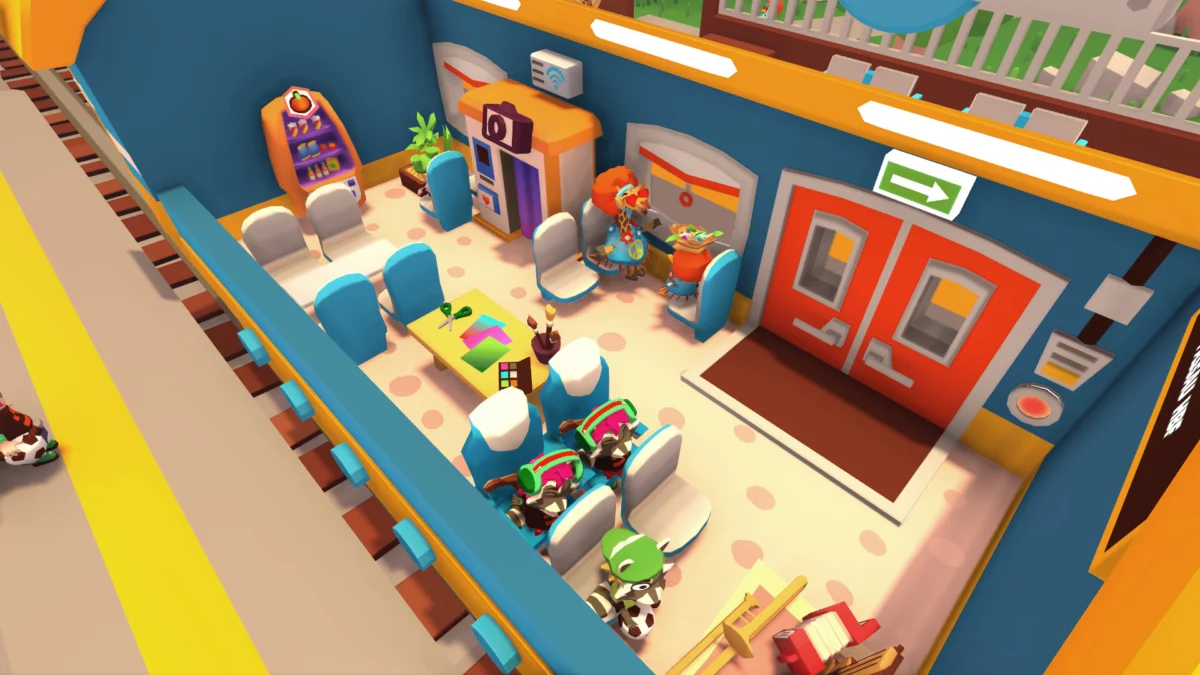
The landscape of indie puzzle games is undergoing a thematic shift, moving away from abstract shapes and toward "cozy" yet mechanically dense simulations of everyday—or slightly extraordinary—life. The latest title to capture the attention of the genre’s enthusiasts is Train Jumble, a vibrant, strategy-focused puzzle game that tasks players with orchestrating the perfect European locomotive journey. Revealed in depth during the Indie Fan Fest 2026, Train Jumble blends spatial awareness, predictive planning, and resource management into a package that is as charming as it is challenging.
Main Facts: The Core of the Jumble
At its heart, Train Jumble is a management puzzle game where the player acts as both the conductor and the interior designer of a bustling train. Developed with a focus on "predictive hospitality," the game challenges players to anticipate the needs of a diverse cast of humanoid animal passengers as they traverse the scenic routes of Europe.
The game operates on a loop of preparation, execution, and reinvestment. Players are not merely placing passengers in seats; they are curated an environment. This involves purchasing equipment from an in-game shop, arranging the layout of the carriages, and reacting in real-time to the shifting whims of the travelers. Unlike traditional "match-three" or static puzzles, Train Jumble utilizes a dynamic feedback system where the happiness of the passengers—and the subsequent financial success of the route—depends on the player’s ability to solve spatial "jumbles" under the pressure of a moving train.
Currently, the game is in active development, with a playable demo available on Steam. The title has already garnered praise for its distinct aesthetic, which pairs a bright, Saturday-morning-cartoon color palette with the logistical complexity of a transit simulator.
Chronology: The Lifecycle of a Journey
To understand the depth of Train Jumble, one must look at the chronological flow of a single "level" or route. The game does not simply drop players into a chaotic cabin; it requires a disciplined approach to the "before, during, and after" of rail travel.
Phase 1: Pre-Departure Logistics and the Shop
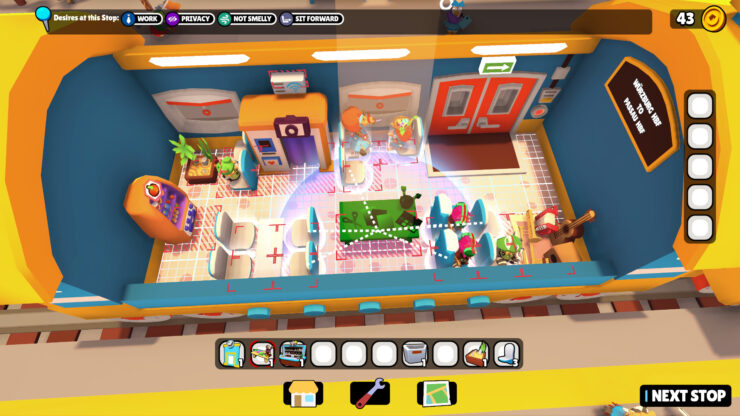
Before the whistle blows and the first passenger steps onto the platform, the player enters the planning phase. This is arguably the most critical stage of the game. Players are given a budget to spend in the shop, purchasing items that will be necessary for the upcoming leg of the journey. These items range from standard seating to more eccentric additions, such as crafting tables—a quirky inclusion that the developer suggests is a "staple of this world’s rail culture."
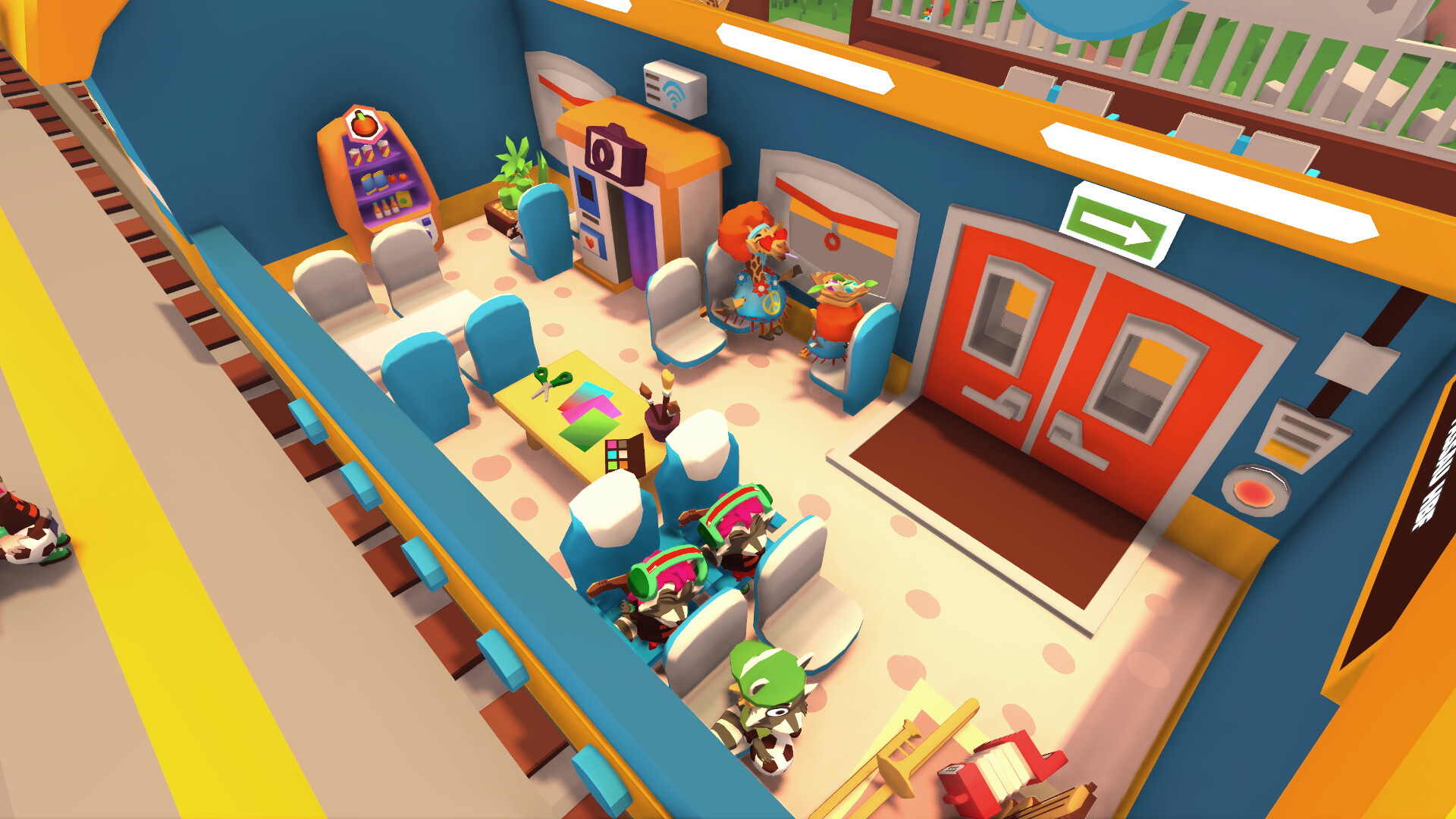
The strategy here lies in the "per-level" nature of these items. Equipment purchased for one route does not necessarily carry over to the next in a permanent fashion, meaning players must restock and reconsider their inventory at the start of every new journey. This prevents the game from becoming a "set it and forget it" simulator, forcing constant adaptation to new route requirements.
Phase 2: The Boarding Process
Once the train arrives at a stop, the puzzle begins in earnest. Potential passengers appear on the platform, each with icons floating above their heads. These icons serve as a "preview" of their requirements. A passenger might demand a window seat, while another might insist on being near a specific piece of equipment or away from a certain type of fellow traveler. The player must quickly assess the available space and determine if their current configuration can accommodate the incoming crowd.
Phase 3: The Transit and Real-Time Adjustments
As the train begins to move, the game shifts from static planning to active management. This is where the "Jumble" in the title truly manifests. Players can pick up and move passengers as the train is in motion.
The game provides immediate visual feedback during this process. When a player "grabs" a character, the seats within the carriage change color—typically glowing green for preferred spots and red for those the character would dislike. However, the puzzle is rarely as simple as "put the passenger in the green seat." Placing one character might satisfy their needs but simultaneously upset a neighbor who prefers solitude or dislikes that specific species.
Phase 4: Arrival and Financial Evaluation
The ultimate goal of each journey is to reach the final destination with a satisfied clientele. Happy passengers provide tips, which are the lifeblood of the player’s operation. These tips are not just "bonus points"; they are essential for covering the operational fees associated with each journey. Any surplus is then reinvested into better equipment, unlocking the ability to handle more challenging routes with more demanding passengers.
Supporting Data: Mechanics and Spatial Logic
The complexity of Train Jumble is hidden beneath its accessible exterior. Several key data points and mechanics define the difficulty curve of the game:
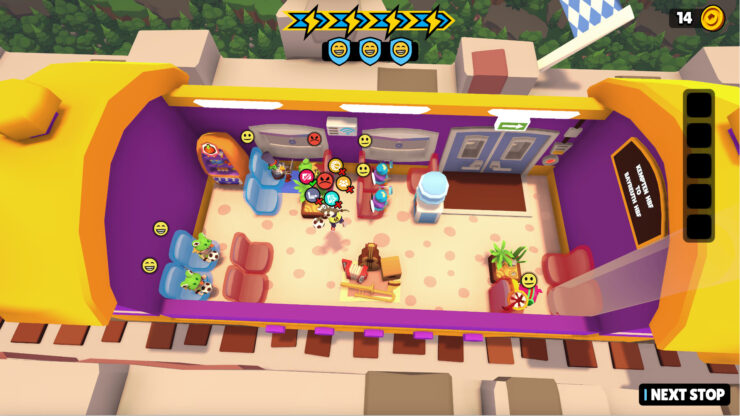
- Spatial Constraints: The carriages have a limited footprint. Larger items, like the aforementioned crafting tables or luxury booths, take up significant real estate. Players must balance the high tip potential of these items against the risk of not having enough room for the sheer volume of passengers needed to pay the base fees.
- Social Synergies: The humanoid animals are categorized into types. Some synergies are straightforward (e.g., families wanting to sit together), while others are more abstract. Learning these social "rules" is a core part of the game’s mastery.
- Route Branching: The game features a map of Europe where players can choose their paths. Some routes feature more frequent stops, requiring more "re-jumbling" of the cabin, while others are long hauls that test the player’s ability to maintain happiness over time.
- Visual UI Cues: The game uses a "mood meter" system represented by the icons above characters’ heads. These icons evolve in real-time. A passenger who starts happy might become frustrated if a "noisy" character is moved into the adjacent seat, requiring the player to constantly scan the cabin for emerging conflicts.
Official Responses and Developer Intent
While the developer (working under the banner of the Train Jumble team) has kept some of the later-game content under wraps, their presence at the Indie Fan Fest 2026 provided insight into the game’s philosophy.
According to promotional materials and developer commentary, the goal was to create a game that felt "organized yet chaotic." The inclusion of "strange" activities—such as passengers wanting to engage in heavy crafting or specific hobbies while on a moving train—was a conscious choice to lean into the whimsical nature of the world.
"We wanted to take the stress of a morning commute and turn it into something joyful and solvable," a representative noted during the overview trailer. "In the real world, you can’t just pick up a grumpy passenger and move them to another car to make everyone happy. In Train Jumble, you can. It’s about the satisfaction of seeing a cluttered, unhappy space transform into a perfectly tuned machine of comfort."
Journalists who have spent time with the demo, including Jupiter Hadley, have noted that while the placement of certain items feels "a little strange" or counter-intuitive at first, it contributes to the game’s unique identity. The "strangeness" is a mechanic in itself, forcing the player to think outside the box of traditional train layouts.
Implications: The Evolution of the "Cozy" Puzzle Genre
The emergence of Train Jumble speaks to a broader trend in the indie gaming industry. We are seeing a move toward "stressful-cozy" games—titles that use comforting aesthetics (animals, soft colors, low-stakes environments) but implement high-stakes logic puzzles.
The "Unpacking" Effect
Following the success of titles like Unpacking, there is a clear appetite for games that find the "fun" in organization. Train Jumble takes this a step further by adding a "live" element. Where Unpacking was a meditative, static experience, Train Jumble introduces the variable of human (or animal) emotion. The implication is that players are looking for more than just order; they are looking for the challenge of maintaining order in a changing environment.
Educational and Cognitive Benefits
From a cognitive standpoint, Train Jumble exercises several key functions:
- Working Memory: Remembering the needs of multiple passengers simultaneously.
- Spatial Reasoning: Fitting irregular "needs" into a fixed grid.
- Prioritization: Deciding which passengers to satisfy when a perfect outcome is impossible.
Market Position
By positioning the game on Steam with a demo and a focus on community wishlisting, the developers are utilizing a "bottom-up" marketing strategy. This allows the niche community of "cozy gamers" and "puzzle tacticians" to provide feedback during the development phase. The success of the demo suggests that the game’s quirky premise—Europe, animals, and crafting on trains—has hit a resonant chord with players who are tired of more traditional, sterile puzzle environments.
Conclusion
Train Jumble is more than just a colorful distraction; it is a sophisticated exercise in logistics and empathy. By asking players to care for their passengers while simultaneously managing a budget and a physical space, it captures the multi-faceted nature of service and strategy. As the game moves toward its full release, it stands as a testament to the creativity currently flourishing in the indie scene—where even a simple train ride can be turned into a "fantastic travel experience" through the power of a well-placed seat and a bit of clever jumbling.
For those interested in testing their own organizational skills, the Train Jumble demo remains available on Steam, offering a glimpse into a world where the journey is just as important—and just as complex—as the destination.




Leave a Comment