The Nostalgia Gambit: Analyzing the Rumors and Reality of League of Legends Classic
The landscape of modern gaming is increasingly defined by a paradox: as technology pushes the boundaries of graphical fidelity and complex systems, the player base is increasingly yearning for the simplicity of the past. This "Classic" movement, which began as a niche experiment, has evolved into a cornerstone strategy for the world’s largest developers. Following the footsteps of Jagex, Blizzard, and Epic Games, rumors are now reaching a fever pitch regarding the industry’s most dominant MOBA. Reports suggest that Riot Games is finally preparing to launch "League of Legends Classic," a move that could fundamentally reshape the trajectory of the 16-year-old title.
Main Facts: The Leaks That Shook the Rift
The speculation surrounding League of Legends Classic transitioned from wishful thinking to a credible report following a series of high-profile leaks from the Eastern competitive circuit. The primary catalysts for this news are two of the most influential figures in the game’s history: Kim ‘Doinb’ Tae-sang and Jian ‘Uzi’ Zihao.
Doinb, a former World Champion mid-laner known for his unconventional playstyle and his penchant for "compulsive" leaking, recently claimed during a livestream that a "Classic server" is slated for release as early as July. While Doinb has faced numerous fines from the LPL (League of Legends Pro League) for disclosing sensitive business information in the past, his track record for accuracy remains remarkably high. According to Doinb, the project is far enough along that he is already planning promotional content, stating, "I might bring back some WE [Weibo Gaming] players or some of the old veterans and invite them to stream together, just like the old days."
Corroborating these claims, legendary marksman Uzi acknowledged the existence of the project during his own broadcast. Although more reserved than Doinb, Uzi’s admission that he "can’t talk about this" but that it "should be coming soon" has been interpreted by the community as a de facto confirmation. In the world of esports, where Non-Disclosure Agreements (NDAs) are strictly enforced, such "non-denial denials" often carry significant weight.
Chronology: The Evolution of the ‘Classic’ Trend
To understand why a League of Legends Classic server is so significant, one must look at the historical trajectory of the "Classic" trend within the MMO and live-service sectors.
The Jagex Blueprint (2013)
The trend arguably found its genesis with Old School RuneScape (OSRS). In 2013, Jagex responded to massive player dissatisfaction regarding the "Evolution of Combat" update by releasing a version of the game based on a 2007 backup. What was initially intended to be a small nostalgia project eventually surpassed the "main" game in player count, proving that stripping away modern "bells and whistles" could lead to a more sustainable and beloved product.
The Blizzard Revolution (2019)
Blizzard Entertainment followed suit in 2019 with World of Warcraft Classic. This release was a direct response to the community’s frustration with the game’s increasing "retail" complexity and the perceived loss of social friction and world-building. The success of WoW Classic was monumental, providing a much-needed lifeline for the franchise during the critically panned Shadowlands expansion and the mediocre reception of Dragonflight.
The Battle Royale Pivot (2023–2025)
The trend moved beyond the RPG genre when Epic Games launched Fortnite OG in late 2023. By returning the map and loot pool to their original 2017 states, Epic saw record-breaking concurrent player numbers. Most recently, Blizzard announced Overwatch Classic for 2025, signaling that even hero shooters are not immune to the pull of the past.

Now, in June 2026, the rumors suggest Riot Games is ready to apply this proven formula to the MOBA genre.
Supporting Data: Evidence Beyond the Leaks
While the words of former pros carry weight, secondary evidence suggests that Riot Games has been laying the groundwork for a major announcement.
The Esfand Mystery
On June 6, Tim ‘Esfand’ Esfandiari, a streamer synonymous with the WoW Classic movement, posted about attending a "mystery event" at Riot Games HQ. The presence of a "Classic" icon at Riot’s campus is unlikely to be a coincidence. While some speculated he was there to test the upcoming champion, Locke, Esfand’s content history shows little overlap with new champion reveals, but a deep, specialized focus on "Classic" ecosystem launches.
The State of the Game
The drive for a Classic server often coincides with a period of "optimization fatigue" in the main game. League of Legends has undergone 16 years of balance refinements, resulting in a highly sterilized, hyper-competitive environment. The current meta, while balanced for professional play, often lacks the "wild west" energy of the early seasons. Data from community forums and social media sentiment analysis suggests a growing segment of the player base feels alienated by the "mobility creep" and the sheer complexity of modern champion kits.
Official Responses: Silence and Redirection
As of this writing, Riot Games has maintained a strict "no comment" policy regarding the Classic server leaks. The company’s official communication channels remain focused on the imminent release of Locke, the game’s newest champion.
Riot’s current priority is the "Locke" reveal, scheduled for June 9. It is common practice for major developers to suppress rumors of secondary projects to ensure that marketing efforts for new content are not diluted. However, the lack of a flat denial—especially given the specificity of Doinb’s claims—has led many analysts to believe that an announcement may be integrated into the upcoming "League Next" showcase.
Implications: Nostalgia vs. Innovation
The potential launch of League of Legends Classic raises profound questions about the future of game development and the industry’s reliance on nostalgia.
1. The Design Philosophy of Chaos
A Classic server would likely take players back to a specific era—perhaps the 2009 launch with 40 champions, or the "Golden Age" of Season 2 or 3. This would reintroduce mechanics that modern Riot would consider "broken":

- Twisted Fate’s Global Teleport: A time when his ‘Gate’ ability was a basic skill rather than an ultimate.
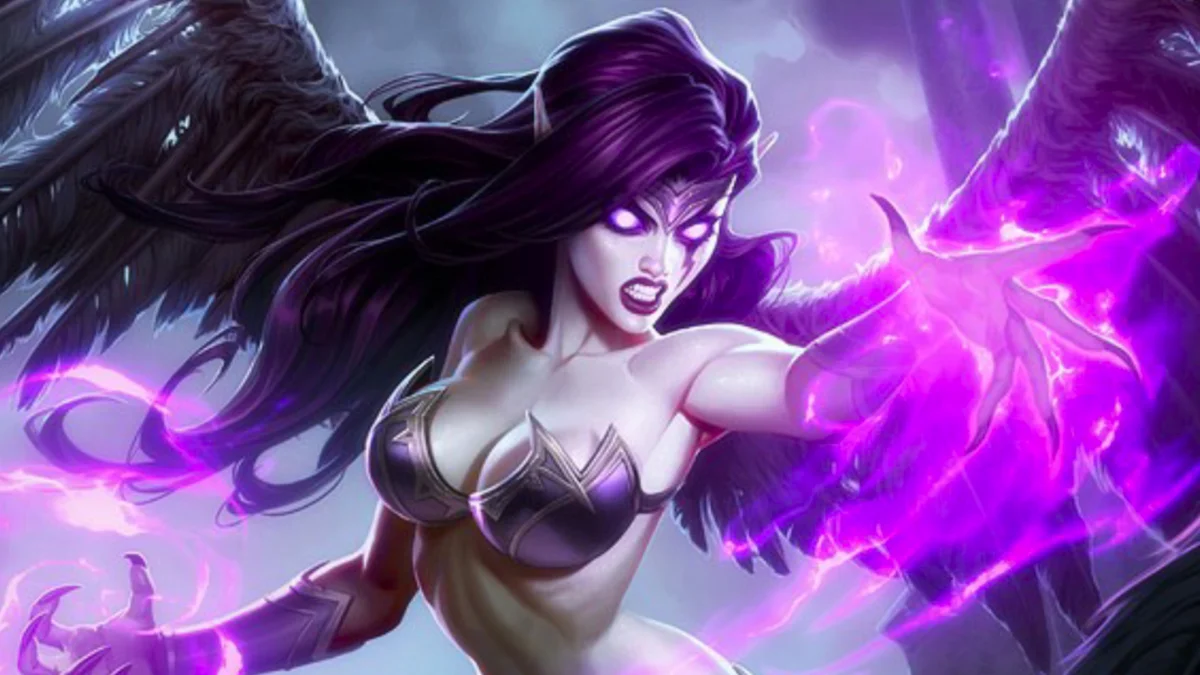
- Morgana’s Original Black Shield: A nearly impenetrable defense that lasted for durations unthinkable in the modern game.
- Itemization: The return of "Heart of Gold" and "Philosopher’s Stone," items that defined a slower, more tactical era of support play.
The appeal here isn’t just nostalgia; it is the "reckless balance" of the past. Players often find joy in the chaos of a game that hasn’t been perfectly tuned for a multi-million dollar esports circuit.
2. The Danger of Nostalgia-Bait
There is a legitimate concern that the industry is becoming over-reliant on remasters and "Classic" iterations. If every "new" gaming experience is simply a retread of an older one, original innovation may stagnate. As the industry leans into "reimagining" OG franchises for modern audiences, it risks becoming a museum of its own past achievements rather than a forge for new ones.
3. The "League Next" Horizon
The most optimistic view is that Riot will use LoL Classic as a "living laboratory." By observing what players enjoy about the older versions—the social interactions, the distinct champion identities, and the high-impact abilities—they can inform the development of "League Next."
Riot has already shown a willingness to experiment by "canonizing" bizarre community builds and loosening the reins on champion roles. If LoL Classic succeeds, it could embolden developers to take the kind of creative risks that defined the game’s early years—such as the infamous event where they "killed off" the champion Gangplank for lore reasons.
Conclusion
Whether League of Legends Classic launches next month or remains a tantalizing "what if," the fervor surrounding the rumor is a testament to the game’s enduring legacy. For many, it represents a chance to return to a time when the Rift felt mysterious and every match was an unpredictable brawl. For Riot Games, it represents a strategic pivot: an acknowledgment that to move forward, they must first understand why millions of players fell in love with the game in the first place.
If Doinb’s predictions hold true, July will mark the beginning of a new chapter for League of Legends—one written in the ink of the past. The industry will be watching closely to see if the king of MOBAs can capture lightning in a bottle for a second time.