Ancient Egypt’s Third Intermediate Period: A Reassessment of a Transformative Era
Cairo, Egypt – Often mischaracterized as a mere "dark age" of chaos and decline, the Third Intermediate Period (TIP) of ancient Egypt, spanning roughly from 1069 to 525 BCE, represents a pivotal and complex era of profound political fragmentation, foreign influence, and remarkable cultural resilience. Following the grandeur of the New Kingdom and preceding the Late Period, this epoch challenges traditional historical narratives, revealing a dynamic society that adapted and innovated even amidst disunity and external pressures.
The Shifting Sands of Power: Main Facts and Reinterpretations
Egyptologists of the 20th century categorized ancient Egyptian history into "Kingdoms" (periods of strong central government) and "Intermediate Periods" (times of disunity). While this framework offers clarity, it was not used by the ancient Egyptians themselves and has often led to a skewed perception of intermediate periods as inherently catastrophic. The Third Intermediate Period, in particular, has long suffered from this historical prejudice, being viewed as a mere epilogue to Egyptian glory, rather than a chapter in its own right.
Unlike the First and Second Intermediate Periods, which primarily saw internal tensions between competing Egyptian powers, the Third Intermediate Period was uniquely defined by significant foreign encroachment and outright invasions. This era witnessed the rise of Libyan dynasties, the formidable Kushite conquest, the devastating Assyrian incursions, and ultimately, the decisive Persian subjugation. This blend of internal fragmentation and external pressure has led some to label it "the era of foreign invasion."
However, modern scholarship offers a more nuanced perspective. While certainly a period of decentralized authority, it was not necessarily one of endemic strife. Instead, it was a time when Egyptian culture, though evolving, maintained its core identity. Art, religious practices, and burial rites continued to flourish, often with innovative expressions, demonstrating an underlying cultural continuity that defied political fragmentation. The absence of monumental building projects, often seen as a marker of decline, can be attributed more to a lack of centralized resources and organization than a cultural collapse.
A Chronicle of Disunity and Resilience: Chronology of the Third Intermediate Period
The Third Intermediate Period commenced with the twilight of the New Kingdom and the reign of Ramesses XI (c. 1107-1077 BCE). The power of the pharaohs had waned significantly throughout the 20th Dynasty, supplanted by the burgeoning influence of the high priests of Amun in Thebes. By the New Kingdom’s end, the god Amun himself, through his powerful priesthood, was effectively the ruler of Upper Egypt, eclipsing the pharaoh’s traditional role as divine intermediary.
The Rise of Dual Authority: The 21st Dynasty (c. 1077-943 BCE)
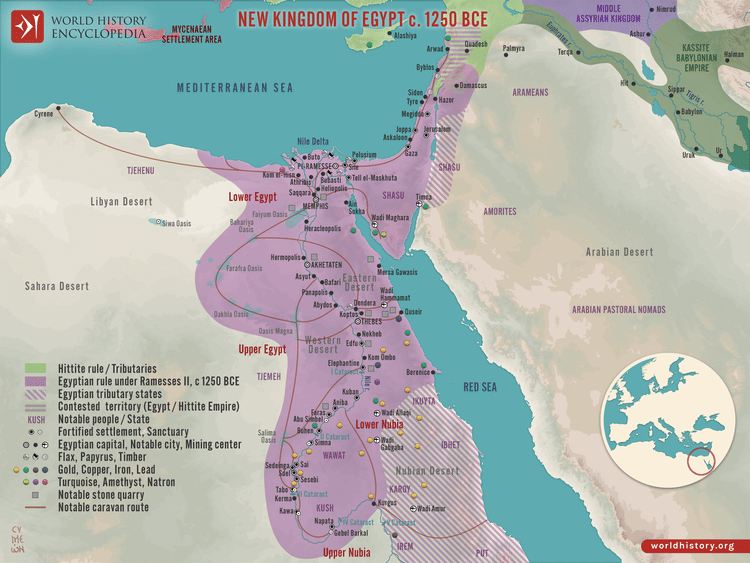
Upon Ramesses XI’s death, Smendes (c. 1077-1051 BCE), a governor from Lower Egypt, assumed power from Tanis, establishing the 21st Dynasty. Simultaneously, the high priests of Amun, led by figures like Herihor (c. 1080-1074 BCE), asserted their authority over Upper Egypt from Thebes. This established a dual power structure: a secular kingship in Tanis governing Lower Egypt, and a theocratic rule in Thebes overseeing Upper Egypt.
Contrary to earlier assumptions of inevitable conflict, this initial division often saw remarkable cooperation. Kings of Tanis and high priests of Thebes, frequently linked by familial ties, recognized each other’s legitimacy. Joint projects and policies were undertaken, as evidenced by inscriptions, and mutual respect for their respective spheres of influence prevailed. This period saw the integration of Libyan elements into the Egyptian ruling class, with many rulers of Egyptian names likely having Libyan origins, foreshadowing future dynasties.
The Libyan Ascendancy: The 22nd and 23rd Dynasties (c. 943-715 BCE)
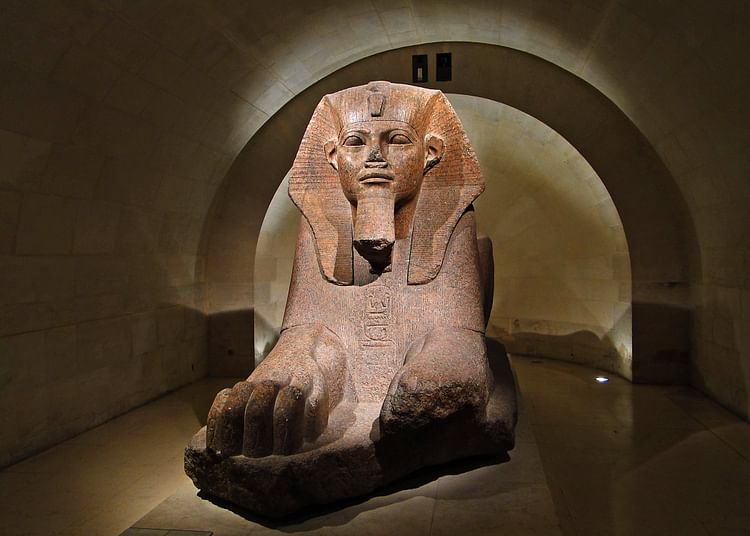
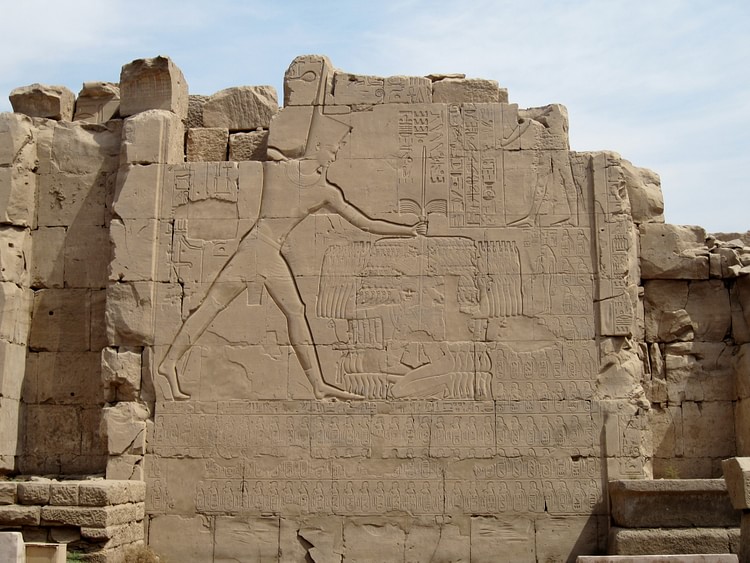
The 22nd Dynasty, founded by Shoshenq I (943-922 BCE), marked a significant shift as Libyan rulers openly governed under Libyan names. Shoshenq I briefly unified Egypt, embarking on ambitious military campaigns reminiscent of the New Kingdom. He is widely believed to be the biblical Shishak who sacked Jerusalem, an event recorded in the Bible and corroborated by his own inscriptions at Karnak, though Jerusalem itself isn’t explicitly named. His reign saw reforms in government and the priesthood, centralizing power by making priestly appointments royal rather than hereditary.
However, Shoshenq I’s achievements proved ephemeral. After Osorkon II (872-837 BCE), Egypt once again fragmented into multiple competing kingdoms, with rulers governing from Herakleopolis, Tanis, Sais, Memphis, Hermopolis, and Thebes. This deep political fracture left Egypt vulnerable to external threats.
The Kushite Unification and Assyrian Shadow: The 24th and 25th Dynasties (c. 747-656 BCE)
From the south, the Kingdom of Kush, deeply "Egyptianized" and admiring of Egyptian culture, observed Egypt’s growing weakness. King Kashta (c. 750 BCE) initiated a peaceful takeover of Upper Egypt by having his daughter, Amenirdis I, appointed God’s Wife of Amun – a position of immense political and religious authority. His son, Piye (747-721 BCE), then decisively conquered Lower Egypt, establishing Kushite dominance over a unified Egypt.
The Kushite pharaohs, including Shabaka (721-707 BCE) and Taharqa (c. 690-671 BCE), genuinely sought to preserve and revive Egyptian civilization. They undertook building projects, safeguarded ancient documents, and solidified borders. However, their intervention in Levantine affairs, supporting local rebellions against the burgeoning Assyrian Empire, inevitably drew the wrath of Assyria. Esarhaddon invaded in 671 BCE, capturing Taharqa’s family, and later Ashurbanipal conquered Egypt in 666 BCE, marking a brutal, if brief, Assyrian occupation.
The Saite Renaissance: The 26th Dynasty (c. 664-525 BCE)
The Assyrians, uninterested in long-term occupation, installed Necho I as a puppet king. Following Necho I’s death, his son Psammeticus I (c. 665-610 BCE) shrewdly played a long game. While outwardly adhering to Assyrian policies, he secretly plotted their expulsion. By 656 BCE, he had reasserted control over Thebes and, through a series of strategic maneuvers and military campaigns, successfully expelled the Assyrians, ushering in the Saite Period and the 26th Dynasty.
Psammeticus I and his successors – Necho II (610-595 BCE), Psammeticus II (595-589 BCE), Apries (589-570 BCE), and Amasis II (570-526 BCE) – presided over a remarkable period of revival. They implemented administrative reforms, stimulated the economy, expanded the military (including a formidable navy with Greek mercenaries), and launched significant building and restoration projects. This "Saite Renaissance" consciously evoked the glories of the Old and New Kingdoms, restoring much of Egypt’s lost prestige and prosperity. Necho II famously killed Josiah of Judah at the Battle of Megiddo, demonstrating renewed Egyptian military might.
However, the Saite dynasty’s resurgence was ultimately cut short by the rising power of Persia.
Supporting Data: Unpacking the Nuances of a Divided Age
The complexities of the Third Intermediate Period are best understood by examining its unique socio-political dynamics and the rich cultural tapestry that persisted.
The Tanis-Thebes Dynamic: A Model of Coexistence
The division of power between Tanis and Thebes was more sophisticated than simple rivalry. Tanis, the seat of secular rule, operated on a pragmatic basis, making decisions based on circumstance while still consulting the gods. In contrast, Thebes was a true theocracy, where the high priests of Amun consulted the god directly through oracles on all matters of governance. Scholar Marc van de Mieroop highlights that "The god made decisions of state in actual practice… Divine oracles had become important in the 18th Dynasty; in the Third Intermediate Period they formed the basis of governmental practice." (266)
The influential position of the God’s Wife of Amun further illustrates this intertwined political and religious landscape. Held by daughters of both Tanite kings and Theban high priests, this role, commanding immense wealth and prestige, acted as a crucial link and often a regent for the Theban region. This concordat-like arrangement allowed for a degree of stability and localized efficiency that a distant central government might have struggled to achieve.
Cultural Flourishing Amidst Fragmentation
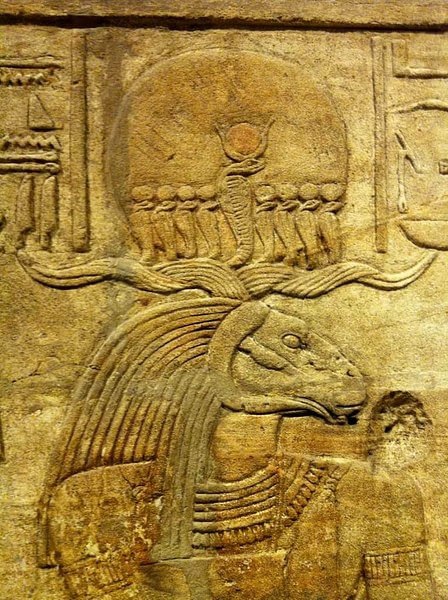
Despite the political fragmentation, Egyptian culture remained vibrant. Elite burial rites continued, producing exquisite funerary art. The period saw striking innovation in bronze, faience, silver, and gold craftsmanship, with intricate inscriptions, paintings, and statuary. While large-scale temple construction was limited due to resource allocation, religious practices evolved. The concept of the mammisi (birth house), dedicated to the worship of a child god born of powerful deities, gained prominence. The enduring cult of Isis, often paired with Osiris and Horus in a divine triad, saw its popularity grow, eventually influencing early Christianity in Rome.
Archaeological Challenges and Historical Gaps
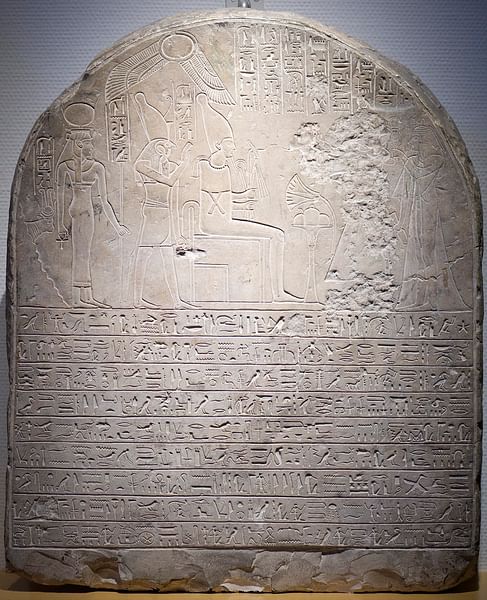
Reconstructing the Third Intermediate Period is notoriously difficult due to a scarcity of official records compared to earlier epochs. The traditional king lists are muddled, and comprehensive documentation of daily life, such as that from Deir el-Medina, largely ceased. Mieroop suggests that humid conditions in the Delta region, where many records from Tanis might have been stored, could have led to their decay. This archaeological lacuna contributes to the perception of the period as a "dark age" by making a detailed, unified chronology challenging to establish.
Official Responses: Redefining an Era
Early Egyptologists, heavily influenced by their own conceptions of centralized governance, often interpreted the decentralized nature of the Intermediate Periods as inherently negative, equating strong central rule with "good" and fragmented rule with "perilous chaos." The Third Intermediate Period received the harshest judgment due to its eventual culmination in foreign domination and the perceived lack of a "glorious" subsequent kingdom.
However, contemporary scholarship, as exemplified by Egyptologist John Taylor, challenges this simplistic view: "It is true that the period was marked by tensions over control of territory and resources, leading on occasion to conflicts, but violence was not endemic; the period as a whole was stable and represents far more than a temporary lapse from traditional pharaonic rule." (Shaw, 324)
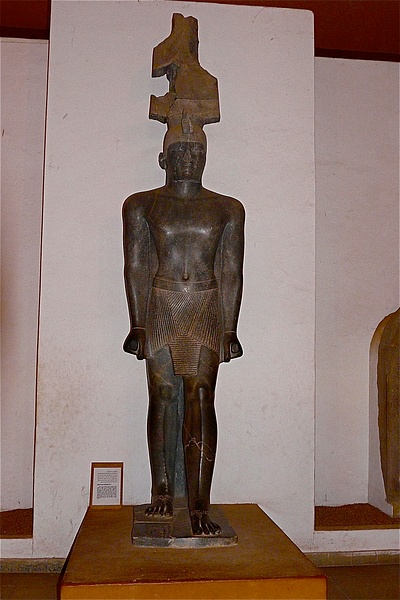
This re-evaluation emphasizes the remarkable continuity of Egyptian culture, even as political structures shifted. The adaptability demonstrated by Egyptian society, absorbing foreign elements (like the Libyans) and maintaining core traditions, speaks to a deeper resilience than previously acknowledged. The "dark age" narrative is increasingly giving way to an understanding of a period of profound transformation, where Egypt learned to navigate a world increasingly dominated by larger, more aggressive empires.
Implications: The Legacy of a Fragmented Greatness
The Third Intermediate Period ultimately set the stage for Egypt’s long struggle for autonomy that would characterize the Late Period. While the Saite Renaissance offered a final, brilliant flourish of indigenous rule, the underlying geopolitical realities had irrevocably changed. The loss of vital buffer zones, such as Judah and Israel after Shoshenq I’s campaigns, brought Egypt into direct confrontation with regional superpowers like Assyria and Persia, which possessed military and logistical capabilities far exceeding those of fragmented Egypt.
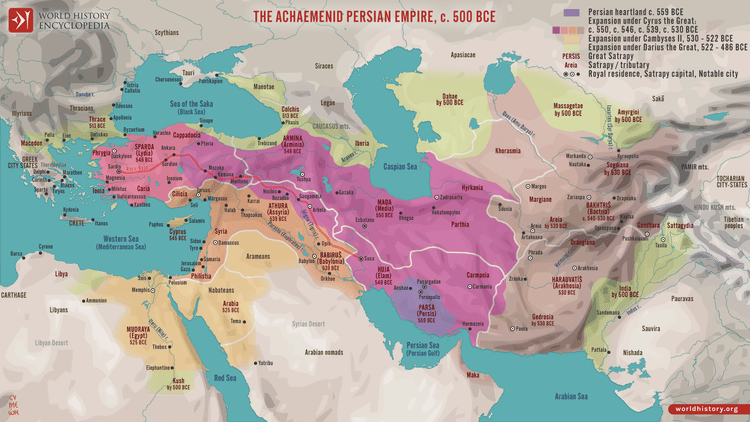
The Persian invasion of 525 BCE, often dramatically recounted with the legend of Cambyses II using cats at the Battle of Pelusium, marked the definitive end of the Third Intermediate Period and, for the most part, Egyptian independence. Cambyses II’s victory and the subsequent execution of Psammeticus III extinguished the last vestiges of the 26th Dynasty. Egypt became a satrapy of the vast Achaemenid Persian Empire, a status it would endure, with brief intervals of self-rule, until the arrival of Alexander the Great in 331 BCE, and subsequently the Greek Ptolemaic Dynasty and Roman annexation.
Despite this eventual loss of autonomy, the Third Intermediate Period should not be seen as a mere decline. It was an era of adaptation, cultural innovation, and the enduring power of Egyptian identity in the face of unprecedented challenges. It demonstrated that even without a single, unifying pharaoh, the complex tapestry of Egyptian religion, art, and social practices could persist and evolve, laying the groundwork for how Egyptian culture would selectively influence and be influenced by the successive foreign powers that came to rule it. The period stands as a testament to the profound depth and resilience of one of the world’s greatest ancient civilizations.