"Enlil in the E-Kur": Unveiling an Ancient Sumerian Masterpiece and its Enduring Echoes
Main Facts
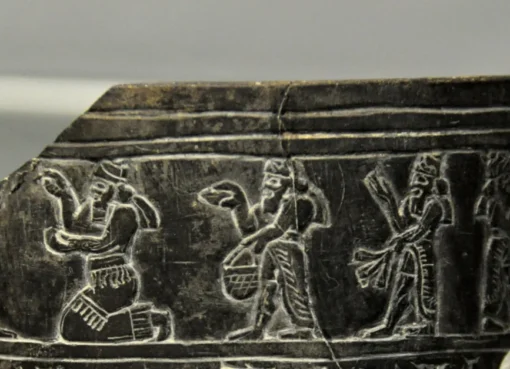
Circa 2000 BCE, in the heart of ancient Sumer, a powerful literary work emerged that would profoundly shape the religious and cultural landscape of Mesopotamia and, arguably, influence subsequent Abrahamic traditions. This seminal piece, known as Enlil in the E-Kur (also referred to as Enlil A, Hymn to Enlil, or Hymn to the E-kur), is a meticulously crafted Sumerian hymn dedicated to the sky god Enlil, his magnificent temple-ziggurat in Nippur—the E-Kur—and his divine consort, Ninlil. Far more than a simple ode, it meticulously details Enlil’s supreme authority, his role as a benevolent creator and preserver of cosmic order, and the unparalleled splendor of his earthly abode.
Regarded as one of the most significant works of Mesopotamian literature, Enlil in the E-Kur stands as a testament to the sophisticated theological and poetic traditions of its time. Its intricate narrative and profound theological statements depict Enlil in glowing terms, portraying him not merely as a deity of the air, but as the ultimate arbiter of fates and the very source of existence. Beyond its intrinsic value, scholars widely acknowledge its crucial influence on later religious texts, particularly books within the Bible such as the Psalms, Isaiah, the Gospels, and the Book of Revelation, suggesting a direct lineage of spiritual thought across millennia.
The Deity and His Domain: Enlil and the E-Kur
Enlil’s Evolving Pantheon Role
Enlil’s journey within the Mesopotamian pantheon is a compelling narrative of divine ascendancy. Initially revered as the Sumerian god of the air, son of An (Anu), the Lord of the Heavens, Enlil gradually eclipsed his father to become the paramount king of the gods. He solidified his position within a formidable divine triad alongside Anu and Enki, the god of wisdom. While some myths occasionally depict him as subordinate to Anu, Enki, or even his consort Ninlil, the overwhelming majority of ancient texts, including Enlil in the E-Kur, present him as the most powerful deity in the Mesopotamian pantheon. He was famously known as the keeper of the Tablets of Destiny, sacred artifacts that held the predetermined fates of both gods and humanity, underscoring his pivotal role as the creator and preserver of universal order. His worship spanned an extraordinary period, from approximately 2900 BCE to around 141 BCE, demonstrating his enduring centrality in Mesopotamian religious life.
Nippur: The Sacred City and the E-Kur
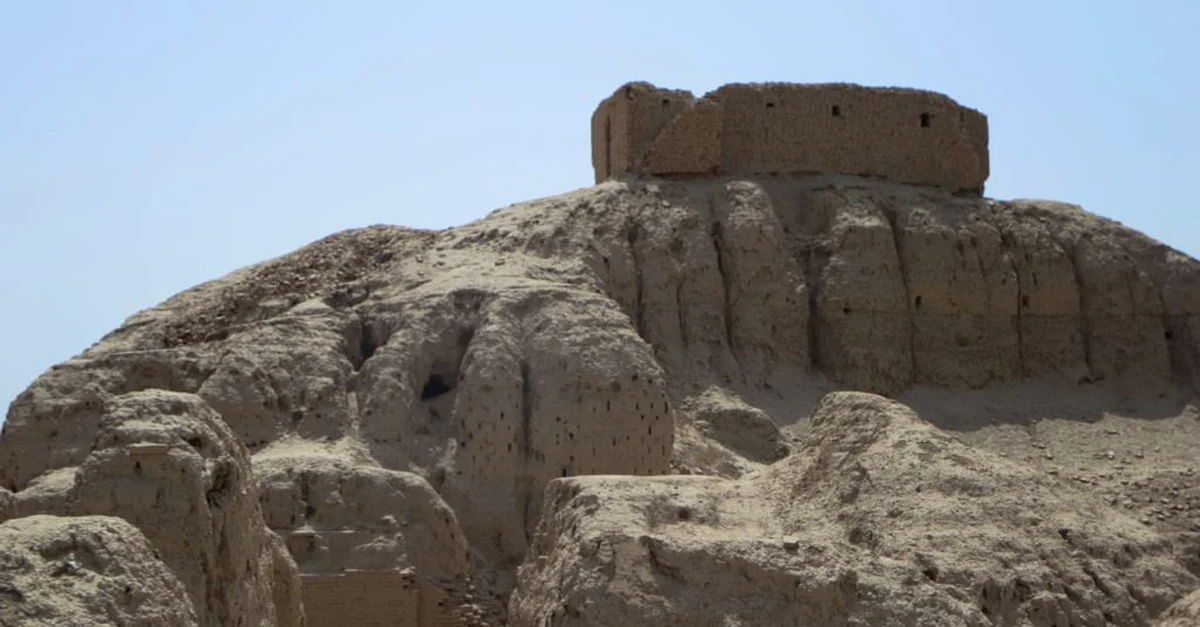
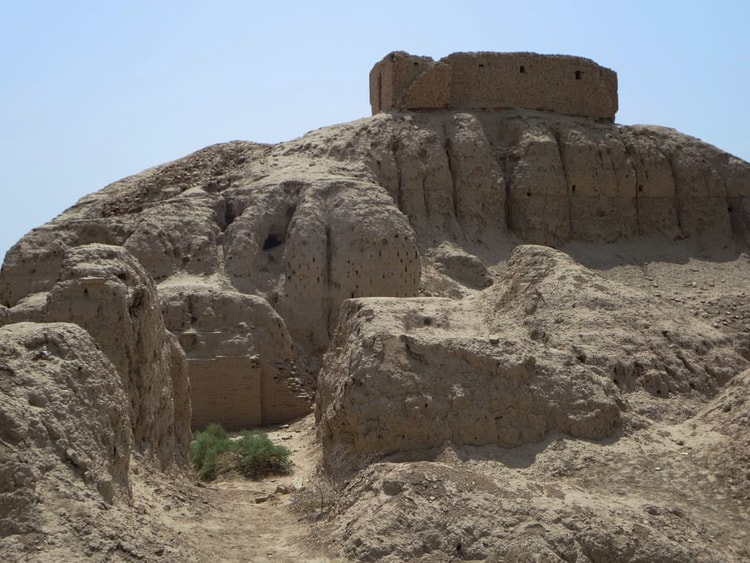
Nippur, the city where Enlil’s cult flourished, was not just any urban center; it was revered as a holy city, a spiritual nexus in ancient Sumer. The E-Kur, Enlil’s temple complex within Nippur, was arguably one of the most opulent and awe-inspiring architectural marvels of its era. This temple, often referred to as the "Mountain House" or "Dur-an-ki" (the "bond between heaven and earth"), was envisioned as the very point where the divine and earthly realms converged. Its towering ziggurat, a stepped pyramid, dominated the landscape, serving as a tangible symbol of Enlil’s connection to both the heavens and the earth.
The hymn itself paints a vivid picture of the E-Kur’s grandeur, describing its "terrible fearsomeness and radiance," its "brickwork [of] red gold," and its foundation of "lapis lazuli." This meticulous description was not merely decorative; it reinforced the temple’s sacred status and Enlil’s omnipotence. The E-Kur was not just a building; it was a cosmic anchor, a place where divine justice was meted out, where abundance flowed, and where the moral fabric of Sumerian society was upheld, making it an indispensable pilgrimage site and a focus of royal patronage for millennia.
A Tapestry of Praise: The Hymn’s Composition and Context
Chronicles of Royal Devotion
The widespread veneration of Enlil and the sustained importance of Nippur are evident in the actions of successive Mesopotamian monarchs. Throughout the Early Dynastic period (circa 2900 to circa 2350/2334 BCE), the Akkadian period (2350/2334-2154 BCE), and especially the Ur III period (circa 2112 to circa 2004 BCE), kings consistently made the construction, renovation, and restoration of Nippur’s sacred structures, particularly the E-Kur, a top priority. This royal patronage was a strategic move, as kings sought to legitimize their rule by claiming direct authority and divine favor from Enlil and Ninlil.
The Ur III period, a golden age of Sumerian revival, saw particularly fervent devotion to Nippur. Kings like Ur-Nammu (reign circa 2112-2094 BCE), the founder of the Third Dynasty of Ur, and his son Shulgi (reign 2094 to circa 2046 BCE), paid extraordinary attention to the city. Shulgi, a prolific patron of literature and religious works, is widely believed to have commissioned or at least overseen the composition of Enlil in the E-Kur, as similar hymns praising both the god and his temple date from his reign, including the celebrated poem Shulgi and Ninlil’s Barge. These royal endorsements ensured the hymn’s prominent place in public life and religious ceremonies, where it was almost certainly sung at festivals across ancient Mesopotamia in honor of Enlil.
Literary Pedigree: The Edubba Curriculum
The popularity and prestige of Enlil in the E-Kur are further attested by the sheer number of copies discovered at Nippur and other ancient sites. Its significance extended beyond religious festivals; it became an integral part of the curriculum in the edubba, the Mesopotamian scribal school. Specifically, it was included in the advanced course of study known as the Decad, a collection of ten literary works deemed essential for a student’s formal education. Placement in the Decad signified the hymn’s recognized literary merit, its theological depth, and its importance in shaping the minds of future scribes, administrators, and priests. Studying Enlil in the E-Kur meant grappling with complex poetic structures, rich metaphors, and profound religious concepts, preparing students for intellectual leadership within Sumerian society. Its inclusion ensured its meticulous preservation and dissemination for generations.

Deciphering the Past: Discovery and Translation
The journey of Enlil in the E-Kur from ancient cuneiform tablets to modern understanding is a testament to the perseverance of archaeologists and linguists. The tablets containing the hymn were discovered in fragments during archaeological excavations in the early 20th century. Piecing together these shattered remnants, often found in disarray across various sites, was a painstaking process, akin to assembling a vast jigsaw puzzle without a complete picture. The monumental task of translation followed, with the first scholarly renditions published between 1918 and 1928. These early translations unlocked a window into the Sumerian worldview, revealing the intricate details of their cosmology, moral codes, and religious devotion. Today, thanks to continued research and improved understanding of Sumerian language and culture, Enlil in the E-Kur remains one of the most studied and appreciated works of ancient Mesopotamian literature, offering invaluable insights into a civilization that laid many foundational stones of human culture.
Anatomy of a Divine Ode: Themes and Imagery
Enlil in the E-Kur is a masterful composition that weaves together theological doctrine, poetic imagery, and a profound sense of reverence. Scholar Jeremy Black provides a concise yet illuminating summary of its structure, noting the alternation between third-person descriptions and direct addresses to the deity. This dynamic interplay creates a sense of both objective truth and intimate devotion, engaging the audience on multiple levels.
The Majesty of Enlil: Righteousness, Radiance, and Fate
The hymn consistently emphasizes Enlil’s multifaceted greatness, depicting him as the ultimate source of order and justice. Dominant images throughout the poem include "righteousness (18-25), festivity (44-55), visual brilliance (65-73), awesomeness (74-83), fatefulness (100-108), and justice (139-155)." These themes are not merely abstract concepts but are vividly brought to life through descriptive passages.
For instance, the section on righteousness (lines 18-25) sternly declares the E-Kur as a place where "evil word[s]… deception, inimical speech, hostility, impropriety, ill-treatment, wickedness, wrongdoing, looking askance (?), violence, slandering, arrogance, licentious speech (?), egotism and boasting are abominations not tolerated within the city." This establishes the temple not just as a physical structure but as a moral sanctuary, reflecting Enlil’s unwavering commitment to purity and ethical conduct.
The "visual brilliance" of the E-Kur is glorified in lines like 65-73: "Its brickwork is red gold, its foundation is lapis lazuli. You made it glisten on high in Sumer as if it were the horns of a wild bull. It makes all the foreign countries tremble with fear." This imagery elevates the temple to a cosmic landmark, a radiant beacon of divine power. The "awesomeness" of Enlil is directly tied to his dwelling, as "Your presence spreads awesomeness over the E-kur, the shining temple, the lofty dwelling. Its fearsomeness and radiance reach up to heaven, its shadow stretches over all the foreign lands, and its crenellation reaches up to the midst of heaven" (lines 74-78). This hyperbolic praise underscores Enlil’s overwhelming power, extending his influence across the entire known world.
His role in "fatefulness" is explicit: "He alone is the prince of heaven, the dragon of the earth. The lofty god of the Anuna himself determines the fates. No god can look upon him" (lines 100-102). This highlights Enlil’s ultimate authority, an unchallengeable power that even other deities cannot fully comprehend or confront.
The Creator God: A World Without Enlil
One of the most extraordinary passages in Enlil in the E-Kur is a profound thought experiment, imagining a world devoid of the great god (lines 109-130). The poet concludes that "nothing at all would exist." This passage serves as the hymn’s most powerful theological statement regarding Enlil’s role as a creator and sustainer:
109-123: Without the Great Mountain Enlil, no city would be built, no settlement would be founded; no cow-pen would be built, no sheepfold would be established; no king would be elevated, no lord would be given birth; no high priest or priestess would perform extispicy; soldiers would have no generals or captains; no carp-filled waters would … the rivers at their peak; the carp would not … come straight up (?) from the sea, they would not dart about. The sea would not produce all its heavy treasure, no freshwater fish would lay eggs in the reedbeds, no bird of the sky would build nests in the spacious land; in the sky the thick clouds would not open their mouths; on the fields, dappled grain would not fill the arable lands, vegetation would not grow lushly on the plain; in the gardens, the spreading trees of the mountain would not yield fruits.
124-130: Without the Great Mountain, Enlil, Nintu would not kill, she would not strike dead; no cow would drop its calf in the cattle-pen, no ewe would bring forth … lamb in its sheepfold; the living creatures which multiply by themselves would not lie down in their …; the four-legged animals would not propagate, they would not mate.
This detailed vision of universal desolation without Enlil firmly establishes him as the ultimate source of life, order, governance, and abundance. Every aspect of existence, from human civilization and leadership to the natural world’s flora, fauna, and hydrological cycles, is attributed to his divine will. This passage articulates a comprehensive creation theology, positioning Enlil as the indispensable foundation of all reality.
The Faithful Shepherd and Prince of Heaven
Throughout the hymn, Enlil is bestowed with epithets that resonate deeply with later religious traditions. He is referred to as a "faithful shepherd" (line 93) for the "teeming multitudes" and the "prince of heaven" (line 100). These descriptions, particularly the imagery of the shepherd, have led scholars to draw compelling parallels with biblical texts. The most famous example is Psalm 23, which begins, "The Lord is my shepherd; I shall not want." The Sumerian concept of a divine shepherd guiding and protecting his flock—humanity—is a powerful thematic precursor that speaks to a shared human desire for divine care and provision. This continuity of imagery underscores the deep-rooted nature of these theological concepts in the ancient Near East.
Ninlil, The Esteemed Consort
The hymn concludes with a poignant tribute to Ninlil, Enlil’s holy consort, highlighting her noble character and her integral role in the divine order (lines 156-166):
156-166: You married Ninlil, the holy consort, whose words are of the heart, her of noble countenance in a holy ma garment, her of beautiful shape and limbs, the trustworthy lady of your choice. Covered with allure, the lady who knows what is fitting for the E-kur, whose words of advice are perfect, whose words bring comfort like fine oil for the heart, who shares the holy throne, the pure throne with you, she takes counsel and discusses matters with you. You decide the fates together at the place facing the sunrise. Ninlil, the lady of heaven and earth, the lady of all the lands, is honoured in the praise of the Great Mountain.
This passage not only praises Ninlil’s beauty and wisdom but also emphasizes her partnership with Enlil in "decid[ing] the fates together." This shared authority underscores the complementary nature of the divine couple, presenting a holistic view of cosmic governance. Her presence humanizes Enlil, showing him as part of a divine family unit, albeit one with immense power.
Enduring Echoes: Biblical Parallels and Legacy
From Cuneiform to Canon
The influence of Enlil in the E-Kur on later biblical texts is a significant area of scholarly discussion. While direct copying is rarely asserted, thematic, linguistic, and conceptual parallels are undeniable. The "faithful shepherd" imagery, as previously noted, finds a profound echo in Psalm 23. Beyond this, scholars suggest the hymn’s depiction of Enlil as a powerful, righteous, and all-encompassing creator god—who determines fates and whose word is immutable—prefigures attributes of Yahweh in various biblical books. Passages describing divine awesomeness, universal control, and the idea that without the deity, nothing could exist, resonate with sentiments found in parts of Isaiah (e.g., Isaiah 40), the Gospels (e.g., John 1:1-3 on creation through the divine word), and the apocalyptic visions of the Book of Revelation, which portray God as the ultimate sovereign and judge. This demonstrates a fascinating continuity of religious thought and poetic expression across different cultures and eras, where foundational ideas about divine power and cosmic order were refined and reinterpreted.
A Window into Sumerian Cosmology
Beyond its literary and theological impact, Enlil in the E-Kur offers an invaluable window into the Sumerian worldview. It reveals a society deeply attuned to divine authority, where cosmic order was intricately linked to moral behavior. The hymn’s emphasis on righteousness and justice within Nippur (lines 18-25) and its depiction of societal norms—such as "the younger brother honours the older brother and treats him with human dignity; people pay attention to a father’s word and submit themselves to his protection; the child behaves humbly and modestly towards his mother and attains a ripe old age" (lines 30-34)—provide crucial insights into the ethical framework and social hierarchy of ancient Sumer. The hymn articulates a holistic cosmology where the divine permeates every aspect of existence, from the highest heavens to the most mundane aspects of daily life, fostering a profound sense of dependence on and reverence for the gods.
Conclusion: A Timeless Testament
Enlil in the E-Kur stands as a monumental achievement of ancient Mesopotamian literature, a vibrant testament to the Sumerians’ sophisticated theological understanding and poetic prowess. Its central message, summed up in its concluding lines, asserts Enlil’s absolute supremacy: "Prominent one whose words are well established, whose command and support are things which are immutable, whose utterances take precedence, whose plans are firm words, Great Mountain, Father Enlil, your praise is sublime" (lines 167-171). This final burst of praise, notably directed solely at Enlil rather than the traditional concluding praise for Nisaba, the goddess of writing, serves to unequivocally emphasize the god’s unparalleled greatness.
The hymn’s meticulous praise of the E-Kur temple gains its profound meaning from the belief that Enlil himself resided there. As Jeremy Black aptly notes, "In Sumerian cosmology, Enlil’s sanctuary Dur-an-Ki was conceptualized as the bond between heaven and earth… Its great stepped tower, still prominent in the desert landscape today, must have been a dominant, awe-inspiring landmark in ancient times too." The architectural grandeur of the E-Kur was not merely for aesthetic appeal but was a physical manifestation of Enlil’s divine presence and power. The hymn, when recited or sung at festivals, would have functioned as a verbal mirror to this awe-inspiring structure, elevating the spirits of its audience and reinforcing their faith.
In an ancient world fraught with uncertainty, Enlil in the E-Kur served as a powerful reminder, much like the towering ziggurat itself, that a supreme deity was in control. It reassured the people that, whatever challenges or struggles they faced, their god, Enlil, was guiding them, ensuring universal order, and promising abundance. Its enduring legacy, from its intricate theological insights to its potential influence on some of the world’s most widely read religious texts, confirms its status not just as a historical artifact, but as a living document that continues to illuminate the depths of human spirituality and literary expression across the ages.