
B3DFramework Rises from the Ashes: A New Era for Open-Source Game Development
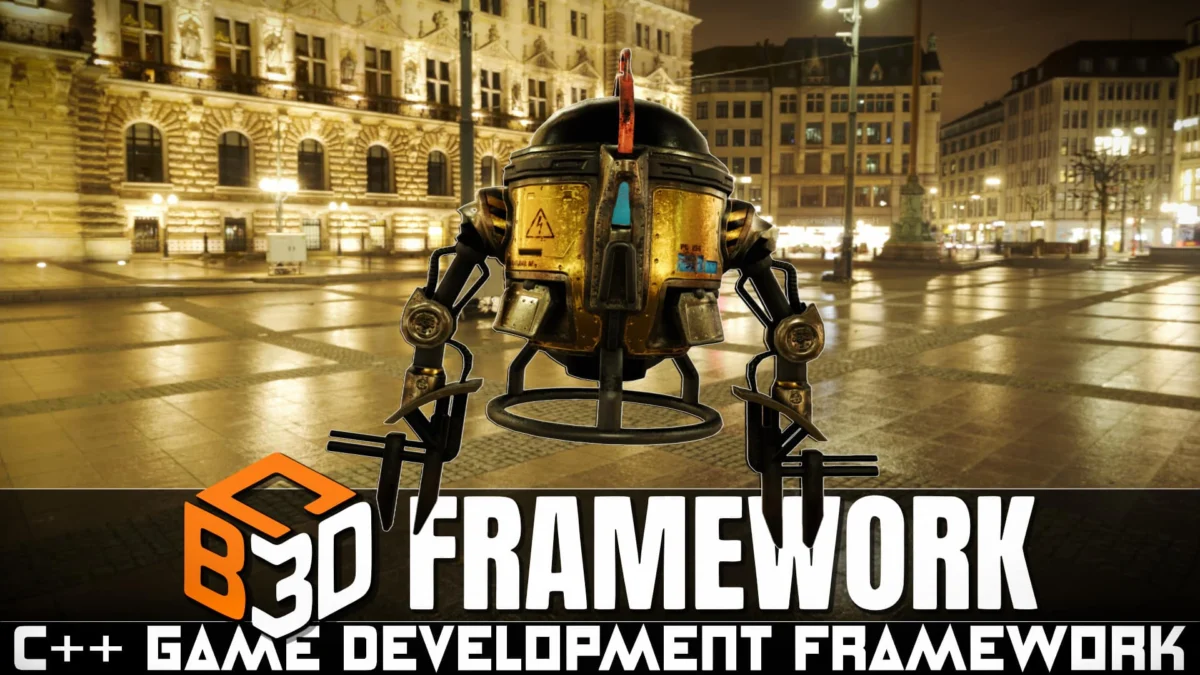
A powerful C++ game development framework, built upon the foundations of the once-promising Banshee Game Engine and its underlying bs::framework, has been resurrected and revitalized. B3DFramework emerges as a robust, feature-rich, and entirely open-source solution poised to empower independent developers and studios alike.
The world of game development is a dynamic landscape, constantly evolving with new tools and technologies. For a period, the open-source community eagerly watched the progress of the Banshee Game Engine and its foundational C++ framework, bs::framework. These projects, lauded for their potential and innovative approaches, abruptly ceased development, leaving a void and unanswered questions. Now, a new entity, B3DFramework, has taken up the mantle, breathing new life into the dormant codebase and promising a bright future for developers seeking a high-performance, flexible, and accessible game development platform.
This revival is not merely a continuation; it’s an evolution. B3DFramework aims to build upon the strengths of its predecessors while addressing modern development needs and incorporating cutting-edge advancements. The project’s commitment to open-source principles ensures that its benefits are accessible to everyone, fostering collaboration and innovation within the global game development community.
A Legacy Reborn: The Chronology of Banshee and the Emergence of B3DFramework
The story of B3DFramework is intrinsically linked to the rise and fall of the Banshee Game Engine. Launched with considerable promise, Banshee aimed to provide a comprehensive and modern game development experience. At its core lay the bs::framework, a meticulously crafted C++ engine designed for performance and extensibility. Developers were drawn to its clean architecture and the potential it held for creating sophisticated games.
However, for reasons that remain largely undisclosed, both the Banshee Game Engine and the bs::framework project experienced an abrupt halt in their development. This sudden disappearance left many developers who had invested time and effort into understanding and utilizing the framework feeling a sense of loss and uncertainty. The promising tools were suddenly out of reach, and the future of projects built upon them became precarious.
This is where the narrative takes a hopeful turn with the emergence of B3DFramework. Recognizing the inherent value and untapped potential within the original bs::framework codebase, a dedicated team has undertaken the monumental task of reviving and enhancing it. B3DFramework is not just a fork; it represents a conscious effort to resurrect a valuable open-source asset and propel it forward into the modern era of game development. The team behind B3DFramework has dedicated themselves to understanding the intricacies of the original framework, addressing any lingering issues, and introducing new features that align with current industry standards and developer expectations.
The transition from a seemingly defunct project to a vibrant, active one is a testament to the dedication and passion of the B3DFramework team. Their efforts ensure that the innovations and architectural strengths of the original bs::framework are not lost to time, but rather serve as a robust foundation for future game development endeavors.
Pillars of Performance: Key Features of B3DFramework
B3DFramework distinguishes itself through a suite of powerful and meticulously designed features, catering to the demanding requirements of modern game creation. These features are not merely a collection of tools but are integrated into a cohesive system that prioritizes performance, efficiency, and developer productivity.
High-Performance Entity Component System (ECS)
At the heart of B3DFramework lies a sophisticated Entity Component System (ECS). This architectural pattern is renowned for its ability to manage large numbers of game objects with remarkable efficiency. B3DFramework’s ECS is engineered for scalability, capable of handling massive object counts without compromising performance. A key aspect of its design is the utilization of cache-aware data layouts. By organizing data in a manner that aligns with modern CPU cache hierarchies, the framework significantly minimizes data retrieval times, leading to substantial gains in execution speed. This is particularly crucial for games with complex scenes, numerous dynamic elements, and extensive simulations.
Modern Graphics and Vulkan Rendering
Visual fidelity is paramount in contemporary game development, and B3DFramework delivers a cutting-edge graphics pipeline. The framework encapsulates its graphical capabilities within a unified, modern rendering system that embraces physically based shading (PBS). PBS ensures that lighting and materials interact realistically with virtual environments, resulting in more photorealistic and immersive visuals.
Furthermore, B3DFramework employs a hybrid tiled deferred/clustered forward renderer. This advanced rendering approach optimizes the rendering process by intelligently handling different types of lighting and geometric complexity. The entire graphics suite is powered by a robust Vulkan rendering backend. Vulkan, a low-overhead, cross-platform 3D graphics and compute API, provides developers with greater control over the GPU, enabling them to achieve higher performance and unlock the full potential of modern graphics hardware. This choice of Vulkan signifies a commitment to leveraging the latest advancements in graphics technology.
Fiber-Based Task Scheduling for Optimal Multi-Threading
Modern game development heavily relies on multi-core processors. B3DFramework tackles this challenge with an intelligent fiber-based task scheduler. This system efficiently distributes workloads across all available processing units, ensuring that the framework can harness the full power of multi-threaded environments. Fibers, a lightweight form of threading, allow for efficient context switching and cooperative multitasking, leading to optimal performance and a zero-compromise execution experience. This means developers can create complex game logic and simulations without being bottlenecked by single-threaded limitations.
Integrated Core Features for a Streamlined Workflow
B3DFramework recognizes that a game engine is more than just graphics and rendering. To provide a comprehensive development environment, it includes a suite of integrated core features that are ready to use out-of-the-box. This includes:
- Integrated UI System: A robust and flexible user interface system for creating in-game menus, HUDs, and other graphical elements.
- C# Scripting: The ability to script game logic and behavior using the popular and versatile C# programming language, making it accessible to a wider range of developers.
- Physics Engine: An integrated physics simulation for realistic object interactions, collisions, and environmental effects.
- Skeleton Animation: Support for creating and controlling character animations through skeletal structures, enabling lifelike character movement.
- Audio Engine: A comprehensive audio system for managing sound effects, music, and spatial audio, crucial for immersion.
Broad Asset Import Support
The efficient integration of external assets is a cornerstone of any game development workflow. B3DFramework offers broad support for importing a wide variety of asset types. This includes common 3D model formats such as OBJ, FBX, and DAE, as well as standard audio formats and a range of texture formats. This extensive compatibility reduces the friction associated with bringing creative assets into the engine, allowing developers to focus on game creation rather than asset conversion.
Modular Cross-Platform Architecture
At its core, B3DFramework boasts a highly modular internal architecture. This design philosophy makes the codebase easier to understand, modify, and extend. Developers can delve into specific modules to customize behavior or add new functionalities without needing to grasp the entirety of the engine. Written in C++17, the framework is developed with cross-platform compatibility as a primary design goal. While currently supporting Windows, the team is actively working to restore and enhance support for Linux and macOS, further broadening its accessibility.
Comprehensive Documentation and Examples
Understanding and effectively utilizing a powerful framework like B3DFramework requires excellent support resources. The project provides detailed online documentation, including comprehensive manuals and an API reference. This documentation aims to guide developers from beginner to advanced levels. Complementing the documentation is a separate repository dedicated to practical examples. These well-documented examples serve as invaluable learning tools, allowing developers to quickly grasp concepts, experiment with features, and accelerate their learning curve.
Open Source: The Cornerstone of Accessibility and Collaboration
Perhaps the most significant aspect of B3DFramework’s offering is its unwavering commitment to being free and open source. This fundamental principle democratizes game development, removing financial barriers and fostering a collaborative environment. Developers can freely access, use, modify, and distribute the framework without licensing fees. This open approach encourages community contributions, bug fixes, and feature enhancements, leading to a more robust and rapidly evolving platform. The success of many prominent open-source projects in various technological fields stands as a testament to the power of this model, and B3DFramework is poised to join their ranks.
Key Links for Developers
For those eager to explore and contribute to B3DFramework, the following links provide essential resources:
- B3D Framework GitHub Repository: https://github.com/GameFoundry/B3DFramework – The central hub for the framework’s source code, issue tracking, and contribution management.
- B3D Roadmap: https://github.com/GameFoundry/B3DFramework/blob/master/Documentation/GitHub/roadmap.md – A look into the future plans and development trajectory of the framework.
- Documentation: https://docs.banshee3d.io/ – Comprehensive guides and API references to aid developers.
- Introductory Video: https://youtu.be/wtewQ2OediU – An overview and demonstration of B3DFramework, highlighting its revival and capabilities.
Implications for the Game Development Landscape
The re-emergence of a powerful, open-source game development framework like B3DFramework carries significant implications for the broader game development landscape.
Empowering Independent Developers and Small Studios
For independent developers and small game studios, the cost of commercial game engines can be a substantial barrier to entry. B3DFramework, being free and open source, levels the playing field. It provides access to a high-performance, feature-rich toolkit that was once the domain of larger, well-funded organizations. This democratizing effect can foster a new wave of innovation and creativity from a wider pool of talent.
Fostering Community-Driven Innovation
The open-source nature of B3DFramework invites collaboration. Developers from around the world can contribute code, report bugs, suggest features, and share their expertise. This collective effort can lead to more rapid development, a higher quality of code, and a more robust framework than a single entity might achieve alone. It cultivates a sense of ownership and shared purpose within the community.
A Viable Alternative to Commercial Engines
While commercial game engines like Unity and Unreal Engine dominate the market, B3DFramework offers a compelling alternative for developers who prioritize control, transparency, and freedom from licensing restrictions. Its modern architecture, Vulkan backend, and efficient ECS make it a technically sound choice for a wide range of game genres and platforms.
The Future of Open-Source Game Development
The success of B3DFramework could inspire other dormant open-source projects to be revived and to encourage new, ambitious open-source initiatives in the game development space. It demonstrates that even complex software projects can be sustained and advanced through community dedication and a commitment to open principles.
In conclusion, the resurrection of the bs::framework as B3DFramework is a significant event for the game development community. It represents not just the revival of a codebase, but the rekindling of hope for accessible, powerful, and community-driven game creation tools. As B3DFramework continues to evolve, it has the potential to become a cornerstone for a new generation of independent games and a testament to the enduring power of open-source collaboration.


Leave a Comment