
Between Earth and Sky by Rebecca Roanhorse – Series Review
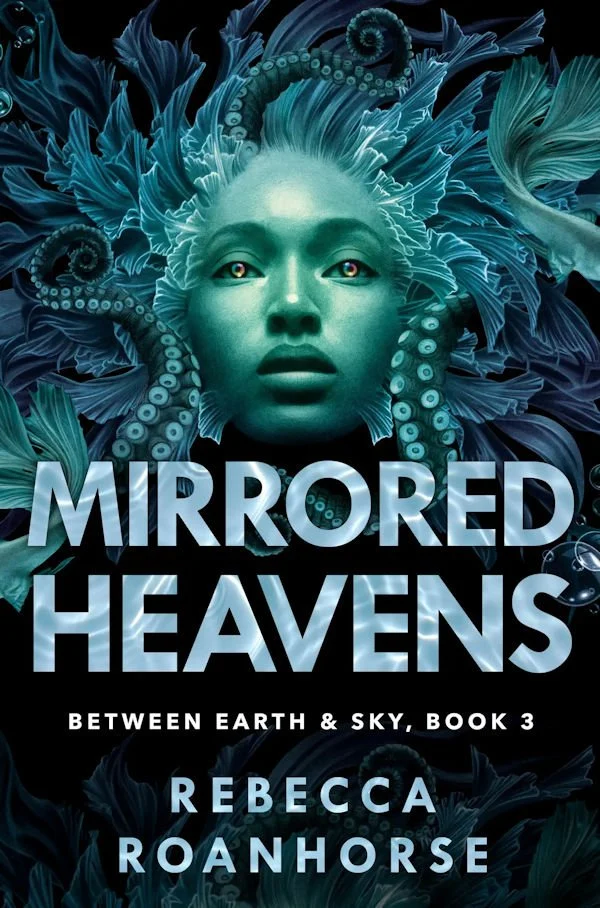
Unveiling a Modern Fantasy Masterpiece: Rebecca Roanhorse’s "Between Earth and Sky" Trilogy
Rebecca Roanhorse’s "Between Earth and Sky" series stands as a monumental achievement in contemporary fantasy, deserving a prominent position on every reader’s to-be-read (TBR) list and a more central role in critical discussions within the genre. Comprising Black Sun, Fevered Star, and the concluding Mirrored Heavens, the trilogy reached its powerful conclusion two years ago, yet its profound impact and intricate storytelling remain remarkably underexplored by a wider audience. This oversight, though perhaps common for series gaining renown post-completion, is particularly striking given the exceptional caliber of Roanhorse’s narrative prowess and character development, which firmly establish her among the foremost modern fantasy authors.
Main Facts: A Pantheon of Political Intrigue and Divine Vengeance
The "Between Earth and Sky" trilogy plunges readers into the richly imagined continent of Meridian, a vibrant yet volatile land on the brink of profound transformation. The series meticulously chronicles the near-apocalyptic unraveling of deeply entrenched political and religious systems, driven by the wrath and calculated vengeance of a wronged deity. At its heart, the narrative is a multi-perspective saga, following a diverse cast of characters whose individual fates become inextricably linked to the continent’s destiny.
Roanhorse masterfully weaves a tapestry of political machinations, spiritual prophecies, and deeply personal struggles against a backdrop inspired by pre-Columbian cultures, offering a refreshing departure from traditional Eurocentric fantasy settings. The core appeal lies in its sophisticated exploration of power dynamics, the intricate relationship between humanity and divinity, and the moral complexities faced by characters thrust into roles far beyond their initial understanding. With the complete trilogy now available, new readers have the unique opportunity to immerse themselves in a fully realized epic from start to finish, experiencing its triumphs and tragedies without the wait between installments.
Chronology: The Unfolding of a Cataclysmic Saga
The series unfolds with meticulous pacing, gradually revealing the vast scope of its world and the intricate connections between its disparate characters.
The Genesis: Black Sun
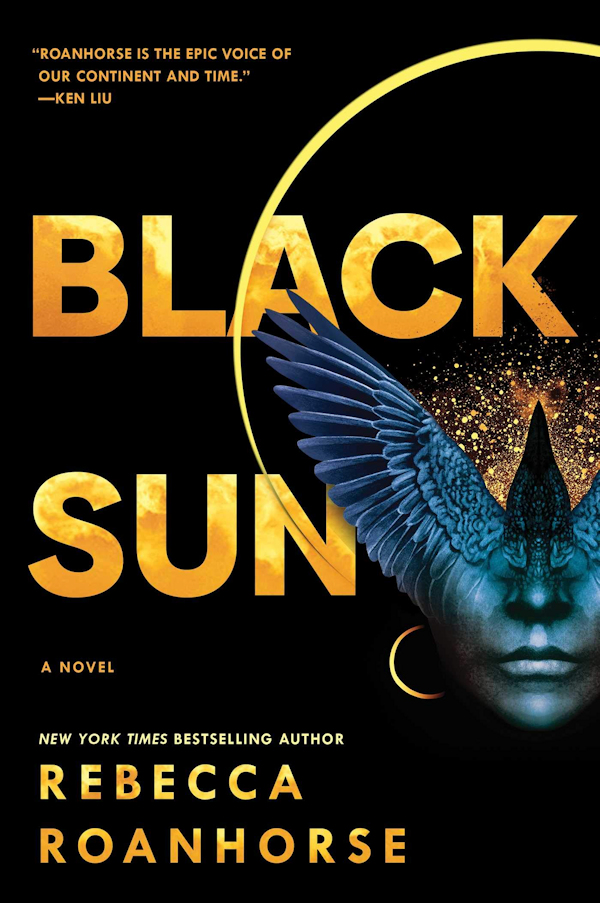
The inaugural volume, Black Sun, immediately immerses readers in the vibrant yet tense atmosphere of Meridian as the sacred winter solstice approaches. The narrative skillfully introduces four primary point-of-view (POV) characters, each on a converging path towards the bustling city of Tova, the spiritual and political heart of the continent.
Naranpa, a young woman from the marginalized "dry-earth" regions, has defied societal expectations to ascend to the prestigious title of Sun Priest. As the politically and spiritually powerful oracle, she helps govern Tova and represents the continent’s four revered Sky-made clans—Carrion Crow, Winged Serpent, Water Strider, and Golden Eagle—alongside her fellow council members, the Watchers. Her journey is one of immense responsibility and precarious power.
Concurrently, Serapio, a young man from the Carrion Crow clan, sails towards Tova, a living vessel for a vengeful Crow god. Scarred and blinded by a blood ritual performed by his own mother, he is a weapon honed for retribution against the Celestial Tower and its priestly hierarchy. His journey is guided by an ancient, consuming thirst for vengeance.

Xiala, the contracted captain of Serapio’s ship, hails from the Teek tribe, a mysterious seaside community of women gifted with magical songs—a power echoing ancient siren myths. Her pragmatism and unique abilities are pivotal in navigating the treacherous seas and political currents.
Finally, Okoa, son of the respected Yatliza matron of Carrion Crow, finds himself drawn to the holy city with his siblings after his mother’s sudden demise, an event that propels his sister, Esa, into the clan matronship, further destabilizing clan politics.
These diverse characters are inexorably drawn into a web of political manipulation and ancestral grievances. The climax of Black Sun is a cataclysmic event during the winter solstice: Serapio, channeling the Crow god, unleashes a devastating assault on the Watchers, annihilating the entire council save for Naranpa. Naranpa herself, having already fallen victim to a coup orchestrated by her best friend and former lover, Iktan, and an assassination attempt by a Golden Eagle priest, barely survives. The repercussions are immediate and profound, plunging Tova into a permanent eclipse and igniting widespread political turmoil and war across the continent as the fragile peace treaties are shattered.
The Unraveling: Fevered Star
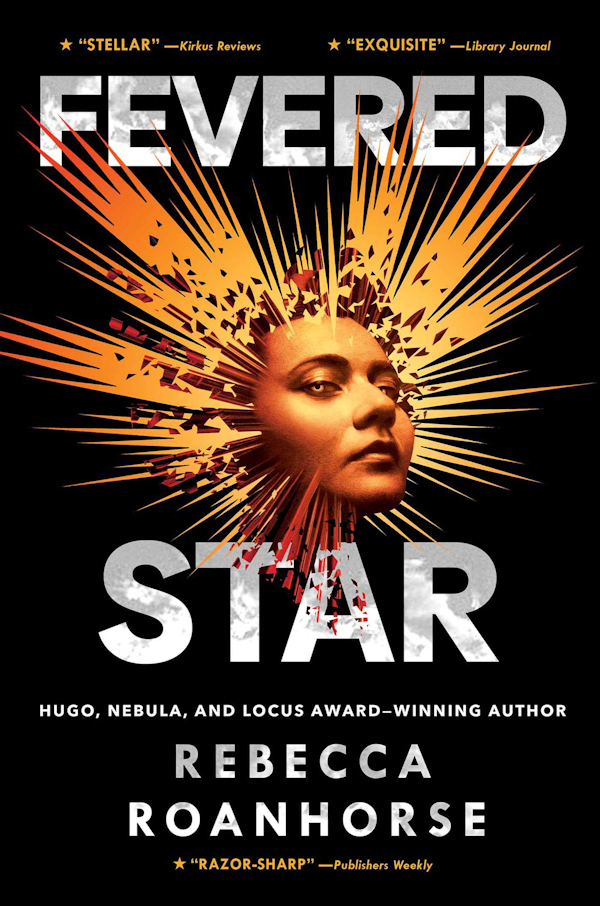
The second installment, Fevered Star, picks up in the tumultuous aftermath, with the characters scattered and pursuing divergent, yet ultimately interconnected, objectives. The fallout from the solstice attack sends ripples across Meridian, reshaping destinies and alliances.
Xiala, captured by Iktan and the Golden Eagle clan, is transported to the distant city of Hokaia. Here, she uncovers the orchestrator behind the entire chain of events: Balam, a formidable sorcerer who initially contracted her services in Black Sun. It is revealed that Balam’s machinations—from the Golden Eagle’s attempted coup to the delivery of Serapio and the Crow god to Tova’s gates—were meticulously planned to destabilize the existing power structure. Xiala’s journey culminates in her return to the Teek homeland, a place from which she was previously banished, only to face the attempted enslavement and slaughter of her people, who now paradoxically look to her as their queen.
Serapio, against all odds, survives channeling his god thanks to the selfless sacrifice of the common crows he had befriended. He is rescued from the tower by Okoa, whose seemingly coincidental presence at the scene leads to an unexpected alliance. In the wake of his actions, Serapio assumes leadership of Tova, grappling with the immense responsibility of commanding both the city and the Sky-made clans while the vengeful Crow god still lingers within him, seeking to eliminate the true Sun Priest, Naranpa.
Naranpa, recovering from her ordeal, briefly finds solace and purpose in Coyote’s Maw with her brother, working to restore the dry-earthers to their rightful place alongside the Sky-made clans. However, a personal tragedy soon propels her on a new quest to the grave of the gods, where she undergoes a profound transformation, becoming "god-touched" and learning the mystical art of dreamwalking.
Okoa, initially dispatched by the Sky-made matrons as an assassin to remove Serapio, ultimately finds an unexpected brotherhood and sympathetic allegiance with the newly proclaimed Carrion King. As these intricate subplots unfold, the true antagonist, Balam—a powerful sorcerer and the white jaguar prince—is fully unmasked through the POV chapters of Iktan, Xiala, and Balam himself. His grand scheme, initiated in his youth, aimed to create a power vacuum and seize control of Meridian through horrific shadow magic and dreamwalking, setting the stage for the trilogy’s thrilling conclusion.
The Climax: Mirrored Heavens
The final volume, Mirrored Heavens, masterfully brings all converging plotlines to a satisfying and impactful close. The scattered protagonists, now individually empowered and profoundly changed, are drawn into the ultimate confrontation with Balam and his dark forces. The narrative expertly weaves together the disparate threads, revealing the deeper connections behind earlier "coincidences" and providing comprehensive answers to the lingering questions. The ending is a testament to Roanhorse’s narrative control, delivering a resolution that feels earned, tying up all loose ends without resorting to ambiguity or leaving crucial elements open to interpretation. It’s a conclusion that resonates with the themes of fate, choice, and the enduring struggle against manipulation, leaving readers with a sense of completion and catharsis.
Supporting Data: Crafting a World and Its Inhabitants
Roanhorse’s "Between Earth and Sky" is distinguished not just by its ambitious plot but by the profound depth of its supporting elements, from its thematic resonance to its vibrant worldbuilding and unparalleled character work.
Themes and Narrative Depth
A pervasive theme throughout the series is the interplay of coincidence, the inexorable pull of the gods and their perceived fates, and the insidious manipulation by political powers driven by vengeance. The four main POV characters, all young adults, are repeatedly funneled towards specific cities or into direct opposition or alliance, often at the behest of an older generation of leaders and sorcerers they initially trust. As readers, we become acutely aware that the destinies of Naranpa and Serapio, in particular, are inextricably intertwined, yet Roanhorse consistently subverts predictability. While the series employs familiar fantasy tropes—such as "the chosen one" and divine retribution—it imbues them with a fresh vitality. The individual characters’ nuanced motives and morally ambiguous actions elevate the narrative, making the stakes feel genuinely high and the plot exhilarating. The reader often anticipates a specific convergence, only for the meeting to unfold in an entirely different, yet equally satisfying, manner. This sense of shared destiny is even reflected in the characters’ internal thoughts, adding a layer of sophisticated metacognition that enhances immersion rather than breaking the fourth wall.
Immersive Worldbuilding
The worldbuilding in "Between Earth and Sky" is nothing short of enthralling. Roanhorse masterfully avoids the common pitfall of massive info-dumps, instead allowing readers to absorb knowledge about Meridian and its diverse clans organically. Every piece of information—from the intricacies of political structures to deeply held beliefs and superstitions—is delivered naturally through character conversations, observations, and experiences. This immersive approach ensures that readers truly understand the stakes, the cultural nuances, and the historical grievances that fuel the continent’s conflicts. The world feels alive and lived-in, sparking a genuine desire to delve deeper into the lore of the Sky-made clans and their gods, even when specific details aren’t directly pertinent to the immediate plot. It’s a testament to Roanhorse’s skill that she creates a universe so captivating, readers are left yearning for more stories within it, whether in the form of prequels, short stories, or further expansions.
Masterful Character Crafting
Perhaps the most significant triumph of Roanhorse’s writing lies in her unparalleled grasp of character. Each character, even with a large ensemble of POV protagonists across a relatively short trilogy, feels fully realized, possessing a distinct personality, complex motivations, and subtle nuances that many writers struggle to achieve. The depth is such that one could theoretically redact character names from individual chapters and still discern who is speaking purely from the unique tone and internal voice.
Xiala and Naranpa, in particular, serve as masterclasses in interpersonal character writing. Their personalities shine through in every interaction—whether it’s Xiala’s blunt offense at a casual nickname, her sharp wit regarding male sailors’ superstitions, or Naranpa’s gentle tenderness towards a romantic partner. These characters are vibrant, realistic, and brimming with individuality, entirely eschewing the reliance on common tropes or stereotypes often attributed to female characters in the genre.
Another strength lies in the series’ antagonists, who inspire both dread and a profound sense of awe. Serapio, initially appearing to be the central "villain," evolves into an increasingly sympathetic and relatable figure, a tragic victim of a fate his mother meticulously fabricated for him. The true villain, Balam, when fully revealed, evokes genuine abhorrence. Every interaction with Balam is meticulously crafted to be condescending, snide, and poisonous—a testament to effective villainy that, for a reader who often finds themselves siding with or liking antagonists, is uniquely impactful. Iktan, who functions as an antagonist for significant portions of the first two books, is portrayed with such self-serving narcissism that it genuinely elicits a strong desire for their demise. The only minor critique in a series with very few weak points is the resolution of Iktan’s arc, which some readers might find too forgiving given their previous actions.
Official Responses: Critical Acclaim and Genre Recognition
The critical reception for the "Between Earth and Sky" series, particularly following its completion, underscores Rebecca Roanhorse’s rising prominence in the fantasy genre. As L. A. Young’s 2020 review of Black Sun powerfully stated, the debut volume alone demonstrated Roanhorse’s immense potential. Now, with the entire trilogy available, this initial assessment can be expanded upon with full conviction: Roanhorse is not merely a powerful voice within fantasy; she is unequivocally one of the best modern writers in the genre.
Her work warrants a place alongside the most celebrated and biggest names in contemporary fantasy literature. Critics have consistently lauded her for her innovative worldbuilding, which draws inspiration from Indigenous cultures, offering a fresh and vital perspective. Her ability to craft intricate plots that balance grand-scale conflict with deeply personal character arcs has garnered significant praise. Furthermore, the consensus points to her exceptional skill in characterization, creating protagonists and antagonists who are complex, morally ambiguous, and profoundly human, avoiding simplistic archetypes. The completion of the series has solidified its critical standing, proving that the initial promise of Black Sun was not only met but surpassed, delivering a cohesive and satisfying epic that resonates deeply with readers and critics alike.
Implications: Shaping the Future of Fantasy
The "Between Earth and Sky" trilogy carries significant implications for the landscape of contemporary fantasy, both for its artistic merit and its broader cultural impact.
Impact on the Fantasy Genre
Roanhorse’s work undeniably elevates the fantasy genre, setting a high bar for intricate worldbuilding and profound character depth. By drawing upon Indigenous American cultures and mythologies, she provides a vital and refreshing counter-narrative to the predominantly European-inspired fantasy that has historically dominated the market. This not only enriches the genre’s imaginative scope but also highlights the importance of diverse voices and perspectives in storytelling. Her ability to weave complex political systems, spiritual beliefs, and personal dramas into a seamless narrative demonstrates a masterful command of the craft, positioning the series as a benchmark for what modern fantasy can achieve. It challenges conventional tropes and offers a compelling vision of what fantasy, when thoughtfully crafted, can truly be.
A Call to Readers
Now that the "Between Earth and Sky" trilogy is complete, the opportunity for new readers to discover this magnificent saga is ripe. The absence of waiting periods between books allows for an uninterrupted, immersive reading experience, where the full scope of Roanhorse’s narrative genius can be appreciated without pause. This series deserves to be at the forefront of every fantasy reader’s attention, not merely as a suggestion, but as an essential entry into the modern fantasy canon. Its enduring legacy will undoubtedly be built on its powerful storytelling, unforgettable characters, and the profound emotional journey it offers.
Future Prospects for Roanhorse
The overwhelming success and critical acclaim of "Between Earth and Sky" firmly establish Rebecca Roanhorse as a major literary force. The fervent desire among readers for more stories set within this universe—whether through prequels, short stories, or entirely new narratives—speaks volumes about the richness and potential of her creations. Her distinctive voice and imaginative prowess promise a future filled with groundbreaking works that will continue to challenge, entertain, and inspire. Roanhorse is not just a writer to watch; she is a writer whose existing body of work demands immediate attention and widespread recognition, solidifying her place as a pivotal figure shaping the trajectory of fantasy literature for years to come.
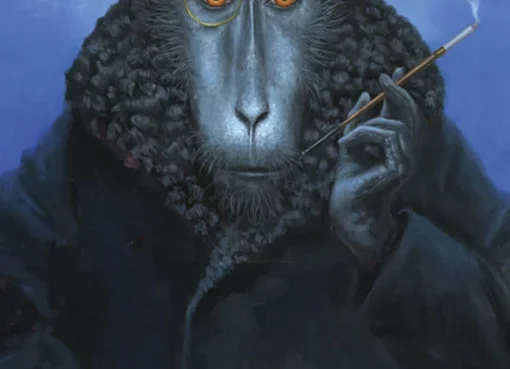
Featured image background by Arnaud Mariat.


Leave a Comment