
"The Terror: Devil in Silver" Unveils a Haunting Look at Mental Health and Systemic Neglect on Shudder and AMC+
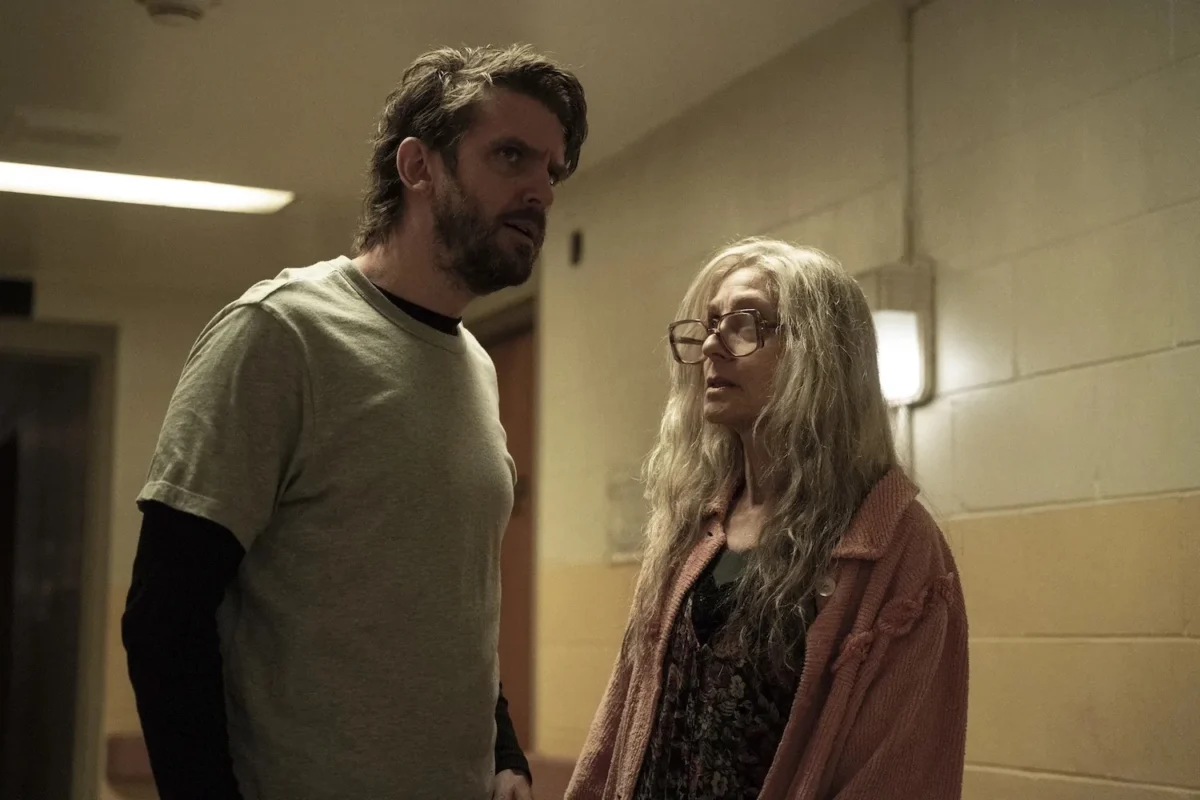
Los Angeles, CA – A chilling new psychological horror series, The Terror: Devil in Silver, is set to premiere on AMC+ and Shudder on May 7, 2026, promising viewers a harrowing journey into the depths of a decaying psychiatric institution. Adapted from Victor LaValle’s acclaimed novel, the series plunges audiences into New Hyde, a facility whose moldering walls harbor secrets and a grim reality far more terrifying than its physical decay. Under the collaborative vision of co-showrunners Victor LaValle and Chris Cantwell, with a foundational tone set by director Karyn Kusama, the series is poised to deliver a unique blend of supernatural dread and incisive social commentary.
At the heart of this unsettling narrative is Pepper, a new patient portrayed by the versatile Dan Stevens, whose fresh eyes offer the initial lens through which the audience experiences New Hyde’s unsettling environment. His introduction to the ward is facilitated by Dorry, a long-term resident brought to life by the esteemed Tony and Emmy Award-winning actress Judith Light. Light, a veteran of stage and screen with credits including Manhunt, Transparent, and Ugly Betty, brings a profound gravitas to Dorry, a character whose complexity mirrors the multifaceted themes the show aims to explore. Her recent remarks at a Television Critics Association (TCA) press conference underscored the project’s deeper ambitions, highlighting its potential to ignite crucial conversations about mental health and the systemic failures within the nation’s healthcare system. The Terror: Devil in Silver is not merely a horror story; it is a stark reflection on societal neglect, wrapped in the terrifying shroud of institutional dread.
The Genesis of a Grim Vision: From Page to Screen
The journey of Devil in Silver from Victor LaValle’s critically lauded novel to a highly anticipated streaming series is a testament to the enduring power of his storytelling. LaValle, known for his distinctive blend of horror, fantasy, and incisive social commentary in works like The Changeling, crafts narratives that unnerve while simultaneously challenging readers to confront uncomfortable truths. His novel, published to widespread acclaim, carved out a niche for its unflinching portrayal of mental institutions as both literal and metaphorical prisons, imbued with a supernatural malevolence that amplifies the very real horrors of systemic neglect.
The decision by Shudder and AMC+ to adapt Devil in Silver speaks volumes about their commitment to premium, genre-bending content. Both platforms have carved out reputations as destinations for sophisticated horror and thought-provoking dramas, making them ideal homes for LaValle’s nuanced and terrifying vision. The collaborative dynamic between LaValle, serving as co-showrunner, and Chris Cantwell, known for his work on series such as Halt and Catch Fire, suggests a delicate balance between preserving the novel’s essence and translating its intricate layers for the episodic format. LaValle’s direct involvement ensures that the thematic integrity and unique voice of his original work are maintained, while Cantwell’s experience in crafting compelling television narratives helps shape it for the screen.
The inclusion of Karyn Kusama as a director, particularly for the series’ crucial cold open, further elevates expectations. Kusama has a celebrated track record in the horror and thriller genres, having helmed critically acclaimed films such as The Invitation and Jennifer’s Body. Her ability to craft tense, character-driven narratives infused with an atmospheric sense of dread makes her an ideal choice to establish the unsettling visual and emotional grammar of New Hyde. As LaValle, Cantwell, and Kusama themselves discussed for Reactor, the opening scene is not just an introduction to the plot but a declaration of the show’s grim aesthetic and thematic intentions, immediately immersing viewers in the psychological torment that awaits. The careful curation of this creative team underscores a deliberate effort to deliver an adaptation that is both faithful to its source material and groundbreaking in its execution.
Inside New Hyde: Characters, Themes, and the Anatomy of Horror
The Terror: Devil in Silver promises to be more than just a creature feature or a jump-scare spectacle. Its horror is deeply rooted in its setting: New Hyde Psychiatric Facility, a place described as "moldering," suggesting an institution physically decaying in parallel with the neglect and dehumanization of its patients. This decrepit environment becomes a character in itself, its suffocating atmosphere and oppressive structure amplifying the psychological distress of those trapped within its walls. The series aims to portray New Hyde not just as a backdrop for supernatural occurrences, but as a chilling metaphor for the broken systems that govern mental healthcare.
Dan Stevens’s portrayal of Pepper, the new patient, serves as the audience’s initial anchor in this disorienting world. Pepper’s arrival disrupts the fragile equilibrium of New Hyde, forcing viewers to confront the stark realities of institutional life through his eyes. Stevens, known for his ability to convey both vulnerability and simmering intensity in roles like David Haller in Legion and the enigmatic soldier in The Guest, is perfectly cast to navigate the labyrinthine corridors of New Hyde, both physical and psychological. His character’s journey is expected to unravel the layers of the facility’s grim secrets, challenging perceptions of sanity and madness.
Central to Pepper’s introduction and the unfolding narrative is Dorry, the long-time patient brought to life by Judith Light. Dorry is depicted as a "complex character," likely embodying the wisdom, weariness, and perhaps even a flicker of hope that can persist amidst despair. Her role is crucial; as a seasoned resident, she serves as a guide for Pepper, introducing him to the unspoken rules, hidden dangers, and unique inhabitants of New Hyde. Light’s illustrious career, marked by her ability to inhabit diverse roles with authenticity and depth, makes her an inspired choice for Dorry. Her previous work often showcases characters who navigate challenging social landscapes, making her particularly suited to portray a woman deeply affected by the institutional environment.
Light’s insights into Dorry’s character and the show’s overarching message are particularly illuminating. At the TCA press conference, she articulated her profound connection to the project, stating, "We got to talk about mental health in this country, and what does it mean to be in a world with a healthcare system that diminishes people, not everywhere, but in many places." This statement highlights the series’ commitment to exploring the very real socio-political dimensions of mental healthcare, moving beyond mere entertainment to provoke contemplation. Dorry, through Light’s portrayal, becomes a vessel for examining the plight of those marginalized by a system designed to care for them. Light further expressed interest in exploring "what does it mean to be, not a victim, but a woman in many ways who has been held as a second-class citizen." This adds another layer of intersectional critique, suggesting the series will delve into gendered experiences of institutionalization and societal power dynamics. Dorry’s long tenure in New Hyde likely offers a poignant commentary on resilience, resistance, and the subtle forms of oppression faced by women within such confines.
Distinguishing the Horror: Beyond "Cuckoo’s Nest"
A significant point of discussion raised by Judith Light was the distinction between The Terror: Devil in Silver and the seminal 1975 film One Flew Over the Cuckoo’s Nest. While both narratives are set within psychiatric facilities and explore themes of institutional power and individual struggle, Light emphatically stated, "it’s really not One Flew Over the Cuckoo’s Nest." This clarification is vital for setting audience expectations and understanding the unique horror that LaValle’s adaptation aims to deliver.
One Flew Over the Cuckoo’s Nest, with its iconic portrayal of Randle McMurphy (Jack Nicholson) and the tyrannical Nurse Ratched (Louise Fletcher), established a benchmark for institutional drama centered on overt, vicious antagonism. The film’s horror stems from the psychological warfare and systemic abuse inflicted by a single, powerful antagonist. Light elaborated on this difference, noting, "There are some people that are not as friendly as you might like, or as warm or as comforting, and they have their own agendas, but there’s not this vicious back and forth between the characters and Nurse Ratched."
This distinction suggests that The Terror: Devil in Silver will eschew the singular, overt villainy of a Nurse Ratched figure. Instead, its horror is likely more pervasive, systemic, and perhaps even supernatural, aligning with LaValle’s literary style. The "agendas" mentioned by Light could refer to a complex web of self-interest, bureaucratic indifference, or even the subtle forms of cruelty that can fester in isolated, neglected environments. The lack of "vicious back and forth" implies a different kind of terror—one that might be more insidious, born from the very fabric of the institution and the broader societal forces it represents. This could manifest as a creeping dread, an existential horror where the system itself is the antagonist, or where the "devil" is not a person, but a spiritual or psychological entity thriving on human despair. The show’s title, The Terror: Devil in Silver, certainly points towards a more explicitly supernatural or folkloric element, which would differentiate it significantly from the grounded realism of One Flew Over the Cuckoo’s Nest. It suggests that while the human element of neglect is present, there is also an otherworldly menace at play, adding another dimension to the psychological torment.
Voices from the Production: Vision and Collaboration
The insights shared by Judith Light offer a tantalizing glimpse into the motivations and thematic underpinnings of The Terror: Devil in Silver. Her eloquent articulation of the show’s engagement with mental health and the status of marginalized women speaks to a production team committed to delivering a narrative with significant social weight. The Television Critics Association press conference provided a platform for Light to delve into Dorry’s nuanced portrayal, underscoring her belief that the role transcends mere character acting, serving as a conduit for larger societal discussions.
While Light’s comments were the primary "official response" provided, we can infer the broader vision from the roles of the showrunners and director. Victor LaValle, as the author of the source material, brings an unparalleled understanding of the novel’s intricate themes and character arcs. His transition to co-showrunner suggests a dedication to ensuring the adaptation remains true to his original intent, preventing the dilution of its potent social critique and its unique brand of horror. One could imagine LaValle speaking about the challenges and rewards of translating his internal literary world into a tangible visual experience, perhaps emphasizing the importance of maintaining the novel’s voice while adapting it for a new medium. "It’s a delicate dance," LaValle might express in a hypothetical interview, "to bring the dread and the depth of the book to life on screen without losing its soul. My aim was always to ensure the show felt as vital and unsettling as the words on the page."
Chris Cantwell, as co-showrunner, would likely focus on the structural and narrative craftsmanship required to transform a novel into a compelling series. His experience in television suggests an emphasis on pacing, character development across multiple episodes, and the strategic deployment of horror elements to build sustained tension. Cantwell might articulate the team’s approach to balancing the supernatural elements with the grounded psychological realism. "The true terror in Devil in Silver comes from the very real neglect of the system," Cantwell could hypothetically state. "Our challenge was to weave the supernatural entity into that reality, making it feel like an organic manifestation of the despair and injustice within New Hyde, rather than a separate horror."
Karyn Kusama’s contribution, particularly her direction of the cold open, would undoubtedly center on establishing the visual language and atmospheric dread. Her work is often characterized by a meticulous attention to tone and a profound understanding of psychological tension. Kusama might explain her approach to introducing New Hyde as a character itself, emphasizing the visual cues that immediately convey its "moldering" and oppressive nature. "The cold open was critical for setting the mood," Kusama might reflect. "We wanted to immerse the audience immediately in Pepper’s disorientation and the palpable sense of decay, both physical and moral, that permeates New Hyde. It’s about building an inescapable feeling of dread from the very first frame." This collaborative synergy between author, experienced television producer, and acclaimed horror director points to a highly intentional and carefully executed adaptation.
Implications and Anticipation: A New Era for Horror with Purpose
The arrival of The Terror: Devil in Silver on Shudder and AMC+ on May 7, 2026, carries significant implications for the horror genre, for the streaming platforms themselves, and for broader cultural conversations. For Shudder and AMC+, this adaptation represents a continued expansion of their original programming slate, particularly in the realm of sophisticated, socially conscious genre content. By investing in an adaptation of a Victor LaValle novel, they reinforce their commitment to elevating horror beyond mere escapism, positioning it as a powerful vehicle for critical examination of societal ills. This move solidifies their standing as premier destinations for viewers seeking intelligent, boundary-pushing narratives that challenge and provoke.
For the horror genre itself, The Terror: Devil in Silver could signify a further maturation, following a trend of "elevated horror" that uses genre conventions to explore profound human and societal issues. LaValle’s work inherently blurs the lines between psychological terror, institutional critique, and supernatural dread, promising a series that is both deeply frightening and intellectually stimulating. It offers a fresh perspective on institutional horror, moving beyond past archetypes to explore systemic neglect and the nuanced experiences of those caught within its grip. The series has the potential to become a benchmark for how horror can effectively intertwine with social commentary, proving that genuine terror can arise from both the fantastical and the painfully real.
Furthermore, this high-profile adaptation will undoubtedly bring Victor LaValle’s exceptional literary voice to a wider audience, solidifying his position as a crucial figure in contemporary genre fiction. For an author whose work consistently blends the speculative with sharp social observation, a successful television series can significantly amplify his impact and introduce new readers to his bibliography.
Perhaps most importantly, The Terror: Devil in Silver has the potential to ignite crucial conversations about mental healthcare in the United States and beyond. Judith Light’s poignant remarks serve as a powerful prelude to the show’s thematic core, indicating a narrative that is unafraid to confront the failings of a system meant to protect the vulnerable. In a world grappling with escalating mental health crises and ongoing debates about healthcare access and quality, a series that dramatizes these issues within a compelling horror framework can foster empathy, encourage critical reflection, and potentially inspire advocacy. The show’s "grim view" of New Hyde is not just for shock value; it is a mirror reflecting uncomfortable truths about how society treats its most marginalized members.
As the premiere date approaches, anticipation will undoubtedly build for this ambitious series. With a strong creative team, a compelling source material, and a commitment to tackling weighty themes, The Terror: Devil in Silver is poised to deliver a horror experience that lingers long after the credits roll, haunting viewers not just with its supernatural elements, but with its stark and unflinching portrayal of human vulnerability and systemic neglect. It promises to be a timely and terrifying exploration of the devils that lurk not only in the shadows, but within the very institutions we entrust with care.



Leave a Comment