
Beyond the Veil of Conflict: Sara Ishaq’s ‘The Station’ and the New Wave of Yemeni Cinema
The global cinematic landscape has long been marred by a significant void: the voice of Yemen. While the country frequently appears in international news cycles as a site of humanitarian crisis and geopolitical struggle, its human stories—the nuances of its domestic life, the resilience of its women, and the stolen childhoods of its boys—remain largely uncaptured by the fictional lens. Sara Ishaq’s highly anticipated fiction debut, The Station, emerges not just as a film, but as a vital cultural intervention. Following her acclaimed 2013 documentary The Mulberry House, Ishaq returns to the screen with a multi-layered narrative that transcends the one-dimensional archetypes often found in war-torn reportage.
Set against the backdrop of a country that has changed drastically for the worse over the last decade, The Station provides a rare, humanizing look at a population under pressure. By focusing on a women-only gas station, Ishaq explores themes of solidarity, the subversion of traditional symbols, and the crushing weight of conscription on the youth, marking a significant milestone for Arab cinema at the Cannes Critics’ Week.
Main Facts: A Microcosm of Resistance and Solidarity
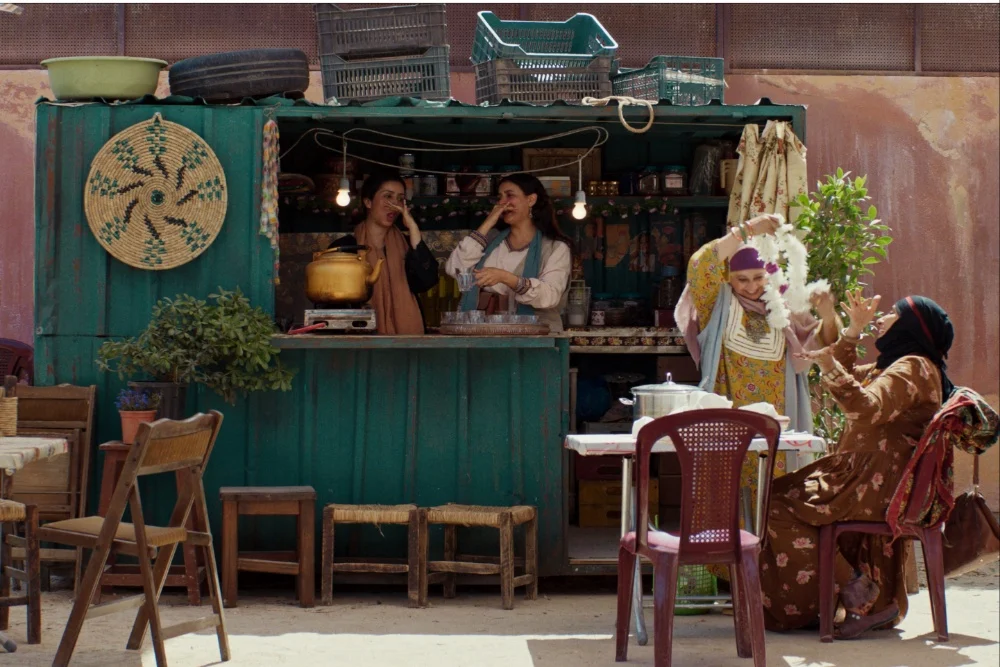
At its core, The Station is a story of survival and sanctuary. The film centers on a titular gas station, a unique locale owned and operated by the resourceful Layal (played by Manal Al-Mulaiki). In a landscape where gasoline is severely rationed and the presence of men often signals danger or political interrogation, Layal’s station is a "women-only" zone.
The station operates under a strict code, displayed on a sign at the entrance: “No men, no weapons, no politics.” This makes the courtyard more than just a place of commerce; it is a liberating space where the harsh realities of the Yemeni civil war are momentarily suspended. Inside, women engage in "girl talk," trade contraband lingerie, and find mutual support away from the suffocating grip of religious and political dogma.
Key Narrative Elements:
- The Sanctuary: A gas station courtyard that serves as a temporary escape from the patriarchal and militarized outside world.
- The Protagonists: Layal, the station owner, and her estranged sister Shams (Abeer Mohammed), who represent the fractured but resilient spirit of Yemeni families.
- The Conflict: The looming threat of child conscription, specifically targeting Layal’s 12-year-old brother, Laith (Rashad Khaled).
- The Production: A collaborative effort shot in Jordan due to the ongoing conflict in Yemen, featuring a cast composed almost entirely of non-professional actors.
Chronology: From Documentarian to Visionary Fiction Director
Sara Ishaq’s journey to The Station is a decade-long evolution in storytelling. Her previous work, The Mulberry House, was an intimate documentary that captured the 2011 Yemeni revolution through the lens of her own family. However, as the country spiraled into a more complex and devastating civil war, Ishaq recognized that documentary alone could not capture the internal psychological shifts occurring within the populace.
Development and Production (2013–2024)
Following the success of The Mulberry House, Ishaq began workshopping the script for The Station alongside co-writer Nadia Eliewat. The development process was arduous, given the logistical impossibility of filming within Yemen. The production eventually moved to Jordan, where the team meticulously recreated a Yemeni environment. This transition required extensive workshopping with non-professional actors to ensure the dialogue felt spontaneous and authentic to the Yemeni dialect and social nuances.
The Narrative Arc
The film opens with a masterful tracking shot that introduces the audience to an environment devoid of men. We see women in long black sharshafs and niqabs navigating a town where walls are plastered with posters of "martyred" adolescent boys.
The plot thickens when the local sheikh’s wife, Umm Abdallah (Shorooq Mohammed), informs Layal that she must pay an exorbitant fee to prevent her brother Laith from being sent to the front lines. This desperate situation forces Layal to reconnect with her sister Shams, who lives in territory controlled by the opposing faction. The ensuing journey and the reunion of the sisters serve as the emotional spine of the film, highlighting the impossible choices women must make to protect the few male relatives they have left.
Supporting Data: Technical Artistry and the Power of the Non-Professional
One of the most striking aspects of The Station is its technical execution, which belies the challenges of its production. Ishaq’s decision to use non-professional actors has resulted in performances that feel lived-in and deeply resonant.
The Visual Language
Cinematographer Amine Berrada, known for his work on the Cannes entry Banel & Adama, brings a sophisticated visual palette to the film.
- Color Grading: The film begins with "honeyed tonalities," a nod to Yemen’s world-renowned honey, symbolizing the warmth and sweetness found within the female community.
- Cinematic Shift: As the story progresses and the external threats close in, the lighting shifts to a "darker register." The final scenes use a "jumbled night" aesthetic to reinforce the tense uncertainty and the precarious nature of the women’s sanctuary.
Script and Dialogue
The script by Ishaq and Eliewat is praised for its duality. It pairs the two sisters with two young boys—Laith and Ahmed (Saleh Al-Marshahi). While the women assume the role of protectors, the boys are caught in a limbo between childhood and the state’s demand that they become soldiers. This dynamic highlights the "strangled development" of Yemeni youth, where boys are forced into manhood before they have finished playing.
Official Responses: The "Arab Absence" at Cannes
Despite the buzz surrounding The Station in the Critics’ Week section, its premiere has sparked a broader conversation about the representation of Arab cinema in major festival circuits. Critics and industry insiders have expressed frustration that the main competition sections of the Cannes Film Festival continue to overlook high-quality Arab content.
Critical Reception
Industry reviews have hailed The Station as a "buzzy title" that justifies its long gestation period. The film is being compared to works like Caramel, which also explores female-only spaces in the Middle East, yet critics note that Ishaq’s film possesses a "specificity" that prevents it from feeling derivative.
The film’s resolution has been particularly noted for its subversive use of the hijab. In a stand-out scene, the women use their headscarves to physically and symbolically protect their space against unseen male aggressors. This acknowledgment of the power and agency women derive from religious clothing stands in stark contrast to the Global North’s frequent portrayal of the hijab solely as a symbol of oppression.
Implications: Humanizing the "Invisible War"
The release of The Station carries significant implications for both Yemeni culture and global cinema. By moving beyond the "one-dimensional news reports," Ishaq has provided a platform for a population that is often spoken about but rarely spoken to.
1. Reclaiming the Narrative
For over a decade, the narrative of Yemen has been dictated by external political analysts and humanitarian agencies. The Station reclaims this narrative by centering on the domestic and the personal. It shows that even in the midst of a "forgotten war," there is laughter, fashion, wig-selling, and deep-seated sisterhood.
2. The Crisis of Masculinity and Childhood
The film sheds light on a harrowing social reality: the disappearance of men. In Ishaq’s Yemen, men are either "fighting or dead." This leaves a vacuum where women must become the sole breadwinners and protectors, while children like Laith and Ahmed are viewed as military assets rather than human beings. The film forces the audience to confront the long-term psychological impact of a society where childhood is "strangled."
3. Subverting Western Stereotypes
By showcasing the gas station as a "liberating space" where the niqab is removed and the hijab is used as a tool of resistance, Ishaq challenges Western audiences to rethink their preconceived notions of Muslim women. The film suggests that liberation is not necessarily found in the absence of tradition, but in the ability of women to define and control their own spaces within that tradition.
4. A Benchmark for Future Filmmakers
The Station sets a high bar for future filmmakers from the region. It proves that even when a national film industry is non-existent due to war, the stories of its people can be told through international collaboration and sheer creative will. As the film begins its festival run, it serves as a reminder that the most powerful weapon against the dehumanization of conflict is the art of storytelling.
In conclusion, Sara Ishaq has delivered a film that is as much a political statement as it is a cinematic achievement. The Station is a testament to the fact that while gasoline may be rationed in Yemen, the resourcefulness, solidarity, and courage of its women are in endless supply.




Leave a Comment