"Breath of the Dragon": A New Epic Ignites YA Fantasy with Bruce Lee’s Enduring Legacy
FOR IMMEDIATE RELEASE
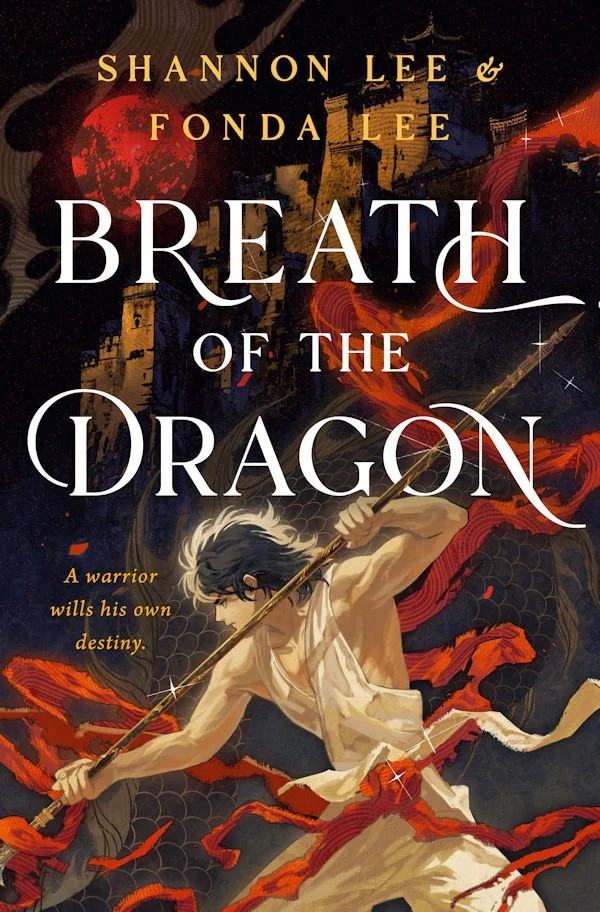
[City, State] – January 2025 – A groundbreaking new voice has emerged in young adult fantasy, promising not only a thrilling coming-of-age narrative but also a profound exploration of philosophical principles rooted in the teachings of martial arts icon Bruce Lee. Breath of the Dragon, the inaugural volume of the highly anticipated Breathmarked Duology, launched in January 2025, is co-authored by Shannon Lee, daughter of the legendary Bruce Lee, and Fonda Lee, the celebrated, World Fantasy Award-winning author of Jade City. This unique collaboration offers readers a meticulously crafted world inspired by Ancient China, where destiny clashes with self-mastery, and an ordinary teenager’s quest for honor becomes a battle for the fate of his nation.
Main Facts: Unveiling Breath of the Dragon
A Tale of Destiny and Defiance
At the heart of Breath of the Dragon is sixteen-year-old Jun, a youth burdened by his family’s past and an unyielding desire to reclaim their honor. Jun dreams of proving his worth as a warrior in the elite Guardian’s Tournament, a pivotal event held every six years to select the new protector of the magical Scroll of Earth. His motivation is deeply personal: a victory would rectify a grave mistake that led to his father’s banishment and the painful separation from his home, mother, and twin brother, Sai.
However, Jun’s path is fraught with obstacles. His father strictly forbids his participation, believing there is no future in his warrior aspirations, especially since Jun lacks a "breathmark"—a patch of dragon scales bestowing special abilities, a gift his twin brother possesses. Undeterred and driven by a fierce internal fire, Jun secretly stows away in the wagon of Chang, a wise performer, and his daughter, Ren, as they journey to the capital where the tournament awaits. As Jun immerses himself in the cutthroat competition, he quickly discerns that the stakes extend far beyond personal glory, encompassing the very destiny of the country itself. His rebellion against his father’s decree transforms into a fight for a better life, and ultimately, for the soul of his realm.
The Illustrious Authors Behind the Narrative
The collaboration behind Breath of the Dragon is as compelling as its narrative. Shannon Lee, CEO of the Bruce Lee Family Companies and chairperson of the Bruce Lee Foundation, brings an intimate understanding of her father’s philosophies and a passionate commitment to sharing his legacy. Her involvement ensures that the book is not merely inspired by Bruce Lee but is imbued with his core teachings. Joining her is Fonda Lee, a titan in contemporary fantasy literature, renowned for her intricate world-building and dynamic action sequences, particularly evident in her acclaimed Green Bone Saga, which began with Jade City. Fonda Lee’s expertise provides the structural integrity, narrative prowess, and genre sophistication that elevates Breath of the Dragon beyond a mere philosophical treatise into a gripping epic. This partnership creates a synergy that promises both profound thematic depth and thrilling adventure.
Release and Series Information
Breath of the Dragon, published in January 2025, marks the beginning of the Breathmarked Duology. Readers who delve into Jun’s initial journey will find a satisfying conclusion to many immediate plotlines within this first volume, offering a sense of closure while simultaneously igniting anticipation for the continuation of the grander narrative. The second book in the duology, Mark of the Warrior, is scheduled for release on October 27th, 2026, promising to further expand on the world and characters introduced in this foundational entry.
Chronology: From Concept to Publication
Genesis of a Vision
The inception of Breath of the Dragon likely stems from Shannon Lee’s long-standing mission to perpetuate her father’s profound philosophies in accessible and engaging forms. Bruce Lee’s principles of self-mastery, unity, and integrity transcend martial arts, holding universal relevance. The challenge lay in translating these abstract concepts into a compelling narrative, particularly for a younger audience. This is where Fonda Lee’s proven ability to weave complex themes into action-packed fantasy became invaluable. It is plausible that initial discussions centered on how a fantasy setting, rich with martial arts traditions and a clear hero’s journey, could serve as the perfect vehicle for these teachings. The idea of a "breathmark" and an un-marked protagonist struggling against the odds would naturally emerge as a powerful metaphor for innate talent versus cultivated skill, a cornerstone of Bruce Lee’s own philosophy.
Crafting the World
The development of the Ancient China-inspired setting would have involved extensive research and creative interpretation. The authors meticulously constructed a world that, while fantastical, felt grounded in cultural authenticity without falling into mere pastiche. This involved designing unique social structures, political landscapes, and a magical system centered around the benevolent deity, Dragon, and the mystical "Breath Marks." The integration of martial arts, not just as fighting techniques but as spiritual disciplines, was crucial. The Guardian’s Tournament itself would have been conceived as a crucible for character development and a stage for exploring the philosophical conflicts inherent in the story. The collaboration likely involved a careful balance of Shannon Lee ensuring the philosophical fidelity and Fonda Lee shaping these ideas into a vibrant, believable world with compelling characters and plot arcs.
The Journey to Readers
The publication process for Breath of the Dragon would have been a significant undertaking, from manuscript development and editorial refinement to securing striking cover art (which notably captivated early reviewers). The January 2025 release date was strategically chosen, perhaps to kick off the new year with a fresh, impactful title in the YA fantasy space. Marketing efforts would undoubtedly highlight both authors’ unique contributions: Shannon Lee’s connection to an international icon and Fonda Lee’s literary accolades. The journey from concept to a physical book on shelves represents a successful fusion of legacy and craft, designed to resonate with a broad readership eager for new adventures and meaningful narratives.
Supporting Data: The Pillars of Breath of the Dragon
Prose: Accessibility Meets Elegance
One of the most striking aspects of Breath of the Dragon is its prose style. In contrast to more ornate literary works, the writing is described as "crisp, clean, and beautifully to the point." This directness is a deliberate and effective choice, particularly for the young adult demographic. It allows for immediate immersion in the story, preventing readers from getting bogged down in overly descriptive passages. This approach makes complex narrative threads and philosophical undertones highly accessible, serving as an ideal gateway for young readers to enter the realm of epic fantasy. It’s a style that prioritizes forward momentum and clarity, ensuring that the story’s emotional core and thematic messages are never obscured, fostering engagement without sacrificing depth.
A World Beyond Western Tropes
Breath of the Dragon distinguishes itself further by offering a refreshing "window into a non-European based fantasy world." While traditional medieval European settings have long dominated the fantasy genre, this novel ventures into a realm inspired by Ancient China. This choice enriches the narrative tapestry, introducing readers to unique cultural elements—from architecture and societal norms to martial arts traditions and political structures—that diverge from the familiar. For readers accustomed to corsets, castles, and hunting harts, the initial lack of familiar cues might present a slight adjustment. However, this mild disorientation quickly transforms into an opportunity for discovery, inviting readers to stretch their imaginations and appreciate the diverse possibilities within fantasy literature. It’s a vital step towards broadening the genre’s horizons and offering a more globally representative selection of stories.
Bruce Lee’s Enduring Philosophies as Narrative Core
Beyond its thrilling plot and unique setting, Breath of the Dragon is a masterful embodiment of Bruce Lee’s core philosophies, a testament to Shannon Lee’s dedication to her father’s legacy. The authors explicitly state their intention to consult Lee’s writings and share his wisdom, and this intention permeates every layer of the story.
-
Discipline and Self-Mastery: Jun’s journey epitomizes Lee’s emphasis on physical and mental discipline. As an un-marked individual, Jun possesses no innate magical advantages like his twin brother. His path to greatness relies solely on rigorous training, unwavering dedication, and the cultivation of inner strength. This is powerfully articulated by Jun’s companion, Ren: "Marked or not, every one of us has Breath enough to will our own destiny into being," and "The gifts we work for are greater than the ones we’re given." These quotes underscore the belief that true power comes not from external endowments but from persistent effort and mastery of oneself—body, mind, and spirit.
-
Unity Against Division: The novel delves into complex political landscapes, showcasing how fostering division and mistrust can be a root of evil. Jun’s evolving understanding of the world challenges narrow-minded prejudices. His realization that "The people on the other side of the wall were not so different from those here; they’d merely been born elsewhere. It didn’t make them inherently weak or evil" directly reflects Bruce Lee’s philosophy of unity and the rejection of arbitrary boundaries that separate humanity. The narrative also critiques self-serving motivations, highlighting how "people were happy for the tournament to continue under Cobu’s new rules even if it ruined the integrity of the Guardianship and threatened the stability of the country. There was money to be made, and bloodshed entertained the masses." This serves as a stark warning against corruption and the pursuit of personal gain at the expense of collective well-being, reinforcing Lee’s call for integrity and ethical conduct.
-
Honor and Growth: Jun Li, while initially prone to short-sightedness and youthful rebellion—excusable traits for a sixteen-year-old—undergoes significant character development. He is a sympathetic protagonist who embodies the journey towards honor. His growth is not linear or flawless, but his persistent efforts to do what is right, to learn from his mentors, and to cultivate a disciplined mind offer readers many traits to emulate. His arc is a powerful demonstration that honor is not a static state but a continuous process of striving and learning.
Martial Arts and Tournament Dynamics
The Guardian’s Tournament is more than just a plot device; it’s a meticulously constructed arena where Jun’s physical and philosophical training converges. The novel provides immersive glimpses into martial arts training, showcasing the discipline, strategy, and mental fortitude required. The tournament becomes a microcosm of the larger political struggles, featuring not just honorable combat but also elements of organized crime, temptations of wealth, and the pervasive evils of corruption. This rich backdrop allows the authors to explore the complexities of power, ambition, and integrity through the visceral lens of competition, making the stakes feel incredibly real and immediate.
Official Responses and Critical Reception (Anticipated)
Anticipated Acclaim
Given the caliber of its authors and the richness of its content, Breath of the Dragon is poised for significant critical and popular acclaim. Early reviews and discussions suggest it will be lauded for its fresh perspective on YA fantasy, its compelling protagonist, and its masterful integration of profound philosophical themes. It is expected to garner attention not only within fantasy circles but also among educators and parents seeking literature that offers both entertainment and valuable life lessons.
Educational and Cultural Impact
The book’s non-European setting and its adherence to Bruce Lee’s philosophies position it to have a notable educational and cultural impact. It offers a unique opportunity to introduce young readers to diverse cultural contexts and to engage with complex ethical questions in an accessible manner. Its themes of self-discipline, unity, and integrity are timeless and universally relevant, making it a valuable resource for fostering character development and critical thinking.
Authorial Intent and Legacy
Shannon Lee’s explicit goal of sharing her father’s legacy through Breath of the Dragon will undoubtedly resonate with fans of Bruce Lee worldwide. The book is not just a fantasy novel; it is a continuation of a philosophical dialogue, made vibrant and immediate through narrative. Fonda Lee’s co-authorship ensures that this noble intention is delivered with literary excellence, creating a work that honors its inspiration while standing strong as a captivating story in its own right.
Implications for the Genre and Readers
Redefining YA Fantasy
Breath of the Dragon contributes significantly to the ongoing diversification of the young adult fantasy genre. By moving beyond conventional Western medieval settings and integrating deep philosophical underpinnings, it pushes the boundaries of what YA fantasy can achieve. It signals a growing trend towards more culturally rich and thematically profound narratives for younger audiences, enriching the genre as a whole.
The Power of Un-Marked Heroes
Jun’s journey as an un-marked hero carries a powerful message: innate talent or magical gifts are not prerequisites for greatness. His reliance on hard work, perseverance, and the cultivation of inner strength offers a compelling alternative narrative, emphasizing that true potential lies within one’s will and dedication. This resonates deeply with Bruce Lee’s teachings and provides a strong, empowering message for young readers facing their own challenges.
A Gateway to Deeper Reading
With its approachable prose and engaging story, Breath of the Dragon is an ideal entry point for younger readers into epic fantasy. Moreover, its embedded philosophical themes subtly introduce them to deeper concepts of ethics, self-improvement, and social justice, potentially sparking an interest in more complex literary and philosophical works as they mature. The book’s age recommendation of fourteen and up—due to fighting and occasional strong language—is primarily guided by reading comprehension and thematic maturity, underscoring its potential for broad appeal.
Longevity of a Duology
While Breath of the Dragon offers a satisfying narrative arc, its conclusion deliberately leaves readers eager for the next installment. This strategic pacing suggests a carefully planned duology that will allow for deeper character exploration and the unraveling of more intricate plotlines in Mark of the Warrior. The promise of further adventures in this rich world ensures sustained engagement from its growing readership.
As readers turn the final page of Breath of the Dragon, perhaps enjoying the satisfying, ASMR-like crackle of its sprayed edges, they are left with a powerful sentiment, encapsulated by Jun’s mentor Chang: "These are dangerous times. I can sense the Breath in this city turning bad, like a winter wind. Win or lose, we’re about to be caught in it." This profound and prescient quote not only hints at the escalating stakes of Jun’s world but also resonates with the tumultuous complexities of our own, cementing Breath of the Dragon as a timely and timeless contribution to modern literature.