Bridging the Great Divide: Android XR Bridge Promises to Bring Meta Quest Exclusives to High-End PC VR
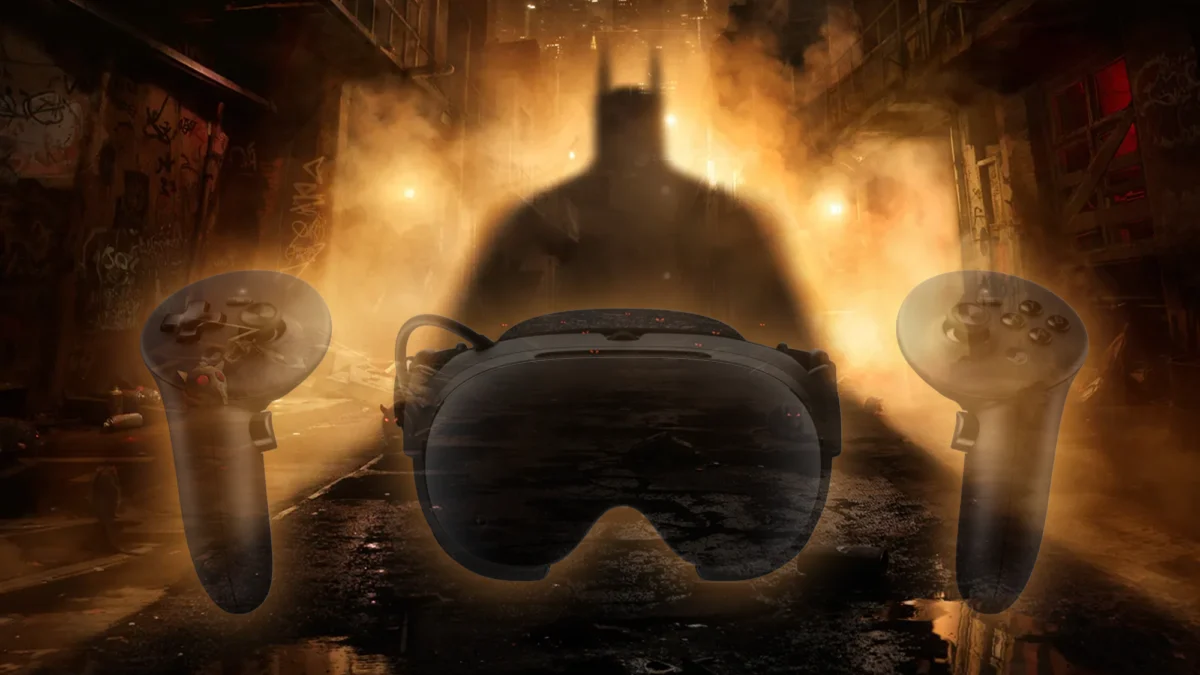
The virtual reality landscape has long been defined by a stark architectural divide. On one side stands the high-fidelity, hardware-intensive world of PC VR; on the other, the accessible, mobile-processor-driven "walled garden" of the Meta Quest ecosystem. For years, PC VR enthusiasts have looked on with envy as Meta secured blockbuster exclusives like Batman: Arkham Shadow, Asgard’s Wrath 2, and Deadpool VR, titles designed specifically for the Android-based architecture of the Quest 2 and 3.
However, a new experimental project titled Android XR Bridge (AXRB), spearheaded by developer Feli Reintgen, aims to dismantle these barriers. By creating a software runtime that allows Android-based VR applications to run on Windows via OpenXR, AXRB promises to grant PC VR users access to Meta’s prestigious library, while simultaneously boosting visual fidelity to levels impossible on standalone hardware.
I. Main Facts: Defining the Android XR Bridge
Android XR Bridge is not a simple game port or a traditional video streamer; it is an experimental software runtime for Windows designed to act as a translation layer. Its primary function is to allow VR applications built for the Android-based Meta Quest operating system to execute on a Windows PC, leveraging the significantly higher compute and graphical power of desktop GPUs.
Technical Capabilities
The most striking feature of AXRB is its ability to upscale the mobile-targeted visuals of Quest games. While the Quest 3 is a powerful mobile device, it is limited by its thermal envelope and the Qualcomm Snapdragon XR2 Gen 2 chipset. AXRB bypasses these bottlenecks, with recent demonstrations showing games running at:
- 4K Resolution Per Eye: Providing a level of clarity that eliminates the "screen door effect" often found in mobile VR.
- 120 Frames Per Second (FPS): Ensuring smoother motion and reduced motion sickness, a feat rarely achievable on standalone hardware for high-fidelity titles.
The Developer’s Vision
Feli Reintgen, the architect behind the project, has positioned AXRB as a tool for enthusiasts who own high-end headsets—such as the Valve Index, Bigscreen Beyond, or Varjo Aero—and wish to play the industry’s most talked-about titles without being tethered to mobile-grade graphics. Reintgen emphasizes that the software is designed to work with legal copies of Quest games, operating similarly to a traditional emulator where the user must provide their own legally acquired game files.
II. Chronology: From Concept to a Controversial Delay
The journey of Android XR Bridge has been one of rapid technical milestones followed by the sobering reality of software stability.
The Early Experimental Phase
In its infancy, AXRB was largely a proof-of-concept. Early versions were plagued by high latency, frequent crashes, and visual artifacts. Critics initially dismissed the project as overly ambitious, noting that translating ARM-based Android instructions to x86 Windows architecture in real-time—while maintaining the low-latency requirements of VR—was a monumental task.
The September Breakthrough
By mid-September, the narrative shifted. Reintgen released a series of updates that significantly optimized the runtime. A landmark social media post on September 16 showcased Pinball FX VR (the Quest-specific version) running flawlessly through the bridge. The developer noted that the game was rendering at a native 4K per eye, stating, "This is something that would have never been possible on Quest."
The Early Access Setback
With momentum building, an Early Access launch was scheduled for Monday, September 21. The VR community anticipated this as a watershed moment for the "open" VR movement. However, on the eve of the release, Reintgen announced an indefinite delay via the project’s official Discord server.
The developer cited several critical "showstopper" bugs, including:
- Installer Failures: The software was failing to install correctly on various Windows configurations.
- Launch Failures: The emulator frequently failed to initialize the VR environment for specific games.
- General Instability: A lack of broad game support meant that many untested titles were failing "most of the time."
III. Supporting Data: The Power of the PC vs. Standalone Mobile
To understand why AXRB is such a significant development, one must look at the technical disparity between the Meta Quest 3 and a modern gaming PC.
Rendering Power
The Meta Quest 3’s GPU performance is roughly comparable to an entry-level integrated laptop graphics chip. In contrast, a PC equipped with an NVIDIA RTX 4090 offers orders of magnitude more raw processing power.
- Quest 3: Typically renders at roughly 2K per eye with aggressive fixed foveated rendering (blurring the edges of the screen to save power).
- AXRB on PC: Can push native 4K per eye with 16x anisotropic filtering and high-quality anti-aliasing, features that are usually disabled on mobile VR to maintain frame rates.
Latency Metrics
One of the primary concerns with any bridge or emulation software is "motion-to-photon" latency. If the delay between a user moving their head and the image updating is more than 20 milliseconds, it can cause severe nausea.
Reintgen’s data suggests that the latency introduced by the AXRB runtime itself is negligible. In the September 16 demonstration, the developer noted that any perceptible latency was a result of network streaming (if using a wireless headset like the Quest as a display) rather than the translation layer itself. When used with a tethered PC VR headset, the bridge aims for near-native performance.
Software Architecture
AXRB utilizes OpenXR, the industry standard for high-performance, cross-platform VR. By translating Quest’s proprietary Android calls into OpenXR, AXRB effectively makes Quest games "headset agnostic." This means a game originally intended only for Meta hardware could, in theory, be played on a HTC Vive or a Pimax headset.
IV. Official Responses and Community Stance
The response to Android XR Bridge has been a mixture of technical awe and legal caution.
The Developer’s Position
Feli Reintgen has been transparent about the project’s limitations. In the delay announcement, Reintgen took a "quality first" approach, stating that releasing the software in its current broken state would lead to a poor user experience and a flood of support requests that a solo developer could not handle.
On the legal front, Reintgen has been careful to distance the project from piracy. The Discord community guidelines strictly prohibit the sharing of copyrighted game files (APKs). The project is marketed as a "runtime," not a "piracy tool," emphasizing that users must perform their own legal backups of games they have purchased on the Meta Store.
The Meta Factor
As of this writing, Meta (formerly Facebook) has not issued an official legal challenge or public statement regarding Android XR Bridge. Historically, Meta has allowed projects like Revive (which allows Quest/Rift games to run on other PC headsets) to exist, provided they do not facilitate piracy. However, AXRB is different because it circumvents the need for the Meta PC app entirely, potentially cutting Meta out of the data-collection loop on the Windows side.
Community Reaction
The VR community has largely supported the delay, preferring a stable release over a buggy one. On platforms like Reddit and X (formerly Twitter), users have expressed that they are willing to wait for a solution that allows them to play Batman: Arkham Shadow at higher resolutions, as many feel the Quest 3’s hardware does not do the game’s art direction justice.
V. Implications: The Future of the VR Walled Garden
The emergence of the Android XR Bridge carries profound implications for the VR industry, ranging from game preservation to market competition.
1. The End of the Walled Garden?
For years, Meta has used exclusives to drive hardware sales. If AXRB becomes a stable, user-friendly tool, the incentive to buy Meta hardware solely for the software library diminishes. This could force Meta to either tighten its digital rights management (DRM) or, conversely, embrace the PC market more fully by releasing official PC versions of their Quest titles—a move they have largely abandoned in recent years.
2. Game Preservation
One of the biggest risks in modern gaming is the "death" of digital-only titles when hardware becomes obsolete. By creating a bridge that allows Android VR apps to run on general-purpose Windows machines, Reintgen is inadvertently creating a preservation tool. Decades from now, when Quest 3 headsets are no longer functional, AXRB (or its successors) could be the only way to play these foundational VR titles.
3. Revitalizing the PC VR Market
The PC VR market has stagnated as developers flocked to the larger install base of the Quest. AXRB could provide a "best of both worlds" scenario. Developers can continue to target the Quest for sales volume, while PC enthusiasts can enjoy those same games with the "Ultra" settings they expect from their expensive rigs. This could lead to a resurgence in high-end headset sales, as the "lack of content" argument against PC VR begins to fade.
4. Technical Hurdles and the "Cat and Mouse" Game
The future of AXRB depends on its ability to keep up with Meta’s OS updates. If Meta perceives AXRB as a threat to their ecosystem, they could implement software updates to the Quest’s kernel that make game files harder to extract or introduce proprietary checks that the bridge cannot easily replicate.
Conclusion
Android XR Bridge represents a bold attempt to unify a fractured medium. While the current delay is a setback for those eager to see Asgard’s Wrath 2 in 4K, the technical milestones already achieved by Feli Reintgen suggest that the era of Quest-exclusive hardware may be coming to a close. As the line between mobile and desktop VR continues to blur, the ultimate winner will be the consumer, who may finally be able to choose their hardware based on comfort and performance rather than which corporate entity owns the rights to their favorite superhero.