"City of Stone" Ignites Debate Among SPFBO Judges: A Deep Dive into a Semifinalist’s Strengths and Contentions
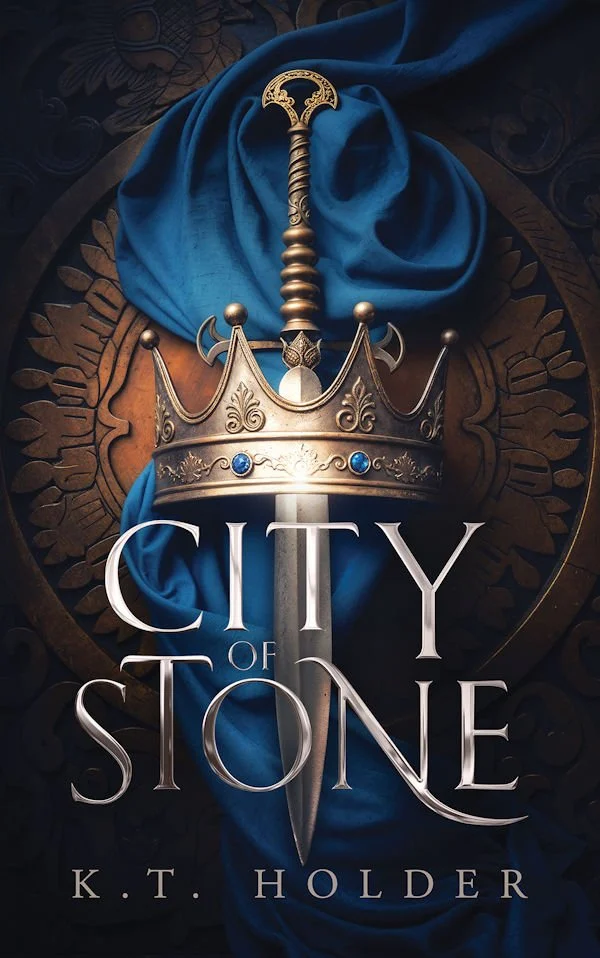
LONDON, UK – As the eleventh annual Self-Published Fantasy Blog-Off (SPFBO) approaches the culmination of its demanding Round One, one semi-finalist, "City of Stone," has emerged as a focal point of discussion, eliciting a spectrum of passionate responses from the judging panel. This ambitious fantasy novel, steeped in magic, political intrigue, and profound personal dilemmas, has captured the attention of critics with its blend of heartwarming found family narratives and a world teetering on the precipice of war. While lauded for its emotional depth and character-driven narrative, "City of Stone" also faced scrutiny regarding its pacing and plot execution, underscoring the subjective nature of literary appreciation in the competitive self-published arena.
Main Facts
"City of Stone": A Synopsis of Intrigue and Brotherhood
At the heart of "City of Stone" lies the captivating journey of Kasperi Ironstone, a protagonist thrust into extraordinary circumstances within a realm where magic is synonymous with power and ancient secrets lurk in the shadows. The narrative opens with Kasperi’s desperate act of thievery, undertaken to secure a better future for his younger brother. This act of familial devotion leads to his incarceration in the dreaded labor camps, a crucible that forges him over eight arduous years.
Upon his emergence, Kasperi finds a world dramatically transformed. The Empire, once a stable entity, now stands on the brink of an existential war, its foundations fractured by internal strife and external threats. Adding to the upheaval, Kasperi discovers his long-lost brother has not only survived but has ascended to lead a formidable rebellion, setting the stage for a poignant and complex reunion.
The central conflict quickly escalates as an unstoppable army looms, threatening invasion. Kasperi, alongside an eclectic band of unlikely allies forged in the crucible of adversity, is tasked with a monumental challenge: to navigate a treacherous web of political intrigue, expose a hidden traitor, and unite a fractured realm before its imminent collapse. However, the stakes become agonizingly personal when a shocking betrayal strikes close to home, forcing Kasperi into an impossible choice. He must decide whether to uphold his loyalty to the brother he cherishes or embrace a duty that demands the salvation of an entire Empire. This moral quandary forms the emotional core of the narrative, promising a tale rich with sacrifice, difficult decisions, and the enduring power of bonds forged in adversity.
The Self-Published Fantasy Blog-Off: A Crucible for Talent
The SPFBO, conceived by renowned fantasy author Mark Lawrence, stands as a beacon for self-published fantasy authors, offering an unparalleled platform for exposure and critical recognition. Now in its eleventh iteration, the competition provides a rigorous, multi-stage review process designed to unearth hidden gems within the vast landscape of independent fantasy literature. Each year, hundreds of submissions vie for the coveted title, undergoing scrutiny from a diverse panel of judges drawn from across the fantasy community.
The competition is structured into distinct rounds, beginning with an initial culling by various judging teams. Those books that successfully navigate the early stages earn the prestigious title of "semifinalist," advancing to a more in-depth review process by a dedicated blog team. These detailed critiques, such as the one for "City of Stone," are crucial not only for determining the ultimate finalist but also for providing invaluable feedback to authors and guiding potential readers toward their next literary adventure. The SPFBO’s commitment to highlighting quality self-published work has solidified its reputation as a vital institution within the fantasy genre, fostering a vibrant ecosystem for independent creators.
Chronology
The Rigorous Path to Semifinalist Status
The journey through the SPFBO is a demanding marathon, not a sprint. Thousands of self-published fantasy novels are initially submitted, each vying for a chance at recognition. The process begins with an initial sifting phase, where books are distributed among various blog teams. Each team meticulously reviews a subset of entries, gradually narrowing down their pool to a select few "longlisted" titles. These longlisted books then undergo more thorough evaluations, culminating in the selection of a single "semifinalist" by each blog.
"City of Stone" has successfully navigated these initial, highly competitive hurdles, securing its position as a semi-finalist for its respective judging team. This achievement itself is a testament to the book’s compelling qualities, marking it as a standout among a vast array of submissions. The current stage, Round One, involves the detailed review of these semi-finalists, a process designed to provide comprehensive critical insights before the ultimate selection of one finalist from each blog team to advance to Round Two. This structured, multi-layered approach ensures that only the most captivating and well-crafted narratives proceed, highlighting the rigorous standards upheld by the SPFBO.
The Judging Panel and Their Mandate
The SPFBO’s strength lies not only in its structured process but also in the diverse perspectives of its judging panel. Comprising individuals with varied literary tastes, backgrounds, and critical lenses, the panel ensures a multifaceted evaluation of each book. For "City of Stone," the judges included EG, Maureen, Julia, Stacey, and Kerry, each bringing their unique reading preferences to the table. Their mandate is clear: to assess the book’s narrative prowess, character development, worldbuilding, pacing, and overall impact, while acknowledging the inherent subjectivity of reading.
The reviews, presented sequentially, offer a chronological unfolding of critical reception. From initial impressions to detailed analyses, each judge contributes to a collective understanding of "City of Stone." The organizers emphasize that these semi-finalist reviews are not presented in any particular order, and the final scores will only be revealed after all four semi-finalist critiques are posted. This approach fosters a holistic evaluation, allowing the full spectrum of opinions to be considered before a conclusive decision is made. The transparency and depth of these reviews are cornerstones of the SPFBO, providing both authors and readers with invaluable insights into the literary landscape.
Supporting Data
Thematic Strengths: Found Family and Emotional Resonance
A recurring theme among the positive reviews for "City of Stone" is its profound exploration of "found family" and its deeply resonant emotional core. Judges Maureen, Julia, and Stacey particularly highlighted this aspect, identifying it as a cornerstone of the novel’s appeal. Maureen, a self-proclaimed "sucker for found family," found herself deeply invested in the bonds forged between characters. Julia echoed this sentiment, noting the book’s "strong emotional core" and the ease with which readers could care for its cast. She emphasized how characters from diverse backgrounds—different peoples, experiences, and origins—came together in a way that felt "natural and warm," driven by "banter, friendship, and quiet loyalty." Stacey further solidified this, stating that the "found family story had so much going for it I could ignore almost anything that needed a little polish."
This emphasis on interpersonal relationships over traditional plot mechanics was celebrated. Stacey appreciated that "magic… is not the core of the novel, people and relationships are." This focus allowed for nuanced character development, particularly in Kasperi’s "unlearning" process, where he gradually sheds empire-centric biases and learns to respect the self-given names of other peoples like the Jatte and Kikachi. Julia praised this as a "quiet adjustment," highlighting the book’s subtle yet powerful message of acceptance and growth. Similarly, the handling of romance was lauded for its gentleness and realism; Julia noted that "LGBT existence isn’t turned into a source of drama," but rather treated with a "baseline of acceptance and willingness to learn," creating a genuinely comforting reading experience. These thematic strengths collectively suggest that "City of Stone" excels in crafting human connection, offering readers a warm, character-driven journey within a high-stakes fantasy world.
Narrative Craft: Pacing, Worldbuilding, and Plotting
Beyond its emotional depth, "City of Stone" garnered significant praise for its narrative construction, particularly in its pacing, worldbuilding, and intricate plotting. Maureen was particularly impressed by the "layers upon layers of plotting," noting that "all the major players had a plan, a scheme, or an agenda." This complexity promised rich developments for future installments, indicating a well-thought-out series arc. She also commended the worldbuilding, which was executed "without info-dumps," allowing readers to organically grasp the political machinations and affiliations of various cities and towns. The pacing was described as "great," with "something always afoot," culminating in "frenetic" final chapters that left her eagerly anticipating the sequel. Kerry corroborated this, admitting that after an initial immersion period, she became "engrossed and ended up reading it in one sitting." Her immediate download and consumption of book two further underscore the compelling pace.
Julia also found the book highly engaging, moving through it "in long stretches without losing interest." She highlighted the effectiveness of multiple POV chapters, particularly from the young Empress Cassandra, who struggles against a patriarchal and entitled nobility. These chapters added "political weight" and emotional grounding, illustrating the difficulty of enacting change within a resistant system. The inclusion of an opposing side’s POV was also appreciated in theory, offering "added perspective and moral tension." These elements suggest a sophisticated approach to narrative construction, where complex world dynamics and political maneuvering are woven seamlessly into a character-centric tale, maintaining reader engagement throughout.
Character Dynamics and Social Commentary
"City of Stone" stands out for its nuanced character portrayals and subtle yet impactful social commentary. Kasperi’s journey, central to the narrative, is one of profound transformation. Emerging from brutal labor camps, he confronts a world radically altered and a brother, Solamon, who is no longer the child he remembers. Stacey particularly highlighted this dynamic, noting Kasperi’s struggle to navigate his brother’s changed persona and the realm’s desperate need for a hero.
Emilia, a Controller, emerged as a favorite for Stacey, not just for her "cool magic," but for her emotional arc: "someone who wasn’t prepared to FEEL for the people she’s seeing around her." Her journey of learning and empathy was a significant highlight. Julia elaborated on the Empress Cassandra’s POV, portraying her as "lonely, sharp, and deeply frustrated by entitlement and patriarchy." Her struggles to rule justly within a corrupt system resonate with themes of systemic resistance to change, adding a layer of sophisticated social critique.
Furthermore, the judges noted the book’s progressive approach to social issues. Julia lauded the "calmly and kindly" way the book treats "unlearning," particularly Kasperi’s adjustment to respectful terminology for different peoples. The casual, accepting portrayal of LGBTQ+ existence, without it being a source of drama, was also a significant positive, fostering a "comforting" reading environment. Even the "druids," as Kerry observed, were subverted from their typical fantasy archetype, depicted as "seriously disturbed and disturbing," adding an intriguing twist to familiar tropes. These character dynamics and subtle commentaries enrich the narrative, making "City of Stone" a thoughtful and contemporary fantasy read.
Points of Contention: Pacing and Predictability
While "City of Stone" garnered significant praise, it was not without its areas of contention, primarily concerning pacing and predictability. Judge EG expressed considerable difficulty engaging with the narrative, confessing, "at 50% I just was so bored." Her critique pointed to repetitive character dynamics, stating they "were spelled out over and over again, as though I couldn’t follow what was going on." This perceived over-explanation led to "various plot twists being quite obvious," diminishing her interest in the story’s outcome. She found potentially interesting characters to be "just angry or childish," further disengaging her.
Julia, despite her overall positive experience, also noted some "rough edges." She observed that the book sometimes felt "a bit too easy," with conflicts resolving "quickly," and answers tending to "appear just when they’re needed." While these moments didn’t derail her enjoyment, they did cause her to "pause with a raised eyebrow," suggesting a minor lack of narrative tension or challenge at times. Stacey echoed this, remarking that the book "needs a little finesse, a little trim," indicating that while its core strengths were undeniable, some refinement could elevate the storytelling. These critiques highlight a common challenge in epic fantasy—balancing intricate plotting with maintaining suspense and avoiding narrative conveniences that can detract from the reader’s immersive experience. For some judges, these elements slightly hampered the otherwise compelling story.
Official Responses
The SPFBO Organizers’ Concluding Remarks
As the SPFBO Round One draws to a close, the organizers emphasize the inherent subjectivity of literary judgment, a crucial message underpinning the entire competition. Their concluding remarks serve as an "official response" to the varied critical reception of books like "City of Stone." They reiterate that "Reading is subjective. What didn’t click for us might be exactly your kind of story. If anything here sounds appealing, please do give it a look!" This statement is a cornerstone of the SPFBO philosophy, acknowledging that a single review, or even a panel of reviews, cannot definitively determine a book’s worth for every potential reader.
Furthermore, the organizers extend a sincere thank you to every author who participates, recognizing the immense courage required to submit one’s work for public scrutiny in such a competitive environment. This acknowledgment fosters a supportive community around self-published authors, regardless of whether their book advances to the next round. The transparency of the SPFBO process, including the delayed announcement of scores, reinforces the focus on qualitative feedback rather than mere numerical ranking in the early stages. Authors are encouraged to direct any queries to the editor, Jennie Ivins, via various social media platforms, ensuring open lines of communication and support throughout the demanding competition.
Authorial Engagement in the SPFBO Context
While the provided text does not include an explicit "official response" from the author of "City of Stone," the SPFBO framework implicitly encourages a particular form of authorial engagement. Authors participating in such a high-profile competition are often keenly attuned to the feedback received, viewing it as an invaluable resource for growth and refinement. The detailed, multi-perspective reviews offer specific insights into reader reception, highlighting both strengths to build upon and areas that might benefit from further development.
For the author of "City of Stone," the collective feedback — ranging from Maureen’s "loved this book" to EG’s "so bored" — provides a rich tapestry of reader experience. The specific points raised by Julia regarding the "rougher edges," such as quick conflict resolutions and convenient answers, offer concrete avenues for polish in future works or even potential revisions. Conversely, the widespread praise for "found family," "unlearning," and gentle representation validates core aspects of the author’s narrative vision. In the self-published world, where direct reader feedback can be scarce or anecdotal, SPFBO reviews serve as a professional, structured form of critical assessment, guiding authors in honing their craft and better understanding their audience. This indirect "response" through the learning process is perhaps the most significant for a self-published author’s long-term career.
Implications
The Future Trajectory of "City of Stone"
The SPFBO semi-finalist review for "City of Stone" carries significant implications for the book’s future trajectory. Foremost, its status as a semi-finalist, coupled with a generally positive critical reception from a respected panel, guarantees a substantial boost in visibility within the crowded self-published fantasy market. For any independent author, this exposure is invaluable, potentially translating into increased sales, a broader readership, and heightened anticipation for subsequent books in the series. Judges like Maureen and Kerry, who immediately sought out and consumed the second book, are powerful testaments to the narrative’s compelling nature, indicating a strong potential for reader loyalty and series longevity.
Furthermore, the detailed feedback provides the author with a critical roadmap. The consensus around the strength of "found family," emotional core, and progressive themes offers clear validation of the book’s most impactful elements. Conversely, the critiques regarding pacing and occasional narrative convenience present actionable insights for refinement, particularly in future installments. Acknowledging these "rougher edges" and actively addressing them can elevate the series from "something truly excellent" to a dazzling success, as Julia suggested. The SPFBO review effectively acts as a significant marketing tool and a comprehensive developmental edit, positioning "City of Stone" for a stronger impact in the competitive fantasy landscape.
The Enduring Value of Diverse Critical Perspectives
The varied reception of "City of Stone" among the SPFBO judges underscores the enduring value and necessity of diverse critical perspectives in literary evaluation. The stark contrast between EG’s experience of boredom and Maureen’s immediate love for the book highlights that no single critique can encompass the full reader experience. This divergence is not a flaw in the book or the judges, but rather a reflection of the multifaceted nature of literary taste, preference for pacing, and engagement with character archetypes.
For readers, this diversity of opinion is incredibly useful. It allows potential readers to identify with specific judges whose tastes align with their own, offering a more personalized recommendation system. A reader who prioritizes intricate plotting and found family might resonate strongly with Maureen’s or Julia’s praise, while one who is easily disengaged by predictable plot points might heed EG’s caution. This spectrum of feedback enriches the reader’s decision-making process, moving beyond simplistic "good" or "bad" labels to a more nuanced understanding of a book’s particular strengths and weaknesses relative to individual preferences. The SPFBO’s commitment to publishing these varied viewpoints therefore serves as a vital service to the broader fantasy reading community.
The Evolving Landscape of Self-Published Fantasy
The performance and reception of "City of Stone" within the SPFBO context also offer insights into the evolving landscape of self-published fantasy. The book’s strengths—its character-driven narrative, emphasis on found family, and inclusion of gentle social commentary and diverse representation—reflect a growing trend in the genre. Modern fantasy readers increasingly seek stories that offer not just epic quests and intricate magic systems, but also deep emotional resonance, relatable character arcs, and a reflection of contemporary social values.
"City of Stone" exemplifies how self-published authors are often at the forefront of these trends, free from some of the commercial pressures that can sometimes constrain traditional publishing. The ability to explore themes like "unlearning" biases or depicting LGBTQ+ existence without it being a source of drama, as highlighted by Julia, showcases the creative freedom and responsiveness of independent authors to current cultural conversations. The SPFBO, by championing such works, reinforces the notion that high-quality, innovative, and emotionally intelligent fantasy is flourishing outside traditional publishing avenues, continually pushing the boundaries of what the genre can achieve. This competition not only discovers individual talents but also charts the dynamic progress of the entire self-published fantasy ecosystem.