Cultivating an Authentic Life: Day 7 of the "7 Days of Gratitude" Journey Unveils Profound Self-Discovery
FOR IMMEDIATE RELEASE
[City, State] – [Date] – As the "7 Days of Gratitude" program culminates, its final day, "DAY 7 ~ GRATITUDE & AUTHENTICITY," challenges participants to delve into the powerful interplay between appreciation and genuine self-expression. This transformative initiative, designed to foster profound personal growth, wraps up with a unique call to action: anonymous acts of kindness and an introspective exploration of one’s authentic self, revealing how gratitude serves as a gateway to living truthfully.
The program, championed by the UPLIFT organization, emphasizes that true gratitude extends beyond mere thankfulness, acting as an invitation to embrace the full spectrum of human emotion, from joy to sorrow. Day 7 specifically tasks individuals with engaging in a "One Week That Can Change Your Life" exercise by giving an anonymous gift and leaving a personalized gift for someone to discover, a practice designed to unveil the profound satisfaction derived from selfless giving. Simultaneously, it guides participants through a reflective journey, urging them to confront past conditioning and embrace the liberating power of authenticity.
The Foundation of Transformation: Main Facts
The "7 Days of Gratitude" program, an initiative aimed at fostering deeper self-awareness and connection, culminates on Day 7 with a dual focus on Gratitude and Authenticity. This final day is not merely an endpoint but a synthesis of the week’s practices, pushing participants towards a more profound understanding of their inner landscape and their interactions with the world. The core tenets introduced on this day include:
- Anonymous Acts of Giving: Participants are encouraged to perform acts of kindness without expectation of recognition. This includes giving an anonymous gift or leaving a personalized surprise for someone to find, with the explicit goal of experiencing the intrinsic joy that accompanies selfless generosity.
- Continuous Gratitude Inquiry: The central daily exercise remains a consistent self-inquiry: "What am I grateful for right now?" This practice aims to rewire cognitive patterns, shifting focus towards positive aspects of life and fostering an ongoing state of appreciation.
- The Ten-Minute Gratitude Meditation: A structured meditation guides participants through identifying and deeply feeling gratitude for one, then two, then three distinct aspects of their lives, culminating in the understanding that gratitude is an infinite resource. Journaling is a key component, allowing for the capture and deeper processing of these emergent feelings.
- The Interconnection of Gratitude and Authenticity: The program posits that genuine gratitude necessitates a deep understanding of one’s own values, likes, and dislikes. This self-knowledge, in turn, is inextricably linked to authenticity – the courage to be vulnerable and to express one’s true self, even in the face of potential discomfort or loss.
- Deconstructing Conditioning: A significant portion of Day 7’s reflection focuses on recognizing and shedding societal or personal conditioning that might have previously discouraged authenticity. The program suggests that many individuals have been conditioned to "keep it on the down low," conform, or avoid "rocking the boat," leading to a disconnect from their true selves.
- Embracing Vulnerability: The article highlights that true gratitude requires an openness not only to joy but also to the pain and grief associated with loss. This vulnerability is presented as essential for a full and authentic emotional experience.
- The Gift of Self: Ultimately, the program champions the profound realization that "to just be myself" is the "greatest treasure," a fundamental starting place for a fulfilling life, free from the constraints of pretense.
This comprehensive approach aims to solidify the lessons of the past six days, providing a powerful conclusion that empowers individuals to carry these principles forward into their daily lives.
A Chronology of Self-Discovery: The "7 Days of Gratitude" Program
The "7 Days of Gratitude" program is structured as a progressive journey, with each day building upon the last, culminating in the profound insights offered on Day 7. While the specifics of Days 1-6 are not detailed in the provided text, the consistent emphasis on daily gratitude inquiry and journaling suggests a cumulative process of self-reflection and positive reinforcement.
Day 7’s Specific Chronology and Activities:
- Morning/Initial Engagement: Participants are introduced to the core challenge: "Give an anonymous gift to someone. Leave a gift for someone where they will find it, with their name on it. Discover how good that feels!" This immediate call to action encourages outward expression of kindness, setting a benevolent tone for the day. The act of anonymous giving is strategically chosen to emphasize the purity of altruism, removing external validation and focusing on internal reward.
- Throughout the Day – Continuous Self-Inquiry: The foundational practice of "Ask yourself, ‘What am I grateful for right now?’" is reinforced. Participants are encouraged to maintain this mindful inquiry throughout their day, actively seeking out moments and reasons for gratitude. The recommendation to journal continuously underscores the importance of capturing fleeting thoughts and feelings, turning transient experiences into tangible reflections.
- Ten-Minute Meditation – Structured Reflection: In addition to spontaneous gratitude, a guided Ten-Minute Meditation provides a dedicated period for deeper contemplation.
- Preparation: "Make yourself comfortable, take 3 deep breaths, feel your body, and invite yourself to relax with each exhalation." This sets the stage for a focused, introspective experience.
- Progressive Gratitude: The meditation then guides participants to "Find just one thing you are genuinely grateful for right now," followed by a second, and then a third. This sequential approach builds momentum, demonstrating that gratitude, once accessed, can be expanded infinitely ("If you can find three things, you can find ten thousand").
- Sensory and Emotional Awareness: Participants are prompted to "Notice the feelings of gratitude in your body" and "Bring curiosity to your current experience as you notice the frequency and vibrations of gratitude moving through your whole being." This encourages a holistic experience of gratitude, integrating physical sensations with emotional states.
- Journaling Integration: Each step of the meditation includes the instruction to "write down what you are feeling in your journal," ensuring that insights are captured and consolidated.
- Deep Dive into Gratitude & Authenticity: The latter part of Day 7 involves a profound narrative reflection on the relationship between gratitude and authenticity. This segment delves into personal experiences of conformity versus genuine self-expression, highlighting past conditioning that often prioritizes societal acceptance over individual truth.
- The Conflict: The narrative reveals "many, many times in my life when it seemed wise to not be authentic," to "get along and not rock the boat." This resonates with common human experiences of suppressing one’s true self to fit in or avoid conflict.
- The Connection: The critical link is established: "to really feel gratitude, you have to know what you’re grateful for, know what you like, and know what you value." This self-knowledge is foundational to both gratitude and authenticity.
- Vulnerability as a Prerequisite: The text underscores that being open to gratitude also means being "willing to be vulnerable to not just the joy of having or being, but the pain of losing, the grief of losing something." Authenticity demands embracing the full spectrum of life’s experiences, including sorrow.
- Overcoming Conditioning: The journey described involves "years of inquiry and inquiry and inquiry," leading to layers of conditioning washing away. This gradual process emphasizes that authenticity is often a result of sustained introspection and effort.
- The Ultimate Freedom: The conclusion of this reflection culminates in "moments of deep and powerful gratitude to just be here, how I am, without trying to do it any different inside or outside." This encapsulates the liberation found in authentic living.
This structured progression, from outward acts of kindness to deep inward reflection, ensures that Day 7 provides a powerful and lasting impact on participants, cementing the program’s core messages.
The Science Behind the Self: Supporting Data for Gratitude and Authenticity
The principles advocated by the "7 Days of Gratitude" program, particularly on Day 7, are deeply rooted in established psychological and sociological research. The emphasis on gratitude, authenticity, and altruism aligns with a growing body of scientific evidence supporting their profound benefits for individual well-being and societal flourishing.
The Power of Gratitude:
Numerous studies in positive psychology have unequivocally demonstrated the transformative effects of gratitude practices. Researchers like Dr. Robert Emmons and Dr. Michael McCullough have pioneered much of this work, showing that regular gratitude exercises can:

- Enhance Mental Well-being: Individuals who practice gratitude report higher levels of positive emotions, optimism, and life satisfaction. They are less likely to experience symptoms of depression and anxiety. The continuous self-inquiry, "What am I grateful for right now?" directly taps into this mechanism, retraining the brain to focus on positive stimuli.
- Improve Physical Health: Grateful people tend to report fewer aches and pains, exercise more regularly, and have stronger immune systems. They also sleep better, which is crucial for overall health. The physiological "frequency and vibrations of gratitude" mentioned in the meditation align with the observed calming effects on the nervous system.
- Strengthen Relationships: Expressing gratitude fosters stronger bonds, increases empathy, and reduces feelings of loneliness and isolation. Acknowledging and appreciating others’ contributions builds reciprocal positive interactions.
- Increase Resilience: Gratitude helps individuals cope with trauma and stress, enabling them to find meaning in adversity and bounce back from challenges more effectively. By accepting "what’s here and available to feel, even if it’s sad, or mad," the program encourages a resilient mindset.
The Imperative of Authenticity:
Authenticity, defined as the degree to which a person’s actions are congruent with their true values, beliefs, and desires, is a cornerstone of psychological health. Research highlights several benefits of living authentically:
- Higher Self-Esteem and Self-Worth: When individuals align their outward behavior with their inner self, they experience greater self-acceptance and a stronger sense of identity. The program’s quest for "communion and connection and authenticity" directly addresses this need.
- Improved Relationships: Authentic individuals are perceived as more trustworthy and genuine, leading to deeper, more meaningful connections. Suppressing one’s true self, as described by the "keep it on the down low" conditioning, can create emotional distance and superficiality.
- Reduced Stress and Anxiety: The effort required to maintain a false persona or conform to external expectations can be mentally exhausting and a significant source of stress. Living authentically reduces this cognitive load, promoting psychological ease.
- Greater Life Satisfaction: When people live in alignment with their core values, they make choices that are intrinsically rewarding, leading to a greater sense of purpose and fulfillment. The realization that "to just be myself" is "the greatest treasure" encapsulates this profound satisfaction.
- Vulnerability as Strength: The program’s emphasis on being "willing to be vulnerable to not just the joy… but the pain of losing" is supported by research from figures like Brené Brown, who argues that vulnerability is not weakness but a courageous act essential for genuine connection and wholehearted living.
The Impact of Altruism (Anonymous Giving):
The instruction to "Give an anonymous gift" taps into the well-documented phenomenon of the "helper’s high." Acts of altruism, particularly those performed without expectation of reward, activate the brain’s reward centers, releasing neurochemicals like dopamine and oxytocin, which produce feelings of pleasure and well-being.
- Enhanced Mood: Giving, especially anonymously, provides an intrinsic sense of satisfaction and happiness, reinforcing positive behaviors.
- Increased Social Connection: While anonymous, the act of giving fosters a sense of connection to humanity and contributes to a more compassionate society.
- Perspective Shift: Focusing on others’ needs can put one’s own challenges into perspective, reducing self-preoccupation.
By integrating these scientifically validated practices, the "7 Days of Gratitude" program offers a robust framework for personal transformation, moving beyond mere platitudes to provide actionable strategies for a more grateful, authentic, and fulfilling life.
The UPLIFT Vision: Official Responses and Program Intent
The "7 Days of Gratitude" program and specifically Day 7’s focus on authenticity and altruism are integral to the broader mission and philosophy of the UPLIFT organization. UPLIFT positions itself as more than just a provider of personal development tools; it is a movement dedicated to fostering "Love in Action" and cultivating genuine human connection.
The organization’s "official response" to the challenges of modern life is to offer structured pathways for self-discovery and positive societal impact. The program is a direct manifestation of their core belief that personal transformation is the genesis of collective betterment.
- Holistic Approach to Well-being: UPLIFT’s program acknowledges the complexity of human experience, recognizing that true gratitude must encompass "feeling what’s here and available to feel. Even if it’s sad, or mad, or anything it turns out." This holistic view moves beyond superficial positivity, advocating for a deep acceptance of all emotions as part of an authentic life.
- Challenging Conditioning: The organization explicitly addresses the societal conditioning that often hinders authenticity. By stating that the quest for "communion and connection and authenticity" often clashes with conditioning to "keep it on the down low" and "conform," UPLIFT frames its program as a necessary counter-narrative, empowering individuals to break free from limiting patterns. This aligns with their mission to "uplift" individuals from internalized constraints.
- Facilitating Self-Realization: The process of "inquiry and inquiry and inquiry" leading to "layers of conditioning come up and wash away" is a cornerstone of UPLIFT’s pedagogical approach. They aim to provide the tools – such as journaling and guided meditation – that enable participants to uncover their true selves and experience "moments of deep and powerful gratitude to just be here, how I am."
- Community and Connection: The very name "UPLIFT" suggests a communal aspect. While the program focuses on individual practice, the underlying philosophy is one of shared experience and mutual support. The quest for "communion and connection" is not just personal but implies a desire to foster a more connected world.
- "Love in Action" Projects: The mention of "100% of your contributions go towards supporting our Love in Action projects" indicates UPLIFT’s commitment to translating internal growth into external impact. This reinforces the Day 7 challenge of anonymous giving, suggesting that the spirit of selfless contribution is a core organizational value. Participants are not just improving themselves but are part of a larger benevolent ecosystem.
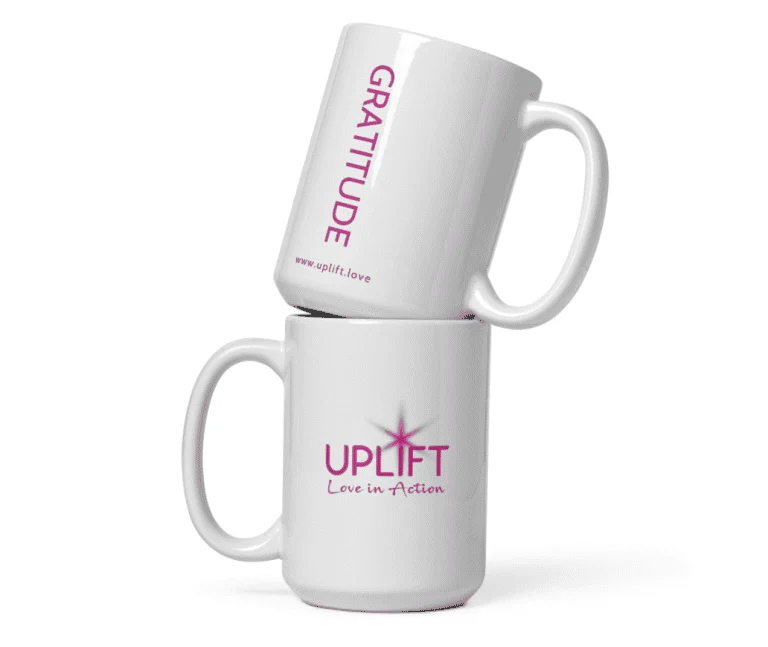
- Integrated Offerings and Tools: The "UPLIFT Gratitude Mug" is presented not merely as merchandise but as a tangible reminder and tool for reinforcing the program’s lessons. Its various sizes, colors, and "intentions" suggest that UPLIFT believes in providing physical anchors for mental and emotional practices. The special offer incentivizes sustained engagement with the message of gratitude beyond the program’s duration.
- Beyond the Program: The "Take 5 Deep Breaths," "Financial Contribution," and "Send a Blessing" initiatives are extensions of UPLIFT’s core values. They offer ongoing ways for individuals to practice mindfulness, contribute to positive change, and spread messages of love, embedding the lessons of the "7 Days of Gratitude" into daily life long after the program concludes. These are not merely add-ons but integrated elements of their continuous "uplifting" mission.
In essence, UPLIFT’s "7 Days of Gratitude" program, particularly Day 7, serves as a powerful testament to their belief in the profound capacity for human transformation through intentional practice, self-acceptance, and outward acts of love. It is an invitation to not only feel good but to be good, authentically and vulnerably, for the benefit of oneself and the wider world.
A Ripple Effect of Authenticity: Implications for Individual and Collective Well-being
The "7 Days of Gratitude" program, culminating in Day 7’s emphasis on gratitude and authenticity, carries significant implications that extend far beyond the individual participant. By challenging ingrained patterns of conformity and encouraging genuine self-expression coupled with appreciative awareness, the program sets the stage for a profound shift in personal well-being and, potentially, broader societal dynamics.
For the Individual:
- Sustainable Happiness: Unlike fleeting pleasures, the gratitude and authenticity cultivated in this program contribute to a more stable and enduring sense of happiness. By regularly acknowledging positive aspects of life and living in alignment with one’s true self, individuals build a resilient foundation for joy, irrespective of external circumstances.
- Enhanced Self-Efficacy: Overcoming years of conditioning to "keep your thoughts to yourself" and "conform" instills a powerful sense of agency and self-efficacy. This newfound confidence empowers individuals to pursue their passions, set healthy boundaries, and make choices that genuinely reflect their desires.
- Deeper, More Meaningful Relationships: Authenticity is the bedrock of genuine connection. By daring to "just be myself," individuals attract relationships based on mutual respect and understanding, rather than superficial pretense. This leads to more fulfilling personal and professional bonds, reducing feelings of isolation.
- Increased Emotional Intelligence: The practice of being "open to feeling what’s here and available to feel, even if it’s sad, or mad" significantly enhances emotional intelligence. It teaches individuals to process emotions rather than suppress them, leading to greater self-awareness and empathy for others.
- Resilience in Adversity: By embracing vulnerability and acknowledging the possibility of "the pain of losing, the grief of losing something," participants develop a more robust capacity to navigate life’s inevitable challenges. Gratitude, even in difficult times, provides a perspective that fosters hope and perseverance.
For Society and the World:
- A Culture of Kindness and Compassion: The Day 7 challenge of anonymous giving directly promotes altruism, creating a ripple effect of kindness. When individuals experience the inherent joy of giving without expectation, it encourages further acts of generosity, contributing to a more compassionate and supportive community.
- Authentic Leadership and Collaboration: A society comprised of more authentic individuals is likely to foster more genuine and effective leadership. Leaders who are true to themselves inspire trust and create environments where diverse perspectives are valued, leading to more innovative and collaborative solutions.
- Reduced Societal Pressure and Mental Health Strain: If more people embrace authenticity, it can gradually lessen the societal pressure to conform to unrealistic ideals. This can have a profound positive impact on collective mental health, reducing rates of anxiety, depression, and self-esteem issues that often stem from trying to be someone you’re not.
- Greater Empathy and Understanding: When individuals are secure in their own authenticity, they are often more open and empathetic towards the authenticity of others. This fosters greater understanding across different backgrounds and beliefs, potentially bridging divides and promoting social cohesion.
- A Foundation for Collective Upliftment: The UPLIFT organization’s mission of "Love in Action projects" directly ties individual transformation to collective betterment. By nurturing gratitude and authenticity in its participants, the program contributes to a growing movement of individuals committed to making a positive impact on the world, one genuine interaction and one selfless act at a time.
In conclusion, the "7 Days of Gratitude" program’s final day is not merely an exercise in self-improvement but a powerful catalyst for a more mindful, connected, and authentic existence. It underscores the profound truth that "to just be myself" is indeed "the greatest treasure," a fundamental baseline from which individuals can not only thrive personally but also contribute significantly to the "upliftment" of humanity. The program’s enduring implication is that a week of intentional practice can indeed "change your life," setting a new course for genuine self-discovery and a world enriched by authentic gratitude.