
Cultural Crossroads: A Deep Dive into the Divergent Paths of Modern Storytelling Adaptations
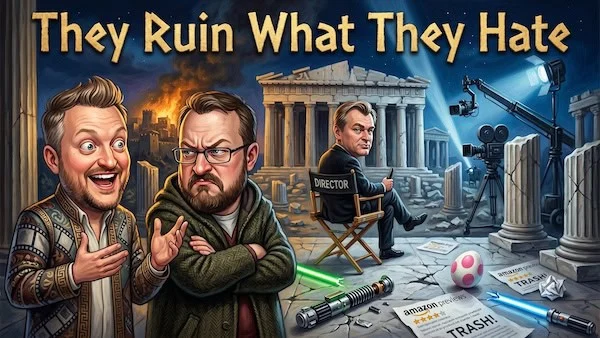
The landscape of popular culture is currently experiencing a significant divergence in how beloved stories and characters are being reinterpreted for new audiences. While some creators are pursuing bold, deconstructive approaches, often alienating established fanbases, others are championing faithful adaptations that honor the source material. This trend is sparking a vigorous debate about the future of storytelling, the role of creators, and the fundamental relationship between artists and their audiences.
The Rise of Deconstruction and Discontent
A palpable sense of unease is permeating the entertainment world, fueled by a series of high-profile announcements and recent releases that have been met with criticism and disappointment. This sentiment is particularly evident in the anticipation surrounding Christopher Nolan’s upcoming project, tentatively titled Odyssey. While the director’s name alone often guarantees a certain level of buzz, the early reception to Odyssey appears to be characterized by a peculiar form of enthusiasm: delight in the widespread disapproval it has already garnered.
This trend of perceived creative missteps is not isolated. James Gunn’s recent directorial effort, Superman, despite achieving profitability, has left a significant portion of the superhero’s dedicated fanbase feeling underserved and disheartened. Following this, Gunn made a controversial statement labeling Batman as "boring," a sentiment that has raised eyebrows and sparked debate about his vision for the character within the forthcoming DC Universe.
The pattern of questionable adaptation choices extends to other popular franchises. The announcement of a Helldivers movie, helmed by a director who has openly admitted to not playing the game and having no intention to do so, has drawn immediate skepticism. This mirrors the approach taken with Netflix’s new Narnia series, which has been described as an "entirely new reimagining," signaling a departure from the beloved C.S. Lewis narratives. Adding to this growing list of concerns, Avengers Doomsday is reportedly poised to feature the return of Chris Evans as Captain America, potentially sidelining Anthony Mackie, whose tenure as the new Cap has been met with a lukewarm reception.
The "Defilement of the Temple" vs. The "Honoring of the Source"
The current cultural moment can be broadly categorized into two distinct, often clashing, approaches to adapting existing narratives. The first, characterized by what some critics term the "defilement of the temple," involves creators taking established, cherished stories and characters and deconstructing them to align with their personal worldviews or contemporary sensibilities. This approach has been widely blamed for the perceived decline of franchises like Star Wars, the struggles of Marvel’s Phase Four, and the vocal outcry against the controversial rewriting of Chani’s character in Dune: Part Two. Further evidence of this trend can be seen in the cancellations of ambitious series such as Rings of Power and The Wheel of Time, as well as the departure of Henry Cavill from The Witcher, reportedly due to his resistance to narrative deconstruction efforts by the writers. Even the venerable franchise Dungeons and Dragons has seen a significant drop in sales for its latest edition, with critics attributing this to the inclusion of divisive social agendas and perceived attacks on original creators on social media platforms.
In stark contrast, the second approach champions faithful adaptation, demonstrating a profound respect for the original source material. A compelling example of this can be found in Destiny 2‘s latest expansion, Renegades. This first-person shooter, despite its own narrative ups and downs, has successfully implemented a beat-for-beat adaptation of Star Wars IV within the Destiny universe. By incorporating elements like lightsabers, thematic cosmetics, force-like abilities, and recognizable Star Wars environments, Renegades has revitalized the game’s player base. This success serves as a potent counterpoint to the perceived failure of EA’s Outlaws, a title that aimed for a similar crossover appeal but ultimately alienated its audience.
The Warhammer 40,000 universe, another titan of established lore, also offers a study in contrasting approaches. While recent novel offerings have faced criticism, the franchise consistently thrives through its video game adaptations. Space Marine 2 is lauded as a standout experience, and the Secret Level episode on Amazon Prime is considered a pinnacle of Warhammer 40k storytelling. The immense anticipation surrounding Henry Cavill’s upcoming Warhammer 40k Amazon series further underscores the value placed on creators who demonstrate a deep commitment to the source material.
The Audience’s Demand for Authenticity
At its core, the current discourse highlights a fundamental truth: people cherish their stories. They express significant displeasure when these narratives are subjected to what they perceive as poorly executed "redos" by creators who appear to disdain the original material or its architects. The prevailing sentiment is that any adaptation should be undertaken with a profound sense of respect for the creator, the source material, and, crucially, the audience.
The cautionary tale of George Lucas and the Star Wars prequels is frequently cited. Lucas’s decision to disregard established expanded universe content, which had enriched the franchise for two decades, alienated a substantial segment of his fanbase. His belief that the story was solely his to dictate ultimately led to the franchise’s sale to Disney, where further perceived damage occurred. To this day, the most enduringly popular elements within the Star Wars universe remain those that closely mirror the original trilogy or the Clone Wars animated series, with other ventures experiencing considerably less traction.
Commentary: Voices from the Trenches of Storytelling
The current trends in cultural adaptations have sparked robust discussions among creators and enthusiasts alike. Several key voices have emerged, offering critical perspectives on the prevailing approaches and their potential consequences.
Thomas: The Echoes of Disappointment and the Perils of "Fixing"
"My book club is currently immersed in reading The Odyssey," shares Thomas, an avid reader and observer of cultural trends. "We were initially quite hyped about the poster for Nolan’s film. While we’re still thoroughly enjoying the original text, our enthusiasm for seeing the movie has significantly waned."
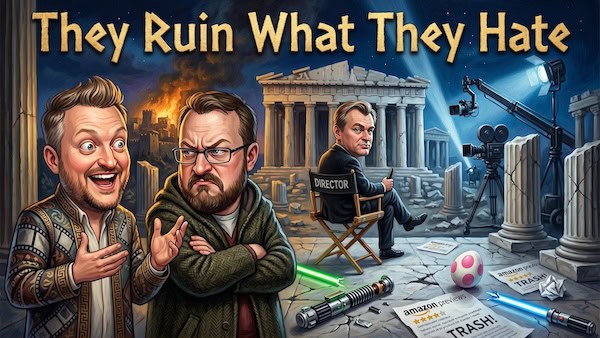
This sentiment is echoed in the specific criticisms leveled against Nolan’s project. "There are several questionable decisions," Thomas elaborates. "The armor design bears an uncanny resemblance to Batman’s armor from The Dark Knight. Nolan attempted to explain it as blackened bronze treated with sulfur, but visually, it’s strikingly similar. Furthermore, the casting choices have been criticized, with a notable absence of Greek actors. The decision to cast a rapper as a bard, with Nolan citing oral storytelling’s analogy to rap, has also raised eyebrows. This is compounded by the news that the new Narnia series on Netflix is reportedly discarding much of the established narrative and incorporating modern music."
Thomas points to a broader pattern: "They seem to view these old works as something to be ‘fixed.’ There’s a recurring story on Author Update about estates censoring deceased authors’ books to align with modern sensibilities. From a business perspective, this strategy is fundamentally flawed. People don’t seek out something they already disliked, merely for it to be remade into a slightly less offensive version."
He draws a parallel to a past marketing misstep: "There was a significant push in the ’90s to make Las Vegas family-friendly, and it was a disaster. What ultimately revitalized the city was the tagline, ‘What happens in Vegas, stays in Vegas.’ You’re never going to out-Disney World Disney World. Trying to create a diluted version of your core appeal to appease those who fundamentally disagree with it is a recipe for failure."
Thomas also identifies this as a key factor in Marvel’s recent struggles. "This is what killed Marvel. Marvel had high scores among men and lower scores with women, so they put women in charge, changed plots, and featured female characters. The result was that Marvel became way less popular with men and just as popular with women as before. They broke the first law of book marketing: love your reader as much as you love your book."
Jonathan: The Purity of Fan Love and the Missed Opportunities
Jonathan, another commentator, emphasizes the importance of genuine fandom in creative endeavors. "Henry Cavill was, in my opinion, the best live-action Superman. He approached the role with genuine love for the character and went the extra mile to make Superman as bright and hopeful as possible in Man of Steel. That was a movie made for people who love Superman. The latest Superman film, however, did not feel like it was made for its fans."
He continues, highlighting the disconnect in other productions: "Then you have the Helldivers movie being directed by someone who has not played the game and has no intention of doing so. The concept should be straightforward: nonstop celebrities dropping onto planets and getting eaten by bugs. It’s a simple premise that should resonate with the game’s core appeal."
Thomas: The Peril of Condescension and the Power of Passionate Creation
Thomas reiterates the danger of a condescending approach to audiences. "Condescension is generally bad for marketing, with one narrow exception: high art targeted at a tiny aristocratic audience where exclusivity is the entire point. But in publishing, there’s no financial viability in targeting only those individuals. You cannot build a sustainable career on such a niche."
He points to a compelling case study that contrasts the current trend: "Epic: The Musical serves as a fantastic case study against Nolan’s Odyssey. Imagine pitching Epic: The Musical – an opera for Gen Z and Gen Alpha based on a 2,500-year-old poem. They would laugh you out of the room. Yet, it has garnered a billion streams. Jorge Rivera-Hernández created it with palpable love, and that passion is evident in the final product."
Thomas also praises Peter Jackson’s adaptation of The Lord of the Rings, highlighting the underlying motivation. "Peter Jackson’s changes to The Lord of the Rings were made out of love. Christopher Tolkien, J.R.R. Tolkien’s son, famously disliked the movies. However, what saved them was that the alterations stemmed from someone who genuinely loved the story and Tolkien’s work. Jackson’s interpretation simplified and adapted it into a commercially viable action film, but it was an adaptation born from a place of affection."
Jonathan: The Blueprint for Success in Destiny 2 and the Call for Authenticity
Jonathan circles back to the Destiny 2 example, underscoring its significance. "Destiny 2‘s Renegades expansion is a beat-for-beat adaptation of Star Wars IV, seamlessly integrated into the Destiny universe. It features the same narrative arc, the same structure, complete with a superweapon, lightsaber combat, and a Sith Lord. This expansion successfully brought the player base back and sent a clear message to Lucasfilm: people cherish classic Star Wars. The plea is simple: stop trying to create fundamentally different Star Wars narratives."
Thomas: The Enduring Appeal of Well-Crafted Villains and the Lessons of Thrawn
Thomas delves into the intricacies of compelling character creation, referencing the enduring success of Timothy Zahn’s Thrawn Trilogy. "The Thrawn Trilogy is crucial. Timothy Zahn created arguably the best villain in Star Wars after Darth Vader by taking an entirely opposite approach. Thrawn possessed no Force powers. His true superpower was his profound understanding of his adversaries’ minds. He would meticulously study the art and culture of a planet and use that knowledge to predict enemy movements in battle. He was consistently five steps ahead. The Republic would often rout in space battles simply at the mere rumor of his presence. It’s a brilliant narrative device: create a villain who is the antithesis of Darth Vader, and in doing so, craft the second-most beloved villain in Star Wars."

He contrasts this with the sequel trilogy’s less successful attempts: "The sequels attempted a diluted version of Darth Vader with the helmet and the angry demeanor, yet the character’s name is barely remembered. Thrawn is not a ‘Diet Darth Vader’; he is an ‘Anti-Darth Vader,’ and that’s precisely why he doesn’t feel like a cheap imitation."
Thomas shares an anecdote that further illustrates the power of understanding foundational storytelling principles: "My brother told me about a video where someone who had never seen Star Wars, but had studied the Hero’s Journey, attempted to recount the story solely from pop culture knowledge. Astonishingly, they were able to recreate Mara Jade from first principles."
Jonathan: The Unfulfilled Potential of Mara Jade
Jonathan expresses regret over missed opportunities: "They should have gone with Mara Jade instead of Rey. She is a fantastic female character with a deeply fascinating story."
Thomas: The Golden Rule of Storytelling: Love Your Reader, Love Your Book
Thomas concludes with a fundamental principle for any creator: "The bottom line for authors, and indeed for all storytellers, is that you must love your reader, and you must love your book. These two imperatives are not mutually exclusive; if you find them in conflict, you are not ready to publish. The Super Mario Bros. Movie was made with immense love by people who adored Mario and cherished the fans. My children were captivated by it and chattered about it enthusiastically all the way home. If you allow hatred or disdain to creep into your heart, you are inevitably walking the path of the dark side."
Chronological Context and Evolving Interpretations
The current debate over adaptation approaches is not entirely new, but its intensity and the sheer volume of examples have reached a critical juncture. The trend of deconstruction, while present in various forms throughout cinematic and literary history, has become particularly pronounced in the last decade, coinciding with the rise of massive shared universes and the increasing commercialization of intellectual property.
- The 1990s: A period marked by attempts to broaden the appeal of certain established brands, sometimes with less than ideal results, as exemplified by the aforementioned Las Vegas marketing shift.
- The Early 2000s: The release of George Lucas’s Star Wars prequels, which, despite their box office success, ignited fan debate over narrative choices and the disregard for existing lore.
- The 2010s: The dominance of superhero franchises and the establishment of interconnected cinematic universes, leading to both critical and commercial triumphs and notable missteps. Marvel’s Phase Four, in particular, has been cited as an example of a franchise struggling to maintain its previous level of consistent quality and fan engagement.
- The Late 2010s/Early 2020s: The rise of streaming services has led to an explosion of content, including numerous adaptations of existing IPs. This has amplified the contrast between faithful retellings and radical reimagining, with fan reactions becoming increasingly vocal and polarized. The cancellations of Rings of Power and Wheel of Time, while debated, highlight the challenges of translating beloved fantasy worlds to screen in ways that satisfy diverse fan expectations. The departure of Henry Cavill from The Witcher further underscores the tension between creative vision and source material fidelity.
Supporting Data and Case Studies
The arguments presented are supported by a growing body of anecdotal evidence and market performance indicators.
- Franchise Performance: The relative successes and failures of different Star Wars media, with the original trilogy and The Clone Wars consistently outperforming newer iterations, serves as a strong indicator of audience preference for established tones and characters.
- Gaming Industry Trends: The robust sales and player engagement of Destiny 2‘s Renegades expansion, directly attributable to its faithful Star Wars homage, contrasts sharply with the performance of games that have attempted more experimental approaches to beloved IPs. Similarly, the continued strength of Warhammer 40k through its video game adaptations speaks volumes.
- Critical and Fan Reception: The widespread outcry against specific character rewrites (e.g., Chani in Dune: Part Two) and the vocal disappointment surrounding certain casting or narrative decisions in new adaptations demonstrate a clear audience desire for respect for the source material.
- Box Office and Streaming Numbers: While not always a direct measure of quality, the financial performance of films and series often reflects audience engagement. The struggles of certain Marvel projects in Phase Four, despite significant marketing, suggest a disconnect with the core audience. Conversely, the enduring popularity of projects like The Super Mario Bros. Movie, which was lauded for its heartfelt homage to the source material and its fans, provides a counterpoint.
- Sales Data: The reported drops in Dungeons and Dragons sales, linked to perceived social agenda insertions and attacks on original creators, highlight the sensitivity of established fanbases to changes that deviate from their core expectations.
Official Responses and Creator Statements
Direct official responses from creators and studios regarding these criticisms are often limited or couched in carefully worded statements. However, the actions and pronouncements of key figures offer insight:
- James Gunn’s Statements: Gunn’s pronouncements on Batman and his vision for the DCU, while intended to signal a fresh direction, have been interpreted by many as dismissive of established character nuances and fan expectations.
- Netflix’s Narnia Approach: The description of the new Narnia series as an "entirely new reimagining" suggests a deliberate departure from the established narrative, a decision that has been met with a mixture of curiosity and apprehension.
- Director’s Intentions: When directors like Nolan discuss their creative choices, such as the armor design in Odyssey, their explanations are often met with scrutiny against the visual evidence, suggesting a gap between artistic intent and audience perception.
Implications for the Future of Storytelling
The current cultural crossroads has significant implications for the future of creative industries:
- The Importance of Audience Trust: Creators and studios are facing a critical juncture where rebuilding and maintaining audience trust is paramount. A history of perceived disrespect for source material can lead to long-term damage to a franchise’s viability.
- The Power of the Fanbase: The internet and social media have empowered fanbases to voice their opinions with unprecedented reach and impact. Ignoring these voices is no longer a viable strategy for long-term success.
- The Rise of "Love-Based" Adaptations: Projects like Epic: The Musical and Destiny 2‘s Renegades demonstrate that audiences are hungry for adaptations created with genuine passion and respect for the original material. This suggests a growing demand for creators who are not just skilled but also deeply invested in the stories they are bringing to life.
- The "Deconstruction" Debate: The ongoing debate around deconstruction raises questions about its artistic merit versus its commercial viability. While some deconstructive works can be insightful, when applied to beloved IPs without a clear understanding or appreciation of their core appeal, they risk alienating the very audience that sustains them.
- The Value of Originality within Adaptation: The success of Thrawn as an original villain created within the Star Wars universe, and the positive reception of Mara Jade, suggests that introducing compelling new elements that complement and respect the established world can be highly effective, rather than solely relying on reinterpreting existing characters.
Ultimately, the current landscape underscores a fundamental truth: audiences crave stories that resonate with them on an emotional level. Whether through faithful homage or inspired reinvention, the most successful adaptations will be those that are born from a genuine love for the source material and a deep respect for the audience that cherishes it. The path forward for creators lies in understanding this symbiotic relationship, fostering trust, and prioritizing passion over perceived artistic license when engaging with the stories that have already captured the hearts and imaginations of millions.



Leave a Comment