
Darwin’s Journey: A Masterpiece on the Brink of Perfection – Navigating the Evolution of Eurogame Design
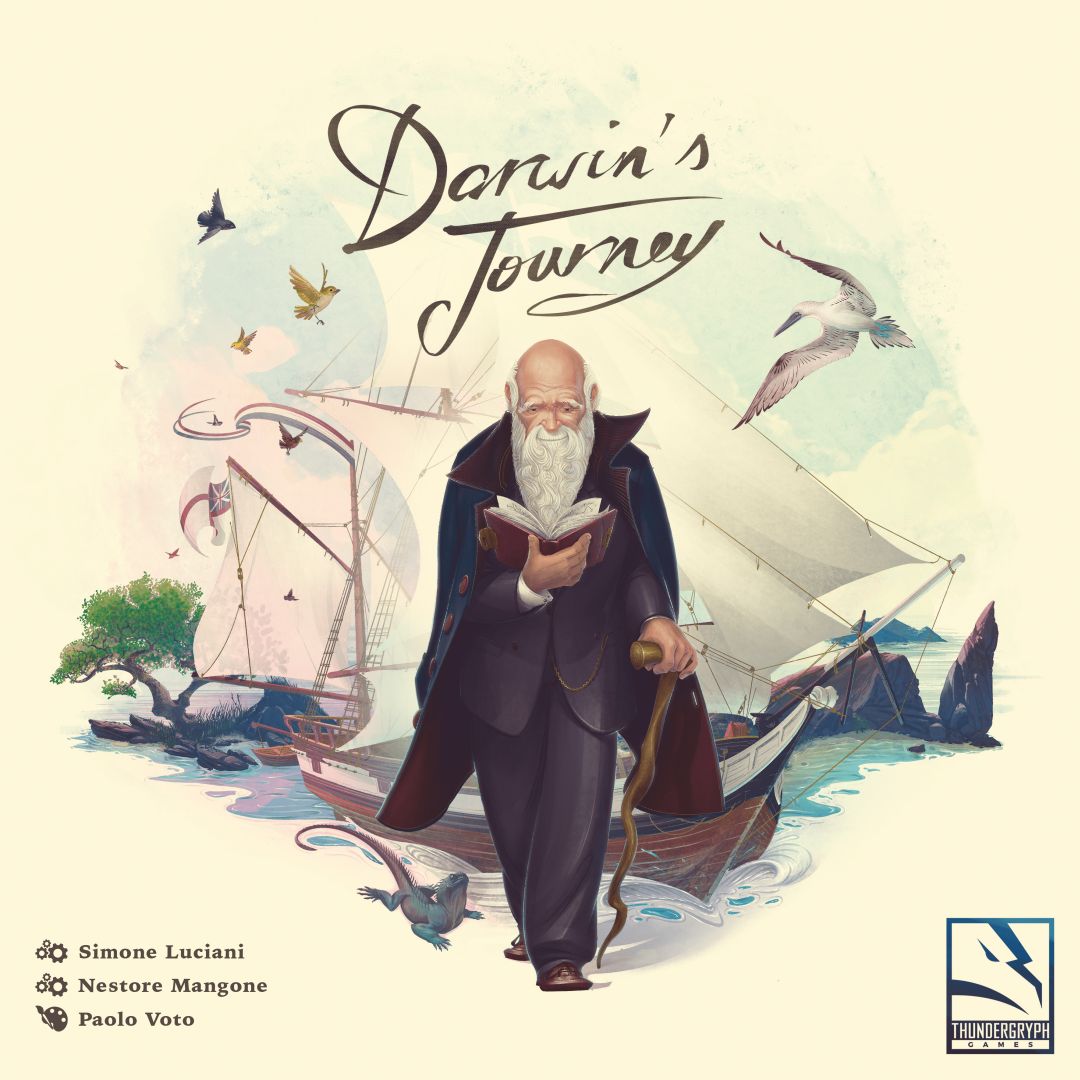
London, UK – In the ever-expanding universe of board gaming, where new titles vie for attention with dizzying speed, a rare few manage to transcend the ordinary and etch themselves into the annals of greatness. Darwin’s Journey, the latest offering from a revered cadre of designers, has not merely achieved this; it has sailed perilously close to the shores of perfection, positioning itself as a crowning jewel in the mid-weight Eurogame category. With its intricate mechanisms, stunning thematic integration, and deeply satisfying gameplay loops, it promises an expedition as intellectually stimulating as the voyage of the HMS Beagle itself, albeit with one curious cartographical oversight.
Main Facts: Charting the Course of Excellence
Darwin’s Journey emerges as a profound and engaging worker-placement Eurogame, hailed by critics as one of the finest examples of its class. Designed by the acclaimed duo Simone Luciani and Nestore Mangone, whose previous works include titans like Tzolk’in, Grand Austria Hotel, Barrage, and Newton, this title continues their tradition of crafting highly strategic and intricately interwoven systems. The game immerses players in the historical era of Charles Darwin’s scientific explorations, tasking them with dispatching explorers, discovering specimens, conducting research, and advancing scientific theories.
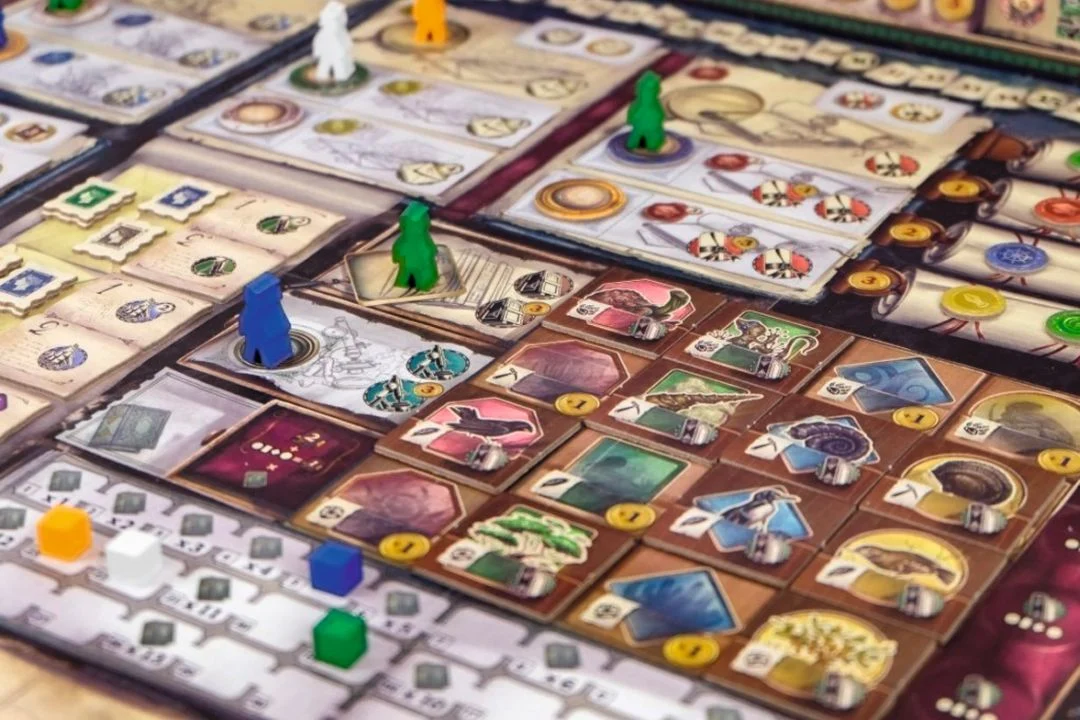
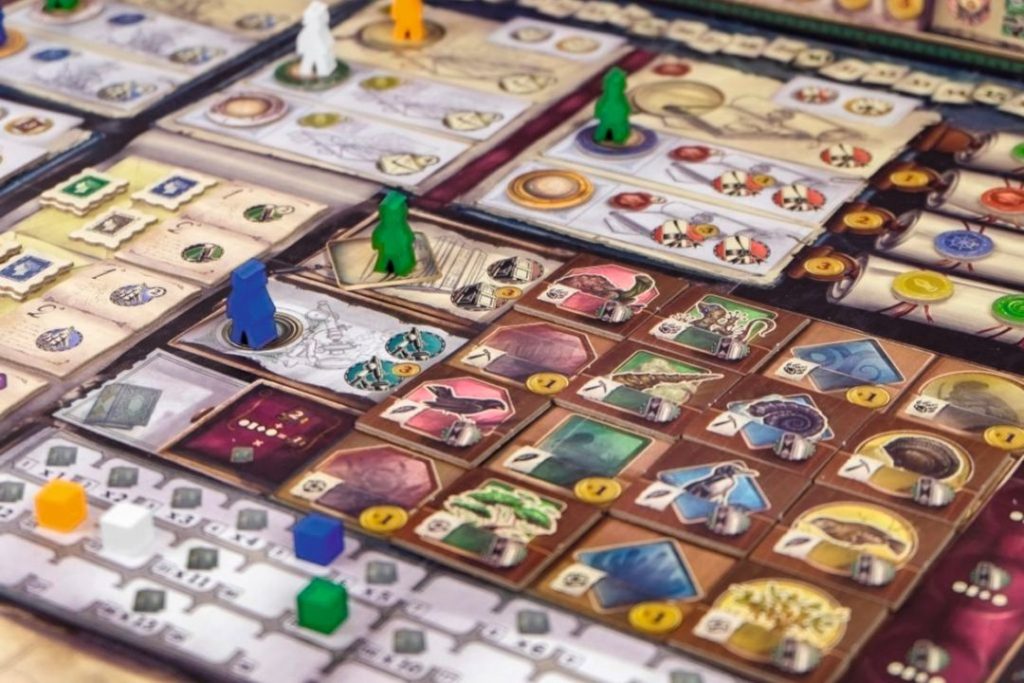
Visually, the game is a triumph. Its table presence, while embracing a historically appropriate palette of browns and beiges, is undeniably lovely, featuring exquisite tile and card sketches that evoke the naturalistic artistry of the period, all anchored by a fantastic game map. The thematic integration is seamless, ensuring that every mechanical action resonates with the narrative of scientific discovery. Players will find themselves effortlessly sailing to islands, making groundbreaking discoveries, showcasing their findings in museums, and ultimately reaping the rewards of their arduous work.
The core gameplay revolves around a sophisticated worker-placement system with a crucial innovation: three of a player’s four workers can be individually upgraded, allowing for dynamic specialization and strategic depth. Actions are categorised by four main colours, and workers can improve their competency in each, unlocking more powerful versions of these actions. This system, combined with a wealth of interconnected actions – from corresponding for ongoing bonuses to advancing on the Theory of Evolution track – creates a constantly evolving strategic puzzle.
Despite its myriad strengths, Darwin’s Journey faces a singular, albeit minor, navigational hazard: its iconography. While the game’s aesthetic is largely impeccable, certain symbols can be less intuitive than desired, occasionally necessitating a dip into the rulebook. However, this initial hurdle is quickly overcome, particularly with the aid of player-created reference sheets, and does little to diminish the game’s overall brilliance beyond the first few plays. In essence, it is a game on the precipice of flawless design, held back only by a detail that, while noticeable, is far from detrimental to the profound experience it offers.
A Legacy of Innovation: The Designers’ Chronology of Excellence
The journey to Darwin’s Journey is deeply rooted in the illustrious careers of its creators, Simone Luciani and Nestore Mangone. Their collaborative and individual design philosophies have consistently pushed the boundaries of Eurogame design, establishing a formidable reputation for creating titles that are both intellectually rigorous and immensely rewarding. Understanding their previous works provides crucial context for appreciating the nuanced genius of their latest creation.
Luciani, in particular, has been a driving force behind some of the most iconic Eurogames of the past decade. His work on Tzolk’in: The Mayan Calendar (with Daniele Tascini) introduced the revolutionary concept of gear-driven worker placement, where workers are placed on rotating gears that advance them through various action spaces over time, forcing players to plan several turns ahead. This innovative approach to time management and resource optimization immediately set a new standard for strategic depth.
Following Tzolk’in, Luciani continued to explore complex economic engines and player interaction with titles like Grand Austria Hotel (with Virginio Gigli), a game celebrated for its intricate dice-drafting and customer management mechanics. Here, players manage a bustling hotel, preparing rooms and serving guests, each action chaining into the next in a highly satisfying cascade. This focus on efficient action chaining and synergistic effects would become a hallmark of his design ethos.
Barrage (also with Tommaso Battista), a heavy Eurogame focused on hydroelectric power generation, showcased Luciani’s ability to create highly interactive and often cutthroat economic simulations. Its unique resource wheel and area control elements challenged players to navigate a tight economy and strategic bottlenecks. Then came Newton (with Nestore Mangone), a game that, in many ways, serves as a direct conceptual precursor to Darwin’s Journey. Newton introduced a multi-path progression system where players developed their scientific careers through various tracks, each offering unique bonuses and strategic opportunities. It emphasized the power of combining actions and specializing in certain areas, echoing the very mechanics that shine in Darwin’s Journey.
Nestore Mangone, while perhaps less prolific individually, has proven himself an exceptional collaborator, contributing significantly to the sophisticated systems seen in Newton and now Darwin’s Journey. His contributions often focus on refining the intricate interactions between different game systems, ensuring that even the most complex mechanics feel cohesive and elegant.
Darwin’s Journey can thus be seen as the culmination of these design experiences. It distills the best elements from its predecessors – the strategic worker placement of Tzolk’in, the satisfying action chaining of Grand Austria Hotel, the multi-track progression and specialization of Newton, and the robust engine-building inherent in all their works – and melds them into a cohesive, thematic whole. It’s not just another Eurogame; it’s an evolution of their own design philosophy, demonstrating a mastery of their craft that few can rival. The game doesn’t invent entirely new mechanics, but rather refines and recombines familiar elements in such a way that they feel fresh, innovative, and deeply integrated, showcasing how well-trodden paths can still lead to exciting new discoveries when explored by master cartographers.
Unveiling the Mechanisms: A Deep Dive into Supporting Data
At its heart, Darwin’s Journey is a medium-complexity worker-placement game, a genre often celebrated for its strategic depth and player interaction. However, what sets this game apart is not just the presence of familiar mechanisms but their ingenious implementation and the elegant way they interlock, creating a rich tapestry of strategic choices.
The Core Loop: Worker Placement and Specialization
Players begin with a modest team of four workers, but three of these are not static; they are dynamic agents of exploration and research that can be upgraded. This upgrade system is a cornerstone of the game’s strategic depth. There are four main action colours, each corresponding to a different field of activity (e.g., exploration, research, correspondence). As the game progresses, players can invest actions to increase a worker’s "strength" or "competency" in one or more of these colours. Many actions have prerequisites – requiring at least one strength in their corresponding colour – while the most potent versions demand three or more. This means players are constantly making crucial decisions: Do I specialize a worker in a single colour to unlock powerful actions quickly? Or do I create versatile workers capable of performing a wider range of less powerful actions? This individual worker progression creates a highly personal and adaptive strategy, distinct from typical worker placement games where workers are often undifferentiated units.
Action Groups: A Symphony of Interconnected Choices
The game features several primary action groups, each vital to success:
- Worker Improvement: This group allows players to enhance their workers’ colour competencies, directly feeding into the strategic specialization described above. It’s a foundational action, critical for scaling up one’s capabilities throughout the game.
- Correspondence: These actions grant ongoing bonuses, often triggered by specific game events or conditions. They represent the long-term networking and academic engagement of Darwin’s era, providing passive benefits that can fuel other strategies.
- Ship Movement: Moving the HMS Beagle is primarily focused on securing end-of-round bonuses. These can range from resources to temporary boosts, adding a tactical layer of timing and resource management as players jockey for optimal ship positions.
- Explorer Movement: This is arguably the most dynamic and visually satisfying action group. Moving explorers across the game’s beautifully rendered map allows players to discover new territories, collect valuable specimens, and trigger a host of immediate rewards, including victory points, multipliers, and essential resources.
Beyond these colour-specific actions, Darwin’s Journey offers a suite of non-colour-specific actions that further enrich the gameplay:
- Making Discoveries: Unearthing new species or geological formations.
- Museum Display: Showcasing discoveries to gain prestige and points.
- Unlocking Stronger Actions: Gaining access to more potent versions of existing actions.
- Advancing on the Theory of Evolution Track: A crucial track that often dictates end-game scoring multipliers and unlocks powerful abilities.
- Gaining Bonus Tiles: These provide immediate or ongoing benefits, often creating powerful synergistic opportunities.
The Magic of Action Chaining
What truly elevates Darwin’s Journey from a collection of solid mechanics to a genuinely inspired design is the seamless and deeply satisfying way these actions interlink. The reviewer’s example perfectly illustrates this "chain reaction" phenomenon:
"You may carry out an explore action allowing you to move on the island; the bonus of which is to make a camp that (as another bonus) lets you move your ship; which picks you up a discovery you need to complete a bonus tile — while setting up your camp got you another bonus on your player board allowing you to move your explorer again, giving you some resources and the chance to pick up another bonus tile."
This isn’t an isolated incident; such cascades of actions are the game’s beating heart. They reward careful planning and strategic foresight, turning seemingly simple choices into catalysts for monumental turns. The joy isn’t just in executing an action, but in anticipating and orchestrating the subsequent chain of bonuses and rewards, leading to moments of profound player satisfaction and strategic triumph.
Aesthetics and Thematic Resonance
The visual presentation of Darwin’s Journey is a significant part of its appeal. The historical theme is beautifully rendered, avoiding overly vibrant, anachronistic palettes in favour of a more subdued, earthy tone. The "brown and beige" palette, far from being dull, lends an air of authenticity and academic gravitas, perfectly matching the scientific exploration theme. The detailed tile and card sketches are exquisite, depicting flora, fauna, and geological features with a naturalist’s precision. The game map itself is a fantastic piece of art, functional yet evocative, drawing players into the world of the Galapagos Islands and beyond.
The thematic integration is truly exceptional. Every mechanical action makes inherent sense within the narrative. Upgrading workers isn’t just a numerical increase; it represents honing an explorer’s skills. Moving explorers across the map feels like genuine discovery. Collecting specimens, researching them, displaying them in museums – these actions directly mirror the scientific process. Even the somewhat abstract "correspondence" actions neatly tie into the academic exchange of ideas prevalent in Darwin’s time. This strong thematic coherence ensures that players are not just moving pieces around a board but are actively participating in a grand scientific expedition.
The Iconography Conundrum
The one area where the supporting data points to a minor stumble is the iconography. While the artwork is beautiful, some symbols used to represent actions or bonuses are not immediately intuitive. This means that during the initial plays, players will frequently consult the rulebook or player aids to decipher the meaning of certain icons. While frustrating at first, this issue tends to fade as players become familiar with the game’s visual language. The suggestion of printing custom reference sheets highlights the community’s proactive approach to mitigating this minor design flaw, underscoring that the core game experience is so compelling that players are willing to put in the extra effort. It’s a shame, as a truly perfect iconography set would have elevated an already stellar visual package to an unassailable height.
The Art of Subtlety: Design Philosophy and Player Experience
The brilliance of Darwin’s Journey lies not just in its individual components but in the design philosophy that underpins their integration. Luciani and Mangone have a remarkable talent for taking familiar Eurogame archetypes and subtly twisting them, making them feel both recognizable and refreshingly new. This "familiar yet different" approach is key to the game’s broad appeal and enduring strategic depth.
Balancing Familiarity with Innovation
The core mechanics, such as worker placement, resource management, and track advancement, are staples of the Eurogame genre. However, the designers meticulously refine each of these. The worker upgrade system, for instance, transforms generic workers into specialized agents, introducing a layer of strategic planning about skill development that is absent in many other worker-placement titles. Similarly, the action spaces themselves, while visually distinct, are designed to create powerful synergies, encouraging players to look beyond the immediate benefit of an action and consider its ripple effect across their entire strategy. This balance ensures that seasoned Eurogame players will immediately grasp the fundamentals while simultaneously discovering novel strategic dimensions.
Addressing the Iconography Challenge from a Design Perspective
The iconography issue, while a point of critique, also offers insight into the complexities of board game design. Creating a universal visual language that is instantly understandable across diverse player bases and contexts is a monumental task. Designers must balance aesthetic appeal, thematic representation, and functional clarity. In Darwin’s Journey, it appears that while the thematic and aesthetic goals were largely met with distinction, functional clarity in some iconography fell slightly short. This often happens when designers are deeply immersed in their own system and the symbols become second nature to them, but require a greater cognitive load for new players. The fact that the issue is largely overcome after a few plays suggests that the visual logic is there, but it requires a learning curve, which could have been smoothed out with more universal or explicit symbols. This doesn’t diminish the game’s quality, but it highlights a common challenge in game interface design.
Unparalleled Replayability: A Puzzle of Infinite Variations
One of the most compelling aspects of Darwin’s Journey is its exceptional replayability. The game genuinely feels like a different puzzle with each play, a testament to the sheer volume and strategic impact of its setup choices. This isn’t just a matter of random card draws; the variability is baked into the very structure of the game:
- Unique Worker Abilities: Players can start with different unique worker abilities, guiding early-game strategy.
- Variable Round-End Bonuses: The goals and rewards for moving the ship change each game, demanding adaptive tactics.
- Selectable Bonus Tiles: The pool of available bonus tiles, offering diverse strategic paths, ensures players can tailor their engine-building.
- Strong Unlockable Multi-coloured Actions: The availability and cost of upgrading specific multi-colour actions will vary, influencing worker specialization.
- Correspondence Bonuses: The specific ongoing bonuses available through correspondence actions differ, altering long-term strategic benefits.
- Specimen Locations: The placement of valuable specimens on the map changes, leading to different exploration routes and priorities.
- Diverse Scoring Opportunities: The game offers two primary scoring methods – one fixed, one dependent on progress on the evolution track – alongside a wealth of secondary scoring opportunities. Players can specialize in particular avenues (e.g., museum displays, specific discoveries) or pursue a balanced approach, leading to widely divergent winning strategies.
This cornucopia of variable elements ensures that players are constantly presented with fresh strategic landscapes, preventing the game from feeling stale even after numerous plays. It encourages experimentation, adaptation, and a deep understanding of the game’s synergistic possibilities. The depth of these choices is a powerful testament to the designers’ commitment to creating a game with lasting appeal.
Beyond the Beagle: The Broader Implications of Darwin’s Journey
Darwin’s Journey is more than just an excellent board game; it carries significant implications for the Eurogame genre and the broader hobby. Its success offers insights into current design trends, player preferences, and the potential for thematic integration in mechanically driven games.
Setting a New Standard for Mid-Weight Eurogames
In a market saturated with heavy, sprawling epics and lighter, gateway games, Darwin’s Journey confidently stakes its claim in the mid-weight category, demonstrating that depth and complexity don’t necessarily equate to excessive playtime or overwhelming rulesets. It strikes a near-perfect balance, offering enough strategic meat to satisfy seasoned players without becoming an impenetrable fortress for those looking to step up from lighter fare. It sets a benchmark for how tightly integrated mechanics, thematic resonance, and high replayability can coexist within a manageable play duration.
The Power of Thematic Integration
While Eurogames are often criticized for being "pasted-on" themes, Darwin’s Journey is a shining example of how a theme can be intrinsically woven into the fabric of the mechanics. The journey of exploration, discovery, research, and display feels genuinely represented by the actions players take. This strong thematic coherence enhances player immersion and makes the strategic decisions feel more meaningful than mere abstract point-scoring. It underscores the growing importance of thematic depth, even in mechanically focused games, as players seek richer, more narrative-driven experiences.
Target Audience and Longevity
Darwin’s Journey is an absolute "Must Play" for fans of medium-to-heavy Eurogames, particularly those who appreciate strategic worker placement, engine-building, and intricate action chaining. If you enjoyed Newton, Barrage, or Grand Austria Hotel, this game is a natural progression. It’s for players who relish the challenge of a deep strategic puzzle and the satisfaction of executing complex, synergistic turns.
Its high replayability, coupled with the subtle nuances of its mechanics, suggests excellent longevity. This is a game that will likely remain a staple in many collections for years to come, offering fresh challenges with each new play. Its strategic depth ensures that players will continue to discover new optimal paths and explore different approaches, preventing it from quickly losing its appeal.
An Evolution, Not a Revolution
The reviewer aptly concludes that Darwin’s Journey may not be an "evolution in and of itself," in the sense of introducing radically new mechanics like Tzolk’in did. Instead, it demonstrates "what is possible when familiar game mechanics evolve to their highest peaks." This is a crucial distinction. It’s not about inventing the wheel, but about perfecting its design, making it roll smoother, faster, and more efficiently than ever before. It’s a testament to the iterative nature of game design, where refinement and masterful integration can be just as impactful as groundbreaking innovation.
In an industry constantly chasing the next big thing, Darwin’s Journey stands as a powerful reminder that excellence often comes from meticulously refining existing concepts, crafting them with precision, and integrating them into a cohesive, immersive, and profoundly rewarding experience. For anyone embarking on their own journey through the vast world of Eurogames, charting a course with Darwin’s Journey is an expedition well worth undertaking.
Review by Chris Marling
PLAY IT?
Must Play
What’s in the box?
(Placeholder for actual box contents – not provided in original, but typically a bulleted list of components like board, cards, tokens, meeples, etc.)
Try This if you Liked…
Newton
Similar in complexity with multiple paths to ignore, master or combine, with everything knitting together beautifully and uniquely.
Buy your copy of Darwin’s Journey on Zatu

Leave a Comment