The $100 Million Punchline: The Anatomy of the ‘Town & Country’ Disaster
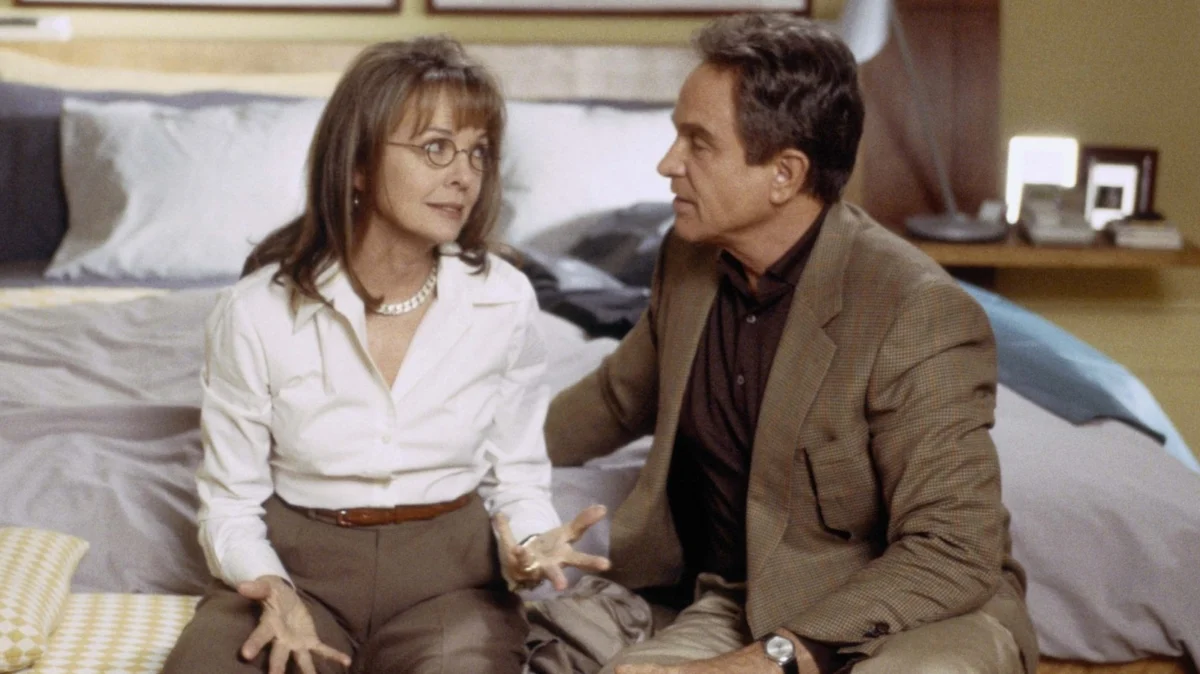
In the annals of Hollywood history, there are failures, there are "bombs," and then there is Town & Country. Released in the spring of 2001, the film was intended to be a sophisticated, adult-oriented romantic comedy featuring a "Mount Rushmore" of acting talent. Instead, it became a cautionary tale of creative indulgence, production profligacy, and one of the most lopsided financial disasters in the history of the medium.
Starring Academy Award winners Warren Beatty, Diane Keaton, and Goldie Hawn, alongside the legendary Garry Shandling, Town & Country represented a collision between Old Hollywood prestige and New Hollywood’s burgeoning blockbuster budget requirements. By the time the dust settled, the film had recouped barely 10% of its production costs, effectively ending an era of star-driven, high-budget adult comedies and leaving a permanent mark on the careers of its primary architects.
Main Facts: A Pedigree of Unprecedented Proportions
On paper, Town & Country was a guaranteed success. The film was directed by Peter Chelsom, who had earned critical acclaim for Funny Bones, and written by Buck Henry, the satiric genius behind The Graduate. The cast was a masterclass in star power: Warren Beatty (who also served as an uncredited producer and editor), Diane Keaton, Goldie Hawn, Garry Shandling, Andie MacDowell, Jenna Elfman, and even Charlton Heston in a supporting role.
The plot followed Porter Stoddard (Beatty), a wealthy and famous New York City architect who finds himself entangled in a web of infidelities, mid-life crises, and farcical misunderstandings. The narrative weaves through the high-society circles of Manhattan, the Hamptons, and the rugged terrain of Mississippi.
However, what was meant to be a lighthearted exploration of marital ennui transformed into a financial quagmire. The film’s production budget, originally pegged at a manageable $40 million, ballooned to an estimated $90 million to $105 million. When marketing costs were factored in, the total investment neared $125 million—an astronomical figure for a film without a single explosion, CGI creature, or superhero.
Chronology: Three Years in Production Purgatory
The timeline of Town & Country is perhaps the most damning evidence of its mismanagement. The journey from the first "action" to the final "cut" was a three-year odyssey of delays.
1998: The Chaotic Beginning
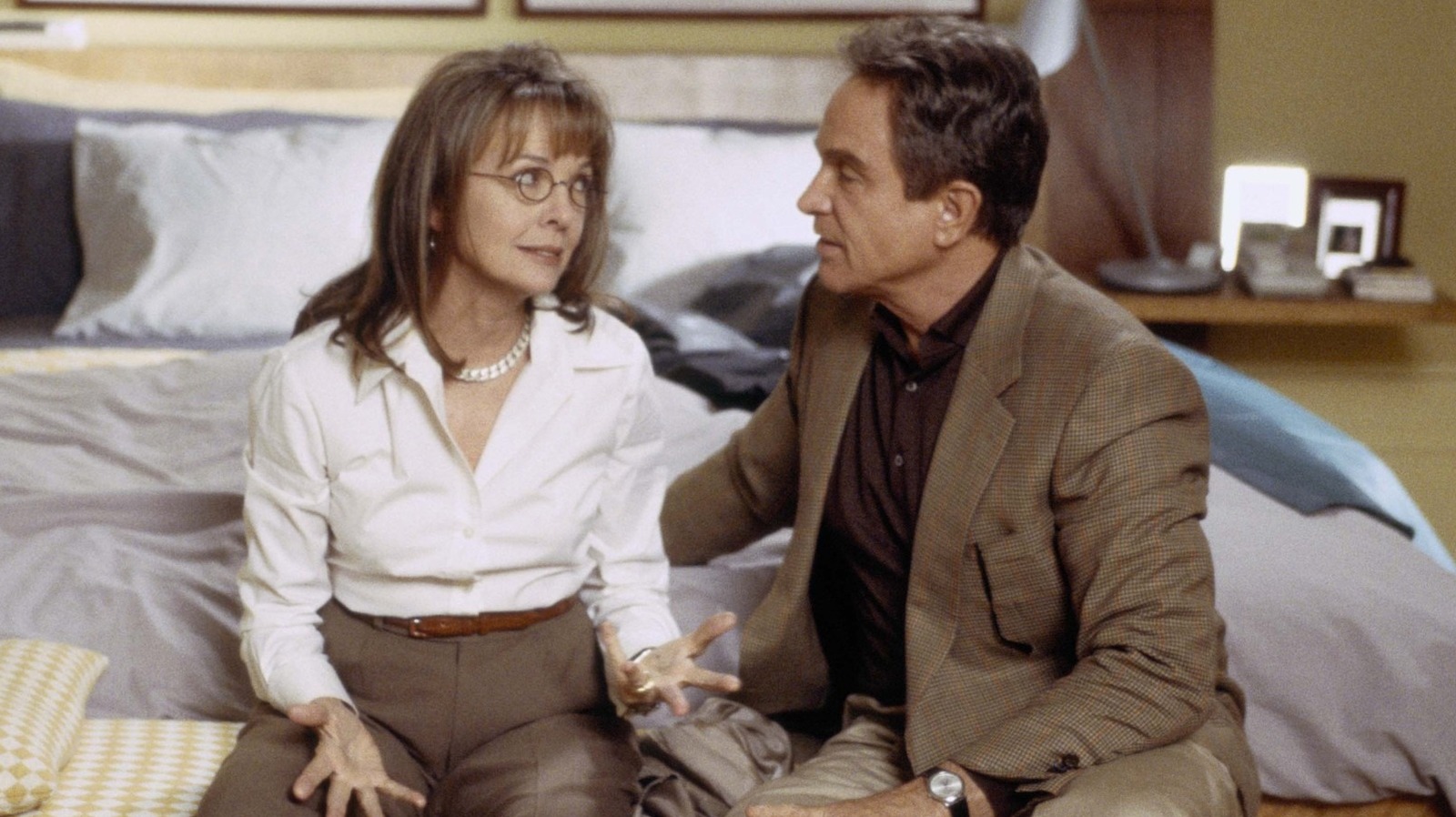
Principal photography began in June 1998. Almost immediately, the production hit hurdles. Reports from the set suggested that the script was incomplete when filming commenced. Warren Beatty, known for his meticulous—and often glacial—working style, allegedly demanded dozens of takes for minor scenes. This perfectionism, while successful in his previous hits like Reds and Heaven Can Wait, proved disastrous for a comedy relying on timing and momentum.
1999: The Great Hiatus
By early 1999, production had dragged on so long that several key actors had to leave to fulfill other contractual obligations. This forced the film into a lengthy hiatus. Because the script was still being tinkered with, the production could not be finished until the cast could be reassembled. The set remained dormant for months, while overhead costs continued to mount.
2000: Reshoots and Editing Room Battles
When the cast finally returned for reshoots in the spring of 2000, the budget had already doubled. During this period, rumors swirled of a power struggle between director Peter Chelsom and Warren Beatty. It was widely reported that Beatty took a heavy hand in the editing room, further delaying the process. New Line Cinema, the studio behind the project, found itself in a "sunk cost" trap—having already spent $80 million, they felt compelled to spend more to make the film releasable.
2001: The Final Release
The film’s release date was moved a staggering 12 times. It finally hit theaters on April 27, 2001. By this point, the industry buzz was toxic. The film opened to a dismal $3 million domestic weekend, finishing its entire global run with a mere $10.3 million.
Supporting Data: By the Numbers
To understand the scale of the Town & Country failure, one must look at the data relative to its contemporaries and the genre as a whole.
| Metric | Town & Country (2001) |
|---|---|
| Estimated Production Budget | $90M – $105M |
| Domestic Box Office | $6.7M |
| International Box Office | $3.6M |
| Total Worldwide Gross | $10.3M |
| Percentage of Budget Recouped | ~9.8% |
| Rotten Tomatoes Score | 13% |
Comparative Analysis
To put this in perspective, other legendary bombs like The Adventures of Pluto Nash (2002) and Ishtar (1987)—the latter also starring Beatty—are often cited as the gold standards for failure. However, Ishtar cost $55 million and grossed $14 million (recouping about 25% of its budget). Town & Country performed significantly worse in terms of ROI (Return on Investment), recouping less than 10%.
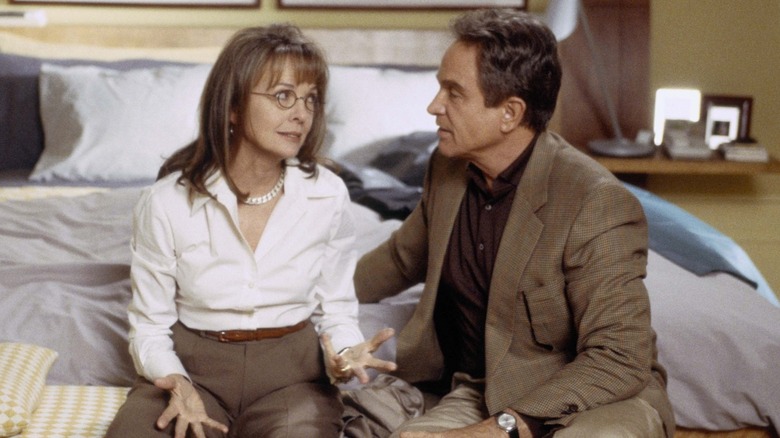
In its opening weekend, Town & Country was outperformed by Driven, a Sylvester Stallone racing film that was itself a box office flop. It also failed to compete with Bridget Jones’s Diary, which was in its third week of release and earned nearly triple what Beatty’s film did in its debut.
Official Responses and Behind-the-Scenes Friction
The fallout from Town & Country was marked by a blend of diplomatic silence and pointed finger-pointing.
The Studio’s Perspective:
New Line Cinema, led by executives Robert Shaye and Michael Lynne, was reportedly exasperated by the ballooning costs. For a studio that had built its reputation on savvy, mid-budget hits like A Nightmare on Elm Street and Rush Hour, Town & Country was a massive departure from their fiscal discipline. While the studio publicly supported the film during its release, insiders later described the project as a "runaway train" that they were unable to stop because of the contractual power held by Beatty.
The Director’s Stance:
Peter Chelsom, the director, found his career severely hampered by the film’s failure. In later interviews, Chelsom alluded to the difficulties of managing a project where the leading man held so much sway over the creative process. He described the experience as a "nightmare" that took years to recover from, though he did eventually find success again with Serendipity (2001) and Shall We Dance (2004).
Warren Beatty’s Silence:
Beatty, ever the enigmatic figure, largely retreated from the spotlight following the film’s release. He did not star in another feature film for 15 years, until 2016’s Rules Don’t Apply. While he never issued a formal "apology" for the film, his long absence from the screen was interpreted by many as a direct consequence of the Town & Country debacle.
Implications: The Death of the Megabudget Adult Comedy
The failure of Town & Country had lasting repercussions for the Hollywood business model, signaling the end of several industry trends.
1. The End of "Star Power" Insurance
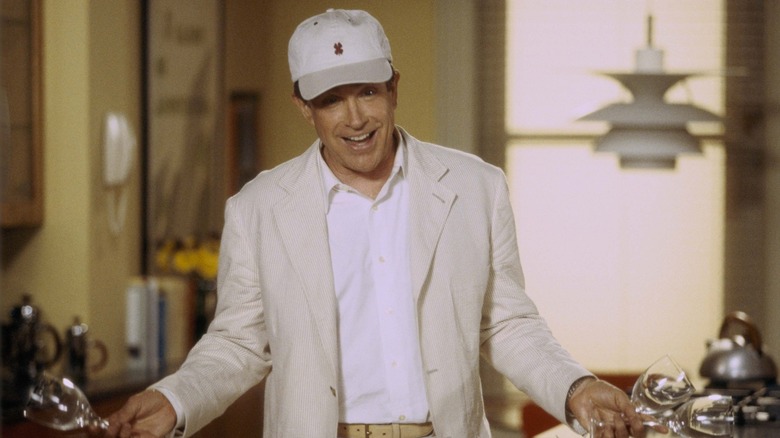
The film proved that even a cast of five or six A-list legends could not save a movie if the production was perceived as "troubled goods." Studios became much more wary of greenlighting high-budget projects based solely on the prestige of the actors involved.
2. The Rise of Budgetary Oversight
Town & Country served as a case study for why studios needed tighter control over "auteur" projects. The era where a star-producer could demand 80 takes and force two years of reshoots without consequence largely ended. Today’s "completion bonds" and studio oversight mechanisms are much more stringent, partly due to the lessons learned from the $100 million lost on this project.
3. A Pivot for New Line Cinema
Ironically, 2001 was both the worst and best year for New Line Cinema. While Town & Country threatened the studio’s stability, they released The Lord of the Rings: The Fellowship of the Ring in December of that same year. The massive success of Peter Jackson’s trilogy effectively "erased" the debt of Town & Country and shifted the studio’s focus toward massive fantasy franchises and away from high-risk adult dramas.
4. The Genre Shift
After 2001, the "adult romantic comedy" shifted almost entirely to the mid-budget range ($20M-$40M). The industry realized that there was a "ceiling" for how much a movie about wealthy people talking in apartments could earn. Town & Country effectively broke the ceiling, but in the wrong direction.
Conclusion
Town & Country remains a fascinating artifact of a specific moment in Hollywood history—a time when studios were willing to gamble nine-figure sums on the charm of aging icons. While the film itself has largely faded from public memory, its financial footprint remains as one of the deepest craters in box office history. It serves as a stark reminder that in cinema, as in architecture, a project is only as strong as its foundation—and no amount of star power can support a structure built on a shifting script and an unlimited budget.