
Design for a Greener Future: How Polar’s New Visual Identity for ‘Escola + Natureza’ is Reimagining Brazilian Education
In an era defined by the escalating urgency of the climate crisis, the intersection of education, environmentalism, and design has become a vital frontier for social change. Recently, the São Paulo-based graphic design studio Polar unveiled a comprehensive new visual identity for Escola + Natureza (School + Nature), a transformative project spearheaded by Instituto Alana. As a prominent Brazilian social and environmental impact organization, Instituto Alana’s latest initiative seeks to bridge the widening chasm between urban-dwelling children and the natural world.
The project is more than a mere rebranding exercise; it is a visual manifesto for a pedagogical shift. By integrating nature into the daily lives of students across Brazil, Escola + Natureza aims to foster a generation of environmentally conscious citizens who are equipped to navigate—and mitigate—the realities of a changing climate.
Main Facts: A Synergetic Collaboration for Environmental Literacy
The Escola + Natureza project was conceived as a multi-pronged response to the "nature deficit disorder" observed in modern urban childhoods. The initiative utilizes a combination of rigorous research, institutional networking, and practical architectural interventions to encourage the "greening" of school environments throughout Brazil.
To give this movement a recognizable and influential voice, Polar was commissioned to create a visual identity that could resonate with diverse audiences—from policy-makers and educators to the children themselves. The resulting design system is a sophisticated blend of playfulness and professionalism, rooted in the core philosophy that "we only care for what we love."

Key Stakeholders and Contributors
- Instituto Alana: The driving force behind the project, a non-profit organization dedicated to the holistic development of children and the protection of their rights.
- Polar: A leading Brazilian design studio known for its ability to translate complex social concepts into compelling visual narratives.
- Flora de Carvalho (Familiar Faces): A renowned type designer who collaborated on the project’s custom typography and wordmark.
- Escola + Natureza: The beneficiary project, focusing on adapting school infrastructure to climate realities and reintroducing biodiversity into educational spaces.
The Design Philosophy: From Aesthetic to Ecological Connection
The visual identity developed by Polar is centered on the concept of "re-enchantment." In a world where environmental news is often dominated by gloom and doom, the Escola + Natureza branding opts for a vibrant, life-affirming approach. The goal is to make the natural world appear not as a distant, threatened entity, but as a joyful, integral part of the human experience.
Typography and Symbolism
At the heart of the identity lies a custom logo developed in partnership with Flora de Carvalho of the foundry Familiar Faces. The wordmark features bold, fluid sans-serif letterforms that suggest movement and organic growth.
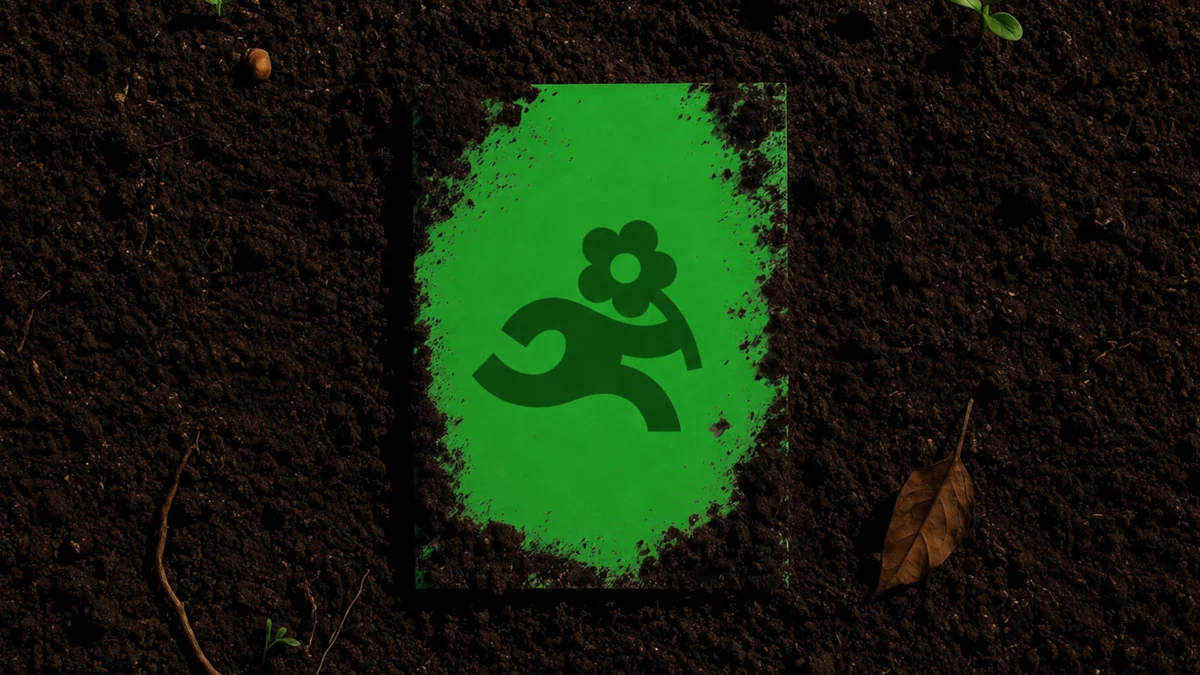
Accompanying the text is a poignant abstract figure: a child leaping into the air, clutching a flower. In a clever bit of symbolic shorthand, the flower also serves as the child’s face. This dual-purpose illustration encapsulates the project’s mission—the blurring of boundaries between humanity and nature, and the idea that our identity is inextricably linked to the environment that sustains us.
A Palette of Brazilian Biomes
Brazil is home to some of the most diverse ecosystems on the planet, including the Amazon rainforest, the Cerrado savanna, the Pantanal wetlands, and the Atlantic Forest. Polar’s design team intentionally moved away from a generic "eco-green" palette. Instead, they developed a vivid color scheme that reflects the specific hues of these unique biomes. This localized approach ensures that the project feels authentically Brazilian, honoring the country’s natural heritage while making the messaging accessible to communities from the North to the South.

Chronology: The Evolution of a Movement
The launch of the new visual identity marks a significant milestone in a timeline of ongoing advocacy by Instituto Alana. To understand the importance of this project, one must look at the trajectory of environmental education in Brazil over the last decade.
- The Research Phase (Pre-2020): Instituto Alana conducted extensive studies on the impact of school environments on child development. The findings highlighted a stark lack of green space in public and private schools, particularly in dense urban centers like São Paulo and Rio de Janeiro.
- The Conceptualization of Escola + Natureza (2021-2022): Building on this research, the organization began forming a network of architects, educators, and biologists. The project was officially framed as a dual-purpose mission: climate adaptation (making schools more resilient to heat and floods) and pedagogical reconnection.
- The Creative Partnership (2023): Recognizing the need for a strong public-facing brand, Instituto Alana partnered with Polar. The design process involved deep dives into Brazilian flora and fauna, ensuring that every visual element had an ecological basis.
- The Visual Identity Launch (2024): The unveiling of the branding marks the transition of Escola + Natureza from a research-heavy initiative to a broad, scalable movement. The identity is now being rolled out across digital platforms, educational materials, and physical school installations.
Supporting Data: Why "Greening" Schools is a Necessity
The necessity for Escola + Natureza is backed by sobering statistics regarding urbanization and climate change in Brazil.
- Urbanization Trends: According to data from the Brazilian Institute of Geography and Statistics (IBGE), over 85% of the Brazilian population lives in urban areas. For millions of children, "nature" is something seen on a screen rather than experienced in the backyard.
- Heat Islands: Research shows that schools with paved playgrounds can be up to 10 degrees Celsius hotter than those with tree cover. As global temperatures rise, "de-paving" schools becomes a matter of public health.
- Cognitive Benefits: Studies cited by the Children & Nature Network indicate that students in "green" schools show improved concentration, lower stress levels, and higher performance in standardized testing compared to those in barren environments.
By providing a visual framework for these improvements, Polar’s work helps translate these data points into a narrative that inspires action rather than apathy.
Official Responses and Strategic Intent
In statements regarding the project, both Polar and Instituto Alana have emphasized the "modular" and "dynamic" nature of the design. This was a strategic choice meant to reflect the ever-changing state of the natural world.

"We wanted to create a system that wasn’t static," a spokesperson from Polar noted. "Nature is a series of living, breathing ecosystems. By introducing motion—simple animations of plants swaying or animals moving—we remind the audience that the environment is alive. It’s a subtle way to engage younger people who are accustomed to dynamic digital content."
The identity was built to be flexible. It accommodates full-screen photography of actual school projects, geometric masks that can be used by non-designers to create flyers, and illustrations that function as text frames. This "democratic" design approach allows individual schools to adopt the branding and make it their own, symbolizing the growth and transformation the project hopes to ignite.
Implications: Setting a Global Standard for Social Impact Design
The work done by Polar for Escola + Natureza has implications that reach far beyond the borders of Brazil. It serves as a case study for how high-level graphic design can be leveraged to tackle the most pressing issue of our time: the climate crisis.
1. The Professionalization of NGO Branding
For too long, social and environmental projects have been hampered by "amateur" visual identities that fail to capture public attention. Polar’s work demonstrates that environmental movements deserve—and require—the same level of design sophistication as global tech brands. A professional aesthetic lends credibility to the cause and helps it compete in a crowded "attention economy."

2. Design as a Tool for Climate Adaptation
By focusing on the "greening" of schools, the project highlights a shift in environmentalism from global abstraction to local action. The branding makes the concept of "climate adaptation" tangible. It isn’t just about carbon credits; it’s about planting a tree in a schoolyard so a child can play in the shade.
3. Fostering Biophilia in the Next Generation
Biophilia—the innate human tendency to seek connections with nature—is the ultimate goal of Escola + Natureza. By surrounding children with a visual language that celebrates biodiversity, the project helps cultivate an "ecological identity" from a young age. In the long term, this is perhaps the most effective climate strategy of all: raising adults who view the protection of the planet not as a chore, but as an act of self-preservation and love.
As Escola + Natureza continues to expand its reach across Brazil, the visual identity created by Polar will stand as a beacon of hope. It is a reminder that while the climate crisis is a daunting challenge, the tools for transformation—education, community, and inspired design—are already in our hands. Through this project, the school of the future looks less like a concrete box and more like a thriving garden, inviting the next generation to step outside and rediscover the world.



Leave a Comment