Dungeons & Dragons Unveils Contrasting Visions with 2024 Player’s Handbook Alternate Cover
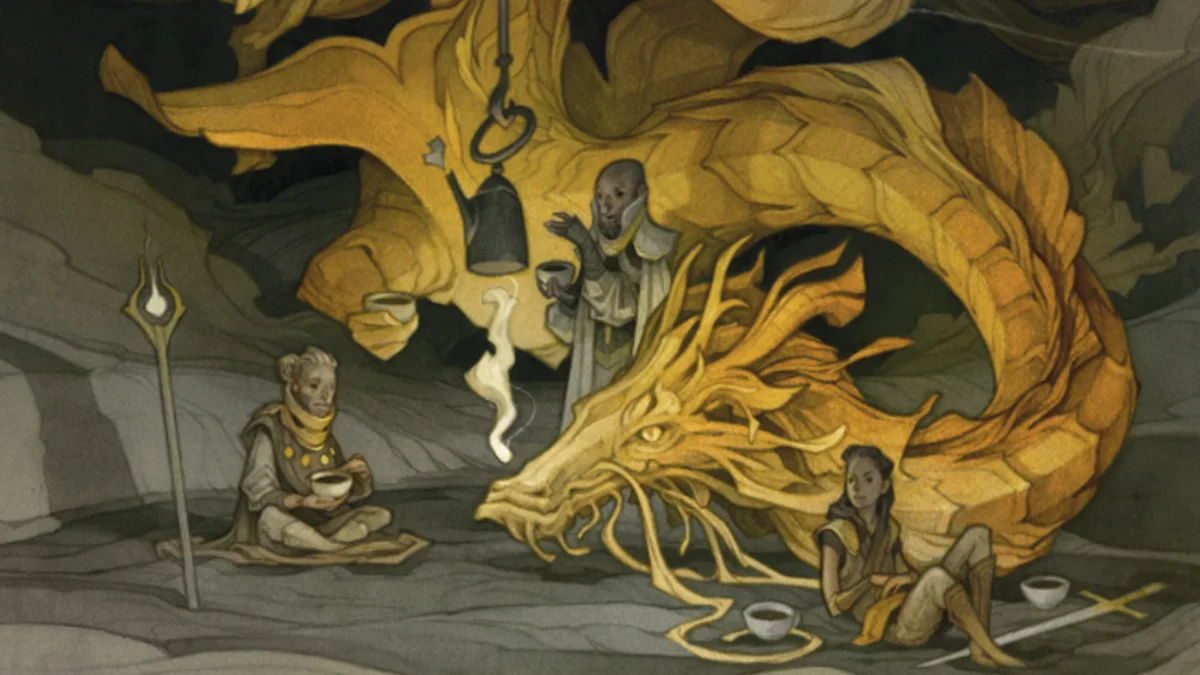
The world of Dungeons & Dragons is abuzz following the recent reveal of the alternate cover art for the highly anticipated 2024 Player’s Handbook. This unveiling offers a stark contrast to the standard edition’s action-packed imagery, presenting a more contemplative and intimate scene that speaks to the diverse ways players engage with the iconic tabletop roleplaying game. Designed by acclaimed artist Wylie Beckert, the alternate cover depicts a classic adventuring party enjoying a serene tea party with a golden dragon in a cavern setting, a dramatic departure from the heroic combat scene gracing the standard cover by Tyler Jacobsen.
The dual reveal highlights Wizards of the Coast’s strategic approach to the upcoming core rulebook update, aiming to cater to a broad spectrum of player preferences, from epic battles to moments of quiet camaraderie and roleplaying depth. With its staggered release planned for September 3rd at local game stores and September 17th for a wider launch, the 2024 Player’s Handbook, and its visually distinct alternate edition, are set to redefine the gateway experience for a new generation of adventurers.
Main Facts: A Tale of Two Covers
The initial excitement surrounding the 2024 Player’s Handbook began with the revelation of its standard front cover artwork. This dynamic illustration, crafted by Tyler Jacobsen, immediately established a tone of classic heroic fantasy. It features a recognizable ensemble of D&D lore – including Strongheart the Knight, Elkhorn the Dwarf Warrior, and Yolande the Elven Queen – locked in battle against a horde of Kobolds. Behind them, a majestic golden dragon looms, seemingly an ally, underscoring the high-stakes, action-oriented adventures Dungeons & Dragons is renowned for. This imagery serves as a direct invitation to the thrill of combat, the glory of heroism, and the eternal struggle against monstrous foes, themes deeply embedded in the game’s public perception.
However, just days later, the reveal of the alternate cover art offered an entirely different narrative, a deliberate counterpoint to the standard edition’s martial focus. This variant cover, brought to life by the distinctive brushstrokes of Wylie Beckert, eschews the battlefield for a tranquil cave interior. Here, a quartet of adventurers – the quintessential wizard, cleric, fighter, and rogue – are depicted sharing a pot of tea with the same benevolent golden dragon seen on the standard cover. The scene is one of quiet camaraderie and shared moments, with the rogue perched playfully on the dragon’s massive form, grasping a normal-sized teacup. This tableau champions the often-understated elements of D&D: exploration, problem-solving, character interaction, and the deep bonds forged between party members during downtime.
The existence of alternate covers for D&D’s core rulebooks is not new; it’s a trend that gained significant traction with the fifth edition, often serving as collector’s items or aesthetic choices for players who prefer a different visual interpretation of the game’s spirit. Beyond their external aesthetics, these alternate versions typically contain the exact same content as their standard counterparts, ensuring that the choice is purely one of visual preference rather than differing rulesets.
The 2024 Player’s Handbook, in both its standard and alternate forms, is slated for an early release at local game stores on September 3rd, allowing dedicated players and collectors first access. The wider retail release will follow two weeks later, on September 17th. This staggered launch not only builds anticipation but also serves as a strategic move to support the vital network of independent game retailers that form the backbone of the tabletop gaming community.
Chronology: The Journey to a Refreshed Core
The 2024 Player’s Handbook is more than just a new edition; it represents a significant milestone in the ongoing evolution of Dungeons & Dragons, specifically the "One D&D" initiative. This ambitious project by Wizards of the Coast aims to deliver an updated, refined, and largely backward-compatible version of the beloved 5th Edition ruleset, which first launched in 2014.
The Road to the 2024 Player’s Handbook: The One D&D Initiative
The journey to the 2024 Player’s Handbook began officially in August 2022 with the announcement of "One D&D." This initiative was framed not as a completely new edition, but rather a comprehensive update to the core rules of 5th Edition, designed to integrate ten years of community feedback, address common pain points, and expand on popular mechanics. The goal was to create an "evergreen" version of D&D, ensuring longevity and continued player engagement without fracturing the player base that 5th Edition had cultivated.
Throughout 2022 and 2023, Wizards of the Coast engaged in an extensive public playtest program, releasing numerous "Unearthed Arcana" documents. These documents presented proposed changes to character classes, races, feats, spells, and fundamental game mechanics. Millions of players participated, offering feedback through surveys, forums, and discussions, shaping the direction of the new rules. This transparent and community-driven development process was a direct response to past criticisms of rule changes and demonstrated a commitment to player inclusion. The 2024 Player’s Handbook is the first of three core rulebooks (alongside the Dungeon Master’s Guide and Monster Manual) that will officially codify these revised rules, promising a more streamlined, balanced, and versatile D&D experience.
Unveiling the Standard Edition: A Call to Arms
The first glimpse of the 2024 Player’s Handbook arrived with the unveiling of its standard cover artwork. This reveal was met with considerable excitement, as cover art has always been a critical element of D&D’s appeal, setting the tone for the adventures within. Tyler Jacobsen’s artwork for the standard edition is a masterclass in classic heroic fantasy. It features a diverse party of adventurers, not just any adventurers, but iconic figures from D&D’s rich history. Strongheart, the valiant human paladin or fighter, embodies courage and leadership. Elkhorn, the stout dwarf warrior, represents resilience and martial prowess. Yolande, the regal elven queen, symbolizes magic and ancient wisdom. These characters are not merely generic heroes; they are touchstones for long-time fans, evoking nostalgia while simultaneously presenting them in a fresh, contemporary style.
The scene itself is a dynamic snapshot of conflict: the heroes are engaged in a pitched battle against a swarm of Kobolds, a classic D&D enemy known for their cunning and numerical superiority. This emphasizes the "dungeons" aspect of the game – delving into dangerous locales and confronting monstrous threats. The massive golden dragon standing behind the party is particularly intriguing. Golden dragons in D&D lore are typically benevolent, metallic dragons, often serving as allies or wise mentors. Its presence here suggests a powerful alliance, a protector watching over the heroes, or perhaps a quest giver. This imagery reinforces the traditional heroic fantasy elements of D&D, where good triumphs over evil, and brave adventurers face overwhelming odds with the aid of powerful allies. Jacobsen’s style, characterized by its vibrant colors, dynamic composition, and clear narrative, perfectly captures the high-adventure spirit that many associate with the game.
The Alternate Art Revelation: A Moment of Respite
Following closely on the heels of the standard cover reveal, the alternate cover art for the 2024 Player’s Handbook quickly emerged, first highlighted by gaming outlets like Polygon. This second piece, illustrated by the uniquely talented Wylie Beckert, immediately established itself as a thematic counterpoint. Where Jacobsen’s cover was a shout of battle, Beckert’s is a quiet hum of companionship.
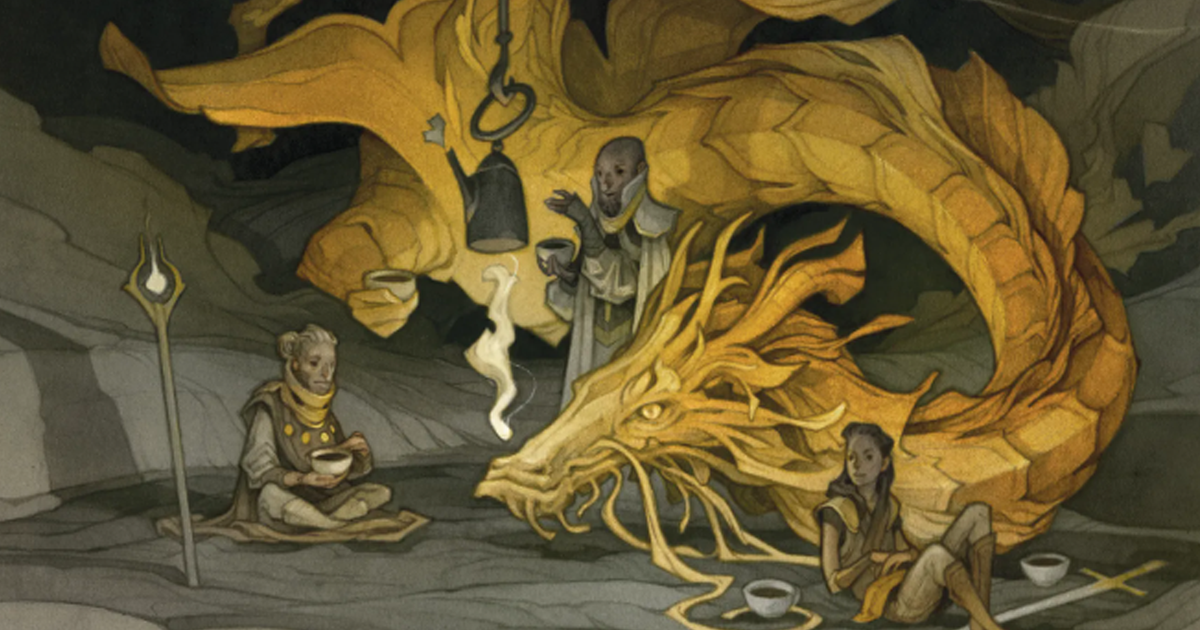
The alternate cover transports viewers to a cozy, albeit cavernous, setting. Instead of weapons drawn and spells cast, a diverse adventuring party – a wizard, cleric, fighter, and rogue – are gathered around a makeshift table, sharing tea. This scene profoundly shifts the focus from combat to the equally crucial elements of roleplaying: interaction, downtime, and the bonds between characters. The golden dragon from the standard cover reappears, but here it is an active, if somewhat oversized, participant in the tea party, gently holding a teacup in its massive claw. The rogue, ever the nimble and daring one, is depicted balancing precariously and playfully on the dragon’s back, adding a touch of whimsy and demonstrating the deep trust and camaraderie within the group.
Wylie Beckert’s artistic style is distinctive, often characterized by its intricate details, dreamlike quality, and unique use of color and texture. Her previous work on the alternate cover for Tasha’s Cauldron of Everything (a 5th Edition supplement) showcased her ability to evoke a sense of wonder and magic that transcends typical fantasy art. For the 2024 Player’s Handbook alternate cover, Beckert masterfully captures a moment of peace and introspection, a reminder that D&D is not just about slaying monsters but also about the shared stories, the quiet moments, and the development of rich character relationships. This cover appeals directly to players who value narrative depth, character development, and the less combative aspects of their campaigns.
Supporting Data: The Art of D&D and its Audience
The choice to present two such distinct visual narratives for a single core rulebook is a deliberate strategic move by Wizards of the Coast, reflecting both the historical evolution of D&D’s aesthetics and the contemporary demands of its diverse player base.
The Evolution of D&D Cover Art: A Visual History
Dungeons & Dragons has a rich visual history, with its cover art often serving as an immediate indicator of the edition’s philosophy and prevailing fantasy trends. From the simple, evocative drawings of the original white box sets to the highly polished, action-packed illustrations of later editions, D&D covers have always been more than just decoration; they are portals to imaginative worlds.
Early editions, such as AD&D 1st and 2nd Edition, often featured classic, sometimes gritty, fantasy art by legends like Larry Elmore and Clyde Caldwell, depicting adventurers facing dragons, delving into dungeons, and confronting dark sorcery. These covers established the visual lexicon of D&D for generations. With 3rd and 3.5 Edition, the art became more stylized and dynamic, reflecting a more rules-heavy and tactical approach to the game. 4th Edition, with its focus on structured combat and heroic archetypes, showcased highly polished, almost comic-book-esque art that emphasized power and iconic character roles.
The 5th Edition, launched in 2014, consciously blended classic fantasy aesthetics with modern sensibilities. Its initial Player’s Handbook cover by Tyler Jacobson (not to be confused with the 2024 artist Tyler Jacobsen, though both share a similar heroic style) depicted a diverse party battling a red dragon, a clear homage to the game’s roots while inviting new players into the fold. The 2024 covers continue this tradition but with an added layer of nuance. The standard cover, with its classic heroes and battle scene, directly echoes the foundational D&D experience. The alternate cover, however, pushes beyond the combat paradigm, suggesting a broader understanding of what "adventuring" can entail. This duality showcases a maturity in D&D’s visual branding, acknowledging that the game is multifaceted and caters to various playstyles.
The Market for Alternate Covers: Collecting and Personalization
The rise of alternate covers in the tabletop RPG industry, and particularly for D&D, is a phenomenon driven by several factors. Firstly, there is a significant collector’s market. Many dedicated fans seek to own every variant of their favorite games, viewing these alternate editions as valuable additions to their personal libraries. The unique artwork often elevates these books to pieces of art in their own right, distinct from their functional purpose as rulebooks.
Secondly, alternate covers provide a level of personalization. Not every player resonates with the "heroic battle" aesthetic. Some prefer darker, more mysterious imagery, while others, like those drawn to Beckert’s work, prefer art that emphasizes the collaborative storytelling, the quiet moments, or the whimsical aspects of D&D. By offering multiple covers, Wizards of the Coast allows players to choose the visual representation that best aligns with their personal interpretation of the game, or indeed, the specific campaign they are running. This choice fosters a deeper connection between the player and their rulebook.
Thirdly, the strategy of releasing alternate covers exclusively through local game stores for an initial period serves a crucial economic purpose. It incentivizes players to visit and support their friendly local game stores (FLGS), which are often the heart of the tabletop gaming community. These stores provide spaces for play, host events, and offer expert advice, making them invaluable to the hobby. By giving them a unique product to sell first, Wizards of the Coast helps drive foot traffic and revenue to these essential retailers.
Artistic Interpretations and Community Response: A Spectrum of Play
The artistic choices for both covers are deeply symbolic. The consistent presence of the golden dragon on both covers is particularly noteworthy. On the standard cover, it is a majestic, powerful ally in battle. On the alternate, it is a gentle, almost whimsical companion at a tea party. This dual representation of the same creature suggests a thematic thread running through the 2024 update: the idea that even powerful entities can be engaged with in multiple ways – through combat, diplomacy, or even friendship. It hints at a richer, more nuanced world where relationships and narrative choices are as impactful as sword strikes.
Early community responses, while not extensively quoted in the original article, can be inferred from typical D&D discussions. Players often passionately debate which cover "better" represents D&D. Some will undoubtedly champion Jacobsen’s heroic vision, seeing it as the quintessential D&D experience. Others will gravitate towards Beckert’s introspective scene, arguing that it better captures the essence of collaborative storytelling, character interaction, and the often-overlooked moments of peace and camaraderie that define long-running campaigns. This very debate underscores the game’s broad appeal and the diverse ways in which it is enjoyed. The choice of two distinct covers actively encourages this dialogue, further engaging the community in the upcoming edition.
Official Responses: Wizards of the Coast’s Strategic Vision
While direct quotes from Wizards of the Coast regarding these specific cover reveals are not extensively detailed in the original brief, we can infer their strategic intent based on the broader "One D&D" initiative and their past communication.

Wizards of the Coast’s Vision: Embracing Diversity in Play
The "One D&D" project has consistently emphasized the goal of creating a more inclusive and versatile Dungeons & Dragons experience. This includes refining rules to better support different playstyles, from dungeon crawls and tactical combat to social intrigue and exploration. The dual nature of the 2024 Player’s Handbook covers perfectly encapsulates this vision.
The standard cover, with its focus on combat and heroism, caters to the segment of the player base that loves the thrill of monster slaying and epic confrontations. It reinforces D&D’s legacy as a game of adventure and conquest. However, the alternate cover, with its serene tea party, speaks directly to players who prioritize roleplaying, character development, and the narrative journey over pure combat. It acknowledges that D&D is also about shared stories, humorous moments, and the quiet beauty of a party bonding. By offering both, Wizards of the Coast signals that all these aspects are valid and cherished components of the D&D experience. This demonstrates a commitment to appealing to the widest possible audience, ensuring that new and old players alike can find a visual representation that resonates with their personal style of play.
The staggered release strategy also reflects an official response to supporting the D&D ecosystem. By prioritizing local game stores with an early release of the alternate cover, Wizards of the Coast acknowledges the crucial role these establishments play in nurturing the D&D community. It’s a tangible way of giving back to the retailers who have been instrumental in the game’s growth and sustained popularity.
Statements from the Artists: Capturing the Essence
While explicit statements from Tyler Jacobsen and Wylie Beckert about these specific covers might not be publicly detailed yet, artists commissioned for D&D core books typically aim to distill the essence of the game into a single powerful image. Jacobsen’s work on the standard cover likely aimed to evoke the classic heroic fantasy tropes that define D&D for many, focusing on dynamic action and the iconic struggle between good and evil. His style is well-suited to conveying energy and high stakes.
Beckert, known for her unique and often whimsical approach, would have been tasked with presenting a contrasting vision. Her alternate cover clearly succeeds in offering a more intimate, character-focused perspective. For an artist like Beckert, the challenge would be to convey the magic and wonder of D&D not through overt action, but through subtle character interaction and atmosphere. The inclusion of the golden dragon in a relaxed setting, and the rogue playfully balancing on it, speaks volumes about the bond between adventurers and the fantastic elements they encounter, even in moments of peace. Both artists, in their distinct ways, contribute to a comprehensive visual identity for the 2024 Player’s Handbook, showcasing the multifaceted nature of Dungeons & Dragons.
Implications: The Future Landscape of D&D
The dual cover reveals for the 2024 Player’s Handbook carry significant implications for the future direction of Dungeons & Dragons, its community, and the broader tabletop RPG industry.
Signifying the Future of D&D: Choice and Inclusivity
The most profound implication of these contrasting covers is the emphasis on choice and inclusivity. By presenting two equally valid, yet visually distinct, interpretations of the D&D experience, Wizards of the Coast is signaling a commitment to catering to a wider array of player preferences. It reinforces the idea that there is no single "right" way to play D&D. Whether a player is drawn to the epic battles of the standard cover or the quiet camaraderie of the alternate, both are embraced as core aspects of the game.
This approach aligns perfectly with the "One D&D" philosophy of refining the 5th Edition rules to be more flexible and accommodating. It suggests that the game mechanics themselves will likely support diverse playstyles, allowing groups to focus on combat, exploration, social interaction, or a blend of all three, without feeling constrained by the system. The 2024 Player’s Handbook is thus positioned as a foundational text that not only updates rules but also broadens the narrative scope of what D&D can be. This strategic move is crucial for maintaining D&D’s position as the leading TTRPG, appealing to both its long-standing veterans and the ever-growing influx of new players.
Impact on Players and Retailers: Engagement and Support
The staggered release schedule, with the alternate version available first at local game stores, is a shrewd move that benefits both players and retailers. For players, it creates an incentive to engage directly with their FLGS, fostering community ties and providing an early opportunity to acquire a coveted collector’s item. This early access builds significant hype and anticipation for the broader release.
For retailers, it’s a direct show of support from Wizards of the Coast. In an increasingly digital world, physical game stores remain vital hubs for the TTRPG community. Offering them an exclusive, high-demand product for a limited period drives sales, increases foot traffic, and strengthens the partnership between the publisher and its retail network. This model recognizes the symbiotic relationship between content creators and the physical spaces where communities gather and games are played. The alternate cover, therefore, serves not just as an aesthetic choice but also as a tool for economic support within the hobby.
Broader Industry Trends: A Leader’s Influence
Dungeons & Dragons, as the undisputed leader in the tabletop RPG market, often sets trends that ripple throughout the industry. The sophisticated approach to cover art, offering diverse thematic interpretations, is likely to influence other RPG publishers. We may see more games offering variant covers that speak to different aspects of their themes or target different player demographics. This could lead to a richer visual landscape across the entire TTRPG sphere, providing more options for players and more opportunities for artists.
Furthermore, D&D’s continued commitment to updating its core rules while maintaining backward compatibility (as is the promise of "One D&D") sets a precedent for how long-running game systems can evolve without alienating their existing player base. The 2024 Player’s Handbook, with its dual visual identity, embodies this delicate balance: honoring tradition while boldly stepping into the future, inviting every type of adventurer to pull up a chair, whether for an epic battle or a quiet cup of tea.