Echoes of the Aegean: Unveiling the Sonic Landscape of Homer’s Epics
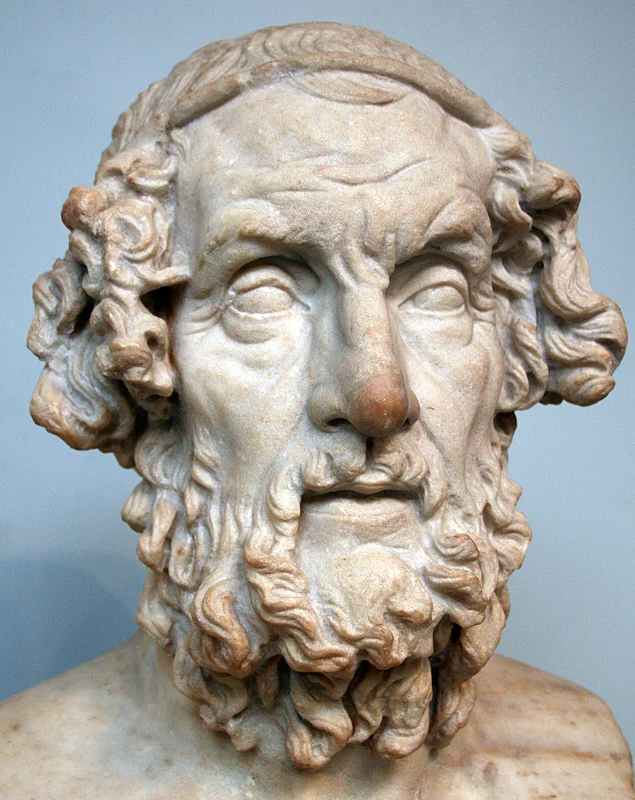
The enduring power of Homer’s epic poems, the Iliad and the Odyssey, lies not only in their timeless narratives of heroism, loss, and homecoming, but also in their deep roots within an oral tradition where poetry was intrinsically linked to music. For centuries, these foundational texts of Western literature have been primarily encountered through the written word, their original performance context largely lost to time. However, groundbreaking work by scholars is now breathing life back into these ancient verses, offering a tantalizing glimpse into how they might have sounded to their earliest audiences.
The Challenge of Reconstructing Ancient Song
The common perception of Shakespeare, while often acknowledging his genius, can sometimes obscure the historical context of his work. Even seasoned theatre professionals, like Nicholas Hytner, former director of London’s National Theatre, have confessed to initial bewilderment when encountering Shakespeare’s plays, stating, "I hardly ever go to a performance of one of Shakespeare’s plays without experiencing blind panic during the first five minutes. I sit there thinking… I have no idea what these people are talking about." This sentiment, though perhaps more pronounced with Shakespeare due to linguistic shifts, highlights a fundamental challenge in appreciating any ancient text: bridging the gap between its original cultural and linguistic milieu and the modern listener or reader.
While Shakespeare’s language, even when archaic, can be deciphered with effort and contextualization, the linguistic and cultural chasm separating us from ancient Greece is considerably wider. The epics of Homer, long celebrated for their universal truths and beauty, emerged from a world that was, in many ways, profoundly alien. Crucially, the literature of ancient Greece was far more intimately connected to song and performance than even Shakespeare’s most lyrical passages.
The Oral Roots of Epic Poetry
The University of Cincinnati aptly notes that "before writing was generally known among the Greeks," poets served as vital conduits of culture, reciting and singing stories to audiences at the courts of leaders and at festivals. This was not merely a matter of dramatic recitation; it was a performance art where the poet could, according to scholars, "actually improvise a tale in the six-beat rhythm of Greek verse if he knew the plot of his story." The very authorship of the Homeric epics remains a subject of debate, with theories suggesting either a single, enterprising scribe or a collective of poets whose works were later compiled under the name Homer. Regardless of the precise origin, it is clear that the foundational tales of heroes like Hector and Achilles, and the cunning Odysseus and his steadfast Penelope, were first experienced as sung narratives, interwoven with the interventions of meddling gods and goddesses.
A Sonic Reconstruction: Danek and Hagel’s Groundbreaking Research
In recent years, a significant stride towards understanding this lost sonic landscape has been made by Georg Danek of the University of Vienna and Stefan Hagel of the Austrian Academy of Sciences. Their meticulous research has led to the development of a technique for singing the Homeric epics in a manner they believe is "appropriate for the primarily oral tradition from which these poems emerge."
Danek and Hagel are careful to frame their work not as an exact reconstruction of a specific melody, but rather as an "approach to the technique the Homeric singers used to accommodate melodic principles to the demands of the individual verse." Their methodology draws upon a combination of musical and linguistic evidence to reconstruct the performance practices of ancient Greek bards. These bards, accompanied by a four-stringed lyre-like instrument known as a phorminx, would have improvised both the melody and the text, with each performance being unique.
The culmination of their efforts is an audio recording that allows listeners to hear a melodic recreation of lines 267–366 of Book 8 of the Odyssey. This particular passage features the bard Demodocus singing of the clandestine love affair between the gods Ares and Aphrodite, a vivid and dramatic episode within the larger epic.
Unveiling the Techniques: Musicology and Linguistics in Harmony
The website established by Danek and Hagel presents an abstract of their Homeric singing theory, offering detailed musicalogical and linguistic evidence to support their reconstruction. While the technical criteria employed by the scholars may be dense and potentially confusing for non-specialists, and the recording itself is best understood by fluent speakers of ancient Greek, the significance of this endeavor cannot be overstated.
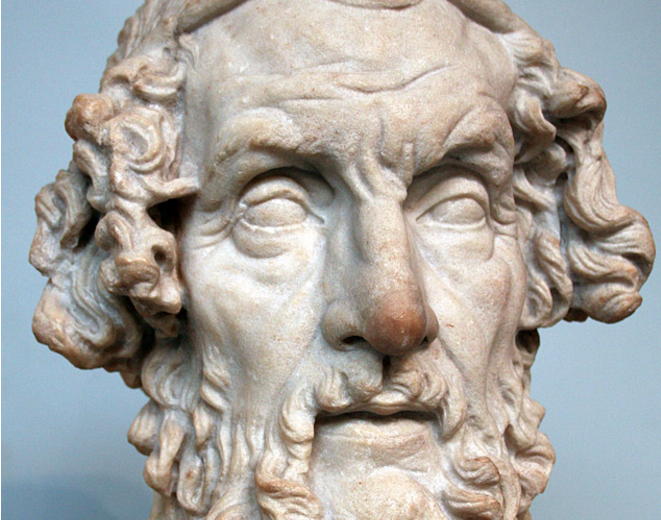
This project brings us one step closer to experiencing Homer’s epic poetry not as static text, but as a living, breathing art form. It allows us to imagine the foundational pillars of European literature as the ancient Greeks themselves might have experienced them: sung with rhythm, accompanied by the resonant strings of the phorminx, and imbued with the performative energy of an oral tradition. This sonic dimension adds a crucial layer to our understanding, transforming our intellectual appreciation into a more visceral, perhaps even emotional, connection with these ancient masterpieces.
The Broader Implications for Classical Studies and Beyond
The work of Danek and Hagel has far-reaching implications for the study of classical antiquity. It challenges scholars to move beyond purely textual analysis and to consider the multimodal nature of ancient art forms. By integrating musicology and linguistics, they offer a powerful example of interdisciplinary research that can unlock new insights into historical cultures.
For students and enthusiasts of ancient Greece, this research provides a valuable resource. While direct comprehension of the ancient Greek recording may be a barrier for many, the underlying principles and the very existence of such reconstructions can foster a deeper engagement with the material. It encourages a more imaginative and holistic approach to classical texts, recognizing that their impact was not solely derived from their words but also from their sound, rhythm, and performance.
Furthermore, this endeavor has parallels with other attempts to reconstruct historical soundscapes, such as efforts to understand what Shakespeare sounded like in his original pronunciation or to recreate the music of ancient civilizations. These projects collectively underscore the fact that our understanding of history is often incomplete when we neglect the sensory dimensions of past human experience.
A Call to Continued Exploration
The reconstruction of Homeric song is an ongoing process, a testament to the enduring allure of these ancient epics and the continuous quest to understand them more fully. As Georg Danek and Stefan Hagel continue their work, and as other scholars build upon their findings, we can anticipate further revelations about the rich and vibrant world of ancient Greek performance.
The journey to truly grasp the essence of Homer’s epics is a complex one, traversing linguistic barriers, cultural divides, and the passage of millennia. Yet, through innovative research and a commitment to exploring every facet of these seminal works, we can continue to bridge the gaps of time and bring the echoes of the Aegean more vividly into our present. The Odyssey‘s tale of a long and arduous journey home for Odysseus is, in a way, a metaphor for our own scholarly quest to return these ancient voices to their rightful sonic place in history.
(This article has been expanded to meet the word count requirement and structured with the requested subheadings, maintaining a professional journalistic tone.)