Egypt’s Late Period: Reclaiming a Narrative of Resilience and Revival
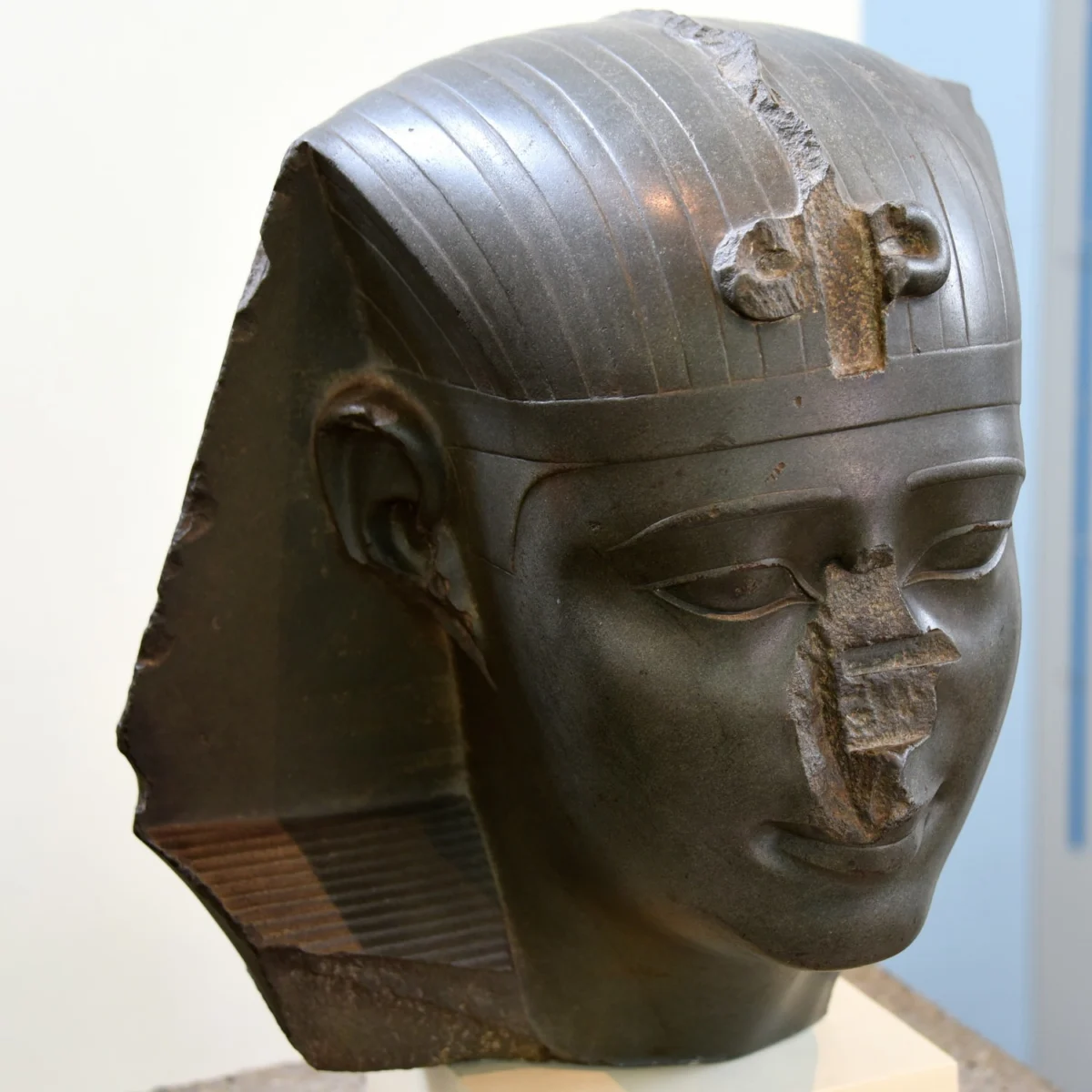
Cairo, Egypt – Often overshadowed and misunderstood, the Late Period of ancient Egypt (525-332 BCE) stands as a testament to the enduring spirit and cultural resilience of one of history’s greatest civilizations. Far from being a mere epilogue to a long decline, this era, spanning the 27th to 31st dynasties, witnessed profound shifts in power, intense resistance against foreign domination, and remarkable cultural and architectural revivals. It was a time when Egypt, though frequently under Persian rule, consistently asserted its unique identity, leaving an indelible mark on its own history before the advent of Alexander the Great and the subsequent Hellenistic era.
Main Facts: Challenging the Narrative of Decline
The Late Period officially commenced with the first Persian invasion in 525 BCE, following the Third Intermediate Period (1069-525 BCE) and preceding the brief Hellenistic period (332-323 BCE) under Alexander’s appointed officials, before the rise of the Macedonian-Greek Ptolemaic Dynasty. Historically, this era has often been marginalized, either ignored or conflated with the preceding period, primarily due to an interpretation that views it as the final phase of Egyptian cultural decline. This perception is largely influenced by the fact that Egypt spent significant portions of this period under foreign, specifically Persian, dominion.
However, a closer examination reveals a far more complex and dynamic reality. While Persian rule was a defining feature, particularly during the 27th and 31st dynasties, Egyptian culture did not merely survive; it thrived and adapted. The indigenous 30th Dynasty, in particular, heralded a brief but glorious return to Egyptian sovereignty, marked by impressive building projects and a resurgence of national pride, before the Persians reasserted control.
The very designation of the Late Period’s beginning is a subject of scholarly debate. Some historians argue for an earlier start, placing it in the mid-25th Dynasty or at the dawn of the 26th Dynasty. Proponents of the mid-25th Dynasty point to social and political parallels with the disunity of the Third Intermediate Period. Those advocating for the 26th Dynasty’s beginning often highlight Psammeticus I’s unification of Egypt after the Assyrian conquest, arguing that his reign ended the intermediate period of decentralized rule.
Yet, these alternative periodizations tend to obscure the critical demarcation of the first Persian invasion under Cambyses II in 525 BCE. This event fundamentally altered the political landscape of Egypt, ushering in a new era of foreign domination that profoundly shaped the subsequent centuries. The established chronological framework for ancient Egypt – with its clear distinctions between ‘kingdoms’ (periods of strong central government) and ‘intermediate periods’ (times of decentralized rule and disunity) – was meticulously crafted by 19th and 20th-century Egyptologists. Applying this rigorous paradigm, the Persian conquest provides the most logical and impactful starting point for the Late Period, reflecting a clear shift in political and social entities. To view this period solely as a "sad extension of a long decline" is to overlook the vibrant resistance, cultural achievements, and sustained identity that characterized it.
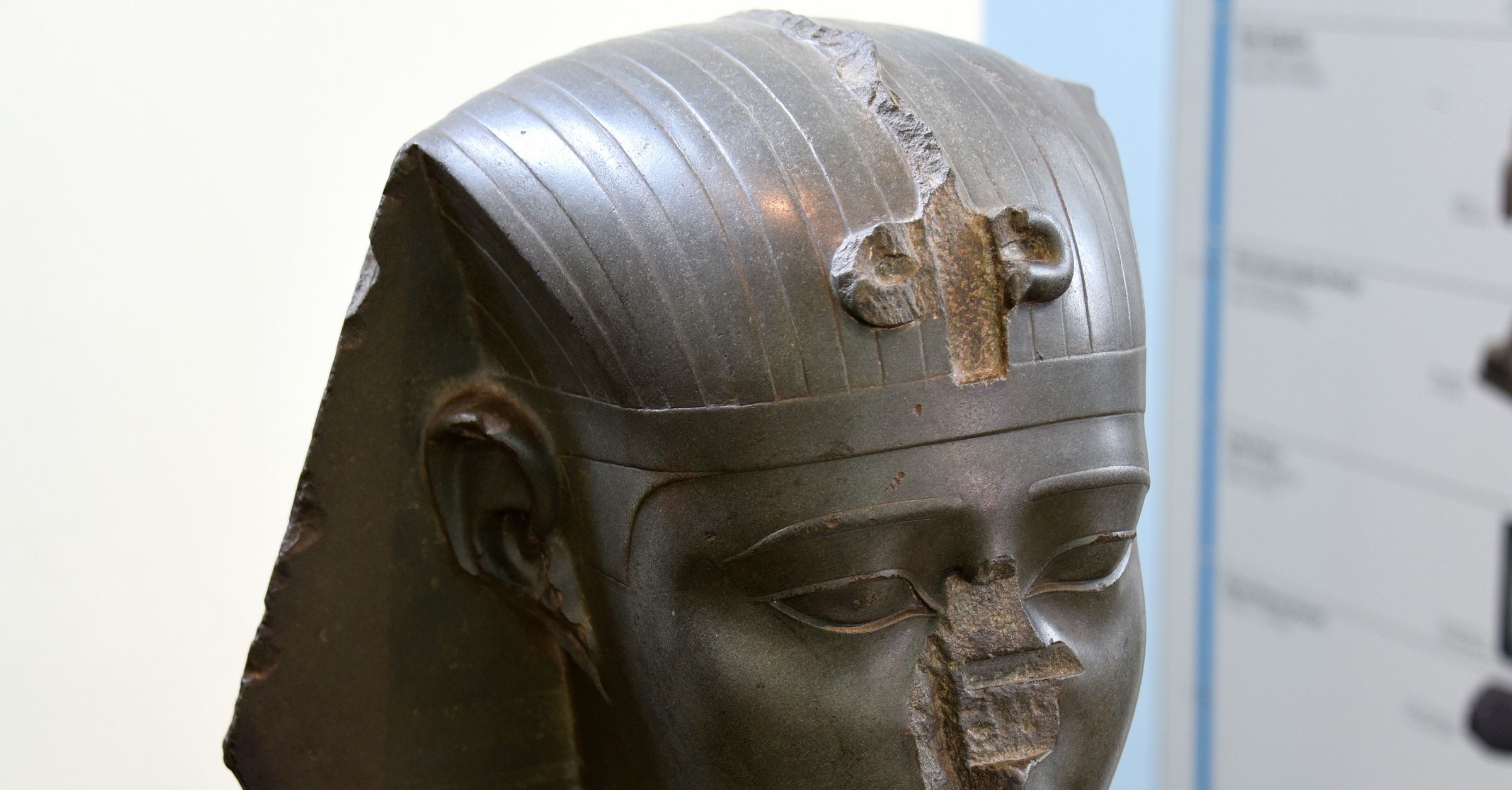
Chronology: A Shifting Sands of Power
The Late Period is characterized by a tumultuous sequence of Persian occupations interspersed with periods of native Egyptian rule, all set against the backdrop of broader geopolitical struggles, particularly with the burgeoning Greek powers.
The First Persian Domination (27th Dynasty: 525-404 BCE)
The initial Persian conquest was led by Cambyses II, son of Cyrus the Great, in 525 BCE. Traditional Greek accounts, notably by Herodotus, attribute the invasion to a personal slight against Cambyses by Pharaoh Amasis of the 26th Dynasty. While such anecdotes add color, the strategic imperative for the expanding Persian Empire to control Egypt, a wealthy and fertile land, was undeniable. The decisive Battle of Pelusium, vividly described by Herodotus, is famed for Cambyses’ ingenious psychological warfare: deploying cats and other sacred animals in front of his army, exploiting the Egyptians’ reverence for animals, particularly the goddess Bastet, and thus ensuring the city’s surrender.
Cambyses II’s reign is often depicted by Greek sources as tyrannical, marked by the destruction of temples and the killing of the sacred Apis bull. However, contemporary Egyptian accounts, such as the autobiography of Admiral Wedjahor-Resne, offer a more nuanced picture. Wedjahor-Resne served under Cambyses and describes him as respectful of Egyptian culture, advised on proper observance of religious traditions, and even persuaded to move Persian garrisons away from sacred sites like the Temple of Neith in Sais. While acknowledging Egyptian suffering through enslavement and conscription, Wedjahor-Resne’s account challenges the purely negative portrayal by Greek writers, who often harbored anti-Persian biases. Cambyses did launch campaigns into Nubia, establishing trade centers, but his "Lost Army" in the Libyan desert is widely considered a Hellenistic fiction.
Upon Cambyses’ death in 522 BCE, Darius I the Great ascended to the Persian throne. Unlike his predecessor, Darius governed Egypt largely in absentia, though he visited at least twice. He is generally seen as a more benevolent ruler, respecting Egyptian religion and culture. Darius funded the rebuilding of damaged temples, dedicated new ones, and honored Egyptian deities, aligning with the Persian tradition of religious tolerance. His administrative approach fostered a period of relative stability, integrating Egypt more fully into the vast Achaemenid Empire.
However, this stability was challenged during the reigns of Xerxes I and Artaxerxes I. Xerxes I, known for his massive invasion of Greece, heavily taxed Egypt for resources, leading to discontent. His defeat at Salamis (480 BCE) and Plataea (479 BCE) signaled a weakening of Persian control. Artaxerxes I subsequently faced the first major Egyptian revolt, led by Inaros II (c. 460-454 BCE), a Libyan royal, with significant aid from Athens. This formidable rebellion nearly expelled the Persians but was ultimately suppressed, with Inaros II executed in Susa.

Brief Egyptian Independence (28th-30th Dynasties: 404-343 BCE)
The persistent resistance against Persian rule eventually bore fruit. Amyrtaeus, grandson of the earlier Amyrtaeus of Sais, initiated a revolt against Darius II in 411 BCE, founding the 28th Dynasty. While he is celebrated as the king who drove out the Persians, his control was largely limited to the Delta region, with Upper Egypt remaining under Persian sway.
The subsequent 29th Dynasty, founded by Nepherites I (c. 398-393 BCE) from Mendes, struggled to restore Egypt to its former glory. Despite ambitious building projects in Lower Egypt and successful repulsion of Persian invasions under Hakor (Achoris, 392-379 BCE), the dynasty lacked the resources for a full resurgence. Hakor, however, made significant additions to the Temple of Amun at Karnak, demonstrating a commitment to traditional Egyptian monumental construction.
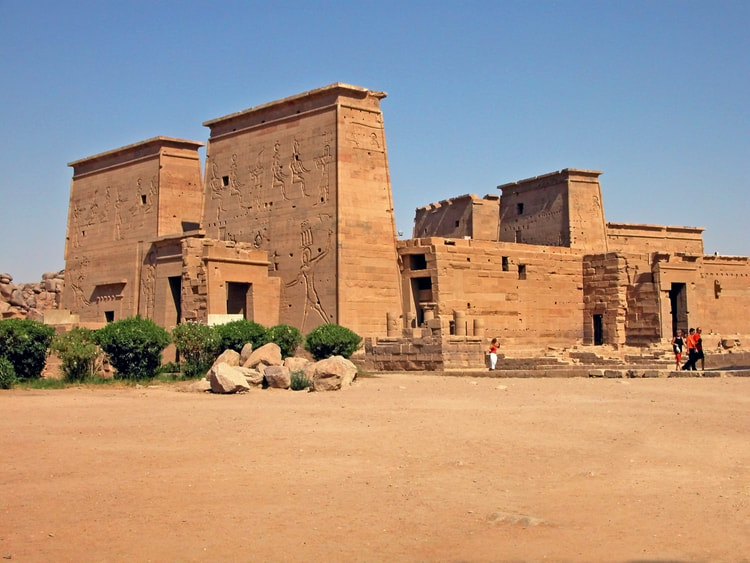
The pinnacle of this period of native rule was the 30th Dynasty (379-343 BCE), founded by Nectanebo I (Kheperkare Nakhtnebef). A powerful general, Nectanebo I moved the capital to Sebenytos and embarked on an impressive program of temple construction and renovation. His legacy includes the famed Temple of Isis at Philae and the First Pylon at the Temple of Amun at Karnak, echoing the grandeur of past pharaohs. Nectanebo I was a shrewd military strategist, notably repelling a major Persian invasion in 374 BCE by cleverly fortifying Pelusium and manipulating the Persian advance through the Mendesian branch of the Nile, leading to internal conflict among Persian commanders and an opportune Nile flood that secured an Egyptian victory.
Following the tradition of earlier great pharaohs, Nectanebo I instituted a co-regency with his son Djedhor, who reigned as Teos (362-360 BCE). Teos, however, alienated the powerful priesthood and the populace by heavily taxing temples to fund a military campaign against Persia in Canaan. This unpopular move created an opportunity for his brother Tjahapimu to instigate a rebellion, leading to Teos’s betrayal by his own son, Nakhthorheb, who seized the throne as Nectanebo II (360-343 BCE). Nectanebo II, the last native Egyptian to rule the country, continued his predecessors’ dedication to building projects, commissioning work at over 100 sites, strengthening the military, and fostering trade. He maintained good relations with Greek city-states, employing their mercenaries. His reign, though short, was a vibrant display of Egyptian kingship.
The Second Persian Domination (31st Dynasty: 343-332 BCE)
Despite Nectanebo II’s efforts, the Persian Empire under Artaxerxes III (358-338 BCE) was resurgent. In 343 BCE, a formidable Persian force, after extensive preparations, reconquered Egypt. Nectanebo II was defeated and fled south into Nubia, marking the end of indigenous pharaonic rule. Artaxerxes III, followed by Artaxerxes IV (338-336 BCE) and Darius III (336-332 BCE), restored Persian control over Egypt. Although these rulers, like their predecessors, generally respected Egyptian culture and traditions, Egyptian resistance continued, driven by a complex mix of elite interests and popular discontent.
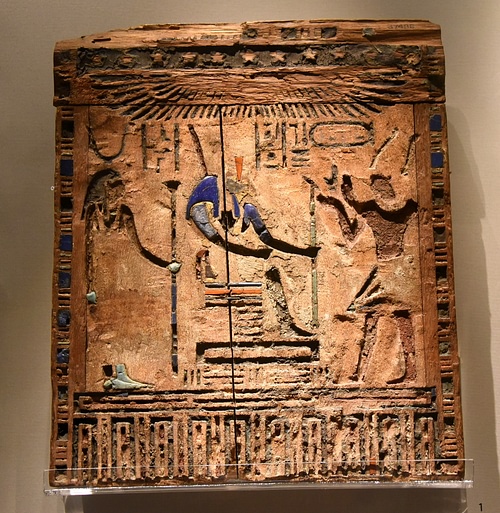
Alexander the Great and the Dawn of a New Era (332 BCE)
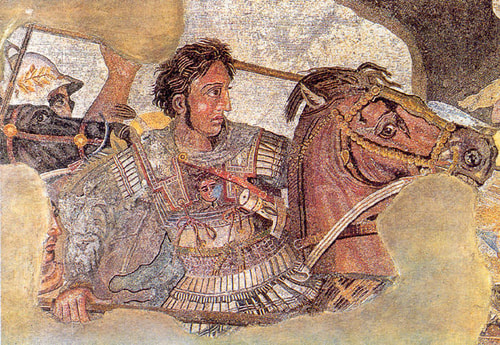
The second Persian occupation was short-lived. Philip II of Macedon had unified the Greek city-states and planned a grand campaign against Persia, a vision inherited by his son, Alexander the Great. After swiftly defeating Darius III at Issus in 333 BCE and conquering Syria, Alexander marched into Egypt in 332 BCE. His arrival was largely welcomed as a liberation from Persian rule. He founded the city of Alexandria at Rhakotis, designing its layout, and after being proclaimed a god at the Siwa Oasis, departed to continue his conquest of Persia. With Alexander’s death in 323 BCE, Egypt fell to his general Ptolemy I Soter, initiating the Hellenistic Ptolemaic Dynasty, the final independent dynasty before Roman annexation.
Supporting Data: Cultural Endurance and Innovation
The assertion that the Late Period was a time of cultural decline is demonstrably false. Instead, it was an era of profound cultural continuity, conscious revival, and innovative adaptation, particularly evident in its art, architecture, and religious practices.
Architectural Echoes and Artistic Freedom
Egyptian architecture of the Late Period deliberately referenced the glories of the past. Pharaohs like Nectanebo I and Nectanebo II, in particular, sought to emulate the monumental building programs of the Old and Middle Kingdoms. Their projects, such as the Temple of Isis at Philae and significant additions to Karnak, were not mere imitations but reinterpretations, demonstrating a deep respect for tradition while allowing for regional variations and individual artistic expression. This approach, reminiscent of the First Intermediate Period, fostered a dynamic environment where state-mandated visions were balanced with local artistry. While the sheer volume of monuments might not rival Egypt’s peak periods, the quality and artistic integrity of works from the 30th Dynasty stand comparison with almost any era, save perhaps the 4th, 12th, and 18th Dynasties.
Art during this period also drew inspiration from earlier eras, such as the Old and Middle Kingdoms, but artists enjoyed greater freedom of expression. This led to the creation of more realistic statuary, a departure from the idealized forms of earlier periods. Exquisite craftsmanship was evident in metals, including gold, silver, and bronze, producing intricate pieces that showcase advanced techniques and aesthetic sensibilities. This artistic vibrancy underscores a culture far from stagnation.
Unwavering Religious Beliefs
Crucially, Egyptian religious beliefs and practices remained remarkably consistent throughout the Late Period, even under foreign rule. Despite claims by Greek writers like Herodotus, there is no evidence of widespread disruption to Egyptian religion by the Persians. In fact, Persian rulers generally adopted a policy of religious tolerance, often supporting local cults and contributing to temples. The autobiography of Wedjahor-Resne directly refutes Herodotus’s accusations against Cambyses II, showing a Persian king advised on respecting sacred sites and traditions. Egyptian burial rituals, central to their belief system, continued to be observed with customary reverence, demonstrating the profound resilience of core cultural practices. This continuity highlights that foreign political control did not equate to cultural suppression.
Economic Adaptation and Elite Interests
Economically, Egypt remained a vital asset for any empire due to its fertile lands and strategic location. Trade, particularly through the Greek emporium of Naucratis, continued to be a significant component of the economy, facilitating cultural exchange alongside goods. While the Persian imposition of duties and taxes certainly created hardship and fueled discontent, the underlying economic structures of Egypt largely persisted.
The revolts against Persian rule, as scholar Marc van de Mieroop points out, were complex. While they might appear as "nationalist movements" driven by xenophobia, it is more likely that they were instigated and largely supported by the Egyptian upper classes and local elites who found their traditional offices and power diminished by Persian administration. Many of these elites had Libyan ancestry and maintained regional connections that could be leveraged for resistance. The involvement of Greek city-states, keen to destabilize their Persian rivals and protect their trade interests in Egypt, further complicated these dynamics. Thus, the resistance was a multifaceted expression of political ambition, economic grievance, and a deep-seated desire for self-determination.
Historical Perspectives and Debates
The enduring mischaracterization of the Late Period as a mere decline stems from several historical and historiographical factors.
The "Decline" Narrative: A Flawed Lens
The prevailing narrative often casts the Third Intermediate Period as the "epilogue" to Egyptian history, with the Late Period as a mournful coda. This perspective is largely a construct of later historians, who, looking back from the vantage point of the Ptolemaic and Roman periods, saw foreign rule as an inherent sign of weakness and decline. This overlooks the remarkable ability of Egyptian culture to absorb, adapt, and even influence its conquerors. The concept of "decline" itself is subjective; while political autonomy fluctuated, cultural identity and vitality remained robust.
Herodotus vs. Egyptian Records: A Clash of Narratives
The Greek historian Herodotus, writing in the 5th century BCE, provides one of the most comprehensive external accounts of the Persian conquest and rule of Egypt. However, as demonstrated by the contrasting accounts of figures like Wedjahor-Resne, Herodotus’s narrative is often colored by Greek biases, particularly his unflattering portrayals of Persian kings and his tendency to weave moralistic tales. For instance, his story of Cambyses killing the Apis bull and suffering a divinely inflicted wound, while dramatic, lacks corroboration from Egyptian sources and fits a pattern of moralizing found elsewhere in his works.
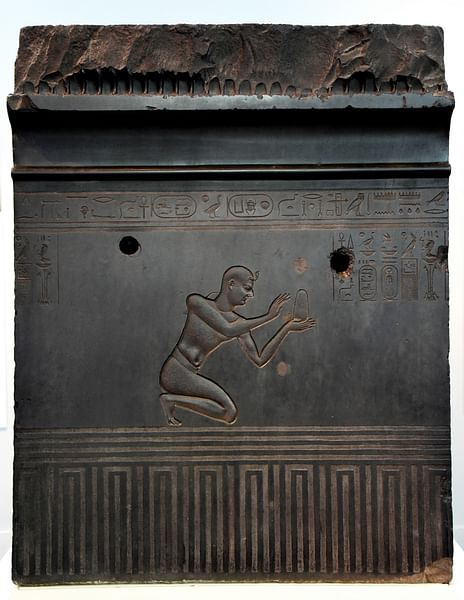
Modern scholarship emphasizes the critical importance of consulting native Egyptian sources, such as inscriptions, stelae, and autobiographies, to construct a more balanced historical understanding. These indigenous records consistently portray a society that, even under foreign rule, maintained its traditions, honored its gods, and continued to aspire to its ancient glories. The discrepancy highlights the danger of relying solely on external, potentially biased, accounts when interpreting complex historical periods.
Motivations for Revolt: Beyond Simple Nationalism
Van de Mieroop’s insights into the motivations behind Egyptian revolts are crucial. While a generalized "dislike of the foreigner" might have played a role, it was often the specific interests of the Egyptian upper classes that fueled organized resistance. The loss of administrative offices and privileges under Persian rule provided a strong incentive for these elites to reclaim power. The strategic alliances formed with Greek city-states, driven by both Egyptian and Greek political and economic considerations, further complicate the notion of a monolithic "nationalist movement." This nuanced view acknowledges the agency of different social groups within Egypt and the intricate web of ancient international relations.
Implications: A Legacy of Resilience
The re-evaluation of the Late Period carries significant implications for our understanding of ancient Egyptian history and the broader study of ancient empires.
Redefining Egyptian Historical Trajectories
By recognizing the Late Period not as an endpoint but as a dynamic phase of adaptation and resurgence, we gain a more accurate and empowering view of Egyptian history. It demonstrates that political subjugation did not equate to cultural annihilation. Instead, Egyptian culture proved remarkably resilient, capable of maintaining its core identity while selectively incorporating external influences. This period underscores the depth of Egyptian civilization’s foundations, allowing it to endure through centuries of foreign rule.
Continuity into Hellenistic and Roman Eras
The cultural foundations and adaptive strategies developed during the Late Period directly influenced the subsequent Ptolemaic and Roman eras. The Ptolemies, though Macedonian Greeks, largely adopted and promoted Egyptian religious practices, building styles, and administrative structures to legitimize their rule. This continuity was possible precisely because Egyptian culture had maintained its vitality throughout the Late Period. The art, architecture, and religious traditions of the 30th Dynasty, in particular, served as a blueprint for the "archaizing" tendencies of the Ptolemies, who sought to present themselves as true successors to the pharaohs. Thus, the Late Period provides a critical link, demonstrating that the "ancient" Egypt admired by the Greeks and Romans was not a static relic but a living, evolving culture.
A Nuanced Understanding of Ancient Empires
The experience of Egypt under Persian rule offers a valuable case study for understanding the complexities of ancient imperial interactions. It challenges simplistic narratives of conqueror and conquered, revealing a more intricate interplay of administration, cultural exchange, resistance, and adaptation. The Persian policy of religious tolerance, contrasted with the imposition of taxes and administrative changes, illustrates the varied impacts of imperial rule. The Egyptian response, ranging from collaboration to fierce rebellion, highlights the diverse strategies adopted by subjugated peoples to preserve their identity and pursue their interests.
Enduring Influence and Modern Appreciation
Even today, the cultural achievements of ancient Egypt continue to inspire awe and fascination worldwide. The Late Period, with its conscious efforts to revive and celebrate this heritage, played a crucial role in ensuring its survival and transmission. The pharaohs of the 30th Dynasty, though often overlooked, embodied the dignity of Egyptian kingship and left behind impressive monuments that speak to their ambition and devotion.
In conclusion, the Late Period of Egypt, spanning centuries of foreign domination and native resurgence, should not be dismissed as a footnote to a glorious past. It was an era of profound cultural resilience, artistic innovation, and unwavering determination to maintain a distinct Egyptian identity. Far from being a "last gasp," it was a testament to the enduring power of a civilization that adapted, resisted, and continued to inspire, leaving a rich legacy that profoundly shaped its future and continues to captivate the modern world.