Five Years of Spatial Serenity: Puzzling Places Celebrates Anniversary with Major Feature Rollout and Platform Expansion
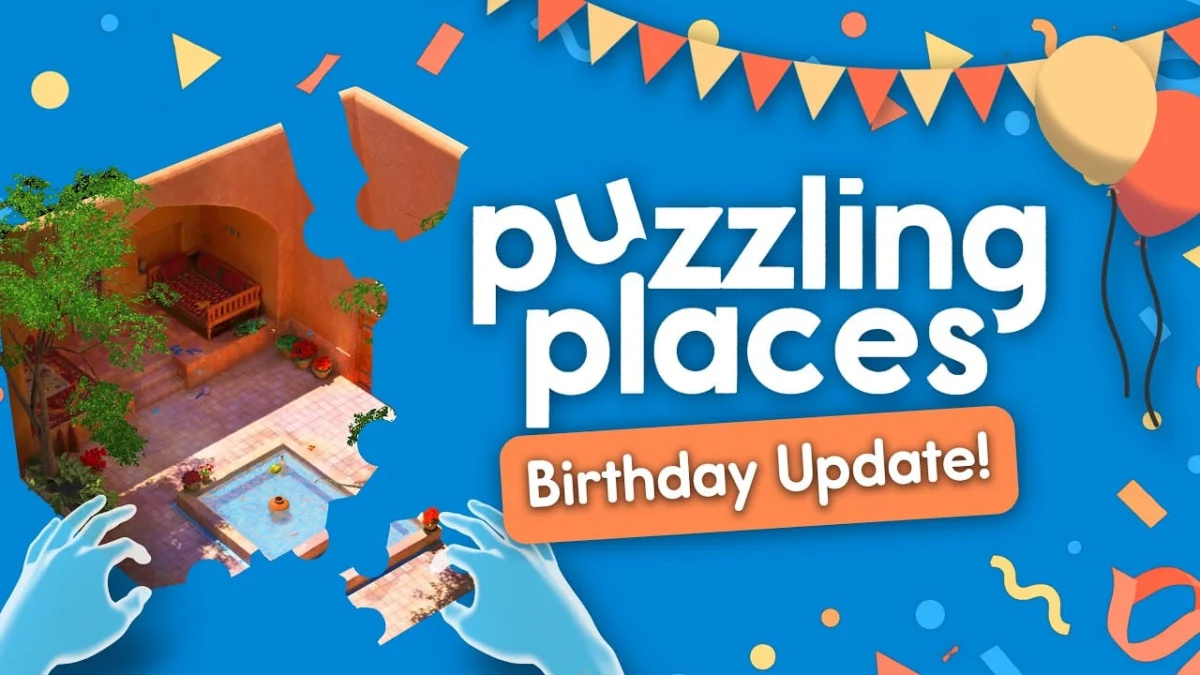
The landscape of virtual reality (VR) is often defined by its high-octane thrillers, rhythm-based fitness apps, and immersive first-person shooters. However, standing as a quiet, meditative titan in the industry is Puzzling Places, a 3D jigsaw puzzle game that has redefined the "cozy gaming" genre within spatial computing. This month, the developer, Realities.io, marks a significant milestone: the fifth anniversary of the project’s inception.
To celebrate half a decade of success, the studio has announced a comprehensive suite of updates designed to reward its loyal community and lower the barrier to entry for newcomers. These updates include a new weekly free puzzle initiative, a revolutionary "Guest Pass" for multiplayer sessions, and significant technical enhancements to its Mixed Reality (MR) capabilities.
Main Facts: A New Era for the 3D Jigsaw
The fifth-anniversary update is not merely a cosmetic celebration but a functional overhaul of how players interact with the game’s content and each other. Realities.io has focused on three core pillars: accessibility, community, and immersion.
The Weekly Free Puzzle Initiative
In a move that significantly boosts the game’s value proposition, Puzzling Places is introducing a "Puzzle of the Week" system. While the game already offers a selection of free puzzles and numerous paid DLC packs, this new initiative ensures that the player base has a rotating reason to return to the app. Each week, a specific puzzle—often curated from their premium collections—will be made available to all players for a limited time. This allows users to sample the diverse range of photogrammetry-based content, from historic European architecture to intricate cultural artifacts, without immediate financial commitment.
The Multiplayer Guest Pass
Perhaps the most significant addition is the "Multiplayer Guest Pass." Collaborative puzzling has been a fan-favorite feature since its introduction, allowing two players to sit in a shared virtual space and piece together complex structures. Previously, both players were required to own the specific puzzle being solved. With the new Guest Pass, only the host needs to own the puzzle pack. They can invite a friend who owns the base game to join them in solving premium content for free. This "Buddy Pass" system is a proven strategy in the wider gaming industry (notably used in titles like It Takes Two) and is expected to significantly increase the social footprint of the game.
Enhanced Mixed Reality Integration
As hardware like the Meta Quest 3 and Apple Vision Pro pushes Mixed Reality into the mainstream, Puzzling Places is doubling down on its MR features. The update includes improved depth-sensing and room-aware placement, allowing the 3D puzzle pieces to interact more naturally with the user’s physical environment. Players can now "anchor" their puzzle board to a real-world coffee table or have pieces float realistically around their living room furniture. This blend of the digital and physical reinforces the game’s reputation as a premier "passthrough" experience.
Chronology: From SideQuest Prototype to Multi-Platform Staple
The journey of Puzzling Places is a classic "indie success story" within the VR ecosystem, reflecting the evolution of the hardware itself.
- 2019: The Prototype Phase: The project began as an experimental demo on SideQuest (an unofficial sideloading platform for Oculus Quest). At the time, it featured a single, highly detailed 3D scan of the Mont Saint-Michel in France. The "pop" sound of pieces snapping together and the tactile nature of the 3D photogrammetry immediately resonated with users.
- 2020: App Lab and Early Access: As Meta (then Oculus) introduced the App Lab for experimental titles, Puzzling Places became one of its most-downloaded entries. The developers used this period to refine the "slicing" algorithm that turns a solid 3D scan into 25, 50, 100, or even 400+ puzzle pieces.
- 2021: Official Store Launch: The game officially graduated to the Meta Quest Store and later the PlayStation VR platform. It was hailed by critics for its "low friction" gameplay—no complex menus or violent mechanics, just pure spatial logic.
- 2022-2023: Expansion and Multiplayer: Realities.io expanded the library to include "Monthly Packs," featuring themes like "Visions of China" and "Behind the High Walls." The introduction of a two-player multiplayer mode transformed the solitary experience into a social one, further cementing its place in the VR zeitgeist.
- 2024: The Spatial Computing Leap: With the launch of the Apple Vision Pro, Puzzling Places was one of the first titles to showcase high-fidelity photogrammetry on the $3,500 headset. The game now spans across Quest, SteamVR, PSVR2, Pico, and Apple Vision Pro, making it one of the most widely available VR titles on the market.
Supporting Data: The Science of Photogrammetry
What sets Puzzling Places apart from traditional digital jigsaws is its use of photogrammetry—the process of using photography in surveying and mapping to measure distances between objects.
Technical Fidelity
The puzzles in the game are not hand-modeled by artists; they are "captured" from the real world using thousands of high-resolution photographs and LiDAR scans. This results in a level of detail that is often breathtaking. When a player zooms in on a 400-piece puzzle of a Japanese ramen shop, they can see the texture of the weathered wood, the fine print on a menu, and the subtle reflections in the windows.
Player Engagement Metrics
While specific sales figures are often kept confidential by developers, Puzzling Places consistently ranks in the "Top Rated" categories on the Meta Quest Store, maintaining a near-perfect 4.9/5 star rating across thousands of reviews. The game’s Discord community is one of the most active in the VR space, with "Puzzlers" sharing speed-run times and custom-made puzzle configurations. The game supports piece counts ranging from a simple 25-piece warm-up to a grueling 1,000-piece challenge, catering to both casual users and "hardcore" puzzle enthusiasts.
Official Responses: The Philosophy of "Cozy VR"
The team at Realities.io has frequently spoken about their commitment to creating a "low-stress" environment. In various developer logs and community Q&As, the studio has emphasized that Puzzling Places is intended to be an antidote to the "gamification" of everything.
"We wanted to create something that feels like a hobby you can do in your living room, but without the mess of a thousand cardboard pieces taking up your dining table," the developers have noted.
Their response to the fifth anniversary has been one of gratitude. By introducing the Guest Pass and Weekly Free Puzzles, the studio is effectively pivoting toward a "service" model that prioritizes long-term player retention over one-time sales. This philosophy aligns with the broader industry shift toward "spatial computing" as a daily-use tool rather than a niche gaming peripheral.
Implications: The Future of Spatial Hobbies
The five-year success of Puzzling Places carries significant implications for the future of the VR/AR industry.
1. The Validation of "Non-Gaming" VR
The game proves that there is a massive, underserved market for non-combative, meditative experiences in VR. As the demographic for VR headsets shifts from young gamers to a broader age range (including seniors and working professionals looking for stress relief), Puzzling Places serves as the gold standard for accessible UI/UX design.
2. The Power of Shared Presence
The "Guest Pass" initiative highlights a growing trend in VR: the importance of shared presence. In an increasingly digital world, the ability to "sit" with a friend across the country and work on a tactile task together is a powerful use case for VR. It moves the technology away from "isolation" and toward "connection."
3. Mixed Reality as the New Standard
By improving their MR features, Realities.io is signaling that the future of VR is not necessarily "fully occluded." The ability to see one’s own hands and environment while interacting with high-fidelity digital objects is the key to mainstream adoption. Puzzling Places is no longer just a "game you play in VR"; it is an "activity you do in your room" using spatial technology.
4. Preservation through Digital Twins
Beyond entertainment, Puzzling Places serves as a digital archive. Many of the locations featured in the game are historic sites that are susceptible to time and climate change. By turning these sites into 3D puzzles, the developers are inadvertently creating a form of cultural preservation, allowing users to explore and touch pieces of history that they may never visit in person.
In conclusion, the fifth-anniversary update for Puzzling Places is more than just a content drop; it is a celebration of how far the medium has come. From a simple prototype of a French monastery to a multi-platform, social, and mixed-reality powerhouse, the game remains a testament to the fact that sometimes, the most revolutionary thing you can do in virtual reality is simply sit down and put the pieces together.