
From Cosmic Voyages to Earthly Relics: A Week in Science Fiction, Space, and History
This week, the worlds of science fiction, space exploration, and historical discovery converged, offering a diverse array of headlines that captivated enthusiasts and scholars alike. From a late-night television farewell steeped in genre tropes to a cosmonaut’s return to a vastly changed world, and the ambitious launch of humanity’s next-generation spacecraft, the narrative thread running through these events is one of change, exploration, and the enduring human fascination with the unknown. Even the fannish community found its voice, with a whimsical ode to digital camaraderie, perfectly encapsulating the spirit of shared interest that binds these disparate topics.
Steve Davidson’s playful opening, a fannish poem evoking the digital camaraderie of online communities, sets a unique tone for a week brimming with narratives that span the spectrum of human endeavor, from the artistic to the scientific, and the historical.
Late-Night’s Sci-Fi Send-Off: Colbert’s Wormhole Farewell
Main Facts:
Stephen Colbert, the esteemed host of The Late Show, bid a spectacular farewell to his audience in an episode that masterfully blended late-night comedy with elaborate science fiction special effects. The New York Times highlighted the finale, titled "Stephen Colbert Went Out His Way: Through a Wormhole," for its highly entertaining use of genre elements, signaling a memorable conclusion to his long-running tenure.
Chronology & Supporting Data:
The May 22, 2026, finale marked the end of an era for The Late Show with Stephen Colbert, a program known for its incisive political commentary and comedic brilliance. As the episode drew to a close, a fantastical wormhole portal opened, threatening to engulf Colbert and his show. In a delightful sequence, renowned astrophysicist Neil deGrasse Tyson, alongside late-night compatriots Jon Stewart and Andy Cohen, appeared to assist Colbert. The segment further escalated with the arrival of the "Strike Force Five" co-hosts – Jimmy Kimmel, Seth Meyers, and John Oliver – all of whom had recently shared a podcast platform during industry strikes.
The banter among the hosts was a highlight, with Seth Meyers quipping about the absence of a "middle-aged white man to make jokes about the news" without Colbert. Jimmy Kimmel humorously referenced ABC’s brief pulling of Jimmy Kimmel Live after comments about Charlie Kirk, suggesting his own "hole" went away after a few days. John Oliver delivered the punchline, reminding Colbert, "tonight it is going to eat you." This playful exchange underscored the camaraderie among late-night hosts while cleverly integrating the sci-fi premise. The episode was rich with embedded videos, allowing viewers to relive the most iconic moments.
Implications:
Colbert’s sci-fi themed farewell is more than just a comedic flourish; it underscores the increasing integration of genre elements into mainstream entertainment. It highlights Colbert’s unique brand of humor, which often infused pop culture and even fantastical concepts into his political and social commentary. The finale also reflects the evolving landscape of television, where hosts frequently collaborate across networks, fostering a sense of shared community even in competition. This memorable send-off cements Colbert’s legacy as a late-night titan who wasn’t afraid to embrace the unconventional, even as he exited the stage.
Exploring Literary Worlds: Shelfies and Speculative Fiction in Translation
Main Facts:
Shelfies, a unique newsletter edited by acclaimed authors Lavie Tidhar and Jared Shurin, continues to offer an intimate glimpse into the literary landscapes of various contributors. Each week, Shelfies provides a "unique peek… into one of our contributors’ weird and wonderful bookshelves." A recent installment, Shelfies #89, spotlighted Rachel Cordasco, a significant voice in the realm of speculative fiction.
Supporting Data:
Rachel Cordasco brings a profound academic and critical perspective to the genre. Holding a PhD in literary studies, she is a regular reviewer of speculative fiction in translation for prestigious publications such as World Literature Today and Strange Horizons. Beyond her critical work, Cordasco is also an active translator of Italian speculative fiction, bridging linguistic and cultural gaps for genre enthusiasts. Her expertise culminated in the release of her book, Out of This World: Speculative Fiction in Translation From the Cold War to the New Millennium, published by the University of Illinois Press. This work explores the rich, often overlooked, history and impact of non-English speculative fiction.
Implications:
The Shelfies project, by showcasing the personal libraries and intellectual interests of its contributors, fosters a deeper connection between readers and the creators/critics within the speculative fiction community. Cordasco’s feature, in particular, highlights the vital importance of literary translation in expanding the horizons of genre readership. Her work champions the diversity of global speculative fiction, encouraging a broader understanding of how different cultures imagine the future, the past, and the fantastical. This initiative enriches the genre by making it more accessible and globally conscious.
Hugo Award Dynamics: A Fannish Perspective
Main Facts:
Camestros Felapton, a prominent voice in science fiction fandom, shared his preliminary rankings for a highly anticipated Hugo category: "Hugo 26: Dramatic Presentation Longggggg." Felapton’s candid assessment revealed that three of the six finalists immediately found themselves at the bottom of his ballot, prompting a characteristic query about whether the "cream rose to the top."

Supporting Data:
The Hugo Awards, presented annually for the best science fiction or fantasy works and achievements of the previous year, are a cornerstone of genre recognition. The "Dramatic Presentation (Long Form)" category is particularly competitive, often featuring blockbuster films, critically acclaimed television series, and innovative streaming content that push the boundaries of visual storytelling in science fiction and fantasy. Felapton’s blog post engages with the often-spirited discourse surrounding Hugo nominations and voting. His humorous "bovine mileage may vary" caveat acknowledges the subjective nature of artistic judgment, a common theme within fandom discussions where passionate opinions often diverge.
Implications:
Felapton’s early ranking offers a snapshot into the critical process undertaken by many Hugo voters. It underscores the rigorous, sometimes contentious, evaluation of genre media within the fandom community. Such commentary not only guides potential voters but also stimulates broader discussions about what constitutes excellence in dramatic presentation within science fiction and fantasy, reflecting the vibrant and opinionated nature of dedicated fans.
A Liaden Universe Constellation: An Interview with Sharon Lee
Main Facts:
The Baen Free Radio Hour recently released a comprehensive two-part interview with acclaimed author Sharon Lee, titled "A Liaden Universe Constellation." The interview delves into her extensive work, particularly focusing on the beloved "Liaden Universe" series.
Supporting Data:
Sharon Lee, often in collaboration with her husband and co-author Steve Miller, is a prolific writer known for her intricate space opera narratives. The "Liaden Universe" is a sprawling saga that has captivated readers for decades with its richly developed characters, complex political landscapes, and compelling themes of honor, duty, and found family. The Baen Free Radio Hour provides a platform for authors published by Baen Books, offering fans deeper insights into their creative processes and the worlds they build. The two-part format allows for an in-depth exploration of Lee’s career, the evolution of the Liaden Universe, and her perspectives on writing within the science fiction genre.
Implications:
This extensive interview serves as a valuable resource for both long-time fans and newcomers to the "Liaden Universe." It highlights the dedication and vision required to sustain a complex, multi-volume series over many years. Furthermore, it exemplifies the importance of author-reader engagement through platforms like podcasts, fostering a stronger community around genre literature and providing unique insights into the minds behind popular fictional worlds.
A Purr-fect Touch: Academia’s Lighter Side
Main Facts:
Cyril Simsa of the Anglo American University in Prague shared a delightful creation: a cat-themed mini-poster, a collaborative effort with fellow cat-loving colleagues, now proudly displayed in their Study Abroad office.
Supporting Data:
While seemingly a small detail, the poster reflects a universal truth: shared interests, even as simple as a love for felines, can foster camaraderie and inject personality into professional environments. The presence of such a lighthearted piece in a university office suggests an inclusive and approachable atmosphere, potentially offering a warm welcome to students navigating study abroad opportunities. The specific content of the poster, though not fully detailed, is implied to be a whimsical or encouraging message, perhaps a play on words related to cats and travel or academic pursuits.
Implications:
This charming anecdote illustrates the human element within academic institutions. Beyond scholarly pursuits, shared passions and humor contribute to a positive working and learning environment. Such small gestures can significantly impact the perceived culture of an office, making it feel more inviting and less intimidating for students and staff alike.
Memory Lane: Outland – The Sci-Fi Western That Almost Wasn’t
Main Facts:
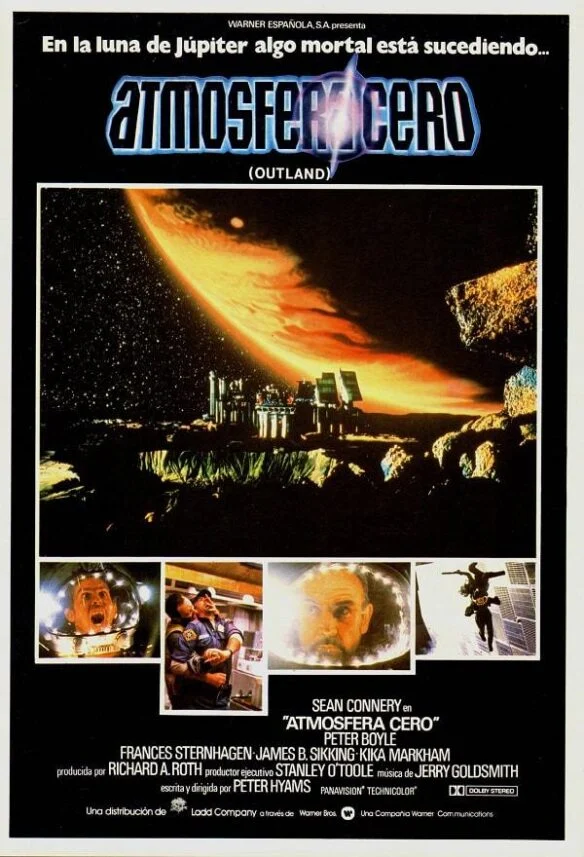
Forty-five years ago, on May 22, 1981, the science fiction film Outland premiered in select U.S. cities. The film, a gritty space Western, later earned a Hugo nomination at Chicon IV, ultimately losing to the iconic Raiders of the Lost Ark.
Chronology & Supporting Data:
Initially titled Io, a reference to Jupiter’s moon where the film is set, audience testing revealed a significant misunderstanding, with viewers interpreting it as "number ten" or "low." This led to the title change to Outland, a deliberate homage to the Western genre that profoundly influenced its creation. Writer and director Peter Hyams explicitly sought to make a Western, observing that the genre, though seemingly dead on Earth, was thriving in the vastness of outer space.

The film stars Sean Connery, whose career at the time was in a relative slump. Outland offered him a golden opportunity to revitalize his presence on screen, a chance he seized by taking on the lead role of Federal Marshal Will O’Niel. The narrative draws clear parallels to classic Westerns like High Noon, exploring themes of right versus wrong, and the complex duties of law enforcement against personal safety. However, unlike High Noon‘s archetypal hero, O’Niel is presented as a character already entrenched in the moral ambiguities of a frontier existence. Connery’s portrayal was widely praised for its depth and intensity, anchoring the film’s stark atmosphere. He was supported by a strong ensemble cast including Peter Boyle, Frances Sternhagen, and James Sikking, all of whom delivered memorable performances as complex characters.
Filming Outland presented a significant challenge given its tight budget of seventeen million dollars. To achieve its impressive visual effects without breaking the bank, the production utilized an innovative technique called Introvision. This process allowed Hyams to seamlessly combine sets, matte paintings, and miniature models directly in-camera, bypassing the then-cumbersome and time-consuming process of extensive green screen work. This technical ingenuity contributed significantly to the film’s believable, albeit bleak, futuristic aesthetic.
Critical reception for Outland was notably mixed. Gary Arnold of the Washington Post dismissed it as "trite and dinky," while Desmond Ryan of the Philadelphia Inquirer hailed it as "a brilliant sci-fi Western." This divergence in opinion highlights the film’s unique position, often appealing more to genre aficionados who appreciated its thematic depth and atmospheric tension over those seeking more conventional sci-fi spectacle. Financially, the film mirrored its budget, earning approximately seventeen million dollars globally. However, after accounting for distribution costs, promotional expenses, and the standard studio share of ticket sales, Outland technically operated at a loss for its studio, a common fate for many mid-budget genre films.
Implications:
Despite its mixed commercial success, Outland has garnered a cult following over the decades. It stands as a significant example of genre blending, proving that the narrative structures and thematic richness of the Western could be effectively transplanted into a science fiction setting. Its influence can be seen in subsequent films that explore similar themes of isolated law enforcement in harsh, frontier-like futures. For many, including critic Cat Eldridge, who sees it more as a police drama than a pure sci-fi film, Outland‘s enduring appeal lies in its exploration of human morality under extreme duress, making it a compelling piece of cinematic history.
The Unseen Canvas: Celebrating Sci-Fi in Comics
Main Facts:
This month marks the 50th anniversary of "Cosmic Chronicles," a foundational science fiction comic series that redefined the genre in sequential art. Published by the fictional Stellar Comics, the series is being celebrated with a deluxe commemorative edition and a new documentary exploring its profound impact.
Supporting Data:
"Cosmic Chronicles," first launched in 1976, introduced readers to a sprawling galactic empire, advanced alien civilizations, and a diverse cast of characters navigating complex moral dilemmas and epic space battles. Its innovative artwork, pioneering serialized storytelling, and mature themes quickly set it apart from its contemporaries. The series is credited with influencing countless creators in both comics and film, proving that science fiction could be explored with intellectual rigor and visual grandeur in the comic book medium. The upcoming deluxe edition will feature remastered art, never-before-seen concept sketches, and essays from leading comic historians, while the documentary promises interviews with the original creative team and contemporary artists inspired by its legacy.
Implications:
The anniversary of "Cosmic Chronicles" underscores the vital role of comics in the broader science fiction landscape. Beyond mere entertainment, comics have consistently served as a fertile ground for experimental storytelling and visual innovation within the genre, often predating and influencing adaptations in film and television. This celebration not only honors a seminal work but also reinforces the enduring power of sequential art to explore complex sci-fi concepts and build enduring fictional universes.
Unveiling the Past: Guesshenge and Neolithic Life
Main Facts:
English Heritage has unveiled a remarkable, full-scale reconstruction of a 4,500-year-old Neolithic hall near the iconic Stonehenge. Dubbed the Kusuma Neolithic Hall, this £1 million project offers visitors an immersive glimpse into the daily lives of the prehistoric people who constructed the world’s most famous stone circle.
Chronology & Supporting Data:
The reconstruction, standing at an impressive 7 meters high, is located near the Stonehenge visitor centre on Salisbury Plain. Its construction involved a monumental effort, with a team of over 100 volunteers working entirely by hand over nine months. The design of the Kusuma Neolithic Hall is based on the archaeological footprint of "Durrington 68," a unique "square in the circle" building anomaly discovered two miles away near Woodhenge, another significant Neolithic site. This original site was first excavated in 1928 by Maud Cunnington and re-examined in 2007 by the Stonehenge Riverside Project.
Despite the detailed archaeological evidence of post holes forming a horseshoe-shaped ring around four massive internal roof support pillars, the true purpose of the original structure remains a mystery. Centuries of ploughing have unfortunately obliterated the original floor and hearths that might have provided clearer clues. However, nearby discoveries of animal bones and grooved ware pottery suggest potential uses, including winter feasting, ritual gatherings, or even communal storage facilities for the prehistoric community.

Official Responses & Implications:
English Heritage’s objective with the Kusuma Neolithic Hall is to bring the distant past to life, offering visitors a tangible connection to the people who built Stonehenge. The project will open to the public this summer, transitioning thereafter into an immersive historical learning space specifically designed for schools. This initiative highlights the ongoing efforts in archaeological interpretation to engage the public and provide educational opportunities. It also underscores the enduring mysteries surrounding ancient civilizations and the innovative ways in which modern archaeology attempts to reconstruct and understand their lives and structures. The hall serves as a powerful reminder of the sophisticated engineering and social organization required to construct monumental sites like Stonehenge.
The Cosmonaut Who Outlasted His Country: Sergei Krikalev’s Mir Mission
Main Facts:
Soviet cosmonaut Sergei Krikalev embarked on a mission to the Mir space station in May 1991. By the time he returned to Earth in March 1992, the country that sent him, the USSR, no longer existed. This extraordinary nine-month mission saw him become, in essence, the "last Soviet citizen," a poignant symbol of geopolitical upheaval.
Chronology & Supporting Data:
Krikalev launched from the Baikonur Cosmodrome as a Soviet citizen on Soyuz TM-12. His mission, originally planned for five months, was extended due to severe funding cuts compressing the Soviet space program. Alongside commander Anatoly Artsebarsky and British cosmonaut Helen Sharman (who returned earlier), Krikalev became the flight engineer asked to remain on Mir for a subsequent long-duration expedition. According to ESA’s biographical note, he agreed to this extended stay.
During his time in orbit, the political landscape below underwent a seismic shift. In August 1991, while Krikalev and Artsebarsky were conducting spacewalks and station maintenance, the failed coup against Mikhail Gorbachev unfolded. The subsequent months witnessed the rapid dissolution of the Soviet Union. On September 6, 1991, Krikalev learned from orbit that his home city, Leningrad, had reverted to its historical name, Saint Petersburg. By December 16, 1991, Kazakhstan declared its independence, making Baikonur Cosmodrome, the very launchpad that sent him into space, part of a newly sovereign nation. Ten days later, on December 26, the Soviet Union formally ceased to exist. Krikalev, still in orbit, was now flying for a state that no longer existed, a Russian cosmonaut rather than a Soviet one. This dramatic change necessitated complex renegotiations for Russia to access the critical infrastructure of its own space program.
Implications:
Sergei Krikalev’s mission stands as a unique and powerful historical anecdote, illustrating the profound personal impact of large-scale geopolitical events. His story highlights the resilience and dedication of individuals in the face of uncertainty, and the inherent continuity of scientific and exploratory endeavors even amidst national collapse. The challenges faced by the nascent Russian space program in the wake of the USSR’s dissolution underscore the complex interplay between political stability and ambitious scientific pursuits, forever linking Krikalev’s name to a pivotal moment in both space history and world history.
To the Moon and Beyond: SpaceX’s Starship Lifts Off
Main Facts:
SpaceX successfully launched its most advanced Starship yet, the "V3" model, on a critical test flight. This upgraded mega-rocket is central to NASA’s plans to land astronauts on the Moon as part of the Artemis program, and ultimately, Elon Musk’s long-term vision for Mars.
Chronology & Supporting Data:
The launch occurred on a Friday, just two days after SpaceX CEO Elon Musk announced his intention to take the company public. Blasting off from a brand-new launch pad at Starbase, located near the Mexican border in southern Texas, the V3 Starship carried 20 mock Starlink satellites. This marks the 12th test flight for the Starship program, showcasing continuous development since the last "old space-skimming Starships" lifted off in October of the previous year. A prior launch attempt on Thursday evening had been thwarted by last-minute pad issues.
The V3 Starship represents a significant leap forward in design and capability. At 407 feet, it eclipses its predecessors by several feet and boasts substantially more engine thrust. SpaceX aimed to avoid the "fireworks" that characterized earlier test flights, which saw mid-air explosions rain wreckage down on the Atlantic, a challenge inherent in developing such a groundbreaking vehicle. The success of this flight is crucial for NASA, which is banking on Starship’s ability to serve as the Human Landing System for its ambitious Artemis missions, aiming to return humans to the lunar surface.
Implications:
The successful launch of the V3 Starship is a monumental step forward for both SpaceX and the future of human space exploration. It reinforces SpaceX’s position as a leader in commercial spaceflight and demonstrates the rapid iterative development approach championed by Elon Musk. More importantly, it brings humanity closer to its next major milestones: returning to the Moon and, eventually, venturing to Mars. The integration of commercial entities like SpaceX into national space programs like NASA’s Artemis underscores a new era of collaborative space exploration, promising faster development and potentially more affordable access to space. While challenges remain, each successful test flight fuels optimism for a future where interstellar travel is not just a dream, but a tangible goal.

Leave a Comment