From Hookup App to ‘Gayborhood’ Powerhouse: The Strategic Evolution of Grindr Under George Arison
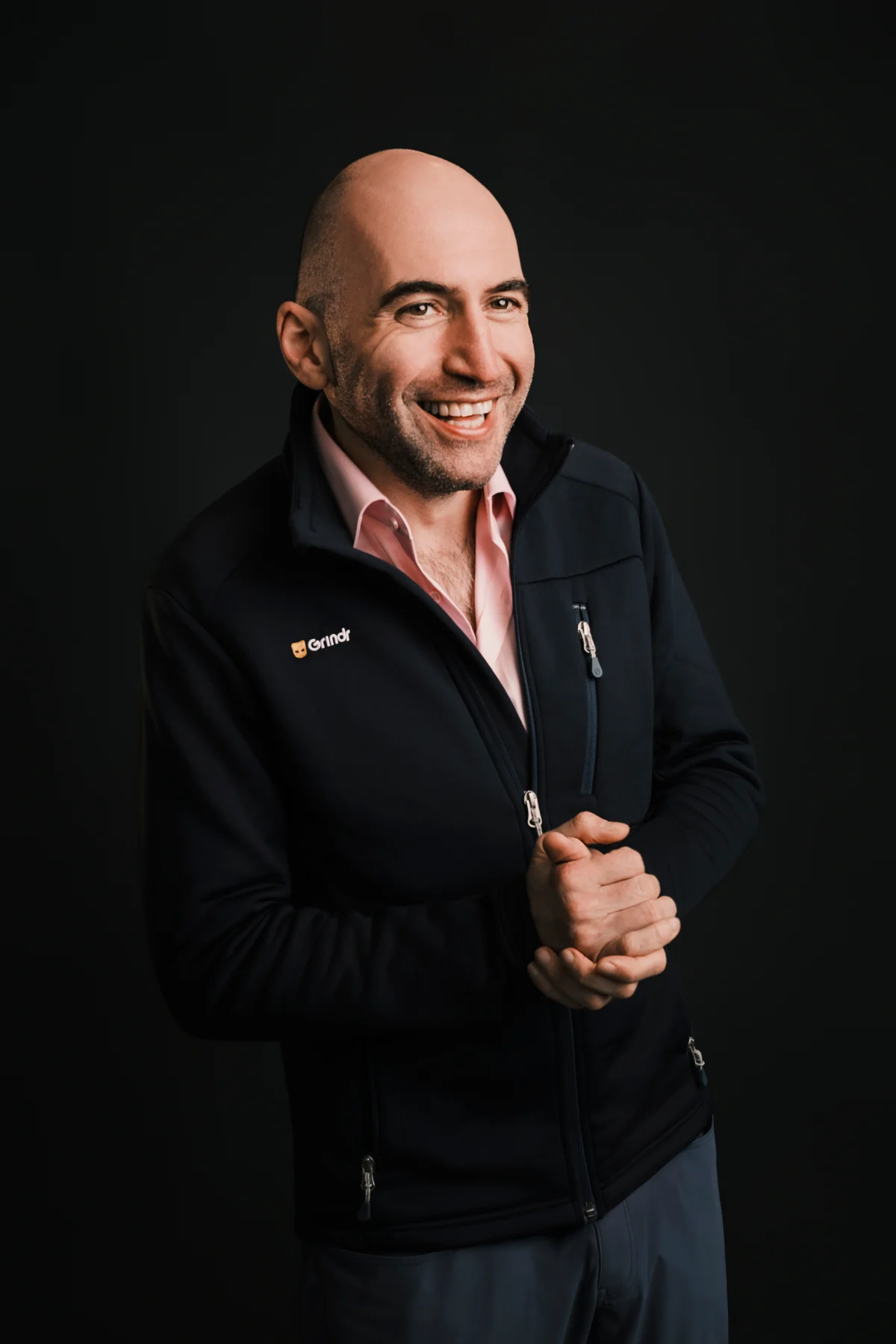
When George Arison stepped into the role of CEO at Grindr in late 2022, he did not just inherit a dating app; he inherited a digital institution that was simultaneously a cash cow and a corporate enigma. Having been shuttled from Chinese ownership to a forced divestiture by the U.S. government on national security grounds, and eventually through a private-equity rescue and a SPAC listing, Grindr was a business that "printed money" but lacked a coherent long-term product roadmap.
Two years into Arison’s tenure, the narrative has shifted from survival to aggressive expansion. Grindr is no longer just a utility for proximity-based connections; it is being repositioned as a comprehensive ecosystem—a "gayborhood in your pocket." With revenue projected to nearly triple from $195 million in 2022 to over $540 million in 2024, and adjusted EBITDA margins robustly holding above 40%, the company is attempting to prove that it can scale beyond its niche origins while navigating institutional biases and internal cultural upheavals.
I. Main Facts: The Financial and Strategic Pivot
The central pillar of Grindr’s current strategy is a shift from horizontal user growth to vertical monetization. While the app’s user base remains massive, the real story lies in how much more each user is worth today than they were two years ago.
The Monetization Engine
In the second quarter of 2024, Grindr reported 1.4 million paying users, representing roughly 9% of its total user base. This is a significant jump from the sub-6% conversion rate seen at the start of Arison’s tenure. Average Revenue Per User (ARPU) has nearly doubled, driven by tiered subscription models and a more aggressive approach to premium features.
The "Everything App" for the LGBTQ+ Community
Arison’s vision, often referred to as the "gayborhood" strategy, involves expanding Grindr’s utility into two high-margin sectors: healthcare and travel.
- Healthcare: Through its "Woodwork" line, Grindr is facilitating access to erectile dysfunction (ED) medication, GLP-1s, and HIV prevention (PrEP).
- Travel: The platform aims to become a community hub for users traveling to new cities, helping them find local safe spaces and social networks.
Lean Operations and AI Integration
Perhaps the most striking fact of the "new" Grindr is its operational efficiency. Following a controversial return-to-office (RTO) mandate that saw the workforce shrink dramatically, the company now operates with a lean team of approximately 175 U.S. employees. Arison has leaned heavily into artificial intelligence, claiming that 80% of the company’s code is now AI-written, leading to a 2.5x increase in engineering productivity.
II. Chronology: A Turbulent Path to Growth
Grindr’s journey to its current state has been marked by geopolitical friction and internal restructuring.
2016–2020: The Era of Uncertainty
Grindr was acquired by the Chinese firm Beijing Kunlun Tech in a phased buyout. However, the Committee on Foreign Investment in the United States (CFIUS) intervened, citing concerns that the personal data of U.S. users (including HIV status and location) could be exploited by the Chinese government. This led to a forced divestiture in 2020 to San Vicente Investments, a private equity group.
2022: The Arison Era Begins
George Arison, the founder of Shift Technologies, took the helm just as Grindr went public via a SPAC (Special Purpose Acquisition Company). He found a company that lacked a dedicated product strategy and suffered from what he described as "peak-COVID" productivity slumps.
2023: The Great Reset
In the summer of 2023, Arison issued a strict return-to-office mandate, requiring employees to be in-office two days a week. The move was met with fierce internal resistance and allegations of union-busting. The result was a mass exodus: the staff count plummeted to about 70 people. Arison used this "reset" to rebuild the company culture from the ground up, hiring a new cohort of engineers and product managers aligned with his high-output vision.
2024: Scaling the "EDGE"
Throughout 2024, Grindr began testing "EDGE," a high-priced, AI-powered subscription tier. Despite online backlash regarding potential price points (some tests reached $350/month), the company has moved forward with the rollout, viewing it as the "Tesla Model S" of their product line—a premium flagship that will eventually see its features trickle down to lower tiers.
III. Supporting Data: Efficiency and Market Valuation
The data underlying Grindr’s growth suggests a company that is outperforming its peers in the dating space, such as Match Group (owner of Tinder and Hinge), despite trading at a lower multiple.
| Metric | 2022 Performance | 2024 Guidance/Actuals |
|---|---|---|
| Annual Revenue | $195 Million | $540 Million+ |
| Paying User Conversion | < 6% | 9% |
| Adjusted EBITDA Margin | ~40% | 40%+ |
| Technical Staff | Distributed/Larger | ~95 (Across all roles) |
| Subscription Revenue % | 86% | 83% (and falling as ads/health grow) |
The "Grindr Discount"
Despite sixteen straight quarters of revenue growth exceeding 25%, Arison argues that the stock is undervalued due to institutional homophobia or "stigma." Grindr currently trades at roughly 11 times its projected 2027 EBITDA. This represents a 35% discount compared to its peers in the broader tech and dating sectors.
While Morgan Stanley upgraded the stock to "overweight" in July 2024, citing the potential of the EDGE tier and telehealth, Arison notes that some financial institutions still refuse to work with the company, citing "reputational concerns."
IV. Official Responses: Arison on AI and Pricing
In a recent Q&A, George Arison addressed the controversies surrounding the company’s lean team and its aggressive pricing strategies.
On Engineering and AI
Arison is unapologetic about the reduction in force, stating that AI has allowed the company to do the work of 350 people with only 100. "A large-tech-company CEO once told me AI would let me do with far fewer people what I thought I’d need 300 to 350 for—he was right," Arison noted. He emphasizes that the goal is not just to write code faster, but to use AI to facilitate "better matches than a sparse profile ever could."
On the EDGE Tier and Pricing Elasticity
Addressing the viral screenshots of $300+ monthly subscription fees, Arison clarified that these were "test points" designed to understand price elasticity. He compared the strategy to the automotive industry: "We think of it like a Tesla Model X or S: a premium flagship now, with the underlying capability rolling down to the broader product over time."
On Long-Distance Matching
One of the most debated features is the use of AI to suggest partners outside a user’s immediate geographic area. Arison defends this by pointing to the limited "dating pool" even in gay meccas like San Francisco. "What if AI could break down the geographic constraint entirely, and surface someone in St. Louis who actually matches what you want?" he asked, noting that younger generations are increasingly seeking long-term monogamy and children, necessitating a wider search radius.
V. Implications: The Future of the "Gayborhood"
The transformation of Grindr has profound implications for the LGBTQ+ community, the dating app industry, and the broader tech market.
1. The Normalization of LGBTQ+ Tech
If Arison succeeds in erasing the "Grindr discount," it will signal a shift in how Wall Street views LGBTQ-focused businesses. For years, these platforms were relegated to the "vice" category or seen as limited-growth niches. Grindr’s move into healthcare and travel suggests that the "pink economy" is not just about dating, but about a lifelong relationship with a specific demographic’s needs.
2. The AI-First Corporate Model
Grindr is becoming a case study for the "lean AI" company. By replacing a large portion of its human engineering capacity with AI-driven workflows, Grindr is testing the limits of how small a half-billion-dollar company can be. This model, if successful, could become a blueprint for other mid-cap tech firms looking to expand margins.
3. Healthcare as the New Frontier
By integrating ED medication and HIV prevention directly into the app via AI bots, Grindr is bypassing traditional healthcare hurdles. The implication is a world where dating apps become the primary portal for sexual health, potentially increasing PrEP uptake and health literacy among high-risk populations, but also raising questions about data privacy and the medicalization of social spaces.
4. Cultural Shifts in Gay Dating
Arison’s focus on long-term relationships and AI-driven matching reflects a changing demographic. With 50% of gay men under 35 seeking monogamy, Grindr is attempting to shed its reputation as a "hookup-only" app. Whether an algorithm can successfully bridge the gap between a "right now" encounter and a "forever" partnership remains the company’s biggest product challenge.
As Grindr heads toward 2025, it stands at a crossroads. It is a leaner, more profitable, and more ambitious version of itself. However, to achieve its 10-year goal of being a diversified healthcare, travel, and social giant, it must first convince the market—and its users—that it is worth the "EDGE" price tag.