The Silicon Rosetta Stone: Google and Antigravity Unveil Offline AI Translation on the Edge
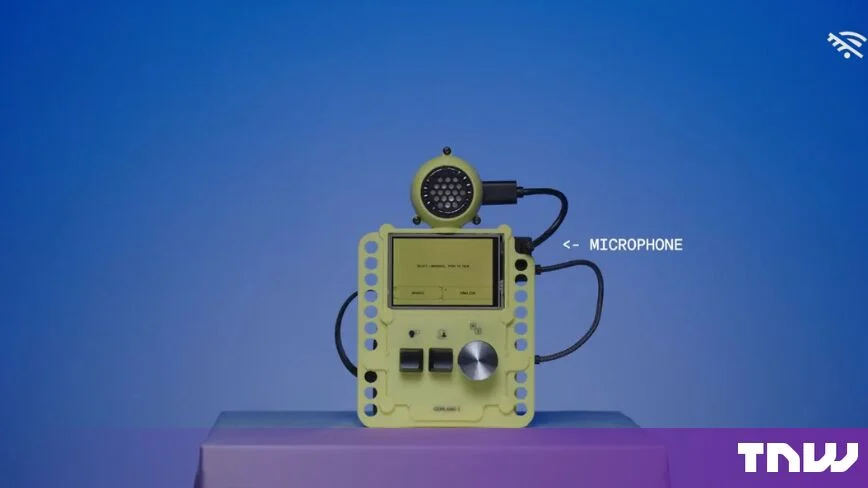
In an era where artificial intelligence is often synonymous with massive data centers and high-speed fiber optics, a new breakthrough from Google’s Antigravity team is bringing the power of large language models (LLMs) back down to earth—specifically, to a device that fits in the palm of a hand. Google has recently showcased a prototype AI translator that functions entirely without an internet connection, running on a Raspberry Pi 5. Powered by the Gemma 4 E2B model, this development marks a significant shift in the trajectory of "Edge AI," proving that the next generation of global communication tools may not need the cloud to be profoundly intelligent.
Main Facts: Breaking the Tether to the Cloud
The project, a collaboration between Google and its internal Antigravity team, represents a tangible proof-of-concept for the democratization of AI. While digital translation has existed for decades, the current "gold standard" involves sending voice data to a remote server, processing it via massive neural networks, and sending the translated text back to the user. This process, while accurate, is tethered to connectivity and raises significant privacy concerns.
The new prototype, dubbed the "Gemma Translator," circumvents these limitations through several key technical achievements:
- Localized Inference: The device utilizes the Gemma 4 E2B model, the smallest and most efficient variant in Google’s open-weight Gemma family. This model is specifically optimized for "edge" hardware—devices with limited processing power and memory.
- Hardware Accessibility: The prototype is built on a Raspberry Pi 5, a popular single-board computer that retails for approximately $80. By proving that high-level translation can occur on sub-$100 hardware, Google is lowering the barrier to entry for localized AI.
- Self-Contained Ecosystem: The device features a custom 3D-printed enclosure, a microphone, and a speaker. It functions as a "black box" of linguistic capability; you speak into it, and it translates back without ever pinging a satellite or a cell tower.
- Open-Source Philosophy: In a move to empower the developer community, Google has released the project’s code on GitHub and licensed the Gemma 4 model under Apache 2.0. This allows hobbyists, researchers, and startups to build upon the foundation for free.
Chronology: From Cloud-First to Edge-Always
The journey toward a fully offline AI translator has been a multi-year endeavor, characterized by the shrinking of model sizes and the increasing power of consumer-grade silicon.
April 2024: The Launch of Gemma 4
Google expanded its Gemma family in April, introducing Gemma 4 with four distinct model sizes. Among them was the E2B variant. The "E" stands for Edge, signaling Google’s intent to compete in the burgeoning market of localized AI. While larger models like Gemini or GPT-4 require thousands of GPUs, Gemma 4 E2B was designed to live on the "fringe" of the network—on laptops, smartphones, and IoT devices.
May 2024: The Rise of Antigravity at Google I/O
During Google’s annual developer conference, I/O, the company introduced "Antigravity." Initially described as an agentic development platform, Antigravity was designed to help developers create AI "agents"—programs that can perform tasks autonomously. The platform was built to simplify the deployment of LLMs on diverse hardware environments, moving away from the "one-size-fits-all" cloud approach.
Late 2024: The Prototype Reveal
Following months of internal development, the Antigravity team revealed the physical translator prototype. This was not presented as a retail product but as a "technology showcase." It served as the first major physical manifestation of the Antigravity platform, demonstrating that "agentic AI" could be packaged into a dedicated, single-purpose tool.
Supporting Data: The Specs Behind the Speech
The success of the Gemma Translator is rooted in the specific technical specifications of both the software and the hardware.
The Gemma 4 E2B Model
The E2B model is optimized for low-latency performance. In the world of translation, latency is the enemy; a three-second delay in a conversation feels like an eternity. By utilizing 4-bit quantization (a method of compressing the model’s weights without losing significant accuracy), the Gemma 4 E2B model can fit within the 8GB RAM footprint of a high-end Raspberry Pi 5.
Hardware Efficiency
The Raspberry Pi 5 represents a significant leap over its predecessor, offering 2-3 times the CPU performance. This extra "headroom" is what allows it to handle the mathematical heavy lifting of neural network inference.
- Cost Breakdown: Raspberry Pi 5 ($80) + MicroSD card ($10) + USB Microphone/Speaker ($15) + 3D Printed Case ($5 in filament) = ~$110 Total.
- Power Consumption: The device can run for several hours on a standard 10,000mAh power bank, making it truly portable for field use.
Comparison to Cloud Translation
Traditional cloud-based translation apps (like the standard Google Translate app on "high-accuracy" mode) typically use models with hundreds of billions of parameters. Gemma 4 E2B uses a fraction of that, yet in the context of conversational translation, it maintains a level of nuance that far exceeds the "phrasebook" style offline translators of the early 2010s.
Official Responses: A "Showcase," Not a Sale
Google has been careful to manage expectations regarding the commercial availability of the Gemma Translator. The company has explicitly stated that this is not a product announcement.
"This project is a demonstration of what is possible when you combine high-efficiency open models with accessible hardware," a Google spokesperson noted during a technical briefing. "Our goal with Antigravity is to provide the tools for the world to build these solutions. We are providing the ingredients; the community will cook the meals."
The Antigravity team emphasized that the project was released to GitHub to encourage "stress testing" by the global developer community. By making the code open source, Google is effectively crowdsourcing the refinement of the translation algorithms, particularly for "low-resource languages" that are often neglected by major tech firms.
Industry analysts view this as a strategic move. By releasing the Gemma models and the Antigravity platform, Google is positioning itself as the infrastructure provider for the next wave of AI, even if the processing happens on a device they didn’t manufacture.
Implications: A Future of Private, Resilient Communication
The emergence of a functional, offline, $100 AI translator has implications that reach far beyond the tourism industry. It addresses three critical pillars of modern technology: privacy, resilience, and accessibility.
1. Privacy and Sensitive Conversations
In sectors like legal aid, healthcare, and high-level diplomacy, the "cloud" is often a liability. When an AI processes a conversation, that data technically leaves the room. An offline device like the Gemma Translator ensures that the data never exists outside the local RAM of the device. This "Privacy by Design" could make AI translation viable for doctor-patient consultations in immigrant communities or for confidential business negotiations.
2. Humanitarian and Disaster Response
When a natural disaster strikes, the first thing to go is the infrastructure. Emergency responders often find themselves in "comms-dark" environments where they must interact with local populations who speak different languages. A device that requires no cell tower and no Wi-Fi becomes a life-saving tool in search-and-rescue operations or during the delivery of international aid.
3. Bridging the Digital Divide
While much of the Western world enjoys 5G connectivity, billions of people live in areas with intermittent or non-existent internet. If AI tools remain cloud-dependent, they will only widen the "AI divide." By optimizing models to run on cheap, offline hardware, Google is ensuring that the benefits of the "AI Revolution" can reach the most remote corners of the globe.
4. The End of the "App" Era?
The Gemma Translator is a "single-purpose" device. It doesn’t check email, it doesn’t have a social media feed, and it doesn’t track your location. It simply translates. As AI becomes more specialized, we may see a return to dedicated hardware—travel gadgets, classroom tools, and accessibility aids—that do one thing exceptionally well without the distractions or dependencies of a smartphone.
Conclusion: The Path Forward
The collaboration between Google and Antigravity on the Gemma Translator serves as a harbinger of a new era in computing. We are moving away from a world where "smart" means "connected" and toward a world where "smart" means "capable."
While you won’t be able to buy a Google-branded offline translator at a retail store this year, the blueprint is now public. The combination of the Raspberry Pi 5’s affordability and Gemma 4’s efficiency has effectively "open-sourced" the ability to bridge language barriers. As these models continue to shrink and edge silicon continues to evolve, the dream of a universal translator—once the province of science fiction like Star Trek—is finally becoming a localized reality.