J.R. Dawson’s "The Lighthouse at the Edge of the World": A Luminous Exploration of Life, Death, and the Human Soul
CHICAGO, IL – In a literary landscape often dominated by escapism, J.R. Dawson, acclaimed author of The First Bright Thing, has delivered a profound and unflinching exploration of mortality, grief, and the enduring human spirit with her latest novel, The Lighthouse at the Edge of the World. This intricate work of magical realism transcends conventional genre boundaries, presenting a vital social commentary wrapped in a compelling narrative that challenges readers to confront some of life’s most difficult questions. Set against the evocative backdrop of Chicago and the ethereal shores of Lake Michigan, the novel positions itself not merely as a story, but as a necessary dialogue on trauma, resilience, and the search for meaning in an impermanent world.
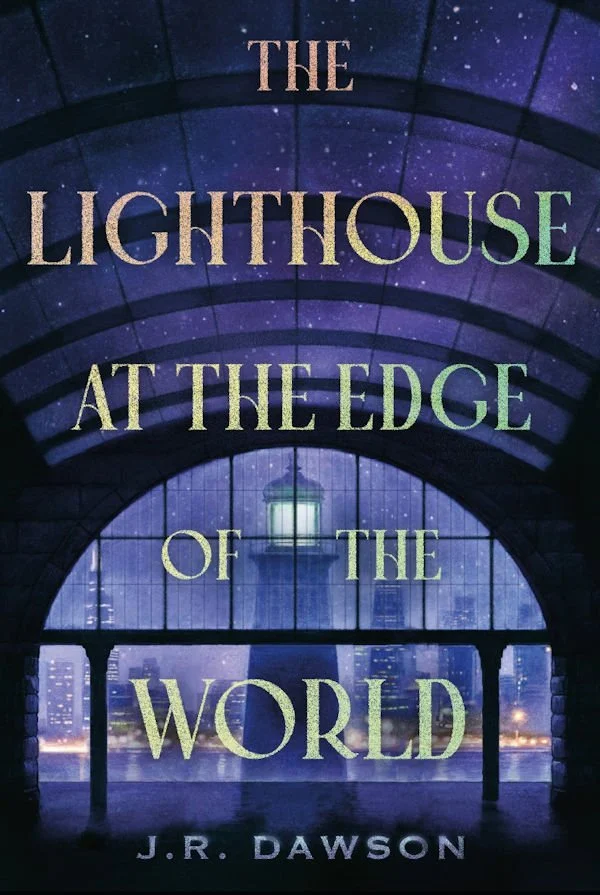
The book, distinguished by its evocative deep purple cover depicting a world viewed through a tunnel and glass, immediately signals its serious intent. Far from a light read, it delves into themes so weighty that its very premise evokes a sense of solemn contemplation. Yet, as critical reception suggests, within its depths lies not just the stark reality of death, but also the vibrant tenacity of life and the unwavering ember of hope.
The Lighthouse at the Edge of the World: A Literary Beacon for the Soul
At its core, The Lighthouse at the Edge of the World introduces a fantastical yet deeply resonant premise: a clandestine waystation for the dead, nestled on the outskirts of Chicago along the shores of Lake Michigan. Each night, the newly departed are drawn through the city to this Station, guided by the unwavering beam of its titular lighthouse. Here, souls undertake a poignant reckoning with their earthly lives before embarking on a final journey across the lake, beyond the veil of existence.
Central to this liminal world is Nera, the daughter of the ferryman of the dead. For decades, her existence has been defined by a silent, unchanging routine, watching her father shepherd souls across the watery expanse. However, the delicate balance of this sacred duty is abruptly shattered. The lighthouse, a steadfast guide for generations, begins to flicker, its light faltering. Simultaneously, the city itself becomes overrun by terrifying, ghostly entities known as "Haunts," manifestations of lingering despair. The ultimate disruption arrives with Charlie, a living person who inexplicably finds her way onto the ferry. Driven by a mysterious song and an unyielding quest for someone she has lost, Charlie’s arrival ignites a chain of events that threatens to unravel the very fabric of the afterlife and force its inhabitants to confront the complexities of life they thought they had left behind.
Dawson’s narrative unfolds through a dual first-person perspective, alternating between Nera and Charlie. This stylistic choice allows for an intimate exploration of two vastly different worlds and worldviews, both converging on a shared, transformative journey. Nera, initially a detached observer of death, gradually embarks on her own quest to comprehend life. Charlie, a conduit for raw human trauma, navigates the impossible landscape of the dead in pursuit of closure. This structural precision, coupled with the book’s raw and deliberately choppy prose—particularly evident in Charlie’s perspective—underscores the profound and often uncomfortable subject matter, establishing a tone that is both authentic and deeply affecting.
Crucially, the book comes with significant content warnings, openly acknowledged by the author: "active shooter situation, death, self-harm, suicidal ideation and suicide, endangerment of an animal, and estrangement from a parent." These warnings are not mere advisories but essential context, preparing readers for a narrative that unflinchingly tackles the darkest corners of human experience, yet ultimately aims to illuminate paths toward healing and understanding.
Navigating the Narrative: A Journey Through Grief and Transcendence
The chronological unfolding of The Lighthouse at the Edge of the World is less about a rapid succession of events and more about a deliberate, immersive journey into the emotional and philosophical landscapes of its characters.
The Unveiling of a Liminal World
The narrative commences by establishing the extraordinary routine of Nera’s existence. Her life at the Station is defined by the constant presence of death, yet she remains paradoxically isolated from the vibrant tapestry of life. Her perspective initially serves as a detached, almost anthropological lens through which readers witness the myriad ways souls grapple with their final moments – from profound sorrow and lingering fear to serene acceptance. This initial phase of the story meticulously builds the intricate rules and unique atmosphere of this waystation for the departed, immersing the reader in a world where the boundary between life and death is both permeable and strictly guarded.
The Catalyst: A Living Soul Among the Departed
Charlie’s abrupt and impossible arrival fundamentally disrupts this established order. Her very presence—a living, breathing person in a realm reserved for the dead—is an anomaly that challenges Nera’s understanding of her world. Charlie’s quest, driven by an almost mythical "song" and the profound ache of a personal loss, injects an urgent, human element into the ethereal proceedings. Her backstory, gradually revealed, becomes the conduit through which the novel introduces its most harrowing themes: intense grief, survivor’s guilt, and the debilitating weight of post-traumatic stress. Her initial interactions with Nera highlight the stark contrast between Nera’s detached familiarity with death and Charlie’s visceral, ongoing struggle with its aftermath.
Dual Perspectives, Converging Quests
As the story progresses, the alternating perspectives of Nera and Charlie begin to converge, their individual quests mirroring and informing one another. Nera, prompted by Charlie’s living vitality and the escalating crisis at the lighthouse, is compelled to move beyond her decades of passive observation. Her journey transforms into a profound quest to understand the very essence of life, its value, its fleeting beauty, and its inherent struggles. Concurrently, Charlie’s pursuit of answers about her lost loved one becomes intertwined with her own journey toward healing and self-acceptance. The narrative skillfully weaves their emotional arcs, demonstrating how their disparate experiences ultimately lead them toward similar realizations about connection, purpose, and resilience.
Confronting the Shadows: Haunts, Demons, and the Weight of Trauma
The increasing proliferation of "Haunts" and the looming threat of the "Demon" within the narrative are not merely external antagonists. They serve as potent metaphors for the internal demons that plague Charlie and, by extension, humanity. The Haunts embody unresolved grief, fear, and the fragmented aspects of trauma that refuse to let go. The Demon, a more centralized malevolent force, symbolizes the overarching despair and the destructive potential of unaddressed suffering. The slow burn of the plot allows for a deep psychological exploration of these manifestations, revealing how internal turmoil can leak into and distort the external world, making the struggle against them both a literal and metaphorical battle for the soul.
The Slow Burn to Revelation
Dawson intentionally crafts a narrative that prioritizes character development and thematic depth over rapid-fire plot action, particularly in its initial two-thirds. This measured pacing allows readers to fully inhabit the emotional states of Nera and Charlie, to slowly unpack the layers of their trauma and philosophical inquiries. The "slow build" is a deliberate choice, reflecting the arduous, non-linear process of healing and understanding. When the action intensifies in the latter half of the book, it carries the weight of all the preceding emotional groundwork, making the climactic moments resonate with profound significance and earned emotional impact.
Unpacking the Human Condition: Themes, Craft, and Social Commentary
The Lighthouse at the Edge of the World is a meticulously crafted work, utilizing its fantastical elements as a sophisticated framework for profound social commentary and psychological exploration.
A Deep Dive into Trauma and Resilience
Through Charlie’s character, Dawson undertakes an unflinching examination of trauma. Readers are immersed in the debilitating realities of grief, survivor’s guilt, post-traumatic stress, and depression. The narrative vividly portrays "all the spiraling, weighty thoughts that come along with them," making Charlie’s internal struggle palpably real. As Charlie articulates: "And something hit me in between my throat and my heart, like a shot of adrenaline. That feeling came a lot in the last year—grief and nerves. Grief, getting stuck on the way from your gut to your eyes. I swallowed it back, but it was the sort of sadness that had roots in more than one place." This raw, unvarnished depiction, mirrored in the book’s deliberate "choppy and raw" writing style, is a stylistic choice that imbues the narrative with an authentic, visceral quality, making the exploration of trauma not just intellectual but deeply felt. The novel endeavors to show how a person might, against all odds, "claw their way back out," highlighting the critical role of support systems and the devastating impact of their absence on relationships and families.
The Spectrum of Mortality: Nera’s Lens on Death
Nera, initially a passive observer, evolves into a conduit for understanding the multifaceted human relationship with death. Her decades-long exposure to the newly departed allows the author to present a "multitude of ways to view death," ranging from "mad grief, to fear, to being at peace, and the whole gambit in between." Her character provides a crucial counterpoint to Charlie’s intense personal trauma, offering a broader, almost anthropological perspective on mortality. Nera’s observation, "To have thousands of days . . . To be completely cocooned in the illusion of routine. What a privilege, to believe this would last forever," encapsulates the book’s poignant reflection on the preciousness of life and the inherent fragility of human existence.
The Interplay of Life, Death, and Meaning
Dawson masterfully engages with age-old philosophical quandaries: "If we’re all going to die anyways, why trouble to live? Should we live like we might die tomorrow? Is anyone ever ready to die? Should we fight, or go peacefully?" The book doesn’t offer simplistic answers but instead provides a rich tapestry of examples and evolving perspectives as both Nera and Charlie grow and form their own conclusions. This nuanced approach avoids didacticism, encouraging readers to engage in their own introspection. Nera’s later realization, "All things disappear eventually. But wouldn’t they cheapen if they didn’t? The suddenness, the temporary flash of life, that’s what made it special," beautifully articulates the book’s profound message about embracing impermanence as a source of meaning and beauty.
Magical Realism as a Vehicle for Empathy
While featuring a distinct fantasy storyline—complete with magic, sapient dogs, spectral Haunts, and a central Demon—the fantastical elements in The Lighthouse at the Edge of the World are deliberately secondary to its thematic core. This is a quintessential example of magical realism, where the extraordinary serves to illuminate the ordinary. The magical lighthouse, the mystical dogs, and even the antagonists exist primarily as "vehicles by which to deliver those points," making "difficult topics more palatable." This strategic integration allows the narrative to explore weighty subjects like trauma and death without becoming overwhelmingly bleak, leveraging the imaginative to deepen emotional resonance and accessibility.
Affirmative Representation and Healing Spaces
Beyond its weighty themes, the novel also champions inclusivity and positive representation. Its LGBTQIA+ friendly stance is a significant strength, weaving diverse identities seamlessly into its narrative fabric. The prominent roles of music and religion are celebrated, with music acting as a powerful allegorical force and religion providing educational insights into varied faiths and worldviews. Furthermore, a crucial theme woven throughout is the importance of "learning to give yourself space and care," particularly the space needed for healing, growth, and transformation into "the person you are meant to be next." This message of self-compassion and evolving identity resonates deeply within the narrative. The inclusion of quotes like, "We are not what I expected for my life, this is not who my father wanted me to be, but it is who I am. And we are full of joy," from The Journal of David Stein within the novel, underscores its affirmative stance on self-acceptance and authentic living.
The Nuances of Change and Connection
Change, and the pervasive human fear of it, forms another potent theme. The narrative implicitly encourages readers to "examine any fear of change they might have, and to take an honest look at the alternatives." This introspective challenge is skillfully integrated, prompting readers to consider adaptation and evolution as essential aspects of life. Moreover, the book is lauded for containing "some of the most beautiful descriptions of love" in contemporary literature. Charlie’s poignant reflection, "I wanted to know her, to really know her. To be ten years down the road from now, having her memorized as if our bodies were a house where we’d grown old together. Her smile, her heart, her hands. Our minds holding all the treasure and souvenirs we’d collected over the decade, all the places we’d seen, all the times we’d made each other laugh with something silly that no one else would understand…I didn’t just want to hold her. I wanted to see all the people she would become. So I brought my lips to hers," encapsulates the novel’s capacity to articulate profound human connection and the enduring hope embedded within love.
Critical Acclaim and Authorial Intent: A Call for Deeper Engagement
J.R. Dawson’s established reputation, bolstered by The First Bright Thing, positions The Lighthouse at the Edge of the World as a significant literary event. The very fear and trepidation it evokes in readers, as noted by critics, is a testament to its powerful subject matter and the author’s clear intent. This is not a book designed for casual consumption but rather for deep engagement, signaling Dawson’s ambition to contribute meaningfully to contemporary discussions on mental health, trauma, and the human condition.
The inclusion of explicit content warnings, directly from the author, serves as a responsible "official response" to the book’s intense themes. This transparency underscores a commitment to reader welfare, acknowledging the profound emotional demands the narrative places upon its audience. It suggests an authorial awareness that such difficult topics require careful handling and that readers should approach the text with self-awareness.
In a world increasingly characterized by fleeting information and superficial engagement, The Lighthouse at the Edge of the World stands as a deliberate counter-narrative. It implicitly challenges the prevailing cultural tendency to reduce complex issues to "memes and soundbites," urging instead for a more "deeply" examined understanding of human suffering and resilience. Dawson, through her intricate narrative and profound thematic exploration, effectively crafts a literary "response" to this cultural zeitgeist, advocating for empathy, introspection, and sustained dialogue around topics that are often easier to ignore. The consensus among early readers and critics is that this book fulfills a vital, albeit challenging, role in contemporary literature.
Beyond the Page: The Lasting Impact of "The Lighthouse"
The implications of The Lighthouse at the Edge of the World extend far beyond its final page. Its profound exploration of trauma, grief, and the resilience of the human spirit positions it as a significant catalyst for introspection and dialogue.
Fostering Empathy and Dialogue
By immersing readers in Charlie’s harrowing journey through survivor’s guilt, PTSD, and suicidal ideation, and contrasting it with Nera’s evolving understanding of death, the book cultivates a rare depth of empathy. It forces readers to confront uncomfortable truths about mental health and loss, fostering a greater understanding of those who struggle. This empathetic bridge is crucial in initiating vital conversations about support, healing, and the societal structures that contribute to or alleviate suffering.
A Mirror to Modern Society
The direct inclusion of an "active shooter situation" in its content warnings anchors the novel firmly in contemporary societal anxieties. This choice is not gratuitous but serves to highlight the urgent relevance of its themes to real-world crises. The book acts as a mirror, reflecting the damage being done to individuals and communities, and implicitly calls for collective action and change. It underscores that understanding the complexities of trauma is not just an individual pursuit but a societal imperative for progress.
The Enduring Quest for Meaning
Ultimately, The Lighthouse at the Edge of the World contributes significantly to the enduring human quest for meaning in the face of impermanence. It argues that while "grief never ends. It spills into the next day, into the next year, the next story," it also coexists with life, love, and the continuous process of becoming. The book does not offer definitive answers to the mysteries of life and death, but rather illuminates the myriad ways individuals grapple with them, finding solace, purpose, and connection along the way.
A Literary Contribution to Healing
Dawson’s novel is more than just a compelling story; it is a piece of literary art that seeks to educate and, potentially, to heal. By making difficult topics "more palatable" through the lens of magical realism, it provides a safe space for readers to engage with their own fears, losses, and hopes. It champions the idea that acknowledging pain is the first step toward growth, and that even in the darkest corners of human experience, there is always the potential for light.
A Call to Deliberate Reading
The consistent advice from critics and the author herself—to approach this book with careful consideration of one’s own emotional state—is a testament to its power. The Lighthouse at the Edge of the World is a work that demands deliberate, thoughtful engagement. It is a book that everyone should read, not because it is easy, but because its universal themes and heartfelt social commentary are deeply worthy of consideration, offering invaluable insights into the enduring human journey between life and the beyond.