Jimi Hendrix’s Dazzling "Sgt. Pepper’s" Cover: A Testament to Rock and Roll Collegiality
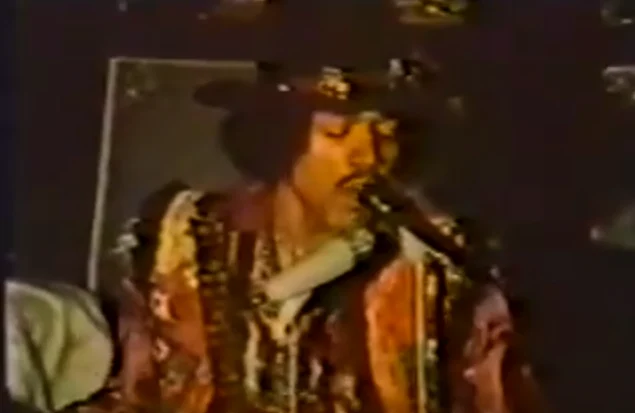
London, UK – July 22, 2026 – The annals of music history are replete with moments that transcend mere performance, etching themselves into the collective consciousness of fans and artists alike. One such indelible moment occurred on June 4, 1967, when Jimi Hendrix, the undisputed virtuoso of the electric guitar, delivered a electrifying rendition of The Beatles’ "Sgt. Pepper’s Lonely Hearts Club Band" title track. What elevated this performance from a mere cover to an iconic event was the presence of Paul McCartney and George Harrison themselves in the audience at London’s Saville Theatre, witnessing firsthand a tribute that spoke volumes about the spirit of artistic admiration and collaboration that defined the psychedelic era.
This extraordinary act of musical homage, executed with Hendrix’s signature flair just days after the groundbreaking album’s UK release, continues to resonate nearly six decades later. It serves as a powerful reminder of a time when musical boundaries were fluid, and artistic respect transcended perceived rivalries. This article delves into the multifaceted story of Hendrix’s "Sgt. Pepper’s" cover, exploring its genesis, the profound impact it had on The Beatles, and the enduring legacy of this unparalleled display of rock and roll collegiality.
The Genesis of a Groundbreaking Tribute
The release of Sgt. Pepper’s Lonely Hearts Club Band on June 1, 1967, was not just another album launch; it was a cultural seismic event. The Beatles had pushed the boundaries of studio experimentation and conceptual artistry, delivering a sonic tapestry that would redefine popular music. For many musicians, including Jimi Hendrix, the album was a revelation, a testament to the creative potential of the medium.
Hendrix, known for his incandescent live performances and innovative guitar techniques, was deeply affected by the album’s artistry. Rather than simply admiring it from afar, he felt compelled to engage with it directly. The story, as recounted by those present and by McCartney himself, is one of remarkable spontaneity and passion. Within a mere three days of Sgt. Pepper’s UK release, Hendrix decided to incorporate the album’s title track into his set at the Saville Theatre. This was no casual decision; it was a bold declaration of admiration, a testament to how deeply the music had resonated with him.
The choice of the title track itself was significant. "Sgt. Pepper’s Lonely Hearts Club Band" served as the album’s ambitious introduction, setting the stage for the kaleidoscopic journey that followed. For Hendrix to tackle this song, penned by McCartney, with such immediate enthusiasm underscored his deep respect for the songwriting prowess and the sonic innovations of The Beatles.
A Night of Unforeseen Reverence: The Saville Theatre Performance
The Saville Theatre, a venue accustomed to hosting prominent musical acts, became the unlikely stage for a pivotal moment in music history on June 4, 1967. The air crackled with anticipation, not only for Hendrix’s legendary performance but also for the unexpected presence of two of the Fab Four themselves, Paul McCartney and George Harrison. Unbeknownst to Hendrix at the time of his decision to play the song, his musical idols were in the audience, a fact that would imbue the performance with an even deeper layer of significance.
Hendrix’s rendition of "Sgt. Pepper’s" was not a faithful replication but a transformative reinterpretation. He infused the song with his characteristic raw energy, his blues-infused guitar licks, and a powerful, almost visceral, delivery. The iconic guitar solo, a hallmark of any Hendrix performance, was reportedly so virtuosic and technically demanding that it led to a minor but memorable incident. As the story goes, during the solo, Hendrix’s enthusiastic whammy bar dives sent his guitar slightly out of tune. In a moment of quick thinking and a testament to the camaraderie within the London music scene, he then famously, though perhaps apocryphally, called upon Eric Clapton, who was also in attendance, to help retune his instrument. This anecdote, whether entirely accurate in its details or embellished by time and legend, highlights the fluid and supportive nature of the musical community at the time.
McCartney’s Enduring Recollection: A "Shining Memory"
The impact of Hendrix’s performance on Paul McCartney was profound and lasting. In numerous interviews over the years, McCartney has spoken with immense warmth and admiration about that night. He has described it as a "shining memory," a testament to the deep respect he held for Hendrix’s talent and dedication.
McCartney’s recollection emphasizes the sheer speed and commitment with which Hendrix approached the cover. "To think that that album had meant so much to him as to actually do it by the Sunday night, three days after the release," McCartney mused, highlighting the extraordinary dedication. "He must have been so into it, because normally it might take a day for rehearsal and then you might wonder whether you’d put it in, but he just opened with it." This rapid assimilation and masterful execution of a complex piece of music, so soon after its release, was a remarkable feat that deeply impressed McCartney.
He further elaborated on the significance of the moment, stating, "I put that down as one of the great honours of my career." This sentiment is particularly poignant coming from a member of The Beatles, a band that had already achieved unprecedented global success and adoration. For McCartney, Hendrix’s act was not just a cover song; it was a profound validation of their artistic efforts, a powerful endorsement from one of the era’s most electrifying musical forces. The fact that Hendrix, a celebrated artist in his own right, would dedicate such immediate and passionate attention to their work spoke volumes about the mutual admiration that existed within the music fraternity.
The Question of Awareness: Did Hendrix Know the Beatles Were Watching?
A lingering question surrounding this historic event is whether Jimi Hendrix was aware of the presence of Paul McCartney and George Harrison in the audience when he launched into his rendition of "Sgt. Pepper’s." While the original reporting suggests that Hendrix was unaware, and this perspective is supported by sources like NME and the BBC, the narrative has been complicated by fictionalized portrayals.
The 2013 biopic Jimi: All Is by My Side presented a dramatic reimagining of the event, depicting Hendrix as fully aware of the Beatles’ attendance and intentionally choosing to open with "Sgt. Pepper’s" as a direct response. In the film, this decision is shown to cause friction with his bandmate Noel Redding, who expresses concern that the Beatles might be offended. However, it is crucial to distinguish between cinematic interpretation and historical fact. Critics and historians widely acknowledge that the film takes significant creative liberties, including the depiction of Hendrix playing a Flying V guitar instead of the Stratocaster he actually used, suggesting that the filmmakers prioritized dramatic effect over strict historical accuracy.
The consensus among many who have researched the event points to the fact that Hendrix was likely unaware of the Beatles’ presence. If he had known, the performance might have been influenced by that knowledge, potentially altering its spontaneity and raw energy. The beauty of the moment, in many ways, lies in its genuine, unadulterated expression of artistic admiration. Hendrix’s decision to play "Sgt. Pepper’s" was, by all accounts, a personal and immediate response to the music he loved, a testament to its profound impact on him as an artist.
The Enduring Legacy: More Than Just a Cover
Jimi Hendrix’s cover of "Sgt. Pepper’s Lonely Hearts Club Band" transcends the typical definition of a cover song. It stands as a powerful symbol of artistic respect, collegiality, and the shared passion that fueled the music revolution of the 1960s. While Hendrix’s virtuosic guitar playing, innovative style, and magnetic stage presence are widely celebrated, this particular performance highlights another admirable, albeit less discussed, quality: his genuine and awe-inspiring rock and roll collegiality.
In an era often characterized by intense competition and burgeoning fame, Hendrix’s act of selfless admiration towards The Beatles is a beacon. It demonstrates that even amidst the highest echelons of success, artists can and do inspire each other, fostering a spirit of mutual appreciation. The fact that he chose to open his set with this tribute, with such immediacy and passion, speaks volumes about the unifying power of music.
This performance also serves as a valuable case study in the evolution of musical interpretation. Hendrix did not merely replicate; he absorbed, internalized, and then re-expressed the essence of the song through his own unique artistic lens. This ability to honor the original while injecting one’s own distinctive voice is the hallmark of a truly great musician.
Broader Implications and Related Content
The story of Hendrix’s "Sgt. Pepper’s" cover offers broader implications for understanding the dynamics of artistic influence and the culture of mutual respect within the music industry. It challenges the notion that artists in similar genres are always in direct competition, showcasing a more nuanced reality where admiration and collaboration can thrive.
For those interested in further exploring the life and impact of Jimi Hendrix, a wealth of related content offers deeper insights:
- Jimi Hendrix Opens for The Monkees on a 1967 Tour; Then After 8 Shows, Flips Off the Crowd and Quits: This article delves into another fascinating period of Hendrix’s career, highlighting his early experiences and unconventional stage presence.
- Jimi Hendrix Plays the Delta Blues on a 12-String Acoustic Guitar in 1968, and Jams with His Blues Idols, Buddy Guy & B.B. King: This piece showcases Hendrix’s deep roots in blues music and his ability to connect with his own musical heroes.
- Jimi Hendrix Wreaks Havoc on the Lulu Show, Gets Banned From BBC (1969): This article illustrates Hendrix’s rebellious spirit and his willingness to push boundaries, even at the risk of censorship.
- Jimi Hendrix’s Final Interview on September 11, 1970: Listen to the Complete Audio: This provides a poignant glimpse into Hendrix’s thoughts and reflections shortly before his untimely death.
As Josh Jones, the writer and musician based in Durham, NC, aptly noted, "There may be little left to say about Hendrix’s brilliant guitar theatrics, completely innovative playing style, onstage swagger, and powerful songwriting. But his ‘Sgt. Pepper’s’ cover is an example of one of his less-discussed, but highly admirable qualities: his genuinely awesome rock and roll collegiality." This sentiment encapsulates the enduring power of this historic musical moment, a testament to the artistry, passion, and profound respect that defined one of music’s most iconic figures.