
Jonathan Maberry: A Life Transformed by Black Panther, Championing Inclusivity, and Redefining Storytelling
[City, State] – Jonathan Maberry, the celebrated New York Times bestselling author and multi-award winner, stands as a titan in the realms of horror, science fiction, and comic books. Known for his prolific output and groundbreaking contributions to speculative fiction, Maberry’s journey is one of profound personal transformation, driven by the power of storytelling and a steadfast commitment to inclusivity. In a wide-ranging interview, Maberry delves into the pivotal role Marvel’s Black Panther played in shaping his worldview, his trailblazing work as editor of Weird Tales, and his enduring philosophy on the craft of writing. (Readers can find the first part of this illuminating interview here.)
Maberry’s narrative is not just a chronicle of professional achievements but a testament to how fiction can challenge ingrained prejudice and foster empathy, leading to remarkable opportunities that transcend conventional boundaries.
A Transformative Childhood: The Genesis of a Lifelong Ethos
Maberry’s journey into the heart of storytelling, and particularly his connection to Black Panther, is rooted in a deeply personal and often challenging childhood in Kensington, Philadelphia. He describes Kensington as a neighborhood notorious for its severe racial intolerance, a place where the mere presence of a Black family could incite violence. This was the environment into which Maberry was born, shaped by a father who led the local chapter of the Ku Klux Klan.
"I grew up in a really terrible neighborhood in Philadelphia called Kensington. If you look up the worst neighborhoods in Philadelphia, it’s still the number one worst neighborhood of Philadelphia," Maberry recounts, painting a stark picture of his formative years. "If a black family moved into Kensington they would be firebombed. That’s the kind of neighborhood it was. It was appalling. My father ran the local chapter of the KKK and that was the environment I was born into."
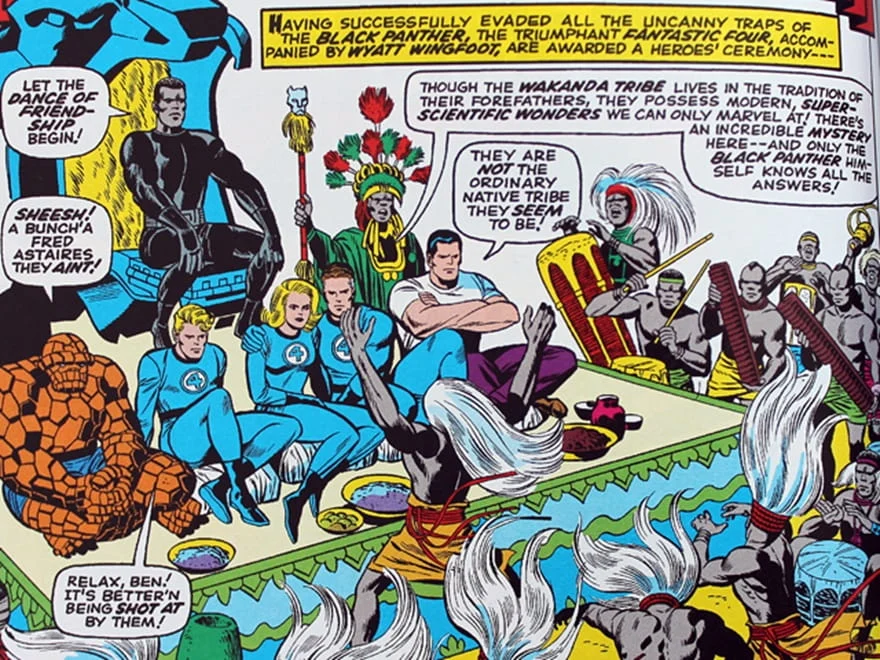
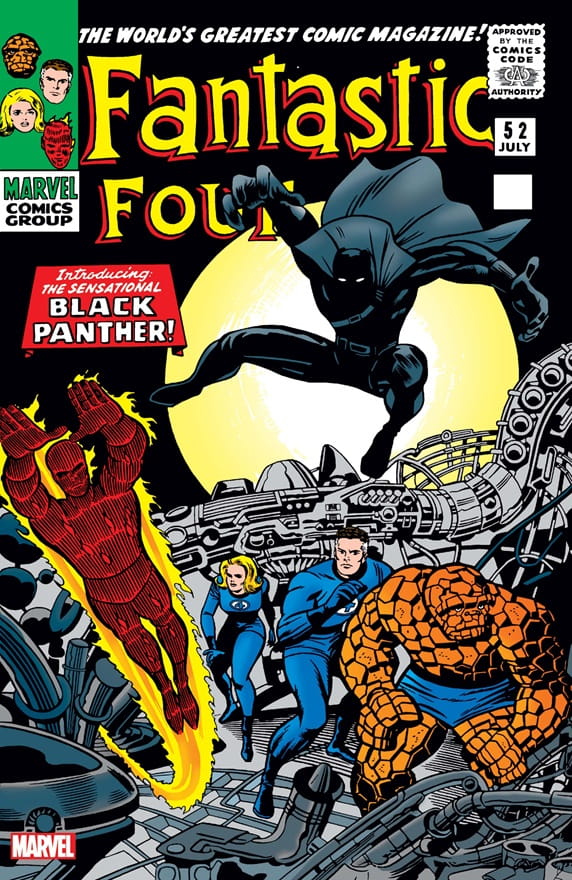
It was amidst this deeply skewed worldview that a comic book, Fantastic Four #52 (July 1966) by the legendary Stan Lee and Jack Kirby, introduced a character that would irrevocably alter the course of young Jonathan’s life: T’Challa, the Black Panther. This groundbreaking character, a noble, strong, and brilliant king from the technologically advanced African nation of Wakanda, presented a stark contrast to the hateful narratives Maberry heard at home.
"It was an early issue of Fantastic Four when they introduced T’Challa the Black Panther that began splitting me away from my father’s viewpoints and made me question all the things that he said Black people were incapable of doing," Maberry explains. The Black Panther, portrayed as a scientist, a hero, and a king, shattered the racist stereotypes propagated in his community.

The true awakening, however, came in 7th grade, when Maberry, for the first time, encountered people of color outside his homogenous neighborhood. He approached his white middle school librarian with a copy of Fantastic Four featuring the Black Panther, seeking to understand his father’s anger at the character. What followed was a pivotal conversation that unravelled the realities of racial injustice.
"She looks at the comic and says, ‘Well this particular issue is about apartheid.’ I was like ‘What’s apartheid?’" Maberry recalls. The librarian then introduced him to the concepts of Jim Crow laws and the true legacy of Dr. Martin Luther King Jr., whom Maberry had been taught was "some sort of a bad guy." The revelation was staggering, forcing him to confront the stark differences between his inherited prejudices and the truth.
"She said, ‘Sit down!’ told me the story of racism, intolerance, and the beauty of inclusion. She really pitched it for me, and moments like that you can either close your eyes again and go back to that skewed worldview, or you can leave your eyes open which is risky, dangerous, and often leads to the breaking of relationships but that’s the real world view and I chose that path." This courageous decision to embrace an inclusive worldview would not only redefine his personal moral compass but also lay the groundwork for a future opportunity that few could have predicted.
From Personal Revelation to Professional Opportunity: Writing the Black Panther
Years later, Maberry, already an established writer for Marvel working on characters like Punisher and Wolverine, found himself recounting this deeply personal backstory on a New York radio show. Unbeknownst to him, his candid reflection on how Black Panther saved him from a path of prejudice resonated with Reginald Hudlin, the acclaimed Academy Award-winning Black film producer and former writer of The Black Panther comic series.
Hudlin was looking to step down from the title and sought a writer who could bring a fresh perspective. Hearing Maberry’s story, and subsequently reading his comics, convinced Hudlin that Maberry was the right choice. He approached the President of Marvel with his recommendation.
"They’re all like: ‘He’s white.’ He said, ‘Yeah I know,’" Maberry recounts the initial skepticism. The prevailing assumption after Christopher Priest’s influential run was that Black Panther would always be written by a Black creator. However, Hudlin championed Maberry, sharing his backstory and the radio clip with Marvel executives.
Maberry was brought in for a "test thing," unaware that Marvel had already decided to hire him. He quickly picked up the narrative thread, even contributing Shuri-centric dialogue to Hudlin’s final issues before taking over as the full-time writer. This was, as Maberry describes, "mind-blowing."
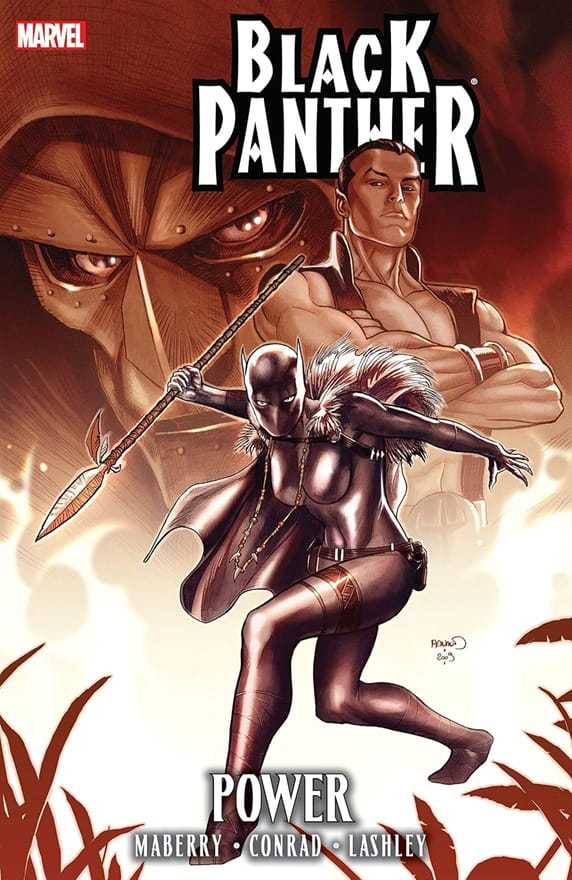
A key element of Hudlin’s vision for Maberry’s run was the transformation of Shuri, T’Challa’s sister. Hudlin learned of Maberry’s 35 years of teaching women’s self-defense and conceived a plotline where T’Challa would be gravely injured by Doctor Doom, necessitating Shuri’s rise to power. Before Maberry’s tenure, Shuri had often been portrayed as a more frivolous character. Hudlin aimed to transform her into a formidable fighter and a queen, a task Maberry’s expertise in empowerment and self-defense made him uniquely suited for.
"Reggie did it as a gift to me to (put) me on sure footing so when I took over the book it would have a natural flow," Maberry acknowledges. This creative decision not only provided a seamless transition for Maberry but also laid significant groundwork for future adaptations.
Indeed, Maberry’s run had a profound impact on the Marvel Cinematic Universe. Black Panther: Wakanda Forever draws heavily from his comics, particularly the conflict between Shuri and Namor, which Maberry was the first to introduce. He also co-designed Shuri’s Black Panther uniform with artist Ken Lashley and created the Midnight Angels, a special ops Dora Milaje team, which evolved into advanced armor in the film. The character Aneka, portrayed by Michaela Coel in the movie, was also Maberry’s creation.
"I didn’t know how much of this was in the movies until they invited my son and I up to the premiere," Maberry shares, highlighting the surreal experience of seeing his creations on the big screen. "I got to meet the cast and we all had a laugh and it all started because I was talking about the terrible childhood I had and how the Black Panther saved my ass."
Beyond Wakanda: A Passion for Storytelling and Collaboration
Maberry’s approach to his extensive career is refreshingly simple: "If I’m not having fun I won’t do the job." Fortunate enough to be offered more work than he can accept, he meticulously chooses projects that ignite his passion, a philosophy that has led to some truly remarkable collaborations.
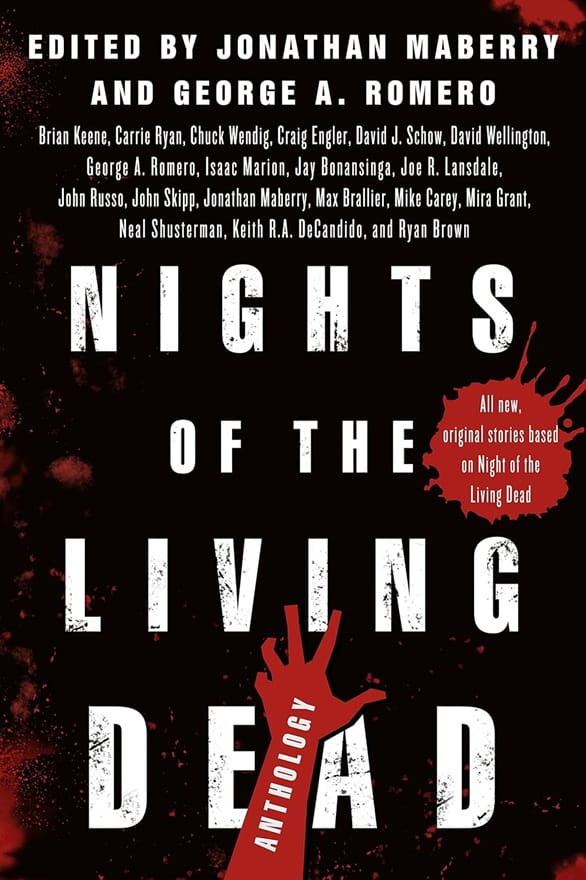
One such project brought him full circle to another formative experience: George A. Romero’s Night of the Living Dead. Maberry, who snuck into the world premiere of the film at age ten in 1968, was profoundly impacted by it. Years later, after numerous panel appearances with Romero, Maberry approached the horror legend with an idea.
"George I would love to do an anthology of stories set around 72 hours in Night of the Living Dead, would you give me permission to do that?" Maberry asked. Romero’s response was enthusiastic, albeit with three conditions: he wanted to co-edit it, contribute a short story, and have Maberry write a story featuring a character from his own work.
Apparently, Romero had been reading Maberry’s Dead of Night series, which depicts a zombie apocalypse. Romero specifically requested that Maberry’s character, Sam Imura, presumed dead in one of the books, be revealed as alive and brought to the iconic house from Night of the Living Dead, thereby officially connecting their fictional universes. The resulting anthology, Nights of the Living Dead, became a poignant capstone to Romero’s career.
"We went out and did the anthology, and it was the last thing he completed before he died," Maberry recounts. Tragically, Romero passed away on the day of the anthology’s first signing event, transforming the gathering into a heartfelt celebration of his life. "He was a good guy who became a very good friend," Maberry fondly remembers.
Reshaping a Legacy: Editor of Weird Tales
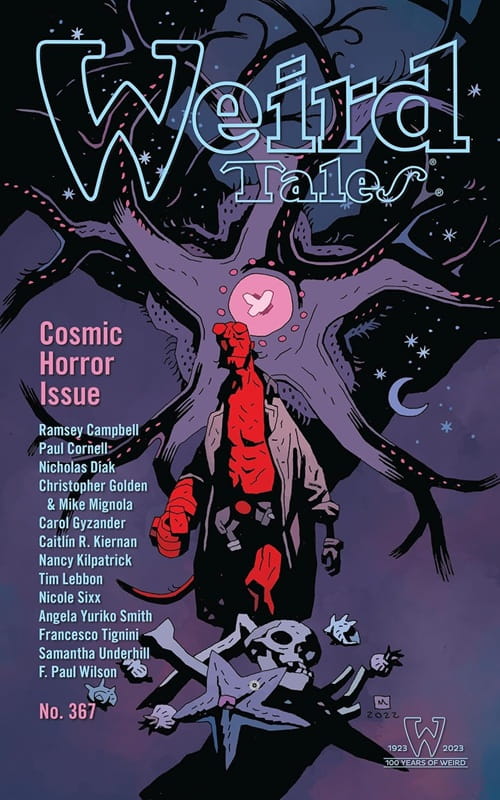
Maberry’s journey into editing a seminal publication like Weird Tales was as unexpected as it was significant. Initially, he pitched and sold a story to the magazine, fulfilling a long-held bucket list item. A month later, however, he received a call from the publisher: the current editor was ill and unable to complete the first issue of the magazine’s return after a hiatus. Knowing Maberry’s experience with anthologies, the publisher asked him to step in.
"I said, ‘Well how much of the magazine is done?’ He said, ‘Well we have your story.’ That was it," Maberry jokes about the daunting task. He started as editorial director and quickly became the full-time editor, ultimately helping to keep the historic magazine alive after the original editor’s passing.
Weird Tales, with its rich history dating back to 1923, is synonymous with speculative fiction, having published luminaries like H.P. Lovecraft, Robert E. Howard (creator of Conan), and Clark Ashton Smith. Maberry’s personal connection runs deep, citing Conan the Wanderer, a novel reprinting Weird Tales stories, as his first novel purchase. Furthermore, L. Sprague de Camp, instrumental in bringing Conan back into prominence, became a mentor to Maberry, and de Camp’s agent was Maberry’s wife’s grandfather, creating an almost fated connection.
However, Maberry recognized a critical challenge: while H.P. Lovecraft’s cosmic horror is foundational, his personal views were undeniably "racist, misogynistic, homophobic asshole." Maberry resolved that Weird Tales under his leadership would not echo Lovecraft’s problematic tone.
"I want to make sure we don’t just dip into a pool where all guys are this skin color or this gender," he declared. This commitment to radical inclusion and diversity became his self-imposed mission. He actively sought out voices from different cultures, genders, and orientations, believing that diverse perspectives reveal new dimensions of fear and the human experience.
A prime example of this vision is his collaboration with Victor LaValle. Maberry was deeply affected by LaValle’s novella, The Ballad of Black Tom, a powerful and bruising reimagining of Lovecraft’s "The Horror at Red Hook" from a Black perspective. Maberry contacted LaValle, expressing his admiration and then inviting him to contribute to Weird Tales. LaValle’s story, "Up From Slavery," went on to win a Stoker Award and is reportedly in discussions for a film adaptation, a testament to the power of Maberry’s editorial direction.
Maberry highlights the historical imbalance in horror, long dominated by white males, and the slow progress towards representation, noting that Tananarive Due was the first woman of color to win a Stoker Award only two years prior. "I started reaching out to my friends, the people I know who had different backgrounds because every time you look at someone from a different culture, different gender, different orientation whatever — what makes them afraid, what they think is scary is going to be different. I want all of that, I want every voice talking about that in the magazine. That’s been my self-imposed mission as the editor of the magazine. I’m very happy with what we’re doing, we have a lot of representation in a lot of different ways."
The Craft of Writing: Wisdom from a Veteran
With decades of experience under his belt, Maberry offers invaluable advice to aspiring and established writers alike, distilled into three core tenets:
- Prioritize Fun: "Only take projects that are fun." For Maberry, writing is a joy, and that passion is what sustains his prolific career. If the enthusiasm isn’t there, the quality and motivation will suffer.
- Master the Craft: "A lot of writers kind of go on their natural storytelling gifts but the more you study the elements of craft, not just know what they are but actually understand how they can be applied in variation, it allows you to write everything in your head better." He emphasizes that a deep understanding of craft provides solutions to writing challenges, preventing creative roadblocks. He cites Stephen King as a role model who, despite his immense success, "is always learning new things… he wants to be better all the time."
- Debunk Writer’s Block: "Don’t believe in the concept of writer’s block, it’s not a thing." Maberry asserts that writer’s block is merely an "umbrella term used to describe a bunch of different problems." He believes these problems are solvable through collaboration and seeking advice from other writers. "Just because you don’t know the solution doesn’t mean the block is like an iron wall a thousand feet tall. It just needs a ladder or door in that wall… Everything is fixable."
Navigating the Future of Publishing: Adaptability and Empathy
Maberry candidly addresses the current turbulent landscape of the publishing industry, marked by political challenges and evolving market dynamics. He expresses concern over the increasing trend of book banning, particularly targeting diverse narratives, which he notes were "the selling point of books" just a few years ago. This pushback, he acknowledges, makes it harder to champion diversity in literature.
Despite these challenges, Maberry remains optimistic about the resilience of writing and reading. "Writing is marching still," he states, pointing to the growth of audiobooks and e-books as print faces pressures from rising costs of oil, paper, and production.
He also notes a significant industry shift towards shorter books, with publishers favoring novels around 25,000 words less than before. Maberry embraces this change, seeing it as a way to keep cover prices low and ensure stories reach more readers. "It’s not about trying to get rich, it’s about trying to make a living while also sharing your stories with as many people as possible," he explains. Adapting to these trends, he believes, is crucial for writers to thrive.
A cornerstone of Maberry’s philosophy, deeply rooted in his own formative experiences, is the importance of writing outside one’s personal experience, grounded in thorough research and genuine empathy. He illustrates this with his novel Ink, which features two distinct elements requiring extensive research.
One plotline involves a "vampire" who feeds on memories tied to tattoos. Lacking tattoos himself, Maberry reached out via social media to interview hundreds of people about their tattoos, their meanings, family reactions, and personal significance. "I learned stuff I never would have learned about tattoo culture. I listened to their experiences and even folded some of them into the book," he shares, underscoring the richness gained from direct engagement.
The other narrative thread in Ink features a bicurious woman in a heterosexual marriage exploring a date with a lesbian. Recognizing his own limitations as a straight man, Maberry again sought out interviews. He expected a few responses but received over 500, a testament to people’s willingness to share their stories when approached with respect and a genuine desire to understand.
"In my message I wrote that I didn’t want to do even well-intentioned assumptions, I didn’t want to do cliché," Maberry explains. The overwhelming response and subsequent conversations not only expanded his ability to authentically portray these characters but also fostered significant personal growth. "It expands your personal growth in understanding human people and human experiences."
Maberry passionately advocates for this approach: "The world is not defined by you and what looks like you. The world is defined by itself and it is a very diverse world. Learn more about that and you’ll find so many things to write about." He champions research as a means to transcend cultural zones, exploring diverse races, religions, and sexual orientations, driven by a genuine curiosity for stories he cannot predict. "The research turn into understanding, not just a collection of data," he concludes, seeing this as a growing wave in contemporary writing.
Upcoming Endeavors: A Prolific Future
Maberry’s prolific output shows no signs of slowing. He has already released two novels this year: Red Empire, a series currently being directed by the director of John Wick (with Maberry hinting at a potential "John Wick role"), and Sleepers War. August will see the release of Bewilderness, followed by Ghosts of the Void in October, which will conclude his Necrotek series.
He is currently working on The Jersey Devil, a novel about the cryptid, which will be his 57th novel in 20 years. Embracing the industry trend, this book will also be 100,000 words or less. In the realm of comics, Maberry is writing three projects, including one he hopes to pitch to Keanu Reeves, featuring an aging samurai who, despite desiring a glorious death in battle, continuously survives due to his formidable toughness.
Jonathan Maberry’s career is a powerful testament to the transformative power of stories, both in his personal life and in the broader cultural landscape. From being saved by the Black Panther to championing diverse voices in Weird Tales and adapting to the evolving literary world, Maberry exemplifies a writer who is not only a master of his craft but also a profound advocate for empathy, inclusion, and the boundless potential of human experience. His work continues to entertain, challenge, and inspire, leaving an indelible mark on the world of speculative fiction and beyond.



Leave a Comment