Joshua Becker Announces ‘The Minimalist Life’: A Strategic Shift from Content to Community in the Modern Minimalist Movement
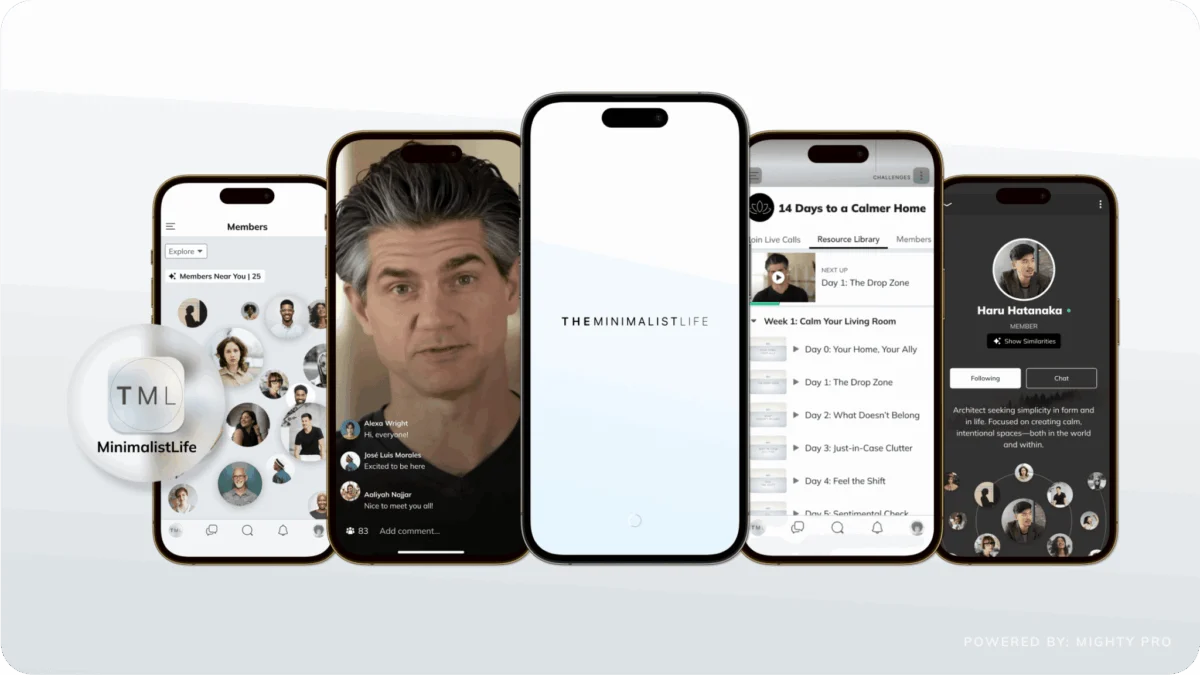
PHOENIX, AZ – Joshua Becker, the influential author and founder of the global platform Becoming Minimalist, has officially announced the launch of "The Minimalist Life," a private membership community designed to bridge the gap between minimalist theory and long-term lifestyle implementation. The launch marks a significant pivot for Becker, who has spent the last 17 years establishing himself as a foundational voice in the modern minimalist movement.
The new initiative, described by Becker as "17 years in the making," represents a move away from the traditional model of content consumption toward a model of sustained, community-driven personal development. The platform aims to address a recurring challenge faced by thousands of individuals: the "maintenance gap," where initial enthusiasm for decluttering fails to translate into a permanent lifestyle shift.
The Core Initiative: Moving Beyond the "Uncluttered" Home
The launch of "The Minimalist Life" is positioned not merely as a new course, but as a holistic support system. While Becker’s previous work—including the highly successful "Uncluttered" course—focused primarily on the physical act of removing possessions, this new community seeks to apply the principles of intentionality to all facets of human experience.
The community is structured around monthly focus areas that extend far beyond the closet or the garage. Members will engage in curated modules focusing on:
- Financial Intentionality: Aligning spending with personal values rather than consumerist pressures.
- Schedule Management: Applying "minimalist" filters to time commitments to reduce burnout.
- Digital Wellness: Navigating the complexities of digital clutter and social media saturation.
- Relationship Health: Cultivating deep, intentional connections while letting go of toxic social obligations.
- Habit Formation: Utilizing behavioral science to ensure minimalist choices become reflexive rather than effortful.
"The Minimalist Life" is launching with a founding member rate of $18 per month, a strategic pricing model intended to foster a dedicated, high-intent user base.
Chronology: The 17-Year Evolution of a Movement
To understand the significance of this launch, one must look at the trajectory of Joshua Becker’s influence on the American lifestyle landscape.
2008: The Catalyst. The journey began in a suburban driveway in Vermont. While spending a holiday weekend cleaning out his garage, Becker realized that his possessions were actually preventing him from spending time with his young son. This "epiphany" led to the creation of the Becoming Minimalist blog, which arrived at the vanguard of a new wave of intentional living advocates.
2010–2015: The Expansion. As the blog’s readership grew into the millions, Becker transitioned from a hobbyist blogger to a professional author and speaker. During this period, he published seminal works such as The More of Less and The Minimalist Home, which helped move minimalism from a fringe aesthetic to a mainstream lifestyle choice.
2016–2023: The Educational Phase. Recognizing that readers needed a roadmap, Becker launched the "Uncluttered" course. This digital program served over 90,000 students, providing a room-by-room guide to physical decluttering. Concurrently, his YouTube channel grew to over 400 videos, amassing a massive digital footprint.
2024–2025: The Community Pivot. After nearly two decades of publishing over 1,700 articles, Becker identified a systemic issue. While his audience knew how to declutter, many struggled with the "what next?" and the "how do I keep it up?" This realization served as the direct inspiration for "The Minimalist Life," shifting the focus from "one-time education" to "ongoing implementation."
Supporting Data: The Crisis of Consumerism and the Rise of "Slow Living"
The launch of Becker’s community comes at a time when consumer data suggests a growing "clutter crisis" in Western households. According to data from the Self-Storage Association, the United States currently possesses more than 2.3 billion square feet of self-storage space, a testament to the overflow of physical goods in the average home.
Furthermore, psychological studies, such as those conducted by UCLA’s Center on Everyday Lives of Families (CELF), have linked high levels of physical clutter in the home to increased levels of cortisol, the body’s primary stress hormone. The "clutter-cortisol" connection has driven a surge in the "wellness-lifestyle" market, which is now estimated to be worth over $1.8 trillion globally.
Becker’s shift toward a community model also aligns with broader trends in the "Creator Economy." As AI-generated content begins to saturate the internet, experts predict a "flight to quality" and a "flight to human connection." Market research indicates that consumers are increasingly willing to pay for "curated proximity"—direct access to experts and like-minded peers—rather than just static information.

Official Response: Joshua Becker on the Need for Human Interaction
In a statement regarding the launch, Becker emphasized that the "information age" has reached a tipping point where more content is no longer the solution for personal change.
"For over 17 years, I have been writing about minimalism," Becker stated. "During that time, I’ve written over 1,700 articles and recorded 400 videos. But over the years, I have kept hearing the same comment: ‘I start strong, but I struggle to keep minimalism going over time. How can I keep this going?’"
Becker argues that the answer lies in the transition from education to lifestyle integration. "You don’t just want to read about minimalism over and over—you want to live it. You don’t want a one-time decluttering project—you want a lifetime of intentional choices. To accomplish that, we all need more than just education. Life change can be difficult."
Crucially, Becker highlighted the "human" element of the new community as a direct counterpoint to the rise of artificial intelligence in the lifestyle space. "In an online world that is increasingly populated by AI-generated content, this community is about human interaction—with me and others. It’s about lasting, legitimate personal development and growth."
Implications: The Future of Intentional Living
The launch of "The Minimalist Life" has broader implications for how lifestyle movements are sustained in the digital age.
1. From "Minimalism" to "Intentionalism"
Becker’s new platform signals a maturation of the movement. Minimalism is no longer just about having a white-walled aesthetic or a specific number of items; it is evolving into "intentionalism"—the deliberate management of all personal resources, including money, time, and mental energy.
2. The Subscription Model for Personal Growth
By moving to a membership model, Becker is betting that people are ready to view personal growth as a utility rather than a luxury. Much like a gym membership, "The Minimalist Life" suggests that mental and environmental clarity require "reps" and ongoing maintenance rather than a "one-and-done" fix.
3. Combatting the Loneliness Epidemic
By prioritizing a "private community," the platform addresses the growing "loneliness epidemic." By connecting individuals with "like-minded people," Becker is leveraging social proof and peer accountability to drive habit formation—a method proven by behavioral psychologists to be more effective than solo efforts.
4. Economic Resilience
In an era of economic volatility and high inflation, the community’s focus on financial minimalism may find a particularly receptive audience. By teaching members to find contentment with less, Becker’s platform offers a form of "economic defense" against the pressures of modern consumer culture.
Conclusion: A New Chapter for Becoming Minimalist
As the doors open to "The Minimalist Life," Joshua Becker is effectively doubling down on his original 2008 mission, but with a more sophisticated delivery mechanism. The transition from a blog-centric model to a community-centric model reflects a deep understanding of the modern struggle: we are drowning in information but starving for implementation.
For the thousands who have followed Becker’s journey from a garage in Vermont to the New York Times Bestseller list, this new community represents the "next step" in the evolution of the minimalist lifestyle. It is an invitation to move beyond the theory of "less" and into the practice of "more"—more time, more focus, and more intentionality.
The founding member period for "The Minimalist Life" remains open through June 30th, marking what Becker hopes will be the beginning of a new, more sustainable era for his followers.
"I can’t wait to meet you and walk alongside you," Becker concluded. "We are creating the calm, focused, intentional life you’ve been dreaming about, one intentional choice at a time."