
Mesh2Motion Evolves: Open-Source Animation Tool Expands Beyond Humanoids, Offering New Possibilities for Game Developers and 3D Artists
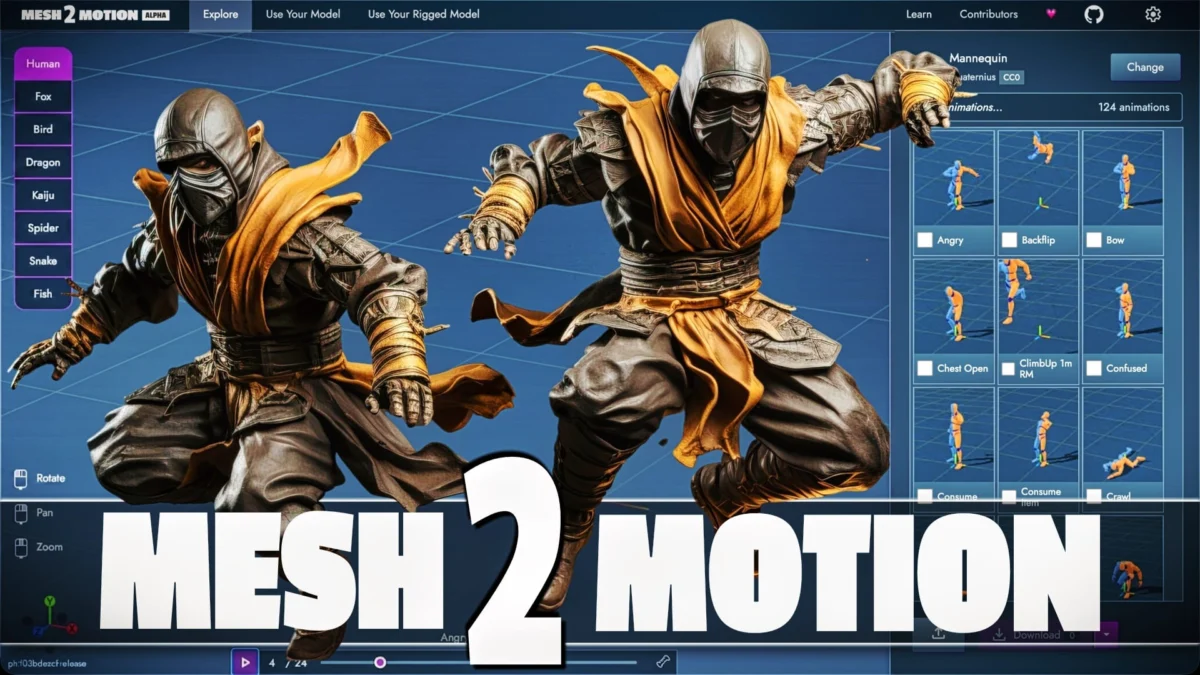
[City, State] – [Date] – Mesh2Motion, the lauded open-source alternative to Adobe’s Mixamo, has undergone a significant evolution, broadening its animation capabilities far beyond bipedal characters. Originally praised for its user-friendly approach to rigging and animating humanoids, the platform has now introduced a diverse array of new rigs and associated animations, including those for birds, snakes, dragons, and more. This expansion promises to unlock a wealth of creative potential for independent game developers, indie studios, and 3D artists seeking robust and accessible animation solutions without the burden of proprietary software or hefty subscription fees.
First highlighted by GameFromScratch.com a year ago, Mesh2Motion has steadily refined its core functionalities while embracing a more inclusive approach to character animation. The project’s commitment to being "easy, free, and open-source" remains its guiding principle, making it an increasingly attractive option in a landscape often dominated by expensive and complex tools. The addition of non-humanoid rigs represents a pivotal step, addressing a key limitation of its previous iteration and opening doors to a wider range of game genres and visual styles.
The Core Promise: Import, Rig, Animate, Export – Simplified
At its heart, Mesh2Motion offers a streamlined workflow designed to demystify the animation process. The platform’s core features, meticulously detailed on its website and GitHub repository, emphasize ease of use and creative freedom.
H3: A Comprehensive Animation Pipeline
The fundamental promise of Mesh2Motion is to provide a complete animation pipeline within a single, intuitive application. This process can be broken down into several key stages:
- Import: Users can import their 3D models, typically in common formats, into the Mesh2Motion environment. The software is designed to handle a variety of mesh types, laying the groundwork for the rigging process.
- Rigging: Mesh2Motion excels in its intuitive rigging system. Users can create full skeleton rigs for their imported models. The process is designed to be straightforward, with intuitive positioning tools that allow for precise placement of bones. A crucial feature for iterative design is the full undo/redo history, empowering users to experiment freely without fear of irreversible mistakes. This allows for rapid prototyping and refinement of rigs, a critical aspect of character development.
- Animation: Once a model is rigged, Mesh2Motion provides the tools to bring it to life. Users can create new animations from scratch or modify existing ones. The platform’s approach encourages exploration and learning, offering the source Blender model and animation files for users to study, adapt, and even contribute to. This open-source ethos fosters a collaborative environment where the community can actively participate in improving the tool.
- Export: The final, and often most critical, step is exporting the animated model. Mesh2Motion addresses this by offering the ability to export multiple animations at once, conveniently bundled into a single GLB (GL Transmission Format) file. This format is natively supported by a wide range of modern 3D pipelines and game engines, including industry standards like Unity and Unreal Engine, as well as web-based technologies such as Three.js and Babylon.js. This seamless integration minimizes friction in the transition from animation to game development.
A Look Back: The Genesis of Mesh2Motion
The journey of Mesh2Motion began with a clear objective: to democratize character animation. Recognizing the significant barrier to entry presented by professional animation software, the developers set out to create a free and open-source alternative that could rival the functionality of popular, albeit costly, solutions like Mixamo.
The initial focus on bipedal characters was a strategic choice, targeting the most common character archetypes in game development. This allowed the project to establish a strong foundation and refine its core rigging and animation tools. Early reviews, such as the one featured on GameFromScratch.com, lauded its accessibility and the quality of its output, quickly garnering attention from independent creators. The platform’s dedication to providing source files, particularly its Blender integration, further cemented its appeal among those who prefer to work within established, powerful 3D modeling environments.
The Latest Leap Forward: Expanding the Bestiary
The recent expansion of Mesh2Motion’s rig library marks a significant milestone. The introduction of rigs for birds, snakes, and dragons, along with their associated animations, directly addresses a growing demand for more diverse character options. This diversification is not merely an expansion of existing features; it represents a fundamental shift in the platform’s scope and ambition.
H3: Unlocking New Worlds with Diverse Rigs
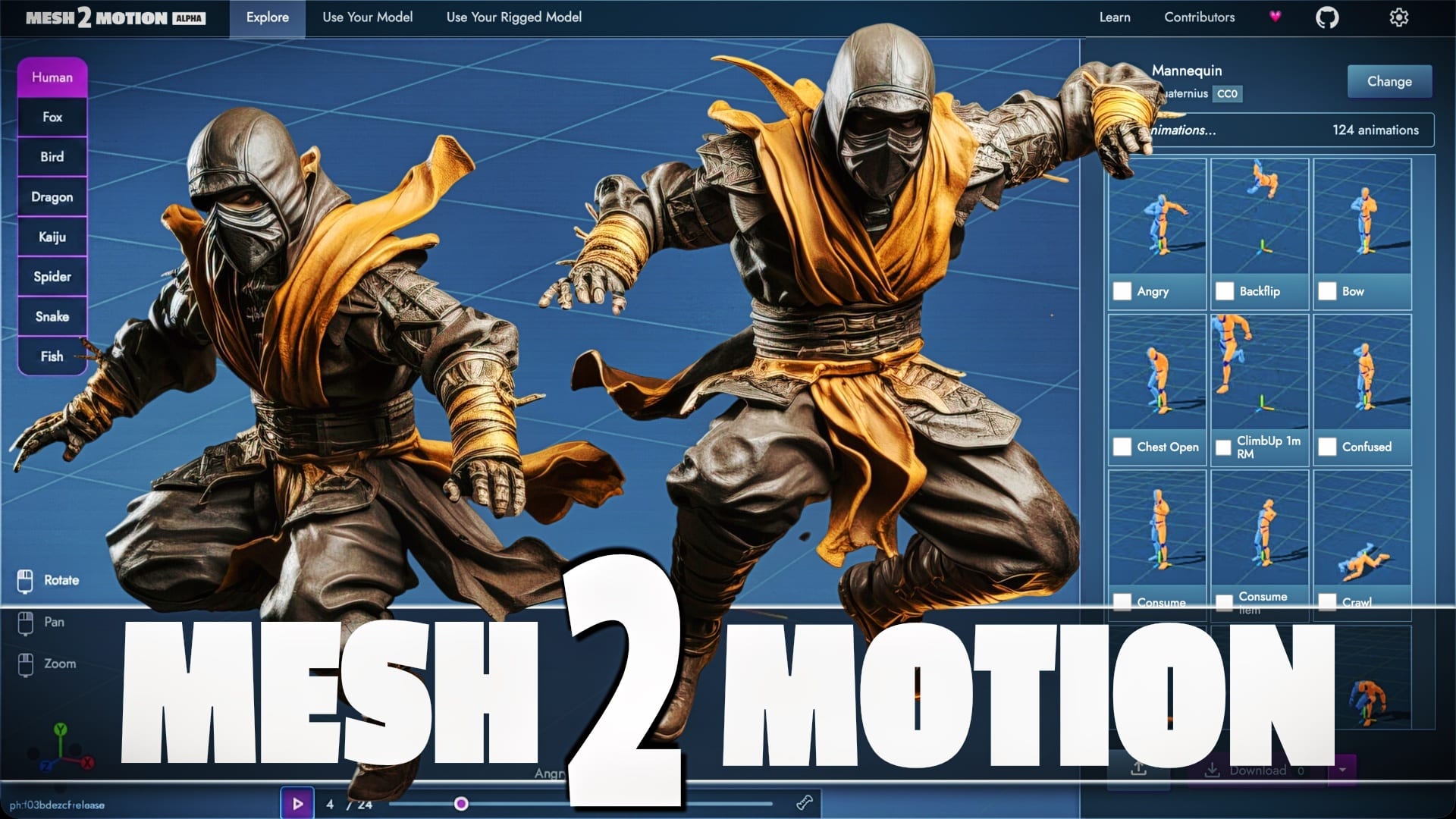
- Avian Animation: The addition of bird rigs opens up possibilities for games featuring flight, aerial combat, or simply the inclusion of wildlife. Animating wings, tails, and subtle head movements can now be achieved with the same ease of use that characterized the bipedal rigs.
- Serpentine Sequences: The snake rig introduces the challenge of creating fluid, undulating motion. This is crucial for creatures in fantasy settings, horror games, or even for animating environmental elements like vines. The ability to generate realistic slithering animations is a testament to the growing sophistication of the platform.
- Draconic Dynamics: Perhaps the most exciting addition is the dragon rig. Dragons are iconic creatures in fantasy and gaming, and animating their complex forms – from powerful wings to sweeping tails and fiery breath – requires robust tools. Mesh2Motion’s inclusion of such a rig suggests a commitment to tackling even the most demanding character types.
These new rigs are not simply pre-built assets; they are designed to be integrated into the Mesh2Motion workflow, allowing users to customize and animate them according to their specific project needs. This flexibility is key to its appeal, ensuring that the tool remains adaptable rather than prescriptive.
Supporting Data and Community Impact
The success and continued development of Mesh2Motion are intrinsically linked to its open-source nature and the active engagement of its community. While specific download statistics or active user numbers are not readily available in the provided text, the project’s presence on GitHub, a platform synonymous with collaborative development, indicates a healthy and evolving codebase.
H3: The Power of Open Source Collaboration
- GitHub Repository Activity: The Mesh2Motion GitHub repository serves as a hub for contributions, bug reports, and feature requests. A consistently active repository signifies ongoing development, bug fixes, and the integration of new ideas from the community. This transparency allows users to track the project’s progress and even contribute directly to its improvement.
- Community-Driven Improvements: The availability of source files, particularly for Blender, empowers users to not only learn from the existing animations but also to contribute their own improvements or extensions. This collaborative model ensures that Mesh2Motion can adapt to the evolving needs of the 3D art and game development communities more rapidly than closed-source alternatives.
- Accessibility for Indie Developers: For independent game developers, who often operate with limited budgets, Mesh2Motion represents a significant boon. The ability to acquire high-quality animation tools for free removes a major financial hurdle, allowing them to allocate resources to other critical areas of game development, such as art assets, programming, and marketing.
Official Responses and Future Implications
While no direct "official responses" from the Mesh2Motion development team are provided in the article snippet, the continuous updates and expansion of features serve as a clear indicator of their ongoing commitment and vision for the project. The trajectory of Mesh2Motion suggests a long-term strategy focused on becoming a comprehensive and indispensable tool for animators and game developers.
H3: Looking Ahead: The Future of Accessible Animation
The implications of Mesh2Motion’s evolution are far-reaching:
- Democratization of Advanced Animation: By offering sophisticated rigging and animation capabilities for a wider range of creatures, Mesh2Motion continues to level the playing field. This empowers smaller teams and individual creators to produce visually rich and dynamic content that was once the exclusive domain of larger studios with substantial animation departments.
- Streamlined Game Development Pipelines: The seamless export to GLB, a format increasingly adopted by game engines and 3D platforms, significantly reduces the time and effort required to integrate animated assets into projects. This efficiency is invaluable in fast-paced development cycles.
- Innovation in Independent Game Design: The availability of diverse character rigs encourages experimentation and innovation in game design. Developers are no longer limited by the typical humanoid protagonist; they can explore a broader spectrum of character archetypes, leading to more unique and engaging gameplay experiences.
- Educational Value: The open-source nature of Mesh2Motion, coupled with its provision of source files, makes it an exceptional educational tool. Aspiring animators and game developers can learn by deconstructing and modifying existing rigs and animations, gaining practical experience in a supportive environment.
The continued growth of Mesh2Motion, particularly its recent expansion into non-humanoid animation, positions it as a vital and ever-improving resource for the 3D content creation community. As it evolves, it not only offers a powerful alternative to proprietary software but also fosters a more inclusive and collaborative ecosystem for the creation of digital worlds and characters.
Key Links:
- Mesh2Motion Homepage: https://mesh2motion.org/
- Mesh2Motion GitHub Repository: https://github.com/Mesh2Motion/mesh2motion-app
- Skeleton Model used in Demo (Fab.com): https://www.fab.com/listings/8350bcac-ce96-4ce6-bae0-c2ea62258a9b
The accompanying video, available at https://youtu.be/PNz-EpqRc1s, further illustrates the ease of use of Mesh2Motion and its application in bringing 3D models to life, including their export to popular game engines like Godot.


Leave a Comment