Nancy Kress Named 43rd SFWA Damon Knight Memorial Grand Master, Cementing Her Place Among Genre Titans
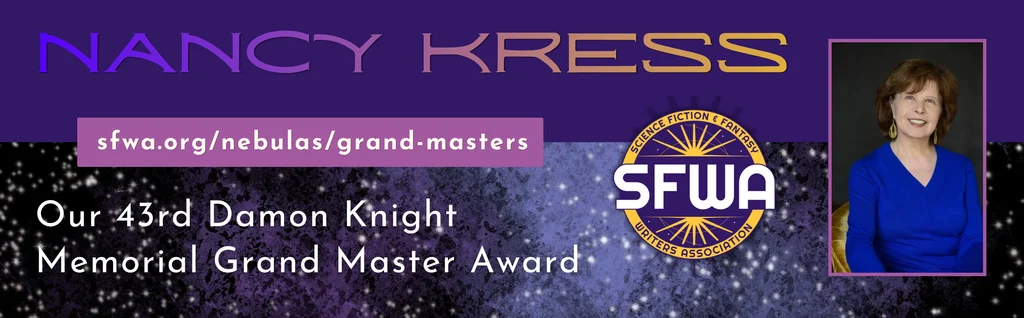
FOR IMMEDIATE RELEASE – The Science Fiction & Fantasy Writers Association (SFWA) has proudly announced Nancy Kress as the 43rd recipient of the prestigious Damon Knight Memorial Grand Master Award. This esteemed accolade, recognizing a lifetime of significant achievement in the fields of science fiction and fantasy, solidifies Kress’s indelible legacy as one of the genre’s most profound and influential voices. The award will be formally presented at the 2027 Nebula Awards Conference, scheduled to take place from June 3-7, 2027, a highly anticipated event where the speculative fiction community will gather to celebrate her remarkable contributions.
Main Facts: Nancy Kress Honored with SFWA Grand Master Award
A Legacy Recognized
The announcement of Nancy Kress as the 43rd Damon Knight Memorial Grand Master sends a resonating wave of affirmation through the science fiction and fantasy community. This award, considered one of the highest honors in speculative fiction, acknowledges not only Kress’s prolific output but also the profound intellectual and emotional impact of her work over decades. Her consistent exploration of complex ethical dilemmas, particularly those arising from scientific and technological advancements, has positioned her as a prescient voice whose narratives continue to challenge and enlighten readers. The recognition by SFWA, an organization dedicated to supporting and promoting speculative fiction writers, underscores the widespread respect and admiration Kress commands among her peers.
Kress’s literary career is distinguished by a rare combination of scientific rigor and deeply humanistic inquiry. From her earliest short stories to her most ambitious novels, she has consistently pushed the boundaries of what science fiction can achieve, using speculative premises to illuminate fundamental truths about humanity. The upcoming ceremony at the 2027 Nebula Awards Conference will not merely be a presentation of a trophy, but a collective acknowledgment of a career that has shaped the genre, inspired countless writers, and provided readers with unforgettable stories that linger long after the final page. Her selection is a testament to the enduring power and relevance of her narratives in an increasingly complex world.
A Distinguished Career: The Chronology of Nancy Kress
Nancy Kress’s journey to becoming a Grand Master is a testament to sustained excellence, intellectual curiosity, and an unwavering commitment to the craft of storytelling. Her career spans several decades, marked by a consistent output of critically acclaimed works that have garnered numerous awards and a dedicated readership.
Early Life and Literary Beginnings
Nancy Kress was born Nancy Anne Koning on January 20, 1948, in Buffalo, New York. Her formative years instilled in her a strong intellectual curiosity, which would later become a hallmark of her fiction. She pursued her education at the State University of New York at Cortland, earning a Bachelor of Science degree in English in 1969, followed by a Master of Arts in English from the State University of New York at Brockport in 1970. This academic background in literature provided her with a robust foundation for her future literary endeavors, honing her analytical skills and deepening her understanding of narrative structure and character development.
Kress’s entry into the world of professional writing began in the early 1970s. Her debut short story, "The Earth Dwellers," was published in Galaxy Magazine in 1976, marking the beginning of a prolific career. Early in her career, Kress honed her distinctive voice, often blending intricate scientific concepts with compelling human drama. Her initial works showcased a budding talent for exploring societal implications of technology and the complexities of human relationships under extraordinary circumstances. These early efforts laid the groundwork for the more complex and celebrated narratives that would define her later career, establishing her as a writer capable of both intellectual depth and emotional resonance.
Thematic Evolution and Breakthrough Works
Throughout her career, Nancy Kress has become synonymous with "hard science fiction" that never loses sight of the human element. Her thematic focus has consistently revolved around cutting-edge scientific fields, particularly genetics, biotechnology, and human augmentation, exploring their potential to transform not just our world but our very understanding of what it means to be human.
Her breakthrough work, the novella Beggars in Spain (1991), is perhaps her most iconic. Expanding into a full novel series (Beggars in Spain, Beggars and Choosers, Beggars Ride), it vividly explores a future where genetic engineering creates a class of "Sleepless" individuals who do not require sleep, leading to profound societal divisions and ethical dilemmas. This series earned her both a Hugo Award and a Nebula Award, catapulting her into the forefront of speculative fiction. Beggars in Spain masterfully examines issues of class, prejudice, and the inherent tension between human potential and social harmony, themes that remain startlingly relevant today.
Other significant works include the Probability Space series (Probability Moon, Probability Sun, Probability Space), which delves into advanced physics and alien encounters, showcasing her versatility within hard SF. Oaths and Miracles and Crossfire explore more immediate future scenarios, often touching on corporate espionage and bio-ethics. Her 2013 novella, After the Fall, Before the Fall, During the Fall, garnered both a Nebula and a Locus Award, presenting a haunting vision of humanity’s struggle against environmental collapse and the desperate measures taken for survival. These works exemplify her ability to craft narratives that are both intellectually stimulating and emotionally resonant, always grounded in meticulously researched scientific premises. Kress’s consistent critical acclaim, evidenced by multiple Nebula, Hugo, Locus, and John W. Campbell Memorial Awards, highlights her enduring impact and the high regard in which her body of work is held within the genre.
A Mentor and Educator
Beyond her celebrated literary output, Nancy Kress has dedicated a significant portion of her career to nurturing the next generation of writers. Her commitment to education and mentorship is as profound as her writing legacy, making her a beloved figure within the speculative fiction community. She has been a fixture at some of the most prestigious writing workshops globally, including the renowned Clarion Writers’ Workshops (Clarion West and Clarion East) and the Taos Toolbox. At these workshops, Kress has shared her invaluable insights into storytelling, character development, world-building, and the intricacies of the publishing industry, shaping the skills and careers of countless aspiring authors.
Her influence extends internationally, with workshops conducted in diverse cultural settings such as Beijing, China, and Leipzig, Germany. These international engagements underscore her global impact and her dedication to fostering a worldwide community of speculative fiction writers. Kress’s pedagogical approach is also captured in her highly regarded non-fiction books on writing craft, such as Characters, Emotion & Viewpoint and Beginnings, Middles & Ends: Sidewinders, Endings, and the Art of the Beginning, Middle, and End. These texts serve as essential guides for writers at all stages of their careers, demonstrating her analytical prowess and her generous spirit in demystifying the writing process. Her mentorship, characterized by both rigor and encouragement, reflects the gracious and generous nature that former SFWA President Jeffe Kennedy highlighted, ensuring that her illustrious footsteps continue to guide emerging talents.
Supporting Data: The Grand Master Legacy and Kress’s Impact
The Damon Knight Memorial Grand Master Award is more than just an honor; it is a recognition of enduring excellence and profound influence, placing its recipients within an elite pantheon of literary giants. Nancy Kress’s inclusion in this distinguished group is a testament to her unique contributions and sustained impact on the genre.
The Damon Knight Memorial Grand Master Award
Established in 1974, the Damon Knight Memorial Grand Master Award is SFWA’s highest honor, bestowed upon living writers of science fiction and fantasy for their lifetime contributions to the field. It is named in memory of Damon Knight, a foundational figure in speculative fiction, renowned not only as an acclaimed author and editor but also as a tireless advocate for writers’ rights and a co-founder of SFWA itself. Knight’s vision for a professional organization dedicated to improving the working conditions and recognition of SFF authors laid the groundwork for SFWA’s enduring mission. The award thus embodies his spirit of literary excellence and community building.
The criteria for the Grand Master Award are stringent, focusing on a body of work that demonstrates not only consistent quality and originality but also a significant impact on the genre’s evolution and its understanding by readers and critics alike. Past recipients represent the very bedrock of science fiction and fantasy literature, including pioneering figures like Robert Heinlein (1974), Jack Williamson (1976), Clifford D. Simak (1977), L. Sprague de Camp (1978), Fritz Leiber (1981), and Andre Norton (1983). More contemporary luminaries such as Ursula K. Le Guin (2003), Anne McCaffrey (2005), Joe Haldeman (2009), Connie Willis (2011), Samuel R. Delany (2013), C.J. Cherryh (2016), Peter S. Beagle (2018), and N.K. Jemisin (2021) also grace this esteemed list. Each name represents a unique voice that has shaped the imaginative landscape of speculative fiction, making Kress’s entry into this lineage a profound affirmation of her own towering achievements. The award symbolizes a career that has not only entertained but also provoked thought, challenged conventions, and enriched the human experience through speculative storytelling.
Kress’s Critical Acclaim and Influence
Nancy Kress’s critical acclaim is undeniable, marked by an impressive collection of the genre’s most prestigious awards. Her mantelpiece proudly displays multiple Nebula Awards, including for Beggars in Spain (Novella, 1991) and After the Fall, Before the Fall, During the Fall (Novella, 2013). She has also been honored with a Hugo Award for Beggars in Spain (Novella, 1992), solidifying its place as a genre classic. The Locus Award, voted on by readers, has recognized her work multiple times, including for After the Fall, Before the Fall, During the Fall (Novella, 2013) and for her novel Probability Space (2003). Additionally, her novel Probability Space earned the John W. Campbell Memorial Award for Best Science Fiction Novel in 2003, further underscoring her mastery of the form. These accolades are not mere ornaments; they represent widespread critical and reader consensus regarding the excellence and impact of her writing.
Kress’s influence extends far beyond her individual awards. She is widely regarded as a master of "hard science fiction" that consistently grounds its speculative elements in plausible scientific principles, while simultaneously exploring deep humanistic and philosophical questions. Her stories often serve as thought experiments, pushing readers to consider the ethical ramifications of genetic engineering, artificial intelligence, and human enhancement long before these topics became mainstream societal concerns. She has a distinctive prose style – precise, elegant, and intellectually rigorous, yet always accessible and imbued with genuine emotion. Her ability to craft believable characters grappling with extraordinary circumstances has inspired countless writers to approach speculative fiction with greater depth and realism. By consistently demonstrating how speculative premises can illuminate the human condition, Nancy Kress has not only expanded the boundaries of science fiction but also elevated its literary standing, leaving an indelible mark on both her peers and the generations of readers who have encountered her visionary tales.
Official Responses: Tributes to a Visionary
The announcement of Nancy Kress as Grand Master has been met with enthusiastic acclaim, with SFWA leadership offering profound tributes to her enduring impact on the literary landscape and the community.
SFWA President Kate Ristau on Kress’s Enduring Relevance
SFWA President Kate Ristau’s statement encapsulates the widespread sentiment that Kress’s recognition is not only well-deserved but "long overdue." Ristau highlighted that Kress’s name has consistently arisen in discussions among Past Presidents for this very award, signaling a deep, collective acknowledgment of her substantial contributions. Ristau emphasized Kress’s incredible impact on the industry, not merely through her prolific body of work but also through her dedicated teaching at esteemed workshops like Clarions and Taos Toolbox, as well as her international outreach in Beijing and Leipzig. This commitment to nurturing new talent underscores her generosity and her dedication to the future of the genre.
Ristau eloquently articulated Kress’s unique thematic focus, stating, "She has spent decades writing at the cutting edge of genetics, biotechnology, and human transformation, asking what happens when science changes not only our world, but our understanding of what it means to be human." This observation strikes at the heart of Kress’s literary genius. Her novels, such as the "Beggars" series, Oaths and Miracles, and After the Fall, Before the Fall, During the Fall, are masterclasses in exploring the ethical quandaries and societal shifts that arise from scientific breakthroughs. She forces readers to confront uncomfortable truths about human nature, prejudice, and the responsibility that comes with unprecedented power over life itself.
Crucially, Ristau drew a powerful parallel between Kress’s long-standing themes and contemporary challenges, noting, "There could not be a more prescient time to honor Nancy’s contributions. As we confront the impact of AI on our work and on our livelihoods, Nancy reminds us what it means to be human: to question, to imagine, to connect. Not only that, but to recognize that our humanity cannot be separated from the choices we make about our future." This connection elevates Kress’s work from mere speculative fiction to essential philosophical inquiry, demonstrating its enduring and urgent relevance in an age grappling with rapid technological advancement and its profound implications for human identity and existence. Her narratives serve as vital cautionary tales and inspirational blueprints for navigating a future increasingly shaped by scientific innovation.

Former SFWA President Jeffe Kennedy on Mentorship and Character
Former SFWA President Jeffe Kennedy’s tribute offered a more personal glimpse into Nancy Kress’s character, reinforcing the widespread admiration for her not just as a writer, but as a human being. Kennedy’s experience teaching alongside Kress at Taos Toolbox provided a firsthand perspective on her qualities, stating, "I met Nancy when we were both teaching at Taos Toolbox. She was as smart, gracious, and generous as everyone in the industry says." This observation speaks volumes, confirming that Kress’s reputation for intellectual prowess is matched by her kindness and willingness to share her knowledge and experience.
In the often competitive world of publishing, Kress’s generosity stands out. Her dedication to mentorship, evident in her extensive teaching career at various workshops, reflects a deep commitment to fostering new talent rather than guarding her own insights. She embodies the spirit of a true Grand Master, one who not only excels in their craft but also actively contributes to the health and growth of the entire literary ecosystem. Kennedy’s pleasure in seeing Kress join the ranks of SFWA’s Grand Masters is palpable, reflecting a sentiment shared by many within the community. Her belief that Kress "will continue to contribute to the new generations of writers following in her illustrious footsteps" underscores the lasting impact of her mentorship and the inspiration she provides. This dual legacy of exceptional writing and profound mentorship positions Nancy Kress as an exemplary figure, whose intelligence, graciousness, and generosity have enriched the speculative fiction community for decades, promising continued influence for years to come.
Implications and the Future of Speculative Fiction
The naming of Nancy Kress as SFWA Grand Master carries significant implications, not only for her personal legacy but also for the broader trajectory and recognition of speculative fiction as a whole. It signals a reaffirmation of the genre’s intellectual depth and its capacity to engage with the most pressing issues of our time.
The Significance of the Grand Master Title
The Damon Knight Memorial Grand Master title bestows upon Nancy Kress a distinguished place in the pantheon of science fiction and fantasy literature, solidifying her status as an enduring luminary. Beyond the immediate recognition, this award often leads to a renewed interest in a recipient’s entire body of work, inviting new generations of readers to discover or revisit their stories. For Kress, this means her groundbreaking explorations of genetics, biotechnology, and the human condition will likely gain even wider readership, ensuring that her prescient narratives continue to resonate and provoke thought. The title also serves as a historical marker, enshrining her contributions within the genre’s official canon and highlighting the specific thematic and stylistic innovations she brought to speculative fiction. It validates the intellectual rigor and literary craftsmanship that Kress has consistently demonstrated, reinforcing the idea that science fiction, at its best, is a powerful vehicle for serious philosophical inquiry and social commentary. This recognition by her peers underscores the profound and lasting impact she has had on shaping the imaginative landscape of speculative storytelling.
Kress’s Ongoing Contributions and the Genre’s Trajectory
Nancy Kress’s selection as Grand Master is not just a look back at past achievements but also a forward-looking statement about the values SFWA upholds in contemporary speculative fiction. Her consistent focus on the ethical dimensions of scientific advancement, the nuances of human identity in the face of technological change, and the societal implications of progress reflects a genre that is increasingly engaging with real-world complexities. In an era where artificial intelligence, genetic editing, and transhumanist concepts are moving from the realm of fiction to reality, Kress’s work provides a crucial framework for understanding these shifts. Her narratives offer both cautionary tales and pathways for navigating the future, preparing readers to critically assess emerging technologies and their potential impact on what it means to be human.
Her ongoing contributions, both as a writer and a mentor, suggest that the genre continues to prioritize thoughtful, character-driven stories that blend scientific plausibility with profound emotional depth. The award reinforces the idea that speculative fiction is not merely escapism but a vital tool for exploring the challenges and opportunities that lie ahead. Kress’s enduring relevance ensures that her work will continue to serve as a touchstone for writers and readers grappling with the accelerating pace of change, guiding the genre towards ever more complex and meaningful explorations of the human condition in a technologically advanced world.
Anticipation for the 2027 Nebula Awards Conference
The anticipation for the 2027 Nebula Awards Conference, where Nancy Kress will formally receive her Damon Knight Memorial Grand Master Award, is already building. This event will be more than just a ceremony; it will be a momentous gathering of the speculative fiction community to collectively celebrate a career that has profoundly enriched the genre. The conference will provide an invaluable opportunity for writers, editors, critics, and fans to honor Kress’s literary achievements and her lasting influence.
Attendees will undoubtedly look forward to her acceptance speech, eager to hear her reflections on a career dedicated to exploring the future, human nature, and the power of storytelling. The event will not only highlight her individual brilliance but also serve as a broader celebration of the genre itself—its capacity for innovation, its intellectual depth, and its vibrant community. As the countdown to June 3-7, 2027 begins, the entire speculative fiction world will be poised to pay tribute to a true visionary, whose work continues to inspire, challenge, and define what it means to craft meaningful stories about humanity’s future.