
Navigating the Narrative Spectrum: Decoding ‘Grimbright’ and ‘Noblebright’ Through Cinematic Lenses
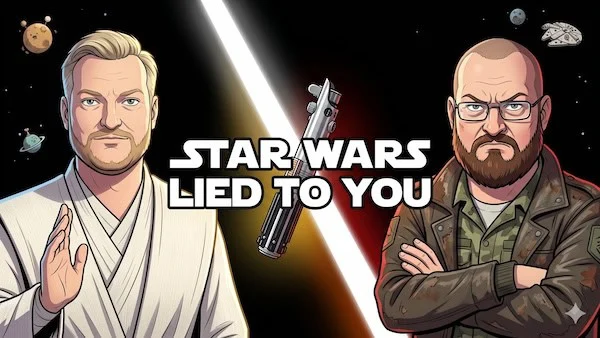
In the ever-evolving landscape of storytelling, a new framework is emerging to dissect the underlying tones and themes of popular culture. This framework, rooted in the cyclical generational theories of Strauss-Howe, categorizes narratives along a spectrum of "Noble/Grim" and "Bright/Dark" axes. At its core, this approach seeks to understand how films and stories reflect and shape societal moods, particularly in transitional periods. This article delves into this fascinating concept, exploring its nuances through the lens of iconic films like Kelly’s Heroes, The Magnificent Seven, and the enduring saga of Star Wars, and engaging in a spirited debate between cultural analysts Thomas and Jonathan.
The Four Quadrants of Narrative: Defining the Spectrum
At the heart of this analytical model lie four distinct narrative quadrants:
- Noblebright: This quadrant embodies the ethos of "hard men make good times." Here, noble sacrifice by individuals of integrity ultimately ushers in an era of peace and prosperity for the broader populace. It’s a narrative of selfless heroism and the triumph of good through determined, often arduous, effort.
- Grimbright: Characterized by the cynical adage, "Good times make weak men," grimbright narratives often depict a world that is perceived as absurd and corrupt. However, instead of succumbing to despair, protagonists navigate this morally ambiguous landscape with dark humor and a pragmatic pursuit of personal gain. The overarching tone remains engaging and entertaining, even as the characters operate in a morally grey area.
- Nobledark: This quadrant represents the "bad times make strong men" era. In a challenging and often bleak world, individuals rise to meet adversity with courage and moral fortitude. While the external circumstances are dark, the internal spirit and actions of the characters are noble, striving for justice and betterment against overwhelming odds.
- Grimdark: The antithesis of Noblebright, grimdark narratives present a bleak, often hopeless, reality where overwhelming forces of evil or corruption seem insurmountable. Characters may exhibit a cynical, survivalist mentality, and even acts of defiance are often futile or come at immense cost, with little hope for ultimate victory or redemption.
Thomas, a proponent of this narrative analysis, posits that societies, much like narratives, cycle through these generational turnings. He suggests that contemporary society has recently transitioned from a "grimbright" era – a period of perceived comfort and ensuing complacency – into a "nobledark" phase, marked by hardship that fosters renewed moral strength and purpose. Understanding "nobledark" is, in his view, best achieved by examining its inverse, the "grimbright" narrative.
Deconstructing "Grimbright": Kelly’s Heroes as a Case Study
Thomas’s exploration into practical "grimbright" narratives begins with a re-watch of the 1970 World War II film, Kelly’s Heroes. Initially sought for its age-appropriateness and portrayal of military action without excessive gore, the film’s underlying message proved far more complex.
Chronology of Analysis:
- Initial Expectation: Thomas sought a straightforward WWII film for his children, featuring tanks and action, but devoid of graphic violence. He recalled Kelly’s Heroes as a fun, albeit unconventional, war movie with a memorable hippie tank driver.
- Emerging Discomfort: Upon viewing with his sons, Thomas found himself increasingly disturbed. He recognized the film’s production in 1970, amidst the Vietnam War, as a significant contextual clue. The characters, depicted as bedraggled and out of uniform, seemed to mirror the disaffected soldiers of that era, rather than the clear-cut heroes of classic WWII cinema.
- The Plot Twist: The central premise involves a group of GIs planning to steal Nazi gold from behind enemy lines. While their actions inadvertently contribute to the war effort, the film’s focus shifts dramatically. The climax sees the GIs collaborating with an SS officer to acquire the gold, celebrating their illicit gains together. This alliance with a symbol of extreme Nazi ideology, for purely personal enrichment, underscored the film’s cynical departure from traditional war narratives.
- Thematic Revelation: Thomas concluded that Kelly’s Heroes is less about World War II and more a commentary on the perceived futility and corruption of the Vietnam War. The characters’ justification for their actions – that the world is "broken and evil" – is presented as a self-deceptive rationalization for greed. Despite the outwardly "bright" outcome of winning the war in the story’s context, the protagonists’ motivations and methods firmly anchor it in the "grimbright" quadrant.
The Western Frontier: The Magnificent Seven vs. The Good, the Bad and the Ugly
The discussion then pivots to the Western genre, a fertile ground for exploring the interplay between "noblebright" and "grimbright" narratives. Thomas contrasts The Magnificent Seven with The Good, the Bad and the Ugly.
Supporting Data & Contrasting Perspectives:
- The Magnificent Seven (1960): Thomas initially categorizes this film as "noblebright," highlighting its portrayal of seven gunslingers who selflessly defend a village of farmers from bandits, with most ultimately sacrificing their lives. He sees this as a prime example of "good men" making a "bright future" through their noble sacrifice.
- Jonathan’s Rebuttal: Jonathan challenges this interpretation, arguing that The Magnificent Seven leans towards "grimbright." He contends that while the film’s ending is "bright" due to the villagers’ salvation, the protagonists themselves are not inherently "good." They are gunfighters, criminals, and mercenaries, recruited for their skills rather than their moral compass. The initial state of the world is grim, with oppressive forces threatening the powerless, and it is these morally compromised individuals who rise to the occasion.
- The Good, the Bad and the Ugly (1966): This Spaghetti Western is unequivocally identified by both analysts as a quintessential "grimbright" story. Its revolutionary approach, released just a few years prior to The Magnificent Seven, marked a significant shift in cinematic portrayals of anti-heroes and moral ambiguity.
Thomas acknowledges the complexity of The Magnificent Seven, suggesting it might be a transitional film, reflecting the end of the "first turning" (associated with Noblebright) and the nascent beginnings of the "second turning" (Grimbright). He notes the characters’ flaws – a coward and a drunk – but emphasizes their ultimate heroism and willingness to sacrifice for others, even those not their kin.
Jonathan counters that the "bright" aspect is solely the outcome for the villagers. The gunslingers, despite their sacrifice, remain fundamentally flawed individuals. He highlights the class division inherent in the story, particularly the American gunslingers’ motivation to protect Mexican farmers, suggesting a noble sentiment emerges, but the core of the characters remains rooted in a more pragmatic, less purely altruistic, foundation.
The conversation deepens with the consideration of The Seven Samurai, the Japanese original upon which The Magnificent Seven is based. Thomas notes its similar class-driven narrative, but points out that the American adaptation shifted the context to a point of peak classism in American history, making the gunslingers’ motivations even more complex. He ultimately frames The Seven Samurai as starting "nobledark" – a dark world necessitating noble action – and concluding as "noblebright," with sacrifice leading to a brighter future for others, a future the heroes themselves do not live to enjoy.

Blending Turnings: The Art of Narrative Fusion
A crucial aspect of this narrative analysis is the concept of blending different "turnings" within a single story. Thomas suggests that successfully integrating elements from multiple generational cycles can lead to a more resonant and enduring narrative, particularly during periods of societal transition.
Implications and Trends:
- Current Societal Context: Thomas posits that contemporary society is at a crossroads, making the ability to blend narrative turnings particularly important. He observes a continued draw towards "grimdark" themes, citing a viral music video depicting school bullying as an example of a culture still resonating with darker, more aggressive narratives.
- The "Generations" Video: This specific reference highlights a popular, albeit dark, portrayal of masculinity and aggression, resonating with audiences seeking catharsis or identification with themes of struggle and dominance.
Star Wars: A Nexus of Narrative Ambiguity
The discussion then turns to the universally recognized epic, Star Wars, as a prime example of a narrative that defies simple categorization. Thomas grapples with whether the original trilogy leans towards "noblebright" or "grimbright," concluding that the answer hinges on the perceived protagonist.
Supporting Data and Conflicting Interpretations:
- Luke Skywalker as Protagonist: If Luke is the central figure, Star Wars appears "noblebright." His journey is one of clear moral alignment, with good (the Rebellion) battling pure evil (the Empire), culminating in a decisive victory.
- Han Solo as Protagonist: Conversely, if Han Solo is the focal point, the narrative shifts to "grimbright." Han, the cynical mercenary motivated by profit, embodies the spirit of The Good, the Bad and the Ugly and Kelly’s Heroes. His arc initially reflects a self-serving pragmatism.
The Brilliant Twist: The Empire Strikes Back
Thomas argues that The Empire Strikes Back masterfully subverts these initial classifications, creating a compelling blend of turnings:
- Luke’s Disillusionment: In Empire, Luke experiences disillusionment and his world crumbles. This descent into a more complex emotional state, tinged with darkness, is interpreted by Thomas as a move towards "grimbright."
- Han’s Heroic Transformation: Simultaneously, Han Solo undergoes a transformation. He evolves from a self-interested scoundrel to a heroic figure willing to sacrifice himself for the cause. His act of helping the Rebellion, rather than fleeing with his bounty, signifies a move towards "noblebright" ideals. His freezing in carbonite is seen as a form of sacrifice, a "death" that allows him to embrace heroism.
Jonathan’s Counter-Argument on Character Arcs:
Jonathan strongly disagrees with Thomas’s interpretation of Luke’s arc in Empire. He argues that Thomas is misinterpreting character development:
- Luke’s Enduring Nobility: Jonathan maintains that Luke remains fundamentally "noblebright" throughout the trilogy. His struggles, including the loss of his mentor and the revelation of his parentage, are seen as challenges to his noble core, not betrayals of it. His dip in the middle is a temporary setback, a "grim" period within a larger noble trajectory.
- Han’s Consistent Cynicism: Jonathan believes Han Solo remains "grimbright" because his core cynicism persists. His heroic act in Empire is seen as the "bright" culmination of his arc within that specific film, but it doesn’t fundamentally alter his cynical outlook.
- The Cave Scene: The pivotal cave scene, where Luke confronts a vision of Darth Vader, is interpreted by Jonathan not as Luke succumbing to evil, but as confronting his deepest fear – the fear of failing his friends and his destiny. This fear, he argues, is a natural survival instinct, distinct from cowardice. The vision of Vader represents the darkness he is trying to fight, and his realization that he has this darkness within him is a profound, albeit grim, moment of self-awareness, not a descent into grimdark nihilism.
The Emotional Tone of Empire: A Shared Ground?
Despite their differing interpretations of Luke’s character arc, both Thomas and Jonathan find common ground in the emotional impact of The Empire Strikes Back.
Shared Sentiment:

- Lingering Grimness: Thomas asserts that the film’s ending evokes a feeling akin to Kelly’s Heroes or The Good, the Bad and the Ugly, characterized by a sense of "grimness of defeat" and compromise, rather than outright victory.
- Hope’s Lingering Presence: However, he qualifies this by stating it’s not "full grimdark" because Luke remains alive, offering a "lingering hope." This blend, he argues, is the essence of "grimbright": a grim setting inhabited by characters who, despite the darkness, retain a spark of brightness. He defines "grim" and "noble" as pertaining to the inner world, while "light" and "dark" relate to the outer world.
Jonathan agrees that the setting is somber, but maintains that the characters’ inner nobility remains intact. He emphasizes that "grim" is a perspective, a practical approach to a dangerous world, not an inherent moral failing.
The Fourth Turning and the Focus on Action
Thomas contextualizes this discussion within the current societal "fourth turning," which he describes as an era highly focused on external action and justice. In this phase, he argues, the emphasis is on "doing the right thing" regardless of personal belief. The inner world and individual conviction become less paramount than collective action against perceived evil.
Long-Term Societal Shifts:
- Future Awakening: He predicts that in approximately 20-30 years, as society enters a new "second turning," there will be a renewed emphasis on the inner world and the pursuit of unity, where belief and conviction will regain prominence.
- Psalty the Singing Songbook: As an example of a definitively "grimbright" children’s story from the 1970s, Thomas points to Psalty. He describes it as a narrative where the outer world is "bright" (everyone is Christian), but the inner worlds are misaligned, leading to sadness. This, he argues, mirrors the emotional tone of The Good, the Bad and the Ugly and Kelly’s Heroes, and its growth in The Empire Strikes Back.
Return of the Jedi: A Shift in Resonance
The conversation then moves to Return of the Jedi, and why it often resonates less strongly with audiences compared to its predecessor.
Analysis of Return of the Jedi:
- Thomas’s View: Thomas believes Jedi leans more towards "noblebright." He suggests that by the time it was released, the cultural zeitgeist had shifted firmly into the "grimbright" era, making the Ewoks’ triumph over the Empire feel out of sync. He also notes that the dynamic between Luke and Han becomes less pronounced as they both move towards a more unified, less contrasting, portrayal.
- Jonathan’s Counterpoint: Jonathan refutes the idea that Jedi is simply a return to "noblebright." He highlights Luke’s deliberate act of throwing away his lightsaber as a profound statement of his nobility and rejection of the dark path, a choice that transcends mere victory. He sees this as a peak in Luke’s character arc, a testament to his enduring moral compass. He also defends the Ewoks as "hilarious" and Han Solo’s sacrifice of the Millennium Falcon as a significant shift from his "grimbright" origins to a more "noblebright" stance.
The Visual Narrative of Darkness:
Thomas points to Luke’s costume change from white in A New Hope to black in Return of the Jedi as evidence of a "grimness" in his story. Jonathan counters that this visual element doesn’t penetrate Luke’s spirit. Even when dressed in black, Luke’s motivations remain noble – to destroy a cartel and free his friend. His spirit, he argues, remains untainted by the darkness of his surroundings, a key distinction from characters who are truly "grimdark." He uses Anakin Skywalker as a contrasting example, whose visual transformation reflects a deep internal corruption.
Defining Grimdark and the Nuances of Perception
The conversation then delves into the core definition of "grimdark" and the subjective nature of narrative interpretation.
Key Distinctions:
- Rogue One as Grimdark/Grimbright: Jonathan proposes Rogue One as a "grimbright" film, citing Cassian Andor’s morally compromising actions (killing informants) as grim, but the ultimate sacrifice and the successful acquisition of the Death Star plans as "bright." Thomas challenges this, suggesting that such actions, leading to immense loss and a bleak outlook, are indicative of "grimdark."
- The Role of Hope: Jonathan defines "grimdark" as a narrative where "you can’t win." Thomas counters that this is too simplistic, comparing it to labeling The Matrix as "grimbright" solely because of its "happy ending." He argues The Matrix is fundamentally "grimdark" due to the ongoing enslavement of humanity.
- Helsreach and Nobledark: The discussion turns to the Warhammer 40,000 novel Helsreach. Jonathan argues it is "grimbright," despite the heavy losses, due to its bright ending and the protagonist’s eventual embrace of a broader heroism. Thomas initially considers "nobledark" due to the thematic focus on duty and sacrifice, but Jonathan reframes it as a story where outward nobility is achieved through inner struggle and grim actions.
Conclusion: The Enduring Power of Narrative Frameworks
The debate between Thomas and Jonathan, while at times spirited, highlights the intricate and subjective nature of narrative analysis. The "Noble/Grim + Bright/Dark" spectrum provides a valuable lens through which to dissect the underlying messages and emotional resonances of our favorite stories. Whether Star Wars is ultimately "noblebright" or "grimbright," or a complex blend of both, remains a point of contention, underscoring the richness and enduring power of these cinematic universes. As society continues to navigate its own generational turnings, these frameworks offer a compelling way to understand the stories we tell and the reflections they offer of ourselves. The exploration of these narrative quadrants not only enriches our appreciation of film but also provides a deeper understanding of the cultural currents that shape our collective consciousness.


Leave a Comment