Unveiling the Enduring Power of "In a Lonely Place": A Critical Re-examination of Noir’s Bleak Heart
By PJ Parrish
In the hushed reverence of classic cinema, certain films resonate with an enduring power, transcending their era to speak to timeless truths about the human condition. Nicolas Ray’s 1950 masterpiece, "In a Lonely Place," stands as a towering testament to this phenomenon. While often categorized as a seminal work of film noir, a deeper dive reveals a more complex and profound narrative—a searing psychological thriller and a devastating love story that continues to captivate and challenge audiences. This re-examination, prompted by a recent re-acquaintance with the film, also draws a compelling parallel with Dorothy B. Hughes’s equally potent 1947 novel of the same name, exploring the subtle yet significant divergences that elevate both the cinematic adaptation and its literary progenitor.
The genesis of this exploration was a night of restless insomnia, a common affliction exacerbated by the unsettling atmospheric conditions of recent weeks. Seeking solace in the familiar embrace of Turner Classic Movies, I found myself introduced to "In a Lonely Place" by the erudite Eddie Muller. What followed was an experience that banished sleep and ignited a profound sense of wonder. How, I pondered with a palpable sense of shame, had this cinematic gem, widely lauded as a noir classic, eluded my comprehensive consumption of the genre for so long? It is a question that has spurred this deeper engagement, leading to a comparative analysis of the film and its source material, and a renewed appreciation for the artistry that defines both.
A Masterclass in Performance and Atmosphere
At the heart of "In a Lonely Place" lies Humphrey Bogart’s arguably most nuanced and compelling performance. Shedding the archetypal heroic persona he so often embodied, Bogart delves into the fractured psyche of Dix Steele, a washed-up, alcoholic screenwriter wrestling with a volatile temper and a gnawing suspicion of murder. His portrayal is a masterclass in controlled descent, a man teetering on the precipice of self-destruction, his every gesture and utterance laced with a profound weariness and a simmering rage.
Complementing Bogart’s tour de force is Gloria Grahame as Laurel Gray, a faded Hollywood starlet whose presence offers Steele a fragile flicker of redemption. Grahame’s performance is a study in understated power. With a single raised eyebrow or a subtle shift in her gaze, she conveys a depth of emotion and a complex inner life that modern cinema often struggles to articulate. The chemistry between Bogart and Grahame is palpable, their interactions charged with a desperate, doomed romance that forms the emotional core of the film.
Ray’s direction masterfully crafts an atmosphere of pervasive dread and melancholic beauty. The sun-drenched streets of Los Angeles, typically a symbol of aspiration and glamour, are rendered here with a sense of suffocating heat and underlying decay. The film eschews the conventional visual tropes of noir, opting instead for a more intimate and psychologically driven approach. The claustrophobic confines of Steele’s apartment, the smoky haze of dimly lit bars, and the echoing silence of empty studios all contribute to a palpable sense of unease, mirroring the internal turmoil of its protagonist.
Beyond Convention: A Psychological Thriller and a Heartbreaking Love Story
"In a Lonely Place" distinguishes itself from typical noir fare by eschewing overt criminal machinations for a profound exploration of character and relationships. While the specter of murder hangs heavy over the narrative, the film’s true power lies in its dissection of the human heart. It is not a story of clear-cut villains and heroes, but rather a nuanced examination of flawed individuals grappling with their demons.
The film is often described as an "epitaph for love," a poignant testament to the ephemeral nature of human connection. There is no convenient resolution, no Hollywood-esque happily-ever-after. Instead, Ray offers a stark and unflinching portrayal of a love that, while intensely felt, is ultimately consumed by the darkness within. This resonates deeply with the film’s thematic exploration of movies and screenwriting, as Steele’s own creative output mirrors his tumultuous personal life. His inability to craft a satisfying narrative for himself extends to his relationships, highlighting the destructive patterns that plague him.

Furthermore, the film subtly interrogates the concept of male cruelty, a theme that is amplified when compared to its source material. While Steele’s temper and volatile nature are evident on screen, the book plunges into the depths of his psychopathy with a ferocity that is both chilling and revelatory. This comparative analysis underscores the film’s nuanced approach, focusing on the psychological underpinnings of Steele’s potential culpability rather than explicit acts of violence.
The Enduring Legacy of Dorothy B. Hughes
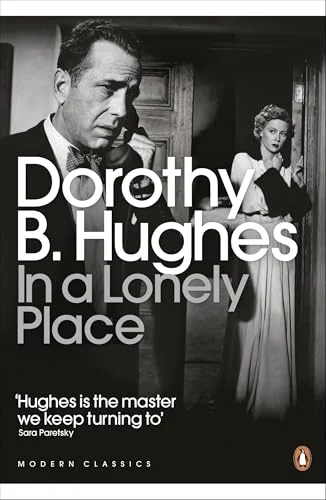
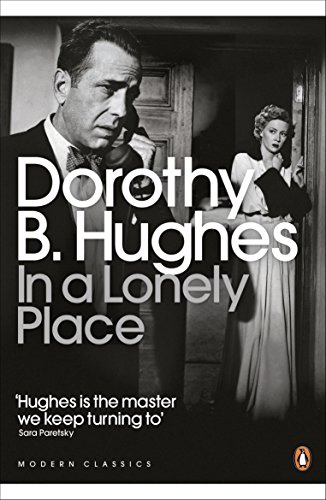
The discovery of the film’s profound impact spurred a pilgrimage to the library, where I unearthed the source material: Dorothy B. Hughes’s 1947 novel, "In a Lonely Place." Re-issued by Penguin Modern Classics, the book proved to be a revelation, offering a starkly different yet equally compelling perspective on the narrative. My initial ignorance of this seminal work, despite my long-standing passion for crime fiction, is a confession of literary oversight that I now seek to rectify.
The critical consensus surrounding Hughes’s novel is a testament to its groundbreaking nature. As critic John Powers observes, while the adage "good novels make bad movies" often holds true, "In a Lonely Place" stands as a remarkable exception. Powers admits to initially assuming director Nicolas Ray had transformed a "lousy pulp thriller into a silk purse." However, upon reading the novel, he discovered that "the novel is more groundbreaking than the film," asserting that Hughes "belongs in the crime writing pantheon with male icons like Dashiell Hammett and Raymond Chandler."
This sentiment is echoed by crime novelist Megan Abbott, who penned the insightful afterword for the Penguin Modern Classics re-issue. Abbott describes reading the novel as akin to "finding the long-lost final piece to an enormous puzzle." She posits that within its evocative setting, one discovers "a delicious and dark secret, a tantalizing page-turner with sneakily subversive undercurrents." Abbott further emphasizes the novel’s profound and "unsung yet inescapable" influence on crime fiction, tracing its imprint from Patricia Highsmith and Jim Thompson to Bret Easton Ellis and Thomas Harris. The "serial killer" tale, she argues, has borne the novel’s stylistic and psychological imprint for seventy years.
Crucially, Abbott highlights the novel’s broader cultural significance: "its larger influence derives from Hughes’s uncanny grasp of the connection between violence and misogyny and an embattled masculinity. And its importance extends beyond form or genre and into cultural mythos: the birth of American noir." This recognition of the novel’s thematic depth, particularly its exploration of toxic masculinity and its roots in post-war societal anxieties, is a critical element that distinguishes it from the film adaptation.
Divergent Paths: The Novel’s Unflinching Violence vs. The Film’s Psychological Focus
The divergence between the book and the film is striking, particularly concerning the portrayal of Dix Steele’s character and the nature of his violence. While the film presents Steele as a suspect in one murder, haunted by his temper and potential for violence, Hughes’s novel depicts him as an unvarnished serial killer. In the book, Steele is a true psychopath, a former fighter pilot whose post-war life of ennui and perceived emasculation drives him to stalk and murder women for sport. His misogynistic worldview is laid bare in chilling pronouncements: "They were all alike, cheats, liars, whores," he muses in the novel, "Even the pious ones were only waiting for a chance to cheat and lie and whore."
The film, while retaining Steele’s hot-headedness, reframes his character as a screenwriter grappling with desperation and a volatile temper. He is presented as someone capable of falling in love, a complexity that the novel’s unyielding psychopath largely eschews. This shift in focus allows the film to delve into the psychological nuances of Steele’s potential guilt, making him a more ambiguous and perhaps even pitiable figure.
Hughes’s fascination with societal outsiders and the darker aspects of human nature is evident throughout her oeuvre. Her 1963 thriller, "The Expendable Man," bravely tackled American racism. With "In a Lonely Place," she plunges the reader directly into Steele’s warped psyche, creating a character who, much like Patricia Highsmith’s Tom Ripley, elicits a disturbing sense of identification, prompting the reader to almost root for him due to his profound damage.
A Feminist Undercurrent and the Price of Hatred
The feminist undertones that are subtly present in the film blossom into a scathing indictment of toxic masculinity within the novel. While the film concludes on a plaintive note, the book offers a more defiant and complex resolution, what Abbott aptly describes as a "paean to post-war girl power." Abbott’s analysis of Steele’s motivations is particularly illuminating: "Dix’s story reveals the essence of being a violent hater. He tries to control his feelings of sadness and powerlessness, not through self-knowledge or personal change, but by finding someone to blame and erase – in this case, women. But far from bringing him salvation or even relief, his hatred turns out to be the loneliest place of all."
Abbott further elucidates Steele’s distorted worldview: "To his mind, the enemy is not the war, its trauma, but what men face upon their return: staid domesticity, the strictures of class, emasculation. And these threats are embodied wholly in women. Women, whose penetrating gazes are far mightier than his sword." This profound insight into the roots of Steele’s rage and his projection of societal anxieties onto women is a central theme that elevates the novel beyond a mere crime thriller.
While preserving the integrity of both narratives, it is important to acknowledge the distinct power of each. The film, with its masterful direction and captivating performances, offers a poignant exploration of love’s fragility and the pervasive darkness that can reside within the human heart. The novel, however, provides a more visceral and unflinching examination of psychopathy, misogyny, and the destructive consequences of unchecked hatred, offering a searing critique of patriarchal structures and the societal pressures that can warp the male psyche.
The Lonely Place Within: A Universal Truth
Ultimately, both the film and the novel of "In a Lonely Place" converge on a central, universal truth: the "lonely place" is not an external location but an internal state of being. It is a void within the self, a consequence of unresolved trauma, fear, and a profound inability to connect authentically with others. As Dorothy B. Hughes, through the voice of Dix Steele, so eloquently describes this internal landscape:
"Fear wasn’t a jagged split of light cleaving you; fear wasn’t a cold fist in your entrails; fear wasn’t something you could face and demolish with your arrogance. Fear was the fog, creeping about you, winding its tendrils about you, seeping into your pores and flesh and bone. Fear was a girl whispering a word over and again, a small word you refused to hear although the whisper was a scream in your ears, a dreadful scream you could never forget. You heard it over and again and the fog was a ripe red veil you could not tear away from your eyes."
This evocative passage encapsulates the profound existential dread that permeates both the film and the novel. It is a testament to the enduring power of "In a Lonely Place" that, decades after its creation, it continues to resonate with such intensity, prompting introspection and a deeper understanding of the complex, often dark, terrain of the human soul.
In conclusion, whether one chooses to experience the cinematic brilliance of Nicolas Ray’s "In a Lonely Place" or immerse oneself in the literary power of Dorothy B. Hughes’s novel, the journey promises to be a profoundly rewarding one. Both offer distinct yet complementary perspectives on the enduring themes of love, loss, violence, and the inescapable loneliness that can define the human experience. I urge you, as I urge myself for a re-read and a re-watch, to engage with these remarkable works. You will, I assure you, be profoundly moved.