
Navigating the Shifting Sands of Speculative Fiction: Genre, Legacy, and Unforeseen Delays
London, UK – [Insert Current Date] – The world of speculative fiction, encompassing science fiction, fantasy, and horror, continues its dynamic evolution, marked by both exciting artistic ventures and significant industry challenges. From profound discussions on genre fluidity by acclaimed authors to the unexpected hiatus of a vital literary magazine, and from the rediscovery of cinematic history to the anticipated delays of beloved television staples, the landscape remains as unpredictable as the narratives it celebrates. This report delves into key developments shaping the literary and visual fronts of SFF, offering insights into creative processes, industry sustainability, and the enduring power of storytelling.
Main Facts
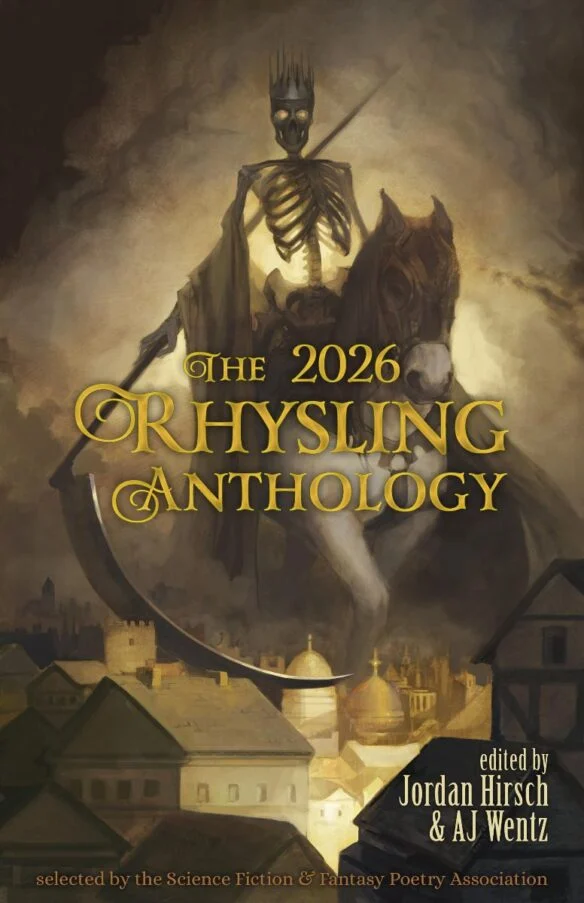
The speculative fiction community is abuzz with a diverse array of news. Author Andrea Hairston has ignited conversations about the artificial barriers between genres, advocating for a more holistic view of storytelling, particularly with her SFF mystery romance novel, The Redemption Center is Closed on Sundays. In a significant development for literary diversity, FIYAH Literary Magazine of Black Speculative Fiction has announced an indefinite hiatus after its 40th issue, raising concerns about the sustainability of independent voices. Meanwhile, the visual media landscape sees its own share of twists: the iconic 1958 Hammer Films’ Dracula, starring Christopher Lee, is set for a UK rerelease featuring newly discovered, long-lost footage. On the small screen, fans of Doctor Who may face a delay for the much-anticipated Christmas 2026 special, potentially pushing its broadcast to Easter 2027. Amidst these developments, the 2026 Rhysling Anthology has unveiled its striking cover art, and a retrospective on the notoriously divisive 1995 film Johnny Mnemonic underscores the perpetual challenges of adapting revered literary works.
Chronology of Key Events and Developments
Andrea Hairston’s Genre-Defying Perspective:
The discourse around genre classification has been reinvigorated by Andrea Hairston, whose insights were recently featured on CrimeReads. Hairston, a celebrated author, challenges conventional notions of literary difficulty, particularly regarding the perceived hierarchy between genres like mystery, romance, science fiction, and fantasy. Her recent novel, The Redemption Center is Closed on Sundays, a unique blend of SFF, mystery, and romance, serves as a testament to her belief in narrative fluidity. She recounts how readers often question the difficulty of writing a murder mystery, but rarely a romance, prompting a deeper reflection on inherent biases within literary criticism.
Hairston’s philosophy is rooted in a long history of genre-blending. She cites the wisdom of science-fiction author Howard Waldrop, who famously emphasized that "Writing is hard," regardless of the genre. For Hairston, the mechanics of a murder mystery – "teasing out the unknown from the known" – are akin to algebra, a fundamental element that underpins much of effective storytelling across all genres. Her work posits that conflict, clues, setting, and character interaction are dynamic elements, not mere decorations, revealing truths and subverting audience expectations. This perspective is not new for Hairston; her first full-length play, Einstein, directed in 1973 for the Black Theatre Workshop at Smith College, was itself a mystery featuring a Black cleaning lady as a detective, a work she retrospectively identifies as an early form of Afrofuturism, predating the widespread recognition of the term by two decades.
FIYAH Literary Magazine Announces Indefinite Hiatus:
A significant blow to the landscape of Black speculative fiction was delivered recently with the announcement that FIYAH Literary Magazine will go on an indefinite hiatus following the publication of its 40th issue. The news, shared by Publisher and Executive Editor DaVaun Sanders on Bluesky, marks a pause for a publication that has been a cornerstone for diverse voices within the SFF community. Since its inception, FIYAH has championed narratives by and for Black authors, artists, and critics, fostering a vibrant space for storytelling that often goes overlooked by mainstream publications.
The decision to pause operations underscores the immense challenges faced by independent literary magazines, which often rely on a dedicated team of volunteers and limited funding. While specific reasons for the hiatus were not fully detailed beyond the general implications of sustained effort and resources, the impact on the speculative fiction community is profound. FIYAH has not only published groundbreaking fiction, poetry, and essays but has also served as a crucial platform for elevating Black speculative artists, contributing significantly to the genre’s ongoing push for greater inclusivity and representation.
Doctor Who Christmas Special Faces Potential Delay:
Fans of the iconic British sci-fi series Doctor Who may need to adjust their calendars. Reports from Radio Times indicate that the planned Christmas 2026 special, following Ncuti Gatwa’s departure as the 15th Doctor, could be delayed until Easter 2027. The last viewers saw of the Doctor was in May 2025, with a dramatic regeneration into Billie Piper, who previously portrayed beloved companion Rose Tyler, leaving a significant cliffhanger regarding the future of the character and the series.

Showrunner Russell T Davies had previously expressed enthusiasm for the Christmas 2026 special, noting that BBC bosses were "with jaws agape, loving it" upon hearing plot details. However, The Sun now suggests that the delay stems from ongoing efforts to find the next lead actor for the titular role. This uncertainty surrounding casting, particularly for a character as pivotal as the Doctor, appears to be impacting the production timeline. The BBC, when approached for comment by Radio Times, declined to offer an official statement, leaving fans to speculate on the implications of this potential schedule shift.
Hammer Films’ 1958 Dracula to Rerelease with Lost Footage:
Horror aficionados have cause for celebration as Hammer Films prepares to rerelease its 1958 masterpiece, Dracula, in UK cinemas this October. This special engagement will include footage long believed lost, which was previously only seen by audiences at the film’s original Japanese theatrical release over six decades ago. The movie, which cemented Christopher Lee’s iconic portrayal of Count Dracula and Peter Cushing’s definitive Dr. Van Helsing, has undergone a full 4K restoration.
The recovered material, a significant piece of cinematic history, was reportedly discovered in a Warner Bros. warehouse. Its inclusion marks the first time this footage will be released in the UK or US, and it has never before appeared on home entertainment platforms anywhere in the world. John Gore, chief executive of Hammer Films, lauded the discovery as "the recovery of a piece of British film history that audiences believed had been lost for ever," highlighting the cultural and historical significance of this rerelease.
Supporting Data and Context
Andrea Hairston: A Legacy of Intersectional Storytelling:
Hairston’s career has consistently demonstrated a commitment to challenging conventional narratives and embracing intersectionality. Her early play, Einstein, not only merged mystery with science fiction but also foregrounded a Black female detective, a radical concept for its time. This pioneering spirit continued through her literary works, which often blend elements of fantasy, folklore, and social commentary. Her assertion that "writing is hard" for all genres pushes back against a long-standing academic and critical bias that often elevates "literary" or "realistic" fiction above speculative or genre works, or assigns greater intellectual weight to certain genres over others (e.g., crime over romance). By doing so, Hairston validates the intricate craft required for all forms of storytelling, emphasizing that depth, complexity, and structural integrity are universal requirements, not genre-specific traits. Her work, therefore, contributes to a broader movement within SFF that champions narrative innovation and pushes against exclusionary genre definitions.
The Indispensable Role of FIYAH Magazine:
FIYAH Literary Magazine emerged as a critical platform to address a glaring need for representation within speculative fiction. Its mission was clear: to create a dedicated space for Black writers of science fiction, fantasy, and horror. Over its 40 issues, FIYAH has not only published high-quality, diverse stories but has also fostered a community and provided visibility for voices that were historically marginalized. The magazine’s commitment extended beyond publication, often advocating for Black creators within the broader SFF ecosystem and contributing to important conversations about diversity and inclusion. Its hiatus is not merely the pausing of a publication; it represents a temporary void in a crucial space that has actively worked to reshape the genre’s future. The challenges faced by FIYAH – from securing consistent funding to managing the intense labor required by a volunteer-driven model – are common to many independent literary journals, highlighting the fragility of these vital cultural institutions.
The Rhysling Anthology Cover Reveal:
The Science Fiction and Fantasy Poetry Association (SFFPA) has unveiled the cover for the 2026 Rhysling Anthology, featuring the evocative image "Death on a Pale Horse" by acclaimed artist Julie Dillon. The Rhysling Awards, presented annually by the SFFPA, recognize excellence in speculative poetry, honoring both long and short-form works. The anthology serves as a collection of the year’s best entries, providing a comprehensive overview of the genre’s poetic landscape. Julie Dillon, known for her intricate and imaginative fantasy and science fiction art, brings a visual richness that complements the poetic themes often explored within the anthology. Her work adds another layer of artistic expression to a genre that frequently blurs the lines between literature and visual arts.
The Rocky Road of Adaptation: Johnny Mnemonic (1995):
The 1995 film Johnny Mnemonic stands as a cautionary tale in the annals of literary adaptation, particularly for groundbreaking cyberpunk works. Based on William Gibson’s seminal 1981 Nebula-nominated short story, the film premiered 31 years ago, failing to capture the essence or critical acclaim of its source material. Despite Gibson himself being credited with the screenplay, the production was plagued by significant studio interference and numerous rewrites, diverging sharply from the original vision shared by Gibson and director Robert Longo.

Critics were sharply divided, though generally unfavorable. Roger Ebert, writing for the Chicago Sun-Times, famously described it as "one of the great goofy gestures of recent cinema, a movie that doesn’t deserve one nanosecond of serious analysis but has a kind of idiotic grandeur that makes you almost forgive it." Caryn James of The New York Times was far less forgiving, lambasting it as a "disaster in every way," feeling like a "shabby imitation" of superior cyberpunk films like Blade Runner and Total Recall. She criticized its lack of tension, dated special effects that resembled a "CD-ROM," and a visually "murky" aesthetic.
Financially, the film was a significant flop. With an estimated production cost of at least $30 million, it barely doubled that at the box office, a figure that doesn’t account for the studio’s reduced share of ticket sales. The film also saw multiple versions: a longer, six-minute-extended cut premiered in Japan, closer to Longo’s initial vision, and a "director’s cut" later emerged. Three years ago, a black-and-white edition, Johnny Mnemonic: In Black and White, was released, which Longo claims aligns more closely with his and Gibson’s original intentions. The film’s lead actor, whose casting was reportedly a studio decision against the director’s wishes, was also a point of contention for critics and fans alike, further highlighting the disconnect between artistic vision and commercial demands. This experience underscores the immense difficulty of translating complex, cerebral cyberpunk narratives to the big screen, often resulting in diluted or misunderstood interpretations. Gibson himself has expressed reservations about adaptations of his work, a stance many fans of his celebrated novel Neuromancer hope will be overcome by the upcoming Amazon series, even as the reception for Amazon’s The Peripheral (another Gibson adaptation) remains a mixed bag.
Official Responses
The BBC maintained a "no comment" stance when questioned by Radio Times regarding the potential delay of the Doctor Who Christmas 2026 special. This official silence leaves room for continued speculation among fans and industry observers about the exact reasons for the possible shift, whether it is indeed related to casting the next lead Doctor or other production complexities.
For FIYAH Literary Magazine, DaVaun Sanders’ announcement on Bluesky served as the official communication regarding the hiatus. While direct quotes detailed the decision, the underlying reasons point to the systemic challenges independent publications face, rather than specific external pressures or internal disputes.
Hammer Films’ CEO John Gore provided an official statement on the Dracula rerelease, expressing profound excitement over the recovery of the lost footage, emphasizing its importance as a "piece of British film history."
Implications
The Future of Genre and Storytelling:
Andrea Hairston’s eloquent defense of genre fluidity and the inherent difficulty in all forms of writing holds significant implications for how literature is perceived and taught. By dismantling artificial hierarchies, she encourages a broader appreciation for the craft and intellectual rigor across genres. This perspective could foster greater cross-pollination of ideas and storytelling techniques, leading to more innovative and boundary-pushing works in the future. Her pioneering work in Afrofuturism also highlights the enduring power of speculative fiction to explore social commentary, identity, and historical narratives from fresh perspectives.
Impact of FIYAH’s Hiatus on Diversity in SFF:
The indefinite hiatus of FIYAH Literary Magazine is a stark reminder of the precarious nature of independent, mission-driven publications. While hopefully temporary, this pause creates a significant void in the speculative fiction landscape, particularly for Black writers and readers who have found a dedicated home and voice within its pages. The implications extend beyond the loss of new stories; it signals a potential setback for ongoing efforts to diversify the SFF genre and ensure that marginalized voices have equitable platforms. It underscores the need for sustainable models and increased support for such vital cultural institutions to prevent the silencing of diverse narratives.

Doctor Who’s Shifting Timeline:
A potential delay for the Doctor Who Christmas special has several implications. For fans, it means a longer wait and increased anticipation, but also potential frustration, especially after the dramatic regeneration cliffhanger featuring Billie Piper. For the production team, a delay could provide crucial time to finalize casting for the next permanent Doctor, ensuring a smooth transition and strategic planning for future seasons. However, it also impacts viewership scheduling, potentially losing the traditional festive audience slot. The narrative implication of Billie Piper potentially carrying the role for longer than initially planned, or as a transitional figure, adds another layer of intrigue and speculation to the show’s ever-evolving lore.
Resurrection of Lost Cinematic History:
The rerelease of Hammer’s Dracula with restored and previously lost footage is a major win for film preservation and horror cinema history. For fans, it offers a rare opportunity to experience a classic film in its most complete form, potentially revealing new nuances in Christopher Lee’s performance or the film’s overall pacing and impact. This discovery also highlights the ongoing importance of archival efforts in cinema, demonstrating that even iconic films can still hold hidden treasures awaiting rediscovery. It reinforces the enduring legacy of Hammer Films and their pivotal role in shaping the horror genre.
Lessons from Johnny Mnemonic:
The Johnny Mnemonic film serves as a potent case study in the perils of adaptation, particularly when studio commercial interests clash with the artistic vision of creators. Its critical and commercial failure highlighted the challenges of translating complex literary cyberpunk into mainstream cinema, often leading to a dilution of thematic depth and stylistic integrity. The subsequent attempts to "fix" the film through director’s cuts and black-and-white versions underscore a persistent desire to reclaim the original artistic intent. The film’s legacy continues to inform discussions around future adaptations of William Gibson’s work, such as the upcoming Neuromancer series, raising questions about how closely producers will adhere to source material and respect the creators’ visions. It’s a reminder that a faithful adaptation requires more than just a famous name on the screenplay; it demands a deep understanding and respect for the original text’s soul.
The speculative fiction landscape, as evidenced by these diverse narratives, remains a vibrant, challenging, and ever-evolving space, continually pushing the boundaries of imagination while grappling with the realities of production, preservation, and representation. The dialogue around genre, the struggle for diverse voices, and the complex journey of adaptation will undoubtedly continue to shape its future.


Leave a Comment