Nicolas Winding Refn Unleashes "Her Private Hell": A Neo-Noir Odyssey into a Neon-Drenched Dystopia
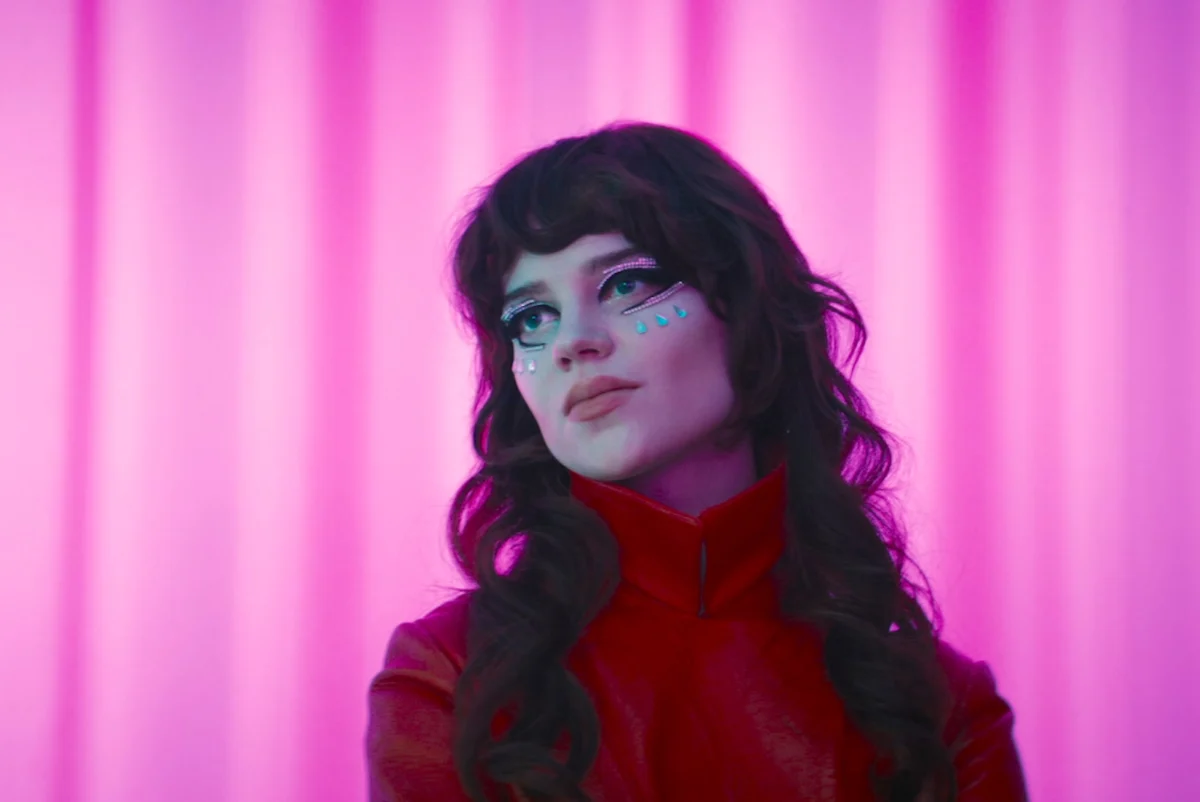
Copenhagen, Denmark / Los Angeles, USA – The cinematic landscape is bracing for a new, intoxicating blend of the beautiful, the brutal, and the enigmatic, as visionary writer-director Nicolas Winding Refn prepares to unleash his latest feature, Her Private Hell. With a tantalizing trailer that has sent ripples of anticipation across the internet, the film promises a signature Refn experience: a meticulously crafted aesthetic fused with a dark, visceral narrative. Set for a theatrical premiere on July 24, 2026, this Neon distribution is poised to be a significant cultural event, drawing both dedicated fans of Refn’s unique style and new audiences intrigued by its potent allure.
Main Facts: A Glimpse into the Abyss
The newly released trailer for Her Private Hell immediately establishes an atmosphere that is unmistakably Nicolas Winding Refn. The opening words, delivered with a cool, knowing gravitas by Yellowjackets star Sophie Thatcher – "Beautiful. Sweet. Powerful. You either have it or you don’t." – serve as both an intriguing character declaration and a meta-commentary on the film itself. This bold pronouncement sets the stage for a cinematic journey characterized by its eerie sensuality, enigmatic narrative, and overwhelming stylistic confidence.
The visual and auditory palette is a familiar Refn cocktail: pulsating synth music, hazy neon lighting that bleeds across dystopian cityscapes, and the shimmering allure of sequined dresses. This combination conjures a world that is simultaneously alluring and dangerous, a hallmark of the director’s neo-noir sensibilities. The trailer offers fleeting glimpses of a futuristic metropolis shrouded in a mysterious mist, an entity that is apparently both deadly and elusive.
At the heart of this unfolding mystery are two compelling protagonists. Sophie Thatcher, fresh off her critically acclaimed role in Yellowjackets, embodies the "troubled young woman" on a desperate search for her father. Her quest appears to be a descent into a labyrinthine urban nightmare, fraught with unseen dangers. Her path collides with that of an "American G.I.," portrayed by Charles Melton, whose recent powerful performance in May December has solidified his dramatic prowess. Melton’s character is on his own harrowing odyssey, driven by the urgent need to rescue his daughter from a metaphorical — or perhaps literal — Hell. The trailer also introduces the chilling figure of the "Leather Man," strongly implied to be the "deadly and elusive entity" responsible for the film’s most gruesome moments, including a scene vividly described as a young woman being torn apart "like she was unshelled edamame."
The ensemble cast supporting Thatcher and Melton is equally impressive, featuring a diverse array of talent including Havana Rose Liu, Kristine Froseth, Shioli Kutsuna, Aoi Yamada, Dougray Scott, Diego Calva, and Hidetoshi Nishijima. Refn directed the film and co-wrote the screenplay with Esti Giordani, promising a narrative that, while potentially opaque, will undoubtedly be rich in thematic depth and visual splendor. Neon, a distributor known for championing auteur-driven and boundary-pushing cinema, has secured the rights, signaling their confidence in Refn’s latest artistic endeavor. The film’s release date of July 24, 2026, allows ample time for further marketing and the building of fervent anticipation among cinephiles.
Chronology: From Concept to Cinematic Canvas
Nicolas Winding Refn’s journey to Her Private Hell is a logical, albeit highly individualistic, progression within his distinct filmography. Known for his uncompromising artistic vision and a penchant for exploring the dark underbelly of human desire, violence, and identity, Refn has cultivated a reputation as a master of atmospheric, visually stunning, and often polarizing cinema.
The Genesis of a Vision: Refn’s Signature Style
Refn’s career is marked by a consistent aesthetic and thematic preoccupation. From the raw, visceral realism of his Pusher trilogy to the sleek, existential cool of Drive (2011), the hypnotic violence of Only God Forgives (2013), and the unsettling beauty of The Neon Demon (2016), he has consistently pushed boundaries. His films are characterized by minimal dialogue, deliberate pacing, striking color palettes (often saturated with reds, blues, and purples), and a deep reliance on evocative electronic scores, typically crafted in collaboration with Cliff Martinez. These elements are not mere stylistic flourishes but integral components of his storytelling, designed to immerse the audience in a heightened, often dreamlike, reality.
Her Private Hell appears to be a distillation and evolution of these signature elements. The "eerie, sexy, enigmatic" vibe described in the trailer is a direct echo of The Neon Demon‘s exploration of beauty and cannibalism in the fashion world, or Only God Forgives‘ descent into Bangkok’s criminal underworld. The choice of a "futuristic metropolis" and a "mysterious mist" suggests an expansion of his urban settings, moving beyond contemporary realism into full-blown dystopian sci-fi, albeit filtered through his unique neo-noir lens.
Collaborative Screenwriting: A New Narrative Dynamic
The co-writing credit with Esti Giordani is noteworthy. While Refn has often written his own screenplays or collaborated with a single co-writer (Hossein Amini for Drive, Polly Stenham for The Neon Demon), the inclusion of Giordani suggests a potentially fresh narrative dynamic for Her Private Hell. Giordani’s background or previous work, if publicly known, would offer insight into what new dimensions she might bring to Refn’s often singular vision. It is plausible that her contribution could enhance the emotional depth of the "troubled young woman" and "American G.I." narratives, providing a counterpoint to Refn’s more abstract, visual storytelling. The logline itself, despite its brevity, hints at a compelling human drama amidst the surreal chaos, a balance that a strong co-writer could help solidify.
The Art of Casting: New Faces, Deep Talent
The casting choices further underscore the film’s potential. Sophie Thatcher, with her breakout role in Yellowjackets, has demonstrated a remarkable ability to portray complex, vulnerable, yet resilient young women grappling with traumatic circumstances. Her character in Her Private Hell, described as "troubled," seems tailor-made for Thatcher’s nuanced performance style, allowing her to explore themes of loss, determination, and survival in a fantastical yet psychologically grounded setting.
Charles Melton’s recent transformation into a serious dramatic actor, notably in May December, positions him as an unexpected but intriguing choice for the "American G.I." His ability to convey internal turmoil and a quiet intensity could bring significant weight to a character driven by paternal love and desperation. This role could further cement Melton’s departure from his Riverdale teen idol image into that of a versatile dramatic performer.
The supporting cast list is a global assembly of talent, promising a rich tapestry of characters. Havana Rose Liu and Kristine Froseth have rising profiles in independent cinema, while Shioli Kutsuna, Aoi Yamada, Dougray Scott, Diego Calva, and Hidetoshi Nishijima bring international recognition and diverse acting styles. This eclectic mix aligns with Refn’s tendency to cast interesting, often unconventional, actors who can embody the distinct archetypes within his heightened realities. The presence of actors like Diego Calva (Babylon) suggests a continued interest in emerging talent capable of commanding the screen with subtlety and presence.
Supporting Data: Deconstructing the Dystopian Dream
Her Private Hell appears to be a rich tapestry woven from various genre threads, predominantly neo-noir, cyberpunk, and existential horror. Understanding these components is key to appreciating Refn’s likely approach.
Neo-Noir Resurgence: Aesthetics of Moral Decay
Refn is a modern master of neo-noir, a genre that updates the classic film noir themes of moral ambiguity, cynicism, and fatalism for contemporary audiences. His films often feature anti-heroes, femme fatales (or their modern equivalents), and plots steeped in crime, betrayal, and violence. Her Private Hell seems to embrace these elements wholeheartedly. The "futuristic metropolis" could be a concrete jungle of corruption, echoing the shadowy urban landscapes of traditional noir. The "mysterious mist" itself could symbolize the moral fog that envelops the characters, blurring lines between good and evil, reality and illusion. The quest for a father and the rescue of a daughter introduce classic noir motifs of redemption and paternal duty, albeit twisted through a dystopian lens.
Cyberpunk’s Dark Future: Technology, Decay, and Identity
The "futuristic metropolis" and the notion of an "elusive entity" immediately invoke cyberpunk aesthetics. This subgenre of science fiction typically explores advanced technological and scientific achievements alongside a breakdown or radical change in social order. Think Blade Runner or Akira. Refn’s use of "hazy neon lighting" is not merely decorative; it’s a staple of cyberpunk, signifying artificiality, late-stage capitalism, and the synthetic beauty of a decaying future. The "Leather Man" as a deadly entity could be a bio-engineered horror, a digital phantom, or a representation of primal fear in a hyper-modern world, aligning with cyberpunk’s exploration of post-humanism and body horror. The film’s setting and premise hint at a world where technology and societal structures have perhaps failed, leading to a "hellish" existence.
Existential Horror and Visceral Dread
Beyond its stylistic trappings, the film’s logline promises elements of horror and thriller. The "deadly and elusive entity" and the chilling description of violence suggest a plunge into visceral dread. Refn’s previous works have not shied away from graphic violence, often presented in a detached, almost artistic manner that makes it all the more unsettling. The idea of rescuing a daughter "from Hell" taps into primal fears and the ultimate stakes of human survival. This isn’t just a physical journey but likely a psychological one, exploring the characters’ inner demons as they navigate an external nightmare. The "unshelled edamame" comparison, while darkly humorous, grounds the fantastical horror in a disturbingly mundane, relatable image of fragility.
The Sonic and Visual Landscape: A Symphony of Synths and Shadows
The emphasis on "synth music overlaid with hazy neon lighting and sequined dresses" is a powerful indicator of Refn’s commitment to creating an immersive sensory experience. Synthwave music, with its nostalgic yet futuristic qualities, perfectly complements the cyberpunk/neo-noir aesthetic. It creates a mood of melancholic grandeur, a sense of cool detachment mixed with underlying tension. Neon lights, beyond their cyberpunk connotations, are used by Refn to delineate spaces, highlight characters, and infuse scenes with symbolic color, often representing emotional states or narrative themes. Sequined dresses, meanwhile, inject a layer of glamorous artificiality and potential vulnerability, contrasting sharply with the grim reality unfolding. This meticulous attention to visual and auditory detail is Refn’s primary tool for building his unique, dreamlike worlds.
Official Responses: Anticipation and Industry Positioning
The immediate, visceral reaction to the trailer – "I want to see this movie" – speaks volumes about Refn’s continued ability to captivate and intrigue audiences, even with minimal narrative exposition. A Refn trailer is rarely about plot clarity; it’s about mood, atmosphere, and a promise of a unique cinematic experience.
Neon’s Strategic Vision
The distribution by Neon is a crucial piece of supporting data. Neon has carved out a distinct niche in the independent film landscape, renowned for acquiring and successfully marketing challenging, artistically ambitious, and often unconventional films. Their roster includes Palme d’Or winners like Parasite, Titane, and Anatomy of a Fall, demonstrating a willingness to back films that push aesthetic and thematic boundaries. Her Private Hell fits perfectly within Neon’s brand identity: an auteur-driven project with a strong visual identity and potentially polarizing themes that will generate significant discussion. Neon’s marketing strategy will likely lean heavily into Refn’s cult status, the film’s distinct visual style, and the compelling performances from its rising stars. Their track record suggests they know how to position such films for critical acclaim and audience engagement, even if mainstream box office success isn’t the primary goal.
Director’s Commentary (Inferred)
While specific official responses from Refn regarding Her Private Hell are yet to be widely disseminated, his past interviews offer a valuable lens through which to infer his approach. Refn often speaks about cinema as an emotional experience, prioritizing feeling and atmosphere over traditional narrative logic. He frequently mentions his fascination with archetypes, the exploration of primal urges, and the beauty inherent in violence and darkness. It is plausible that he views Her Private Hell as another canvas to explore these recurring themes, perhaps delving deeper into the nature of "hell" – both internal and external – and the inherent power struggles within human relationships. He might describe the film as a "fairy tale" for adults, a dreamlike journey through a nightmare landscape, or a meditation on identity and survival in a fractured world.
Cast Perspectives (Anticipated)
Actors who work with Refn often speak of his unconventional directing style, his trust in their instincts, and the immersive environments he creates. One might anticipate Sophie Thatcher and Charles Melton discussing the challenges and rewards of inhabiting such complex, stylized roles. Thatcher might speak to the emotional depth required to portray a "troubled young woman" searching for a lost parent amidst chaos, and the physical demands of Refn’s often intense scenes. Melton could reflect on portraying a protective father figure, driven by love, in a world that seems designed to break him. Both would likely laud Refn’s unique vision and the collaborative spirit that allows for such distinctive performances.
Implications: Shaping Futures and Challenging Cinema
The release of Her Private Hell carries significant implications for Nicolas Winding Refn’s legacy, the careers of its cast, and the broader cinematic landscape.
Solidifying Refn’s Auteur Status
For Refn, Her Private Hell is another opportunity to reassert his singular voice in cinema. Following a foray into television with Too Old to Die Young, this film marks his return to the feature format, where his aesthetic prowess truly shines. Its likely polarizing nature will only cement his status as an uncompromising auteur, revered by a dedicated fanbase and often debated by critics, but never ignored. The film will contribute to his ongoing exploration of genre, visual storytelling, and the darker aspects of the human condition, further defining his unique contribution to modern cinema.
Career Trajectories for Thatcher and Melton
For Sophie Thatcher and Charles Melton, starring in a Nicolas Winding Refn film is a significant career move. It positions them as actors willing to tackle challenging, visually striking roles outside of conventional mainstream fare. For Thatcher, it builds upon her genre cred from Yellowjackets, proving her versatility beyond television and within a distinct cinematic universe. For Melton, it further solidifies his transition into serious dramatic acting, showcasing his range and ability to lead a high-concept feature. These roles could open doors to more complex characters and collaborations with other visionary directors, shaping their long-term career trajectories.
The Future of Neo-Noir and Cyberpunk
Her Private Hell arrives at a time when audiences continue to be fascinated by retro-futurism, 80s aesthetics, and the timeless allure of neo-noir. The film could serve as a benchmark for how these genres can be innovatively reinterpreted and combined. By blending classic noir tropes with a starkly futuristic setting and Refn’s unique visual language, it may inspire a new wave of filmmakers to explore similar thematic and aesthetic territories, pushing the boundaries of what these genres can achieve.
Critical and Commercial Reception
Given Refn’s track record, Her Private Hell is almost guaranteed to generate robust critical discussion. Reviews will likely be divided between those who celebrate its artistic ambition and visual splendor, and those who find its narrative opaque or its violence gratuitous. Its commercial success will be measured not by blockbuster numbers, but by its impact on the arthouse circuit, its performance in festivals, and its ability to cultivate a devoted following. Neon’s distribution strategy will focus on maximizing its cultural footprint and ensuring it finds its dedicated audience, potentially through a strong VOD and streaming presence after its theatrical run.
As the release date approaches, Her Private Hell stands as a beacon for audacious, visually driven filmmaking. It’s a promise of a journey into a world where beauty and brutality dance a dangerous tango, guided by a director who consistently dares to delve into the depths of human experience with a style all his own. The trailer has done its job: the anticipation is palpable, and the allure of Her Private Hell is undeniable.