
OpenAI’s Early Azure Deal: A Peek into the Genesis of AI Dominance and Internal Microsoft Doubts
The foundation of today’s generative AI revolution was partly laid through a significant, and initially contentious, computing deal between OpenAI and Microsoft. Newly unearthed documents, stemming from the ongoing legal dispute between Elon Musk and Sam Altman, shed light on the substantial discount Microsoft provided to OpenAI for its Azure cloud computing services, a move that was met with considerable internal apprehension among Microsoft executives.
The Dota 2 Genesis: A Strategic Coup in Cloud Computing
The story begins with OpenAI’s groundbreaking achievement: developing an AI, dubbed OpenAI Five, capable of defeating professional human players in the complex real-time strategy game Dota 2. This remarkable feat, first reported last week, was made possible, in part, by a pivotal intervention from Elon Musk. In 2017, Musk personally contacted Microsoft CEO Satya Nadella to negotiate a deeply discounted rate for access to Azure, Microsoft’s robust cloud computing platform. This arrangement provided OpenAI with the immense computational power necessary to train and refine its sophisticated AI models.
The newly released documents, originating from the legal battle between Musk and Altman, have now quantified the scale of this discount and, more intriguingly, revealed the initial skepticism and concern that permeated within Microsoft’s executive ranks regarding OpenAI’s ambitions and the nature of their partnership.
A Timeline of Early Collaboration and Lingering Apprehension
The narrative unfolds in the aftermath of OpenAI’s Dota 2 triumph. On August 11, 2017, Satya Nadella sent a congratulatory email to Sam Altman, acknowledging the team’s success: "Just wanted to pass on my Congrats on the win today!" This initial exchange marked a positive note in their burgeoning relationship.
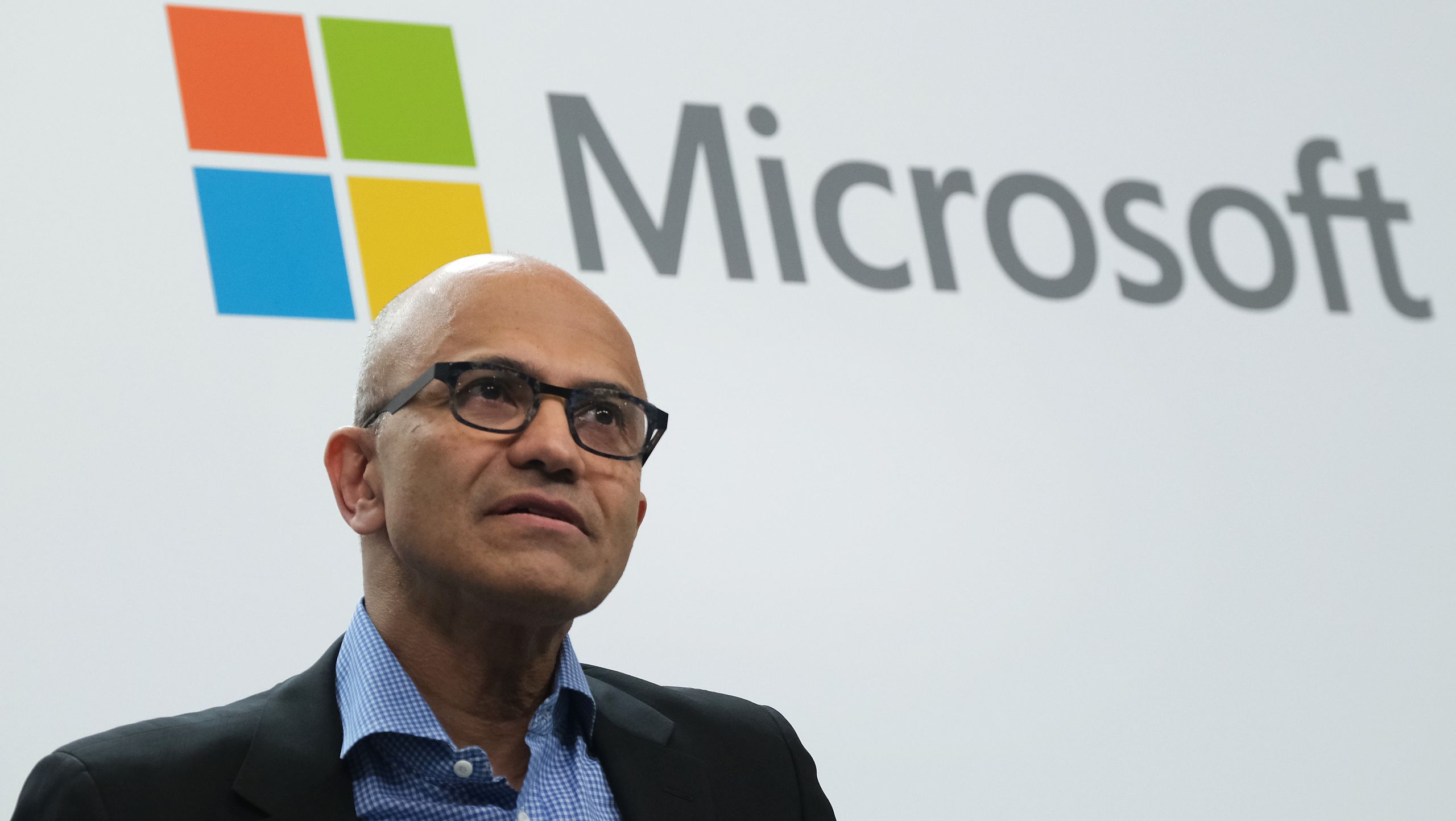
However, a few weeks later, a more complex dynamic emerged. Altman, seeking to solidify and expand their partnership, reached out to Nadella. The exact content of Altman’s email has not been fully disclosed, but the subsequent internal communications at Microsoft reveal its implications. Nadella, in turn, forwarded Altman’s message to a select group of his senior executives, including Brett Tanzer, Jason Zander, Eric Horvitz, and Jason Graefe. Nadella’s accompanying message, tinged with a sense of déjà vu, read: "I know we have been on this road before. Wondering how to reply to this…" This statement alludes to previous strategic collaborations and perhaps a degree of caution in forging new, potentially high-stakes, alliances.
The subsequent internal discussions within Microsoft painted a picture of cautious optimism mixed with significant apprehension. The executives grappled with the financial implications of continuing to provide such heavily discounted computing resources to a nascent, albeit promising, AI research organization.
Quantifying the Discount and Internal Debates
While the exact percentage of the discount has not been publicly detailed in the released documents, the internal deliberations strongly suggest it was substantial enough to warrant significant discussion and even concern among Microsoft’s leadership. The primary driver for this concern stemmed from a perceived lack of clear financial return on investment and the potential for OpenAI to leverage this powerful, subsidized infrastructure to develop technologies that could ultimately benefit competitors.
One of the most candid assessments came from a Microsoft executive identified as "Scott." In his internal memo, Scott outlined a series of "what-if" scenarios that could potentially justify the continued investment. However, he ultimately deemed these scenarios unlikely to materialize, highlighting the speculative nature of the partnership at that early stage.

Scott’s more pressing concern, however, revolved around the public relations fallout if the partnership were to sour. He expressed anxiety about "the PR downside of us not funding them, and having them storm off to Amazon in a huff and shit-talk us and Azure on the way out." This fear underscores the strategic importance Microsoft placed on maintaining a positive relationship with OpenAI and preventing them from aligning with a direct competitor like Amazon Web Services (AWS).
Further adding to the internal debate was a clear distinction drawn by some executives between different types of AI development. Harry Shum, another Microsoft executive, while acknowledging the gaming achievements, expressed skepticism about the broader "AGI claims" (Artificial General Intelligence). He noted, "They worked on two main streams: gaming like Dota 2, and learning from observation with robots. Sam is all about gaming and beating human champions perhaps motivated by DeepMind." This suggests a belief that OpenAI’s focus on competitive AI, like the Dota 2 bot, might be a less strategically valuable pursuit compared to AI that augments human capabilities.
Jason Zander echoed these sentiments, articulating a worst-case scenario: "To walk away from the deal altogether, I think we have to be convinced that there is no unique / valuable IP that they are going to generate which offers unique advantage to their cloud partner." This highlights a core concern: ensuring that Microsoft’s significant investment in Azure infrastructure for OpenAI yielded proprietary intellectual property that would exclusively benefit Microsoft. The fear was that OpenAI, after benefiting from Microsoft’s resources, could simply take their innovations to AWS, potentially undermining Microsoft’s competitive edge.
The "Crush Humans" vs. "Extend Humans" Dichotomy
Perhaps the most insightful aspect of these internal discussions is the clear delineation drawn between AI designed to "crush humans" and AI aimed at "extending human capabilities." Eric Horvitz, another executive, suggested that OpenAI’s work, even in the context of Dota 2, could be "angled some of their work… toward our interest in human-Al collaborations, centering on extending human intellect with Al-versus beating human." He further elaborated on the perception that the Dota 2 work was driven by Elon Musk’s desire to "show how Al can crush humans, as part of Elon Musk’s interest in demonstrating why we should all be concerned about the power of Al."

This dichotomy reveals a strategic divergence within Microsoft’s thinking. On one hand, there was an acknowledgment of the potential dangers of advanced AI, as articulated by Musk’s public warnings. On the other, there was a clear preference for AI development that focused on augmenting human intelligence and fostering collaboration, rather than pure adversarial capabilities. The internal debate suggests that some within Microsoft saw OpenAI’s pursuit of AI that could "crush humans" as potentially misguided or even problematic, even if it was partly driven by a desire to highlight AI’s power and potential risks.
The Long Arc of Partnership: From Skepticism to Dominance
It is crucial to contextualize these early 2017/2018 discussions within the broader trajectory of the Microsoft-OpenAI relationship. The skepticism and internal debates, while significant, did not deter Microsoft from deepening its commitment. Within a few years, the landscape shifted dramatically. In 2019, Microsoft made a $1 billion investment in OpenAI. This was followed by an even more substantial $10 billion investment in January 2023. These investments eventually granted Microsoft a significant 27% stake in the now for-profit company.
This evolution from cautious internal deliberation to massive financial commitment underscores the transformative impact of generative AI and OpenAI’s rapid ascent. The initial concerns about financial viability and competitive advantage were eventually overshadowed by the immense potential of OpenAI’s technology and Microsoft’s strategic vision to become a dominant player in the AI era.
The early days of the Microsoft-OpenAI partnership, as revealed by these documents, offer a fascinating glimpse into the nascent stages of the AI revolution. They highlight the complex interplay of technological ambition, strategic negotiation, and internal corporate deliberation that shaped the early development of some of the most powerful AI models in existence today. The internal debates within Microsoft, particularly the distinction between AI that augments and AI that "crushes," offer a valuable perspective on the ethical and strategic considerations that have long been part of the AI discourse, even before the widespread adoption of tools like ChatGPT. In this particular instance, it appears that despite their initial reservations, Microsoft ultimately chose to back the potential of AI innovation, a decision that has profoundly reshaped the technological landscape.



Leave a Comment