Publishing Landscape Shifts: Indie Ebooks Expand, AI Ethics Spark Debate, and Genre Tastes Evolve
Week Ending August 6, 2026
The publishing industry continues its rapid evolution, marked by significant strategic moves, emerging ethical dilemmas, and shifting consumer preferences. This week, a prominent audiobook platform expands into ebooks, a lucrative debut novel faces collapse over AI authenticity concerns, and a new study reveals the substantial presence of AI-generated fiction within Amazon’s genre catalog. Alongside these developments, major publishers report varied financial performances, and cultural commentators observe a noticeable shift in music consumption among younger demographics.
Libro.fm Charts a New Course for Indie Ebook Sales
In a move poised to disrupt the digital book market, Libro.fm announced its forthcoming expansion into ebooks, set to launch this fall. This strategic pivot will enable its network of over 5,000 independent bookstore partners to offer ebooks through the same platform that currently facilitates audiobook sales. This initiative aims to create a significant new sales channel for independent booksellers, directly challenging Amazon’s long-standing dominance in the ebook space.
Chronology of the Expansion:
- August 7, 2026: Libro.fm officially announces its intention to launch ebook sales.
- Fall 2026: A beta version of the ebook platform will be rolled out to select booksellers for testing and feedback.
- 2027: Full consumer access to ebooks on the Libro.fm platform is expected.
Libro.fm CEO and co-founder Mark Pearson described the ebook integration as a "natural next step" for the employee-owned company, emphasizing its commitment to supporting independent bookstores. Key features of the new offering include flexible credits that can be applied to both ebooks and audiobooks, and a "LibroSync" functionality allowing readers to seamlessly switch between formats or follow along with the text while listening. Booksellers will also gain access to digital advance reading copies, mirroring their existing audiobook ARC program. The platform will prioritize DRM-free ebooks where possible, utilizing LCP (an open industry standard) for broader compatibility with devices like Boox, InkBook, and PocketBook.
Implications for Authors and Retailers:
This expansion presents a dual benefit. For readers who already patronize independent bookstores through Libro.fm, it offers a convenient way to continue supporting their preferred retailers while diversifying their reading formats. For authors, it opens a vital new sales avenue that directly channels revenue away from Amazon and into the independent bookselling ecosystem. Authors with wide distribution should ensure their ebooks are available through Libro.fm’s partners, and actively promote this option to readers who value supporting local bookstores. The LibroSync feature could also incentivize dual-format purchases, potentially increasing overall sales volume per title.
AI Authenticity Crisis Claims Multi-Million Dollar Debut Novel
The burgeoning concerns surrounding artificial intelligence in creative writing have led to a dramatic collapse of a high-stakes publishing deal. Jerry Falade’s debut crime novel, Call Me, I’ll Hide the Body, with an reported advance exceeding $2 million in a 14-way auction, was withdrawn from sale last week due to unresolved questions about its AI authorship.

The Deal’s Unraveling:
- Pre-Auction: During the submission process, agents vetted the manuscript for AI use and received assurances from Falade that it was written without AI assistance in writing or editing.
- Mid-Auction: An editor raised concerns about potential AI involvement in the manuscript.
- July 29, 2026: Following a meeting where "aspects of [Falade’s] story changed," the agents officially withdrew the book, citing a need for "total faith" in the author’s creative process.
- Publication Planned: The book was slated for a 2028 release, with Minotaur Books (an imprint of Macmillan) securing U.S. rights and HarperCollins acquiring U.K. rights.
In an email to publishers, Falade’s agents stated they could "no longer authenticate how the manuscript fully evolved from origin to completion." This decision highlights a growing unease within the industry about the provenance of AI-assisted or generated works.
Author’s Defense and Broader Concerns:
Falade has vehemently denied using AI to write the novel, asserting in a Wall Street Journal interview that he employed a local, open-source AI model solely for research queries, such as identifying chemicals or exploring word choices. He has also raised concerns about potential racial bias, pointing to a pattern where several Black authors securing major deals have subsequently faced AI suspicions that disrupted their careers, while some white authors openly discussing AI use have not encountered similar scrutiny.
This incident follows other high-profile cases, including the U.S. cancellation of Mia Ballard’s horror novel Shy Girl and scrutiny over H.M. Wolfe’s Daggermouth. These events underscore a critical shift in how the publishing industry values creative work, increasingly linking worth to the perceived human labor involved, a concept echoed by some commentators as akin to a Marxist labor theory of value.
Implications for Authors and Publishers:
The publishing industry’s current posture, prioritizing the narrative of creation over the finished product, presents a challenge for authors. Readers, however, typically judge a book by its story and its ability to engage them, irrespective of the labor invested. This dynamic suggests that a focus on the quality and reader appeal of the work itself, rather than the perceived "handcrafted" nature of its origin, may prove a more sustainable strategy in the long term. Authors are now under increasing pressure to meticulously document their creative process to allay these AI concerns.
HarperCollins Reports Strong Revenue Growth Amidst Sector-Wide Challenges
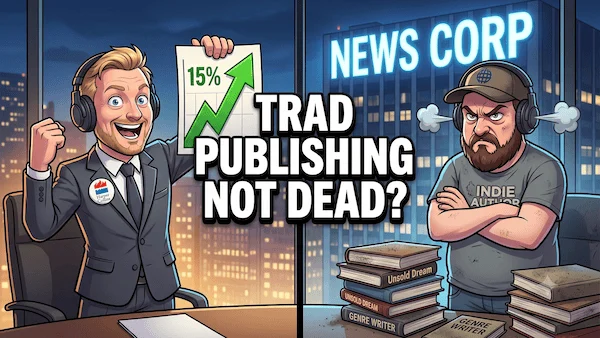
News Corp’s latest financial report reveals a robust 15% increase in HarperCollins’ fourth-quarter revenue, reaching $566 million for the period ending June 30, 2026. This growth, driven by a strong frontlist across general books, children’s publishing, and the U.K. market, contributed to News Corp’s overall positive fiscal year results.

Key Financial Highlights:
- Fourth-Quarter Revenue: $566 million, up 15% year-over-year.
- Full-Year Revenue: $2.288 billion, up 6% year-over-year.
- Digital Revenue Growth: 12% increase in the fourth quarter, with audiobook sales up 16%. Digital sales represented 23% of consumer revenue for the full year.
- Profit Pressure: Despite revenue gains, segment EBITDA for the year saw a 3% decline to $287 million, impacted by one-time charges including a $13 million write-off related to the closure of Baker & Taylor and a $16 million inventory write-off in international operations.
Drivers of Growth and Profitability:
The success of series like Rachel Reid’s Game Changer series, alongside notable titles from authors such as Sarah A. Parker, J.D. Vance, and Ann Patchett, bolstered the quarter’s performance. Christian publishing also contributed positively to full-year results. Digital revenues, particularly from audiobooks, continue to be a significant growth engine.
However, the reported profit decline highlights the impact of external factors and operational costs. The closure of industry giant Baker & Taylor and inventory write-offs significantly affected net income. While the nominal revenue growth of 6% for the full year translates to a more modest real growth of approximately 2.5% after accounting for a 3.5% rise in the U.S. Consumer Price Index, the fourth-quarter performance demonstrates the power of a well-curated frontlist.
Official Response and Outlook:
News Corp CEO Robert Thomson identified Book Publishing as one of the company’s core growth engines. He emphasized the enduring value of content in the AI era, noting the company’s engagement with major AI players while vowing aggressive legal action against unauthorized use of its intellectual property. Thomson’s commentary suggests a strategic focus on leveraging content assets amidst an evolving technological landscape.
Recommendations for Authors:
Authors are advised to prioritize strong audio editions, given the robust growth in audiobook sales. The success of multi-title series like the Game Changer series underscores the potential of sustained momentum. Furthermore, authors should be mindful of the impact of industry-wide cost pressures and write-offs when negotiating contracts, recognizing that even modest sales growth can be offset by such factors. Looking ahead, HarperCollins’ fiscal 2027 frontlist, featuring prominent authors like Sylvester Stallone, James Patterson, Barbara Kingsolver, and Cher, is expected to provide a catalyst for year-over-year comparisons.

Fable Flourishes as Social Reading Platform Captivates Young Readers
Fable, the social reading platform, has surpassed the milestone of 5 million registered users, a significant increase from 3 million following its acquisition by Scribd, Inc. in June 2025. The platform’s growth is largely attributed to its vibrant book club community, with over 820,000 users joining new clubs in the past year, fostering an environment of shared reading experiences.
Fable’s Ecosystem and User Engagement:
Fable distinguishes itself through its emphasis on interactive book clubs, chapter-by-chapter discussions, reading streaks, and community feeds. Unlike Goodreads, which primarily focuses on individual tracking and recommendations, Fable prioritizes real-time community engagement. The integration with Everand (Scribd’s ebook and audiobook service) allows for seamless syncing of reading progress across formats, further enhancing user habit formation.
Demographics and Growth:
The platform’s user base skews young, with the majority under 40, predominantly Gen Z and younger millennials, and approximately 85% identifying as women. This demographic alignment with current reading trends suggests Fable is effectively capturing a significant segment of the market. Notably, growth has been driven almost entirely by word-of-mouth referrals rather than paid marketing, indicating strong organic user satisfaction.
Implications for Authors:
While Fable is primarily a reader-centric platform, authors can leverage its community features by hosting free book clubs, participating in existing discussions, and making their books available for sale. Indie authors can distribute their titles through Draft2Digital, with Fable listed as a retailer. Authors are encouraged to engage actively within the Fable community, potentially exploring paid placements within larger clubs and utilizing the platform’s sync features with Everand to connect subscription reading with active discussion. The platform’s expanding user base, driven by conversation rather than advertising, presents a unique opportunity for authors to connect with engaged readers.
AI Fiction’s Growing Footprint in Amazon’s Genre Catalog
A new peer-reviewed study by researchers at Stony Brook University reveals that AI-generated fiction now constitutes a significant portion of Amazon’s genre ebook catalog, impacting sales and revenue dynamics. The study, which analyzed nearly 15,000 self-published genre fiction ebooks released between January 2023 and March 2026, found that books with substantial AI-generated text (over 25%) account for 20% of the sample and capture 12.1% of sales and 11.3% of revenue.

Study Findings and Market Dynamics:
- AI’s Market Share: "Substantial AI" books have grown from a negligible presence in early 2023 to approximately 20% of the market by mid-2026. "Light-AI" books (less than 25% AI-generated) represent an additional 17.1% of the sample.
- Sales and Revenue Concentration: Books with no detected AI text, while comprising 62.9% of the catalog, capture 71.7% of sales and 72.5% of revenue.
- Market Dilution: The number of books with at least one sale has grown nearly 20-fold, while quarterly revenue has only increased by nine-fold, indicating market dilution and a decline in revenue per selling book across most genres.
- Genre-Specific Impacts: Fantasy and horror remain exceptions where human-authored titles have still gained ground. However, in genres with high Kindle Unlimited participation, the sales-share advantage of no-AI books has diminished.
- Commercial Scale of AI Titles: The study highlights that substantial AI books are achieving commercial scale, with some generating over $1.7 million in gross revenue and individual titles earning hundreds of thousands of dollars within their first year.
Implications for Authors:
The study’s findings present a critical challenge for authors, particularly regarding discoverability. The rapid expansion of the catalog, coupled with the increasing presence of AI-generated content, can lead to a decline in per-book earnings for purely human-authored works. The pressure is amplified in high Kindle Unlimited genres, where readers may sample more titles. Authors are advised to audit their primary genres for AI density, monitor rank volatility, and strengthen non-Amazon distribution channels, such as email lists and direct storefronts, which may offer better rewards for human-authored content. Differentiating through compelling cover art, blurbs, and sample chapters is crucial, as these elements are less readily replicated by AI at scale. Authors in high-KU categories may need to explore strategic pricing or exclusivity adjustments. Documenting the author’s creative process is also recommended to ensure compliance with potential future platform requirements.
Author Alerts: Industry Leaders Call for AI Authorship Standards
In response to the escalating concerns surrounding AI-generated content, HarperCollins CEO Brian Murray has called for the establishment of industry-wide standards for AI authorship. Speaking on August 6, 2026, Murray emphasized the need for agents, authors, and publishers to collaborate on best practices to certify human authorship, citing recent canceled deals as evidence of a "very murky" situation.
Key Concerns Raised by HarperCollins CEO:
- Unreliability of Detection Software: Murray dismissed AI detection software as an insufficient solution.
- Impact on Copyright: He warned that AI-assisted books could potentially be treated as public domain works, posing significant legal risks to copyright.
- Need for Transparency: Publishers require upfront assurance that manuscripts are free from AI assistance.
- Documentation of Process: Murray suggested authors may need to maintain detailed records of their writing process.
- Foundation of Trust: The proposed solution relies on the industry’s foundational trust and relationships, though acknowledging the need for "difficult conversations."
Implications for Authors:
Authors who utilize AI tools for research, outlining, or editing are now facing increased pressure to meticulously document their entire process and disclose it early to agents and publishers. Without clear records, manuscripts risk rejection or deal cancellation, even if the author claims primary human authorship. The recommendation for authors is to begin logging drafts, timestamps, and tool usage immediately to demonstrate compliance with evolving industry standards.
Snapchat’s AI Triggers Arrest Amidst Privacy Concerns
A recent incident involving a student teacher at John L. Hensey Elementary School in Washington, Illinois, highlights the potential risks of automated AI scanning in private communications. After a frustrated student interrupted her lesson, the teacher, Kristen Volpe, sent a private Snapchat message to her boyfriend and roommates expressing exasperation. Snapchat’s automated safety systems flagged the message as a potential threat, leading to an emergency report to the FBI and subsequent dispatch of local law enforcement.

Incident Breakdown:
- January 29, 2025: Volpe sends a message to a private Snapchat group.
- Snapchat AI Detection: The platform’s automated system flags the message as a potential threat.
- Law Enforcement Notification: An emergency report is generated and transmitted to the FBI, then forwarded to the Tazewell County Sheriff’s Office.
- Arrest: Deputies arrive at the school approximately one hour after the message was sent.
- Investigation and Charges: Volpe stated the message was a "bad joke" with no serious intent. Authorities concluded she posed no threat, but she was charged with disorderly conduct and spent a night in jail.
- Consequences: Volpe did not return to her student-teaching placement, and legal proceedings moved toward deferred prosecution.
Snapchat’s Policy and Broader Risks:
Snapchat’s safety guidelines permit voluntary disclosure of user information when an emergency poses a threat of imminent death or serious bodily injury, with disclosures occurring before a court order. Crucially, records in this case suggest no human moderator reviewed the message before the automated report was issued, and Volpe received no notification that her private chat had been flagged.
Why This Matters for Authors:
Authors often use private communication channels like Snapchat, Discord, and Signal for writing groups, beta reader discussions, and marketing conversations. These channels may contain dark humor, plot ideas involving sensitive themes, or frustrated commentary on industry dynamics. The reliance on keyword scanning and automated escalation without human context introduces a significant operational risk. A single flagged message, regardless of intent, can trigger law enforcement intervention before any recipient has even read it. Authors are strongly advised to prioritize communication tools with end-to-end encryption and no automated threat scanning for sensitive discussions, and to be aware that platform definitions of "risk of harm" may supersede the private nature or intent of a conversation.
Zeitgeist: Generational Shifts in Music and Culture
The cultural landscape is experiencing notable shifts, particularly among younger demographics, impacting everything from music preferences to social discourse.
Gen Z’s Move Towards Country Music:
A significant trend observed is the growing popularity of country music among Gen Z and younger millennials. This demographic shift has propelled country music to the forefront of the all-genre music charts. Songs like Ella Langley’s "Choosing Texas" and Morgan Wallen’s "Been By Now" are dominating the Billboard Hot 100, demonstrating an appetite for narrative-driven, emotionally resonant music. This preference for rooted, story-driven sounds suggests a broader cultural movement towards traditionalism and authenticity.

The Rise of "Black Fatigue":
A term gaining traction on social media is "Black fatigue," reflecting an exhaustion with certain Black cultural products or media narratives. This phenomenon, documented across platforms like X, TikTok, and Reddit, is reportedly influencing music consumption patterns. While R&B and hip-hop remain dominant in terms of sheer volume, there’s a discernible shift towards more traditional genres like country music among younger listeners. Commentators suggest that foreign actors may be amplifying such terms to sow division and influence cultural discourse within the United States.
Racial Dynamics and Generational Differences:
Discussions surrounding race are becoming increasingly prominent, particularly among younger generations. Unlike older generations who were often taught to be "colorblind," Gen Z has been educated through anti-racist and DEI frameworks, leading to a heightened awareness and focus on race. This can manifest in varying ways across the political spectrum, with younger individuals potentially exhibiting more pronounced racial biases, either towards or against certain groups. This evolving perspective on race has implications for how cultural products, including literature, are perceived and consumed.
Marketing Lessons for Authors:
The shifting cultural tides offer critical lessons for authors. The principle of targeting a specific audience with content that resonates deeply, even if it alienates a broader segment, is highlighted by the success of country music and hip-hop. This "lean-in" approach, focusing on niche appeal rather than broad, generic messaging, can lead to greater engagement and market dominance within that specific demographic. Authors are encouraged to understand their target reader ("Timothy") intimately and tailor their narratives accordingly, recognizing that the cultural landscape and reader expectations have changed significantly from previous decades.
Viewer Question: Diverse Casts and Middle Grade Books
A common concern among authors, particularly in the middle-grade space, is whether the inclusion of diverse characters might negatively impact a book’s reception. While the trend in recent years has been to emphasize diversity, the current cultural climate suggests a potential fatigue with race-centric narratives. Authors are advised to focus on character development beyond race, emphasizing personality, virtues, and individual traits. While diversity can still be a selling point, the framing should evolve from a purely identity-based approach to one that integrates characters authentically into compelling narratives. The marketing strategy should also adapt, recognizing that the appeal of diversity for parental virtue signaling may be diminishing, while readers themselves may have evolving preferences.

The publishing industry is navigating a complex period of adaptation. As new technologies emerge and cultural attitudes evolve, authors and publishers must remain agile, informed, and attuned to the subtle yet powerful shifts shaping the literary landscape.