Re-examining the Craft: Joseph T. Shaw’s Timeless Wisdom for Writers in the Pulp Era
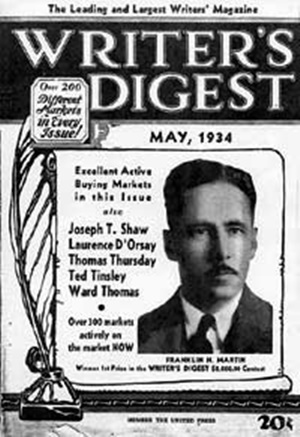
In an era dominated by rapid consumption and a constant demand for engaging content, the foundational principles of popular storytelling remain surprisingly constant. A recently highlighted archival piece from Black Gate magazine, an encore from their "A (Black) Gat in the Hand" column, brings to light a profoundly insightful essay by Joseph T. Shaw, the legendary editor of Black Mask magazine. Originally published in Writer’s Digest in May 1934, Shaw’s article, "Do You Want to Become a Writer or Do You Want to Make Money?", offers a pragmatic blueprint for aspiring authors in the burgeoning pulp fiction market. Decades later, his advice continues to resonate, providing a fascinating glimpse into the commercial realities of writing and the enduring craft of captivating a mass audience.
The Genesis of Hardboiled: Black Mask and Its Formative Years
The hardboiled detective genre, characterized by its gritty realism, cynical protagonists, and terse prose, found its cradle within the pages of Black Mask magazine. This seminal publication, launched in 1920, quickly became the proving ground for a new brand of crime fiction that diverged sharply from the more genteel traditions of Sherlock Holmes.
Early Foundations: Pioneers and Prototypes
The magazine’s initial editorial helm was held by George W. Sutton. It was under his tenure in 1923 that the genre’s earliest progenitors emerged. Carroll John Daly’s "Three Gun Terry" and "Kings of the Open Palm" introduced readers to a tougher, more morally ambiguous detective figure, often operating outside the bounds of conventional law. Simultaneously, Dashiell Hammett, who would later become a titan of the genre, debuted with "Arson Plus," showcasing his distinctive minimalist style and keen observation of human nature. These early stories, as the Black Gate article’s author, Bob Byrne, notes, laid the groundwork for a literary revolution.
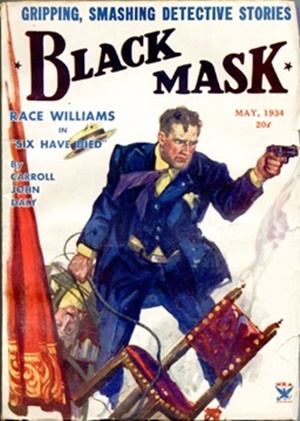
In 1924, Sutton’s resignation paved the way for circulation editor Phil Cody to briefly take the reins. Cody pushed for more stories featuring popular characters like Race Williams (Daly) and the Continental Op (Hammett). He also encouraged the prolific Erle Stanley Gardner to develop his character Ed Jenkins, "The Phantom Crook," and brought in other significant voices like Frederick Nebel and Raoul Whitfield. However, Cody’s responsibilities across multiple publications meant his time at Black Mask was stretched thin, leading to another editorial transition.
The Arrival of "Cap" Shaw: Shaping a Genre
The departure of Phil Cody marked a pivotal moment for Black Mask. His successor was Joseph T. Shaw, a former bayonet instructor with no prior editorial experience and a less-than-stellar track record as a writer himself. This unconventional appointment, as Byrne wryly observes, might seem baffling ("I mean, sure, why not?"). Yet, it was Shaw who would become the revered figure synonymous with the magazine’s golden age and the hardboiled movement’s definitive voice.
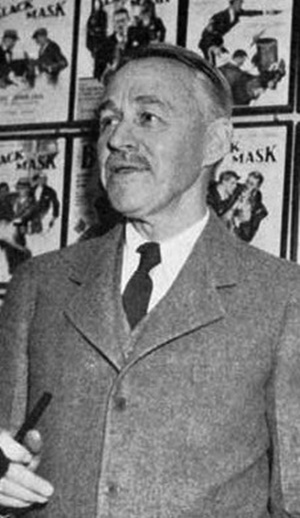
Though he did not initiate the hardboiled school, Shaw’s meticulous editorship refined and elevated it. He possessed an uncanny ability to identify talent and a clear vision for the type of stories Black Mask should publish. Under his guidance, the magazine transformed into a "razor sharp hardboiled Pulp that dominated the field," setting the standard for gritty realism, fast-paced plots, and authentic characterization. His influence was so profound that it’s widely accepted he shaped the very essence of hardboiled fiction, nurturing talents who would define American crime literature.
Joseph T. Shaw: The Architect of Hardboiled Excellence
Shaw’s reputation as the "prince among editors" was not merely for discovering talent but for his dedicated mentorship. Robert Thomas Hardy and Arthur Sullivant Hoffman, two influential figures in the early 20th-century writing scene, were known for their patience in developing new writers. By 1934, they had transitioned into agents. Their "successor in the hearts of hundreds of writers" was undeniably Joseph T. Shaw, operating from his New York office. An anecdote shared by a contemporary described Shaw’s fierce loyalty: "If he likes you, he’ll do so much for you, it’s pathetic." This dedication highlights his commitment to fostering literary careers within the demanding world of the pulps.
It is against this backdrop of Shaw’s profound influence and dedication to his craft that his Writer’s Digest essay takes on added significance. It’s not just a set of guidelines; it’s a window into the mind of the man who, perhaps more than any other, understood the mechanics of commercial storytelling and the unique appeal of hardboiled fiction.
"Do You Want to Become a Writer or Do You Want to Make Money?": Shaw’s Incisive Counsel
Shaw’s 1934 essay begins with a stark, almost provocative question, immediately forcing the aspiring writer to confront their motivations.
Literature vs. Livelihood: A Crucial Distinction
"You think the two are synonymous? Not with the frequency you might suppose," Shaw challenges. He posits two divergent paths: one for those seeking to "make literature and a name for yourself as a really fine writer," a path confined to "a few quality magazines that pay low rates and to book publishers." This route, he warns, demands "years of struggle and apprenticeship" but promises eventual success and a "very full and happy life" for those with the talent of an O’Neill, Lewis, or Hergesheimer.
The alternative, and the focus of his essay, is for those who "want to write not for the sake of making literature, but of making a living, making money." For these individuals, Shaw’s advice is clear: "forget literary ideals and concentrate all your efforts on creating what the great mass of the reading public want and are willing to pay for." This pragmatic approach underscored the economic realities of the Great Depression era, where writing was often a means of survival, and the pulps offered a tangible, albeit modest, income.
Understanding the Pulp Market: "Rough Paper" vs. "Slicks"
Shaw then delves into the specifics of the commercial writing landscape, categorizing magazines into "white paper magazines" (the higher-paying, glossy "slicks") and "rough paper magazines" (the "wood-pulps"). His essay explicitly concerns the latter.
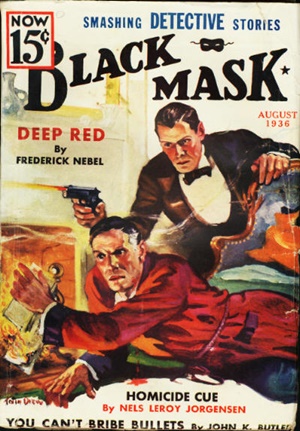
He describes the pulps as "very numerous, roughly they number more than a hundred," boasting a readership "well into the millions." This immense market, he argues, is "too big… to be taken lightly from any angle, too filled with possibilities to be looked upon disparagingly." He emphasizes that pulps, unlike "smooth paper magazines" with their diverse revenue streams (format, illustrations, advertising), are "dependent for their circulation upon the popularity of their fiction alone." This economic imperative meant that pulp fiction "must be popular, it must be what the majority of certain classes of the people want or they go out of business."
Shaw disabuses writers of any "altruistic motives" on the part of pulp editors and publishers. While some might desire a "higher plane" for the genre, commercial viability trumps artistic ambition. The Black Gate author highlights this point with a personal observation: "I’ve long felt that Shaw held his nose and put Carroll John Daly’s stories featuring Race Williams on the cover, knowing that sales were significantly greater when he did so." This anecdote perfectly illustrates Shaw’s candid assessment of market forces dictating content.
Editorial Interpretation and Reader Demand: The Writer as Supplier
A cornerstone of Shaw’s philosophy is that "popular taste… molds the character of rough paper fiction more than does editorial and writer inspiration." Editors, he states, act "for the most part in an interpretive capacity; the writers deliver merchandise specified." The message is unambiguous: success in the pulp field necessitates writing "to popular taste."
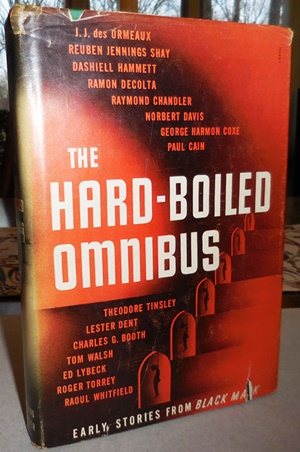
He recounts the story of a "very successful writer" who patiently studied and analyzed "public mental capacity and taste of various markets," framing his stories accordingly. This writer not only "made money" but also demonstrated remarkable versatility, crafting distinct narratives for different audiences. The ability to "gauge this taste accurately is the key to the success of the best paid writers in the field today."
Crafting for the Masses: Shaw’s Practical Principles for Pulp Fiction
Beyond the philosophical distinction between art and commerce, Shaw provides concrete advice for honing the craft of pulp writing.
Specialization and Genre: Finding Your Niche
The early newsprint magazines offered a broad range of subjects, but Shaw notes a swift move towards "specialization." Magazines began dedicating their content to specific genres: "adventure, romance, sex, war, aviation, westerns, crime, detective, mystery, the pseudo-scientific, fantasy, and the like." This diversification presented writers with "a wide range… from which to choose," encouraging them to write in subjects where they felt "most familiar and to which he can give his most natural expression." For a comprehensive understanding of this evolution, the Black Gate author strongly recommends Ed Hulse’s The Blood ‘N’ Thunder Guide To Pulp Fiction.

Simplicity, Clarity, and Emotional Impact: The Core Tenets
When it came to writing skill, Shaw championed fundamental principles: "simplicity and clarity must rank high." He argued that the writer’s primary objective is "to accomplish an emotional effect upon your reader." This is only possible if the reader "can follow your story clearly and understands what it is all about." Confusion, overly complicated expression, intricate plot structures, or excessive subtlety would lead to reader disengagement.
Pulp readers, Shaw observed, "want to take their stories in their stride, to read them while they run or ride." They had no desire "to stop in the middle of a story and go back to untangle confused threads or re-identify characters." This practical insight led to specific advice, such as avoiding "similarity of characters, particularly with respect to names of similar appearance" – a common pitfall still relevant today, as the Black Gate author echoes: "I hate it when I can’t keep characters straight because their names are a bit too similar… If I have to stop and try and recall who is what, the story is losing me."
Action, Pacing, and Plausibility: Keeping the Reader Engaged
"Swift movement and speed of action are other essentials in this age of fast tempo," Shaw declared. He cautioned against "many rapid, meaningless notions" but stressed that "long descriptive openings are for the most part taboo." His instruction was direct: "Start your story in action if you can do so quickly. Identify your characters so that the action will be understandable to the reader; and keep it moving all the way to the end."
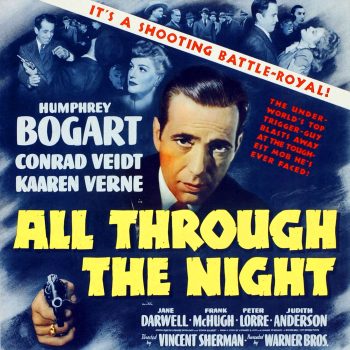
Crucially, Shaw clarified that "it is not necessary to stage a gun battle from start to finish, with a murder or a killing in every other paragraph." Instead, a story could remain "alive and moving, when sympathy is once aroused, by tension and suspense, through dialogue or other form of plot development, when action is absent." However, he conceded that "Action in one form or another is, however, pretty generally in demand."
Shaw also tackled the often-misunderstood concepts of "logic and plausibility." While editors might mention them, he noted that "in by far the greatest volume of crime and detective fiction they are completely disregarded, while rapidity of motion, exaggerated menace and exaggerated action are substituted in their stead." Yet, he advocated for a nuanced approach: if the presentation makes happenings "seem logical," the writer has little to worry about. Regarding plausibility, the writer merely needs "to have his characters move and talk, act and react as real human beings would do in like situation, however imaginary, and his task in that respect is done." As the Black Gate author succinctly interprets, "Make your characters and their actions seem plausible, even if the setting isn’t. Huh…"
Avoiding Imitation, Fostering Originality: The Hammett Standard
Perhaps one of Shaw’s most significant pieces of advice concerned originality. While Black Mask undoubtedly benefited from Dashiell Hammett’s genius, Shaw was adamant about not wanting imitations. "We are of course seeking another Hammett, but we distinctly do not want his imitation," he stated. He admired Hammett’s "inflexible purpose and indomitable will that disregarded ill health, a measure of poverty, even the absence of an early scholarly environment and yet achieved their aim." His message to aspiring writers was clear and challenging: "Look, kid, you’re not Hammett. Don’t try to be."
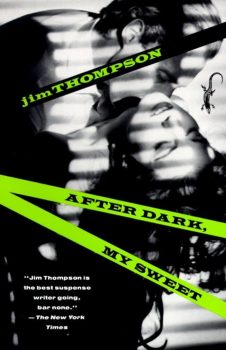
He listed other successful Black Mask authors—Frederick Nebel, Raoul Whitfield, Erle Stanley Gardner, Carroll John Daly, George Harmon Coxe, Eugene Cunningham, W.T. Ballard, Theodore Tinsley, Roger Torrey—and explicitly stated, "We do not need material along their respectively different lines. We do want stories unlike those of any one of them in type, character and treatment." This encouraged genuine innovation within the hardboiled framework, a testament to Shaw’s desire for evolving, not static, genre fiction. Byrne notes with pride that "A (Black) Gat in the Hand managed to write at least a bit about every one of those authors above, except for Eugene Cunningham, over the course of this column!"
Finally, Shaw emphasized the importance of a "clear mental picture" for the writer. Confused ideas would inevitably lead to confused writing. "Thus it would seem that word choice and arrangement, diction if you will, come secondary to clear thinking." This insight, the Black Gate author suggests, feels like "a swipe through time at pantsers…" (writers who write by the seat of their pants without outlining). While acknowledging that reworking might be costly for "moneymakers" focused on speed, he noted that many successful pulp writers still practiced it, valuing "greater care in workmanship."
Enduring Legacy and Contemporary Resonance
Joseph T. Shaw’s essay, penned ninety-two years ago for a market that has long since transformed, remains remarkably pertinent. The distinction between "literature" and "making money" continues to fuel debates in creative industries, from independent filmmaking to online content creation. His emphasis on understanding the audience, delivering clear and engaging narratives, and prioritizing emotional impact over convoluted artistry is a blueprint for commercial success that transcends genre and medium.
The "rough paper magazines" of the 1930s may have faded, but their spirit lives on in countless forms of popular entertainment: mass-market paperbacks, streaming series, video games, and webcomics. Shaw’s insistence on swift action, identifiable characters, and a clear story arc forms the bedrock of modern genre fiction. His advice to avoid overly complex plots and similar character names is still golden for anyone crafting narratives in a fast-paced, attention-deficit world.
As Bob Byrne concludes, Shaw’s piece is an "interesting look into the pulp market at the peak of its popularity," offering "solid advice." Joseph T. Shaw was not just an editor; he was a visionary who understood the symbiotic relationship between writer, story, and audience. His legacy, preserved in the gritty pages of Black Mask and echoed in this rediscovered essay, continues to guide those who seek not only to write but to connect, entertain, and ultimately, to make their mark on the vast landscape of popular storytelling.