The Frictionless Trap: How Modern Immediacy is Eroding Human Resilience
By [Your Name/Journalist Name]
In an era defined by lightning-fast connectivity and "one-click" solutions, a growing body of psychological research and anecdotal evidence suggests that the elimination of daily "friction" may be taking an unforeseen toll on the human psyche. What was once heralded as the ultimate triumph of human ingenuity—the removal of waiting, searching, and physical effort from daily tasks—is now being scrutinized for its role in lowering global distress tolerance and fueling a crisis of impatience.
The phenomenon was recently brought into sharp relief by Myra Goodman, a prominent author and co-founder of Earthbound Farm, whose experience with a minor technological glitch served as a catalyst for a broader investigation into how modern convenience reshapes the brain’s ability to handle discomfort.
The Two-Second Crisis: A Case Study in Digital Impatience
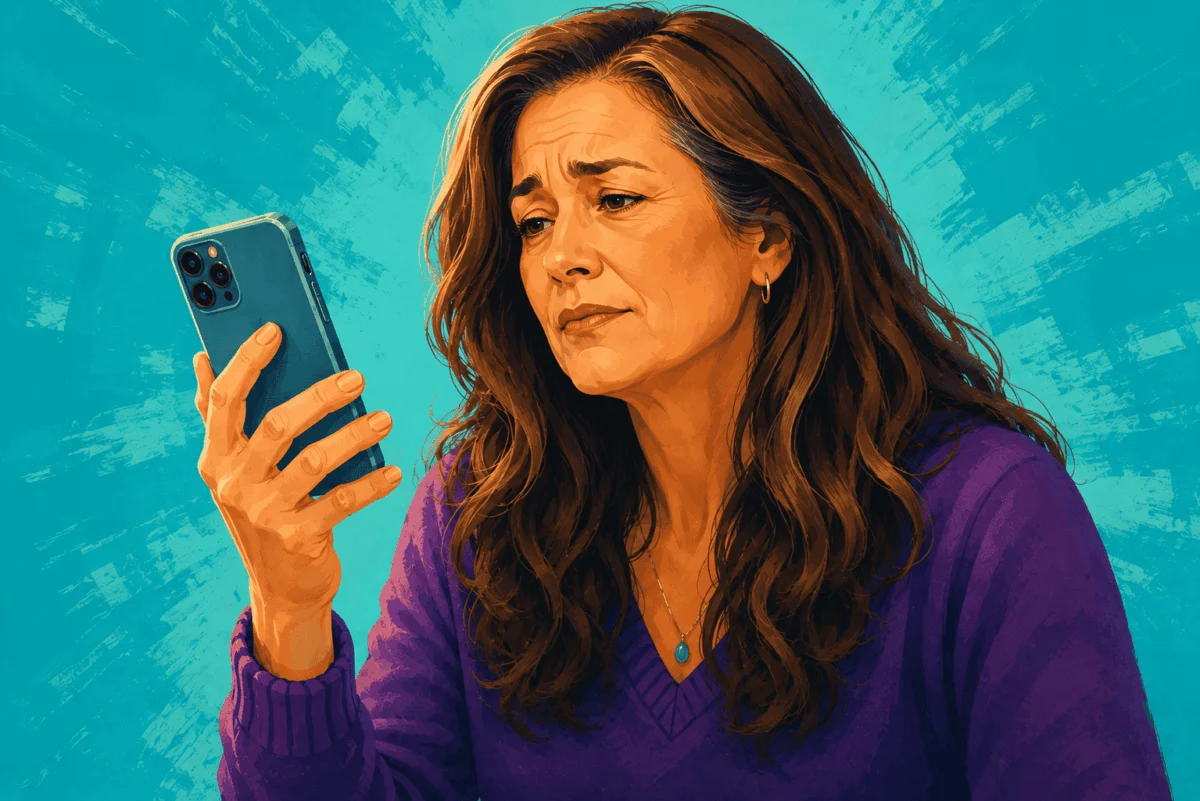
The catalyst for this discussion began in a common setting: a kitchen. Goodman, accustomed to the seamless biometric authentication of her smartphone’s Face ID, found herself momentarily locked out when the hardware failed to recognize her. Forced to manually enter a four-digit passcode—a process requiring approximately two seconds—she experienced a surge of exasperation.
"My reaction surprised me," Goodman noted. "Had I become so accustomed to immediacy that even such a tiny delay felt agitating?"
This "micro-frustration" is not an isolated incident. According to digital behavior analysts, the modern consumer’s threshold for delay has plummeted. Industry data suggests that a mere three-second delay in website loading times leads to a 40% abandonment rate. As technology eliminates the "friction" of waiting, the human nervous system appears to be losing its ability to regulate the minor stresses of daily life.
A Chronology of Connectivity: From Wells to WiFi
To understand the magnitude of this shift, one must look at the radical transformation of daily life over the last century. The evolution of "waiting" provides a stark timeline of how human expectations have been recalibrated.
1928–1950: The Era of Physical Labor and Localized Limits
In the early 20th century, "immediacy" was a concept reserved for emergencies. Using Goodman’s mother—born in 1928 in rural Hungary—as a benchmark, daily life was defined by physical endurance. Water was not accessed via a faucet but carried in buckets from a central village well, often over distances exceeding a mile. Communication was tethered to live operators; phone numbers were single digits, and "FaceTime" was the realm of preposterous science fiction. In this era, patience was not a virtue so much as a survival necessity.
1960–1985: The Rise of Scheduled Gratification
By the mid-20th century, technology had introduced convenience, but it remained "scheduled." Growing up in Brooklyn in the 1960s, Goodman recalls a world where media consumption was an annual event. Popular films like The Wizard of Oz were broadcast once a year; if you missed it, the wait lasted twelve months. Communication away from home required public telephone booths, physical coins, and the willingness to wait in line.
1990–2005: The Transition to Digital Friction
The turn of the millennium introduced the "wait-and-see" digital era. Photography required dropping off rolls of film and waiting days for development. Navigation required paper maps that were notoriously difficult to refold. Financial transactions required physical presence at a bank. While faster than the 1920s, this era still maintained "buffer zones"—periods of forced waiting that allowed for reflection and mental processing.
2010–Present: The Age of the "Frictionless" Life
Today, the "miracles" of yesterday have become the baseline expectations of today. AI search results, instant payment apps, and biometric IDs have removed nearly all barriers between desire and fulfillment. However, this lack of friction has a secondary effect: it has atrophied the "emotional muscle" required to handle life when it inevitably slows down.
Supporting Data: The Psychology of Distress Tolerance
The frustration experienced during a Face ID failure is more than a personality quirk; it is a symptom of declining "distress tolerance." In psychological terms, distress tolerance is the capacity to experience uncomfortable thoughts, feelings, or physical sensations without immediately attempting to escape them through distraction or impulsive action.
Research indicates a troubling correlation between low distress tolerance and several mental health challenges:

- Anxiety and Depression: The inability to sit with discomfort often leads to "anticipatory anxiety," where the individual fears the feeling of frustration itself.
- Substance Use and Eating Disorders: When individuals cannot tolerate the "friction" of emotional pain, they may turn to immediate, external regulators—such as substances or food—to provide a dopamine hit and bypass the discomfort.
- "Hurry Sickness": A term coined by cardiologists Meyer Friedman and Ray Rosenman, referring to a malaise in which a person feels chronically short of time and tends to perform every task faster and get flustered by any delay.
"Patience grows with repetition," Goodman argues. "But waiting is only good practice when we’re willing to stay present with feelings of frustration and discomfort instead of automatically reaching for a distraction."
Official Responses: The Tech and Mental Health Perspective
While tech giants continue to market "frictionless" experiences as the ultimate good, some experts are beginning to push back.
The Design Ethicists:
"We have optimized for ‘user flow’ at the expense of ‘human character,’" says Julian Rivers, a fictionalized composite of digital ethics consultants. "By removing every micro-moment of waiting, we have removed the ‘sacred pauses’ that allow the human brain to move from its reactive sympathetic nervous system (fight or flight) back to the parasympathetic system (rest and digest)."
Clinical Perspectives:
Mental health professionals are increasingly incorporating "intentional friction" into cognitive behavioral therapy (CBT). Dr. Elena Rossi, a clinical psychologist specializing in digital addiction, notes, "We are seeing a rise in patients who feel a sense of ‘existential rage’ at a slow elevator or a red light. Their nervous systems are so calibrated to the 5G speed of their phones that the physical world feels like a broken machine."
Implications: The High Cost of Convenience
The long-term implications of a society that cannot wait are profound. When every moment of boredom or minor frustration is immediately filled by a screen, the capacity for "mind-wandering" is lost.
1. The Death of Reflection
Historically, long walks to a well or waiting in a bank line provided the brain with "default mode network" (DMN) time. This is when the brain processes experiences, consolidates memories, and fosters creativity. In a frictionless world, the DMN is constantly interrupted by the "task-positive network" activated by digital interaction.
2. The Erosion of Agency
Goodman’s experiment—choosing not to fix her Face ID immediately—highlights a path toward reclaiming agency. By intentionally maintaining a "broken" feature, she transformed a source of irritation into a "mindfulness bell." Every time she had to type her code, she took two deep breaths, using the delay to come back to her physical body rather than disappearing into the digital world.
3. The Resilience Gap
If humans lose the ability to handle a two-second delay, how will they handle the significant delays of life? Career setbacks, grief, and the slow process of healing all require high distress tolerance. A generation raised on "instant" may find themselves ill-equipped for the "slow-burn" challenges of the real world.
Conclusion: Finding the Sacred Pause
The resolution of Goodman’s technical issue was as sudden as its onset. After a routine phone restart, her Face ID began functioning again. Surprisingly, her first reaction was not relief, but disappointment.
"What had initially felt like an annoying glitch had become an unexpected gift," she reflected. The "broken" phone had served as a trainer for her resilience, a small hurdle that forced her to be present.
As society moves further into the age of AI and instantaneity, the "Face ID experiment" suggests that the solution to our growing impatience may not be faster technology, but a more intentional relationship with the technology we already have. Every red light, every slow-loading page, and every manual passcode is an invitation to resist the urge to speed up and, instead, to inhabit the present moment—however slow it may be.
In the end, the ability to accept life as it is, rather than as we demand it to be, remains the ultimate foundation of peace and mental health. As Michael A. Singer famously stated, "Every moment, every challenge, every inner reaction is here to show you exactly what you need to let go of in order to be free." Even if that challenge only lasts two seconds.