
The Unseen Architecture of Consciousness: A Philosophical Encounter in a Coffee Shop
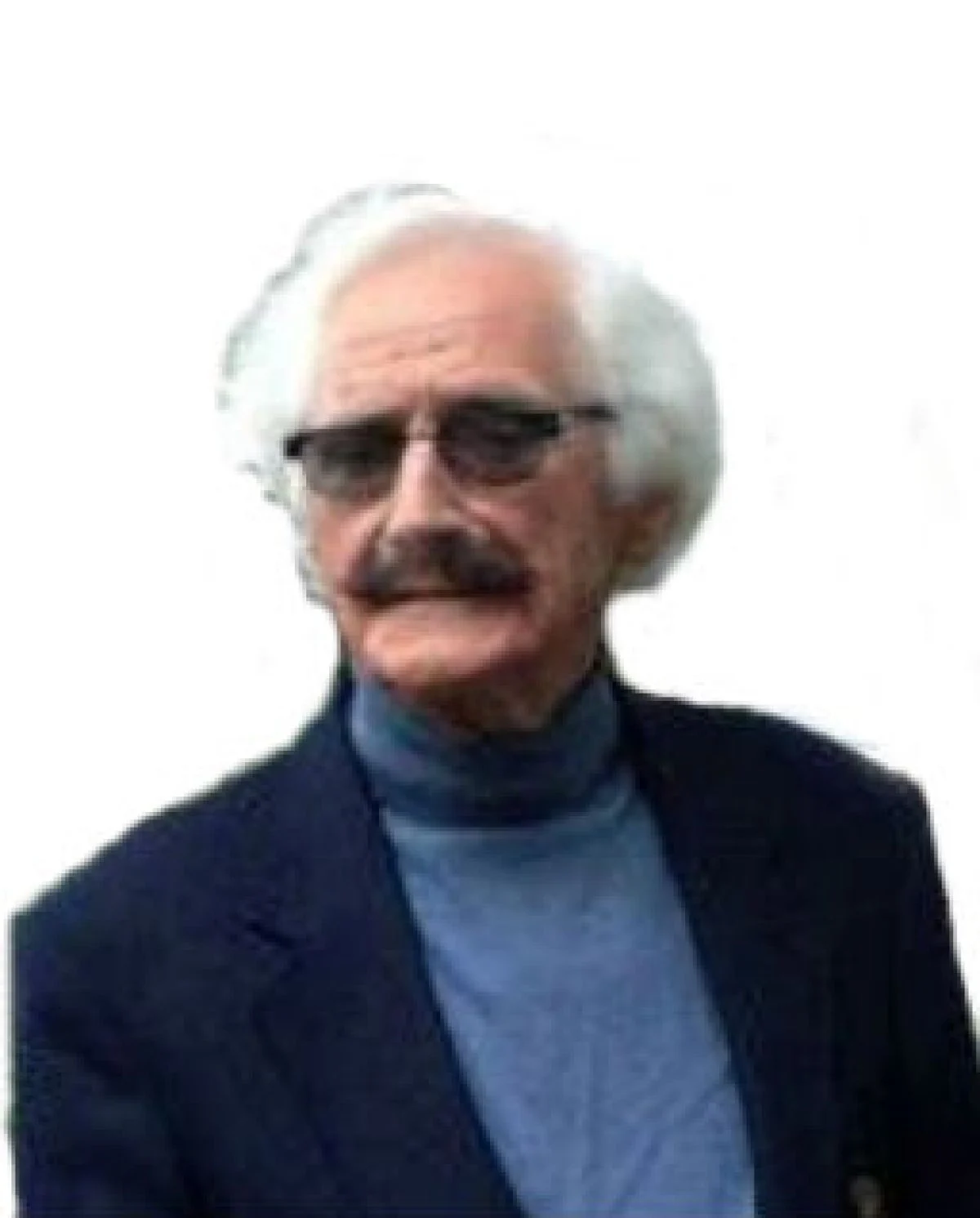
A retired professor’s chance conversation with university students delves into the profound, yet often overlooked, realm of metaphysical awareness and its connection to the human spirit.
Introduction: The Spark of Curiosity
It began, as many profound discussions do, in the most ordinary of settings: a local coffee shop, a quiet moment of respite while a car underwent its routine service. For a retired professor of philosophy and psychology, these moments often become unexpected classrooms. Such was the case when a chance encounter with two university students, their minds brimming with youthful inquiry, ignited a conversation that meandered from the mundane to the deeply metaphysical. The students, upon learning of the professor’s academic background, posed the perennial questions that have echoed through human history: questions about purpose, the nature of consciousness, and the driving forces behind human action. This article aims to expand upon that serendipitous exchange, exploring the professor’s insights into the metaphysical, the human spirit, and the often-unexamined depths of our inner lives.
The Paradox of Purpose: A Historical Perspective
The professor’s initial response to the students’ query about purpose was a sobering acknowledgment of history’s often brutal narrative. "It was not easy to talk about purpose," he admitted, reflecting on the persistent human tendency towards conflict and violence. The annals of history are replete with instances where nations and individuals have engaged in destructive wars, driven by ideologies, greed, or fear. This historical reality, the professor noted, paints a stark picture, leaving "a hell of a lot to be desired when it comes to looking for benevolent and spiritually tolerant attitudes between individuals and nations." This sentiment underscores a fundamental challenge in defining a universal human purpose when faced with the persistent presence of animosity and intolerance in our collective past and present.
However, the professor quickly pivoted from this somber observation to a more hopeful and inspiring aspect of human behavior. He pointed to the burgeoning landscape of charitable organizations worldwide, a testament to humanity’s capacity for compassion and altruism. He highlighted the extraordinary work of Doctors Without Borders as a prime example. "Nurses and doctors are working and dying in some of the most dangerous places in the world," he stated, emphasizing the immense personal risk undertaken by these individuals. These are not mere professionals performing their duties; they are "men and women risking their lives, driven by compassion and the altruistic need to act." Their actions, he elaborated, transcend mere professional obligation, reaching into the core of what it means to be human.
The professor’s description of their motivations painted a vivid picture of dedication: "These doctors and nurses go far afield, putting their own lives and careers on the line, traveling to distant and dangerous locations to serve the greatest of all moral persuasions, that internal force known as the human spirit." This invocation of the "human spirit" serves as a crucial pivot point, introducing a concept that would become central to the ensuing discussion. It suggests an intrinsic, perhaps even innate, drive within humanity that compels individuals to act for the betterment of others, often at great personal cost. This innate drive, he implied, is a powerful counterpoint to the historical narrative of conflict and division, suggesting a dual nature to human motivation.
Unveiling the Metaphysical: Beyond the Senses
The conversation then turned to a word that, for many, remains shrouded in mystery: "metaphysical." The professor observed that only one of the two students present had a grasp of its true significance. He defined it as denoting "a level of awareness in human consciousness that goes beyond the world of appearances; beyond the workings of the five senses." This is a critical distinction, separating the tangible and observable from the intangible and abstract. The world we perceive through our senses – sight, sound, touch, taste, and smell – constitutes the empirical realm. Metaphysics, in contrast, delves into the realm of what lies beyond or behind these sensory perceptions.
The professor elaborated on this concept, describing metaphysical awareness as "a kind of silent dialogue constantly asking questions raised by one’s always questing imagination." This internal dialogue is not a random process; it is driven by a fundamental human desire to understand the "how and why of the psychological complexity of one’s self." This self-exploration, he posited, is propelled by "a psychological force that has long been described as spirit, the human spirit." Here, the professor meticulously connects the abstract concept of metaphysics to the very essence of human experience – our internal lives, our capacity for introspection, and the underlying force that animates our search for meaning.
The professor further illuminated the origins of the term "metaphysical," crediting the ancient Greek scientist and philosopher Aristotle. Aristotle, he explained, coined the term to describe the abstract nature of this mental activity. "Meta" itself, meaning "beyond" or "after," serves as a linguistic key, signaling a departure from the purely physical or empirical. Thus, the metaphysical encompasses a realm of existence and understanding that transcends the immediate and the material. It introduces the concept of "mind" as a distinct level of awareness, encompassing "thoughts, ideas, feelings, hunches, and ruminations." These are not merely byproducts of biological processes; they represent an "intuitive range of consciousness," often described as inspirational and serving the "forces of spirit, which are working at the instigation of a soul, no less." This bold assertion links the metaphysical to the spiritual and the soul, elevating the discussion to a profound level of philosophical inquiry.
The Duality of Consciousness: Mind as Partnership
The professor then articulated a pivotal concept in understanding human consciousness: its inherent duality. He explained that human awareness has historically been viewed as comprising two distinct yet interconnected aspects. On one hand, there is the "outwardly directed rational and sensory brain." This is the part of our cognition that processes information from the external world, engages in logical reasoning, and relies on sensory input. It is the engine of our interaction with the tangible environment.
On the other hand, there exists the "inwardly directed intuitive and spiritual brain." This aspect of consciousness is responsible for our gut feelings, our creative insights, our moral compass, and our capacity for abstract thought and contemplation. It is the source of our hunches, our dreams, and our sense of interconnectedness. The professor emphasized that these two facets are not in opposition but rather form a "mental partnership we call mind." This partnership suggests a harmonious integration of our rational and intuitive faculties, a synergy that allows for a more complete and nuanced understanding of ourselves and the world around us.
To underscore the often-overlooked nature of this inner world, the professor posed a direct question to the students: "if they ever pondered the unique nature of their own personalities." The response, he lamented, was a pair of "blank looks." This observation is a poignant indictment of modern education and societal focus, which often prioritize empirical knowledge and practical skills over the cultivation of introspection and self-awareness. The professor’s experience suggests that many, particularly younger generations, may be disconnected from the profound richness and complexity of their own inner lives, the very realm that metaphysics seeks to explore.
The Neuroscientific Perspective: Mind as a Metaphysical Entity
As the coffee cups emptied and the time for departure neared, the professor sought to leave the students with a thought-provoking conclusion. He introduced the words of Wilder Penfield, a preeminent Canadian neuroscientist and brain surgeon. Penfield, renowned for his pioneering work in epilepsy and brain mapping, offered a perspective that resonated deeply with the professor’s philosophical discourse. Penfield, grappling with the fundamental nature of consciousness, famously described "mind as a ‘non-temporal, non-spatial entity.’"
This description is profoundly significant because it aligns directly with the concept of the metaphysical. A "non-temporal" entity exists outside the constraints of time, and a "non-spatial" entity exists outside the confines of physical space. These are characteristics that cannot be attributed to the physical brain, which is undeniably bound by both time and space. Penfield’s struggle to define mind in purely physical terms led him to conclude that it must, by its very nature, be something beyond the physical – hence, metaphysical.
Penfield’s neuroscientific perspective provides a compelling bridge between the philosophical exploration of consciousness and the scientific understanding of the brain. It suggests that while the brain is the biological substrate for consciousness, the mind itself, with its subjective experiences, thoughts, and feelings, may transcend purely material explanations. This "non-temporal, non-spatial" nature, as described by Penfield, is the very essence of what philosophers have long referred to as the metaphysical.
Conclusion: The Enduring Quest for Understanding
The chance encounter in the coffee shop, initiated by the simple act of getting a car serviced, evolved into a profound exploration of human purpose, the nature of consciousness, and the elusive yet fundamental concept of the metaphysical. The professor’s insights, rooted in decades of philosophical and psychological study, highlight the ongoing human quest to understand our place in the universe and the intricate workings of our inner lives.
The historical tapestry of human conflict, juxtaposed with the altruistic endeavors of individuals and organizations like Doctors Without Borders, reveals a complex duality in human motivation. The professor’s definition of the metaphysical as a realm of awareness beyond sensory perception, fueled by imagination and the human spirit, offers a framework for understanding this duality. The concept of mind as a partnership between our rational, sensory selves and our intuitive, spiritual selves further enriches this understanding.
Ultimately, the professor’s conversation with the students, though brief, served as a potent reminder that the most profound questions about our existence often arise in the most unexpected moments. The enduring legacy of thinkers like Aristotle and scientists like Wilder Penfield underscores the timeless nature of these inquiries. The challenge, as suggested by the students’ blank looks, lies in cultivating a societal and individual awareness that acknowledges and actively explores the rich, complex, and often metaphysical dimensions of our humanity. The human spirit, it seems, continues to beckon us towards a deeper understanding of ourselves, urging us to look beyond the apparent and delve into the profound depths of consciousness.



Leave a Comment