
Revolutionizing Game Development: Gaussian Splats Emerge as a Viable Tool for Immersive Experiences
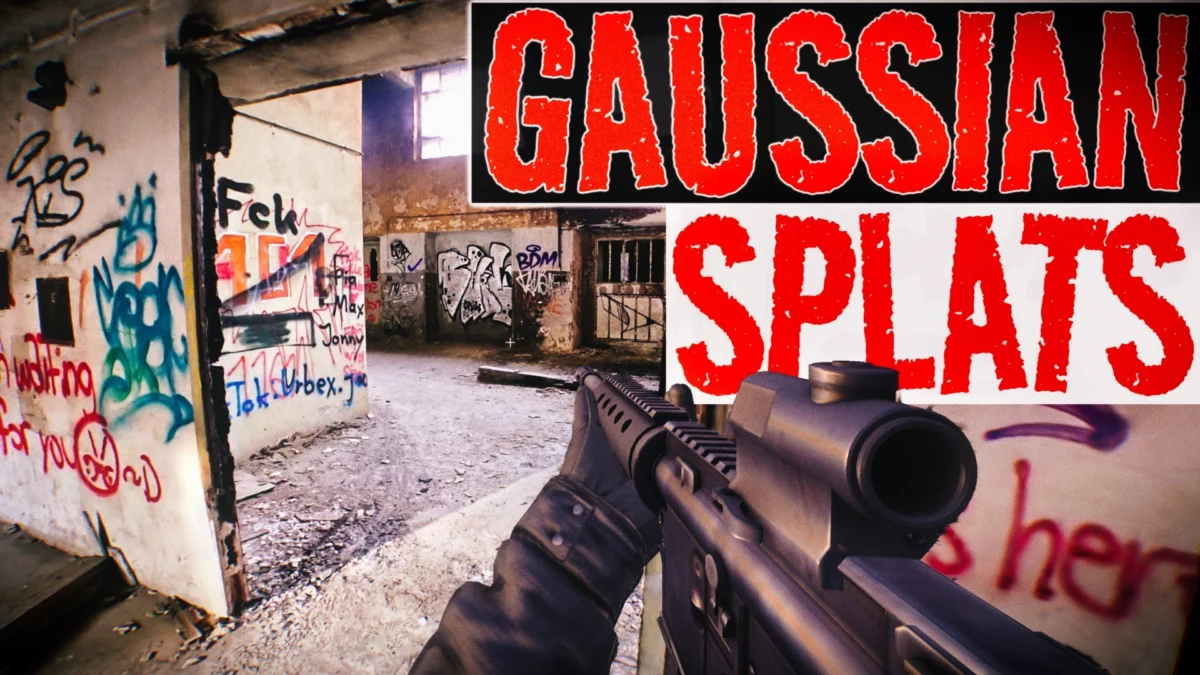
The cutting edge of computer graphics is witnessing a seismic shift with the burgeoning popularity of Gaussian Splats. While traditionally perceived as a niche technology with inherent limitations for game development, a recent breakthrough demonstrates their potential to not only integrate but also enhance the creation of immersive video games, even on mobile platforms. This development, spearheaded by developer Iakov Sumygin and leveraging the PlayCanvas game engine, is poised to redefine how we approach real-world environment capture and its application in interactive entertainment.
Gaussian Splats, a novel representation technique for 3D scenes, have gained significant traction due to their ability to render highly realistic environments captured directly from photographs or videos. This process, often achievable with just a smartphone, offers an unprecedented level of photorealism compared to traditional 3D modeling workflows. However, their adoption in game development has been hampered by several key challenges. These include the absence of inherent collision data, substantial file sizes that can strain performance, and a general incompatibility with established game development pipelines. Despite these hurdles, the undeniable advantages of Gaussian Splats—namely, their ease of capturing and their photorealistic output—have fueled persistent exploration into overcoming these limitations.
The Dawn of a New Era: A Playable Gaussian Splat FPS
The paradigm-shifting potential of Gaussian Splats in gaming has been dramatically illustrated by the creation of a functional first-person shooter (FPS) game that runs directly on mobile devices. Developed by Iakov Sumygin, this innovative project serves as a powerful testament to the viability of Gaussian Splats not just as a visualization tool, but as a foundational element for interactive experiences. This groundbreaking demonstration suggests that Gaussian Splats might not only be usable in game development but could, in fact, offer a compelling and advantageous approach.
Unpacking the Process: From Splat Data to Playable Game
A detailed technical article, "Turning a Gaussian Splat Into a Videogame," meticulously outlines the entire development journey. This comprehensive guide delves into the intricate process of transforming raw Gaussian Splat data into a playable game. It provides invaluable insights into the methods employed for processing the splat data, effectively addressing performance bottlenecks, and implementing solutions for collision detection challenges, which have historically been a significant impediment to their use in interactive environments.
The significance of this project is amplified by its accessibility. The entire game was meticulously crafted using the PlayCanvas game engine, a powerful and browser-based platform that fosters rapid prototyping and development. Crucially, Sumygin has made the entire project source code publicly available. This not only allows aspiring developers to dissect the innovative techniques employed but also enables them to experiment firsthand with the game and its underlying technology. The ability to directly interact with and modify the project democratizes access to this cutting-edge development approach, fostering a collaborative environment for innovation.
Empowering Creators: Tools for Gaussian Splat Integration
Beyond the direct demonstration of a playable game, the initiative extends to providing developers with the necessary tools to integrate Gaussian Splats into their own workflows. A supplementary video tutorial explores how to manage Gaussian Splat data within Blender, a widely-used open-source 3D creation suite. This is facilitated by the Kiri Engine plugin, which offers dedicated functionalities for handling and rendering 3D Gaussian Splat (3DGS) data within the familiar Blender environment. It is important to note that, at the time of this reporting, the Kiri Engine plugin for 3DGS rendering specifically requires users to be running Blender version 5. This detail, while specific, highlights the ongoing development and refinement of these tools.
The availability of such plugins is critical for bridging the gap between specialized 3D capture technologies and established content creation pipelines. By enabling artists and developers to work with Gaussian Splats within a familiar software environment like Blender, the barrier to entry for adopting this technology in game development is significantly lowered. This fosters a more inclusive ecosystem where the benefits of Gaussian Splats can be harnessed by a broader range of creators.
Key Resources for Exploration and Implementation
To facilitate further exploration and adoption of this revolutionary approach, a curated list of essential links has been provided. These resources offer a comprehensive pathway for anyone interested in understanding, experiencing, and implementing Gaussian Splats in game development:

- Technical Article: Turning a Gaussian Splat Into a Videogame – This is the definitive guide to the technical intricacies of the project.
- Playable Game Demo: Play The Game (Browser Based) – Experience the FPS game firsthand in your web browser.
- PlayCanvas Project: PlayCanvas Project – Access and explore the full source code of the game project.
- Gaussian Splat Data Repository: SuperSplat – Downloadable Gaussian Splat Data – A valuable resource for obtaining pre-captured Gaussian Splat datasets for experimentation.
- Kiri Engine Tools: Kiri Engine Tools – Explore the broader suite of tools offered by Kiri Engine for 3D asset creation.
- Kiri Engine 3DGS for Blender: Kiri Engine 3DGS for Blender – The specific plugin enabling Gaussian Splat integration within Blender.
The Broader Implications for the Gaming Landscape
The successful demonstration of a playable FPS game built using Gaussian Splats carries profound implications for the future of game development. It signifies a potential paradigm shift away from solely relying on traditional polygon-based modeling for environmental assets. The ability to capture and integrate real-world environments with such fidelity opens up exciting new avenues for creating hyper-realistic and immersive gaming experiences.
Potential Impact on Game Design and Aesthetics:
The use of Gaussian Splats could lead to a surge in games that feature incredibly lifelike environments, ranging from photorealistic recreations of historical sites to fantastical worlds rendered with an unprecedented level of detail. This could foster a new genre of "virtual tourism" games or games that leverage the authenticity of real-world locations for enhanced player immersion.
Democratization of High-Fidelity Asset Creation:
While high-end 3D modeling and scanning equipment can be prohibitively expensive, capturing Gaussian Splats with a smartphone significantly lowers the barrier to entry for creating high-fidelity assets. This could empower independent developers and smaller studios to produce visually stunning games that were previously out of reach.
Performance Optimization and Future Development:
The challenges of file size and performance, though addressed in this demonstration, remain an active area of research and development. As optimization techniques for Gaussian Splats mature, their integration into larger, more complex game projects will become increasingly feasible. Future advancements may involve hybrid approaches, where Gaussian Splats are used for environmental detail while traditional meshes handle interactive elements and performance-critical geometry.
Mobile Gaming Revolution:
The fact that this demonstration is playable on a mobile phone is particularly significant. It suggests that Gaussian Splats could be a key technology in elevating the visual fidelity of mobile games, bringing console-quality graphics to a wider audience. This could lead to a new wave of mobile titles that offer unparalleled visual experiences.
Challenges and Future Outlook:
While the potential is immense, several challenges still need to be fully addressed for widespread adoption. These include robust collision detection for complex splat scenes, efficient streaming and loading of large splat datasets, and the development of standardized tools and workflows for game engines. However, the rapid pace of innovation in this field, as evidenced by Sumygin’s work and the ongoing development of tools like the Kiri Engine plugin, suggests that these hurdles are likely to be overcome.
In conclusion, the development of a playable FPS game using Gaussian Splats is a landmark achievement that signals a significant evolution in game development. It opens the door to a future where the lines between reality and the virtual world are further blurred, offering players unprecedented levels of immersion and visual fidelity. As research and development in this area continue to accelerate, Gaussian Splats are poised to become an indispensable tool in the arsenal of game developers, shaping the landscape of interactive entertainment for years to come.




Leave a Comment