
A New Frontier in Game Development: Arjan Brussee Unveils the "Immense Engine" with a European Focus and AI-Driven Ambitions
By [Your Name/Publication Name]
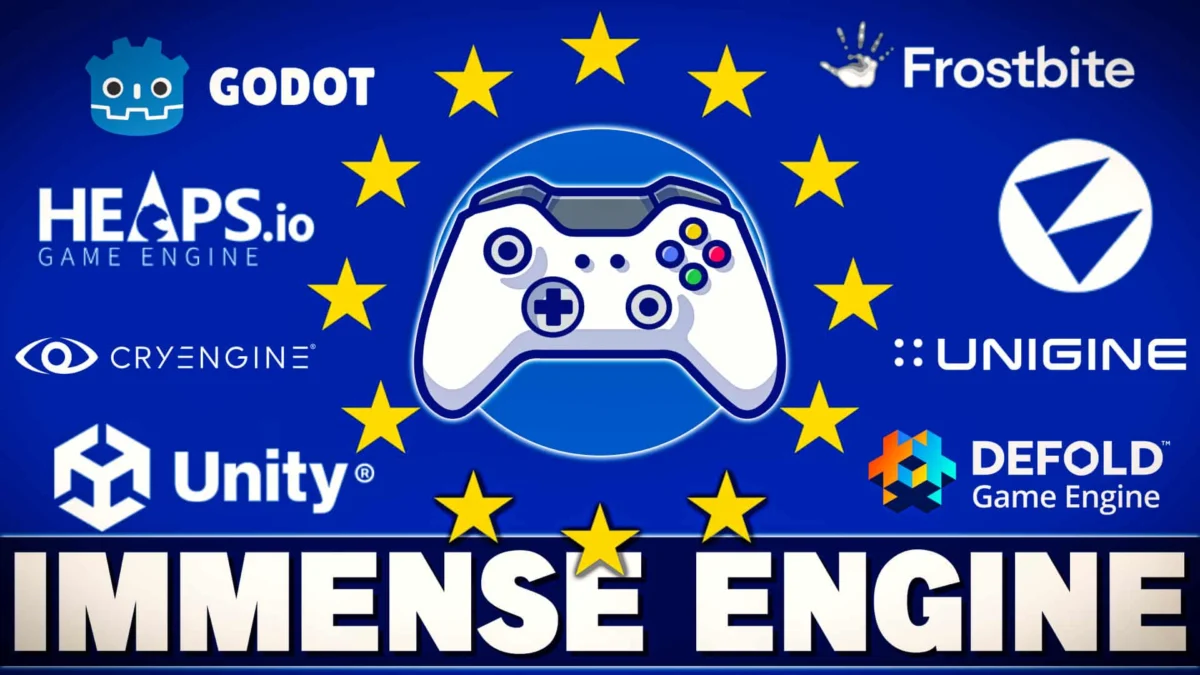
In a landscape often dominated by tech giants and globally distributed development teams, a significant new initiative is emerging from the heart of Europe, promising to reshape the way interactive experiences are crafted. Arjan Brussee, a veteran developer with a storied career including his pivotal roles in the creation of iconic titles like Jazz Jackrabbit 1 & 2 and co-founding the critically acclaimed Guerrilla Games, has announced the development of the "Immense Engine." This ambitious new game engine is not only poised to leverage cutting-edge artificial intelligence but also champions a distinctly Eurocentric approach to its development and hosting.
Brussee’s vision for the Immense Engine stems from a perceived gap in the market for a game engine that is "fully European-hosted, built by Europeans, and complies with European rules and guidelines." This statement, made in a recent interview, highlights a desire to foster a localized and compliant development ecosystem within Europe, moving away from reliance on platforms that may operate under different regulatory frameworks. The engine’s design also anticipates the growing importance of 3D world creation beyond the confines of gaming, suggesting applications in fields such as simulation, virtual reality, and digital twin technologies.
The Genesis of Immense: A European Vision and AI Integration
The announcement of the Immense Engine arrives at a time of rapid evolution in game development tools. Brussee, drawing upon decades of experience, believes that the advent of artificial intelligence presents a transformative opportunity for engine development. "The rise of AI means that we need to approach the development of this kind of crucial software differently," he stated. "As an old hand with a vision of how things should work, I see opportunities there."
This forward-thinking approach is central to the Immense Engine’s design philosophy. Brussee emphasizes the potential for AI to augment and accelerate the development process. He elaborates, "If you are smart and know how to put a good framework of AI agents to work, you can do the work of ten or fifteen people." This suggests a paradigm shift where AI is not merely a tool for asset generation or gameplay mechanics but is deeply integrated into the core development pipeline of the engine itself, potentially streamlining complex tasks, optimizing workflows, and enabling smaller teams to achieve results previously requiring significantly larger resources.
The "Eurocentric" aspect of the Immense Engine is a key differentiator. Brussee’s rationale is rooted in a desire to create a development environment that is intrinsically aligned with European values and regulations. This could encompass data privacy, intellectual property rights, and even the ethical considerations surrounding AI development. In an era of increasing scrutiny over data sovereignty and cross-border data flows, a European-hosted and developed engine offers a compelling proposition for studios operating within the continent.
A Legacy of Innovation: Brussee’s Impact on the Gaming Industry
To understand the significance of the Immense Engine, it is crucial to appreciate the track record of its creator. Arjan Brussee is not a newcomer to the game development scene. His early work on Jazz Jackrabbit, a beloved platformer series that gained significant traction in the late 1990s, established him as a talented programmer with a knack for creating engaging gameplay.
However, Brussee’s most profound impact on the industry arguably came with his co-founding of Guerrilla Games. Under his and his colleagues’ leadership, Guerrilla Games rose to prominence, first with the Killzone series, a flagship PlayStation franchise known for its gritty sci-fi aesthetic and challenging gameplay. This success culminated in the development of Horizon Zero Dawn and its sequel, Horizon Forbidden West, critically acclaimed open-world action RPGs that showcased stunning visuals, compelling narratives, and innovative gameplay mechanics. These titles have cemented Guerrilla Games’ reputation as a powerhouse of modern game development, and Brussee’s influence in shaping this trajectory is undeniable.
His departure from Guerrilla Games and his subsequent work at Epic Games, another titan of the game development industry, further underscore his deep understanding of the tools and technologies that power interactive entertainment. This wealth of experience, spanning from the early days of PC gaming to the cutting edge of console and PC development, provides a unique foundation for his current endeavor with the Immense Engine.
The "European Game Engine" Debate: A Globalized Industry Perspective
The concept of a "European Game Engine" itself sparks a fascinating discussion in the context of today’s interconnected global development ecosystem. As the article originating this news points out, in the age of the internet and cloud-based collaboration, the geographical origin of a game engine might seem less relevant than its capabilities and accessibility. The notion of a distinctly "European" engine could be perceived by some as a niche concept in a market where engines like Unreal Engine and Unity, developed by American and Unity Technologies (with significant global operations), dominate.
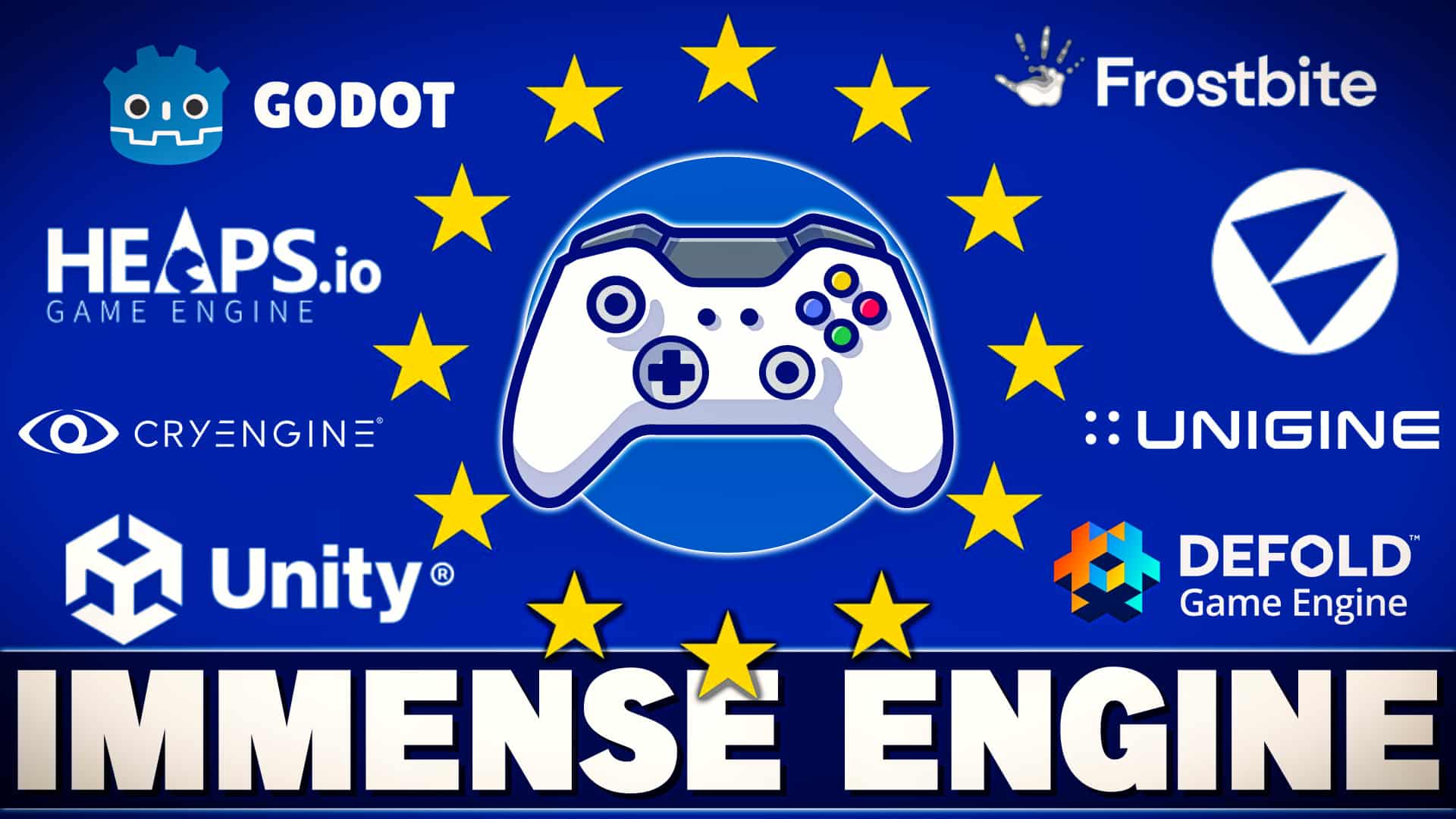
However, Brussee’s perspective suggests a deeper consideration than mere geographical branding. It points towards a desire for an engine that is built within and for the European regulatory and cultural context. This could translate into specific features, support structures, and licensing models that are more attuned to the needs of European developers and compliant with European data protection laws, such as the GDPR.
The argument can be made that while global engines offer unparalleled reach and vast communities, they may not always cater to the specific nuances of regional development. A European engine could potentially offer more streamlined compliance with local regulations, dedicated European support channels, and a development philosophy that aligns with European market demands and ethical considerations.
Supporting Data and Context: The Evolving Game Engine Landscape
The game engine market is a fiercely competitive arena. For decades, proprietary engines were the norm, with major studios developing their own in-house solutions. However, the rise of powerful, accessible, and commercially viable middleware engines like Unreal Engine and Unity has democratized game development, enabling smaller teams and independent developers to create high-fidelity experiences.
Unreal Engine, developed by Epic Games, is renowned for its graphical prowess and is widely used for AAA titles, architectural visualization, and film production. Unity, on the other hand, is lauded for its versatility, ease of use, and extensive asset store, making it a popular choice for mobile games, indie titles, and a broad spectrum of interactive applications.
Beyond these behemoths, Europe itself is home to a number of significant game engine developers and studios utilizing their own in-house technology. Companies like CD Projekt Red (with its REDengine), Remedy Entertainment (Northlight Engine), and Ubisoft (AnvilNext, Snowdrop) have all developed sophisticated proprietary engines that power their acclaimed titles. These engines, while not necessarily available as general-purpose middleware, demonstrate a strong European capability in engine technology.
The emergence of the Immense Engine, however, signifies a potential shift towards a more publicly accessible, European-developed middleware solution. Brussee’s emphasis on AI integration also places the Immense Engine at the forefront of a critical trend in software development. AI is increasingly being explored for its potential to automate repetitive tasks, generate content, optimize code, and even assist in game design. By building AI into the core of the Immense Engine, Brussee aims to equip developers with powerful tools that can significantly reduce development time and cost, a crucial factor for studios of all sizes.
Implications and Future Outlook
The Immense Engine’s success hinges on several factors. Firstly, its technical capabilities will need to rival or surpass those of established engines, particularly in terms of performance, rendering quality, and feature set. The promise of AI integration is a strong hook, but its practical implementation and effectiveness will be paramount. Developers will need to see tangible benefits and ease of use from the AI-powered tools.
Secondly, the "Eurocentric" approach, while a potential differentiator, must also be carefully balanced with the global nature of the game development market. While catering to European regulations and preferences is important, the engine must also be appealing to developers worldwide if it aims for widespread adoption. This might involve offering flexible licensing options and ensuring that the core technology is universally applicable.
Thirdly, community building and developer support will be crucial. Established engines have vast online communities, extensive documentation, and a wealth of tutorials. The Immense Engine will need to invest heavily in fostering its own supportive ecosystem to attract and retain developers.
Arjan Brussee’s Immense Engine represents a bold step into the future of game development. With its unique blend of European focus and advanced AI integration, it has the potential to offer a compelling alternative to existing solutions. As development progresses, the industry will be watching closely to see if the Immense Engine can indeed deliver on its ambitious promises and carve out a significant niche in the ever-evolving landscape of interactive entertainment. The journey of a European-born engine, powered by the intelligence of artificial agents, is one that warrants significant attention from developers, publishers, and enthusiasts alike.




Leave a Comment