
Scent of a Second Chance: Controversial Memory Fragrance Technology Disrupts Calgary Wedding, Rekindles Decade-Long Love
CALGARY, AB – In a dramatic turn of events that melded cutting-edge neuroscience with profound human emotion, a wedding in Calgary was abruptly halted this week when a man from Beijing arrived unannounced, armed with a controversial "memory fragrance" designed to reignite a decade-long love affair. The astonishing incident, which saw the bride abandon her fiancé at the altar, has sparked widespread discussion about the ethics of manipulating memory, the power of scent, and the enduring nature of true love.
Shijun, a determined young man from China, flew thousands of miles across the Pacific to confront Manzhen, his former girlfriend, on her wedding day. His audacious plan hinged on a small, amber bottle containing a unique liquid crafted by a reclusive "memory perfumer" – a scent engineered to unlock deep-seated, forgotten memories. The intervention, witnessed by a stunned wedding party, culminated in Manzhen’s tearful realization and her decision to reunite with Shijun, leaving her fiancé and the church behind.
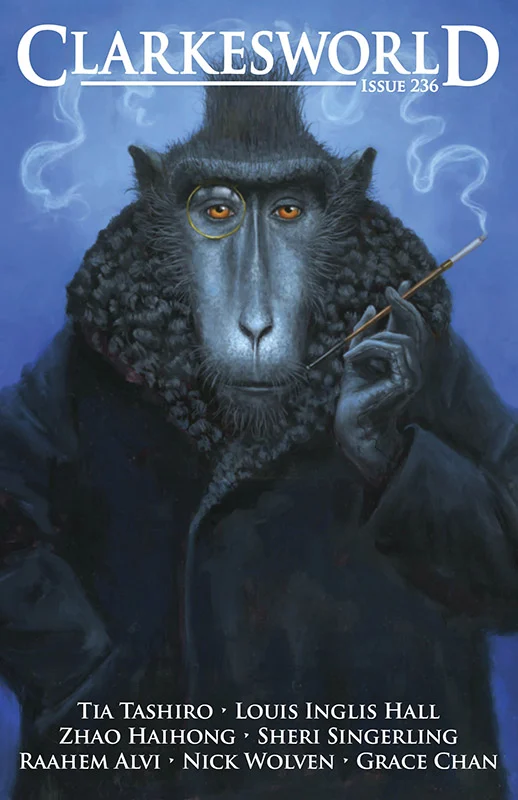
This extraordinary tale, originally chronicled in a short story by Zhao Haihong and translated by S. Qiouyi Lu, highlights a fictional yet compelling exploration of how scientific advancements, even those operating on the fringes of legality, can intersect with the most intimate aspects of human experience.
Main Facts: A Bold Gamble on Love and Memory
The core of this unfolding story revolves around Shijun’s desperate attempt to reclaim Manzhen using a highly experimental and ethically dubious technology. Upon learning of Manzhen’s impending marriage, Shijun commissioned a "memory fragrance" from a proprietor named Zuo Xiaotian, a man who claimed to synthesize personalized scents capable of triggering intensely vivid, long-suppressed memories. The cost was exorbitant, the process painful, and the success rate, according to Xiaotian, virtually non-existent.
Undeterred, Shijun embarked on a journey from Beijing to Calgary, arriving just hours before Manzhen’s wedding. Bursting into her apartment as she prepared to don her veil, he sprayed the potent fragrance, hoping to awaken their shared past. While Manzhen initially resisted, the lingering scent eventually propelled her into a profound flashback, forcing her to re-evaluate her choices and ultimately leading her to abandon her wedding and reconcile with Shijun. The event has left a Calgary community grappling with the implications of such a powerful intervention.
Chronology of a High-Stakes Romance
The narrative unfolds through several pivotal moments, each building towards the dramatic climax in Calgary.
The Journey to Reckoning
Shijun’s journey began with a Greyhound bus speeding through the vast North American landscape, a stark contrast to the internal turmoil he experienced. Waking abruptly, he grappled with existential questions: "What am I doing here?" and "Am I really doing this out of love? Or am I just obsessed with the idea of love?" Messages from a mutual friend, Jiayuan, underscored the urgency: "We have to leave by 2 p.m.!" The amber bottle, containing about 10 ml of clear liquid, was his last hope, its presence a constant reminder of the physical and emotional toll the process had taken on him. The aching in his underarms—a subtle hint at the physiological stress—served as a testament to his commitment.
The Genesis of a Desperate Plan
The idea of a "memory fragrance" first entered Shijun’s life during a moment of profound despair. Reeling from the news of Manzhen’s engagement, he stumbled upon a peculiar shop in Beijing called "Memory Fragrances," owned by the enigmatic Zuo Xiaotian. Intrigued by the concept of a perfume that could evoke memories, Shijun confided in Xiaotian about his decade-long relationship with Manzhen, a bond that had spanned middle school, college, and a challenging period of long-distance separation.
Their relationship, marked by initial promises and later by Shijun’s career instability, had frayed. Manzhen’s decision to pursue graduate studies in Calgary with a fellowship, coupled with Shijun’s inability to provide the stability she craved, led to their separation. A misunderstanding involving a colleague at a company Christmas party further exacerbated the distance, leading to Manzhen’s belief that Shijun was unfaithful.
Zuo Xiaotian’s Unlicensed Science
Xiaotian revealed the extraordinary, and deeply personal, origins of his "memory fragrances." He was, in fact, Zuo Xiaotian, abducted as a three-year-old and rescued years later, only to find he no longer recognized his biological parents. His parents, a neuroscientist mother and a perfumer father, developed the technology as a desperate attempt to help him recover his lost childhood memories.
Their research drew inspiration from 1930s experiments by Wilder Penfield, who found that electrical stimulation of the brain could trigger vivid childhood flashbacks, often linked to strong smells. They built upon the understanding that the olfactory cortex plays a central role in information processing and memory, with the hippocampus greatly affected by olfactory sensations. To recreate Xiaotian’s earliest memories, his parents painstakingly identified key olfactory signals – his mother’s body odor, breast milk, the scent of his cot, gardenias – and synthesized them. The process was agonizing, requiring direct and continuous stimulation of Xiaotian’s olfactory cortex, and his mother even chose to get pregnant again to reproduce the exact scent of her breast milk, sparing him further suffering.
This technology, while groundbreaking, operated in a legal gray area. Xiaotian admitted his shop was an "unlicensed medical practice" and that his parents were now focusing the technology on Alzheimer’s research. He also confessed the low success rate: only two previous clients had dared to order, and both abandoned the process, realizing they "didn’t love them that much." Despite these stark warnings, Shijun, convinced of his unwavering love for Manzhen, chose to proceed.
The Confrontation in Calgary
Shijun’s arrival at Manzhen’s apartment complex on the University of Calgary campus was charged with anticipation. Guided by Jiayuan’s frantic messages, he bypassed the elevator, sprinting up three flights of stairs. The door opened to a relieved Jiayuan and a shocked Manzhen, who was just beginning to don her veil.
Dropping to one knee, Shijun presented the amber bottle, spraying the air three times. "Manzhen, please," he pleaded, "Accept this gift. Forgive me and come back to Beijing with me."
Manzhen’s Initial Resistance and First Flashback
The first encounter with the memory fragrance plunged Manzhen into a dreamlike state, thrusting her back to the Beijing train station where she and Shijun had last said goodbye. The mild spring rain, their embrace, and the pungent station odor, mingled with her familiar perfume, overwhelmed her. The vividness was jarring, but her practical resolve quickly returned. Her whalebone panniers cracking as she collapsed into a chair symbolized the rigidity of her current path.
"Shijun, we can’t go back," she stated, devoid of tears, signaling a hardened resolve. Jiayuan, caught between loyalty to her friend and hope for the enduring love, urged them to talk. Shijun tried to explain the Christmas Eve misunderstanding, but Manzhen, her intuition sharp, cut him off, accusing him of downplaying his colleague’s interest. He admitted the colleague’s feelings but vehemently denied reciprocation.
Manzhen, however, revealed deeper reasons for her choices. She spoke of her financial struggles in Calgary, working multiple jobs to supplement her half-scholarship, and the harsh Canadian winters. "Maybe all I wanted was to find someone I could rely on sooner," she confessed, her eyes filled with anguish, not happiness. Shijun, acknowledging his own past failures to provide stability, was left speechless. He stepped back, offering a pained "Goodbye. I wish you happiness," and bolted.
The Second Awakening: A Decade Revisited
After Shijun’s departure, Manzhen still clutched the cold bottle. In the bridal car, on the way to the church, Jiayuan tried to assuage her doubts. Yet, Manzhen, habituated to pressing the back of her hand to her nose when nervous, instinctively inhaled the lingering fragrance. This time, the memory perfume worked its full, devastating magic.
She was hurtled back a full decade, to her junior year of high school. The scene was crystal clear: Shijun, crouching in the school corridor, carrying her on his back after she fractured her foot. The scent of golden osmanthus blooming on campus, the green grass, Shijun’s sweaty musk, a touch of adolescent hormones, her own girlish body odor – it all blended into a powerful cocktail of first love and profound security. "Of all the boys in her class, this boy had made her feel the most secure," the memory whispered. "She had wanted to be with him forever. That had been the spark."
Manzhen broke down, sobbing uncontrollably. "How could I forget such a pure moment?" she thought. The realization hit her with devastating clarity: her earlier pragmatism, her search for immediate reliability, had overshadowed the foundational love and self-trust she once possessed. "In the end, only a woman who trusts in herself has the freedom to pursue true love and live her own life."
The Reunion Amidst the Rockies
With newfound clarity and resolve, Manzhen pointed to the adjoining door, urged Jiayuan to explain, and fled the church through the back exit. Outside, amidst the breathtaking backdrop of the distant Rockies and their snowy peaks, Shijun paced, unable to leave.
"Shijun!" she called out, her voice filled with fresh tears, not of anguish, but of relief and rediscovery. He turned, and as he smiled, Manzhen knew, irrevocably, that she had made the right choice.
Supporting Data: The Science and Ethics of Olfactory Memory
The "Memory Fragrances" technology, as described by Zuo Xiaotian, leverages genuine scientific principles, albeit amplified to a fictional degree. The strong link between scent and memory is well-documented in neuroscience. The olfactory bulb, which processes smells, is directly connected to the amygdala (involved in emotion) and the hippocampus (involved in memory formation), bypassing the thalamus, which processes other sensory information. This unique neural pathway explains why smells can trigger such powerful and immediate emotional memories, often referred to as the "Proustian phenomenon."
The concept of stimulating specific brain regions to unlock memories, as Wilder Penfield did with epilepsy patients, forms the theoretical bedrock for Xiaotian’s parents’ work. Their innovation lies in translating these neural triggers into a physical, chemical compound – a perfume – that can be inhaled. However, the story introduces an additional layer of complexity: the need for "brain scans to locate signals in specific regions" and then "simulating these signals to awaken memories" before creating the perfume. This suggests a highly invasive and personalized process, moving far beyond conventional perfumery.
Xiaotian’s candid admission of operating an "unlicensed medical practice" underscores the profound ethical dilemmas inherent in such technology. The "painful" and "agonizing" process, requiring repeated brain stimulation and the sacrifice of his mother (even getting pregnant again), raises serious questions about patient consent, potential harm, and the very definition of medical intervention. The story implicitly suggests that while the underlying research for Alzheimer’s treatment may be noble, its application for personal romantic endeavors ventures into uncharted and dangerous territory.
The low success rate also serves as a critical piece of "supporting data," highlighting the rarity of Shijun’s outcome. The previous clients’ abandonment of the process, concluding they "didn’t love them that much," provides a sobering counterpoint, suggesting that even with potent memory triggers, genuine love and resolve are prerequisites for success.
Official Responses: A Regulatory Vacuum
Given the nature of "Memory Fragrances" as an "unlicensed medical practice," there are no formal "official responses" from regulatory bodies within the story. However, the very existence of such an operation on the fringes of legitimate science immediately raises red flags. If such a technology were real, it would undoubtedly face intense scrutiny from health authorities, ethics committees, and medical licensing boards.
The implications for informed consent, patient safety, and the potential for misuse would necessitate rigorous oversight. Zuo Xiaotian’s parents’ shift towards Alzheimer’s research hints at a potential pathway for legitimizing the technology within a regulated medical framework. Yet, the commercial availability of such a potent, memory-altering substance for personal use would almost certainly be deemed illegal and highly dangerous, warranting immediate investigation and cessation of operations. The fact that the shop was "shutting down soon" could be interpreted as a pre-emptive move to avoid official intervention, or a recognition of the inherent difficulties and ethical quagmires of its commercial application.
Implications: Reshaping Love, Memory, and Identity
The story of Shijun and Manzhen carries profound implications across several domains:
The Future of Relationships and Commitment
If memory manipulation through scent were possible, it could fundamentally alter the landscape of relationships. Would "memory fragrances" become a tool for rekindling lost love, or a dangerous means of coercion? The story suggests that while the scent can trigger memory, the ultimate decision rests with the individual’s current emotional state and self-awareness. Manzhen’s final realization wasn’t just a passive recall of the past but an active reassessment of her values and self-worth. This implies that while technology can unlock the past, it cannot dictate the future of human connection without genuine introspection.
Ethical and Philosophical Debates
The most significant implication lies in the ethical and philosophical questions surrounding memory. Memory is central to identity. To what extent can or should it be manipulated? The painful process Zuo Xiaotian endured, and his mother’s sacrifice, highlight the profound cost. Could such technology erase trauma, or inadvertently create new ones? The potential for abuse, for example, in manipulating a person’s recollection of events for legal or personal gain, is immense. This raises critical questions about human agency and the sanctity of personal history.
Therapeutic Potential vs. Personal Gain
The dual application of the technology – Zuo Xiaotian’s parents using it for Alzheimer’s research versus Zuo Xiaotian’s commercial venture – underscores the classic dilemma of scientific discovery. A tool that could potentially alleviate the suffering of Alzheimer’s patients, restoring lost memories and identities, holds immense therapeutic promise. However, its use for personal romantic gain, outside medical supervision and ethical guidelines, showcases the dangerous path of unchecked technological application. The story implicitly argues for a careful, regulated approach to such powerful science.
The Power of Self-Reliance
Manzhen’s journey from seeking a "shoulder to lean on" to realizing that "only a woman who trusts in herself has the freedom to pursue true love and live her own life" offers a crucial commentary on personal growth and societal pressures. Her initial decision to marry David was driven by financial insecurity and a desire for stability, reflecting a common struggle faced by many young people. The memory fragrance, in this context, acted not merely as a romantic catalyst but as a tool for self-discovery, allowing her to re-evaluate her priorities and reclaim her agency. Shijun’s journey also reflects growth, moving from a self-confessed "ridiculous" obsession to a genuine, if desperate, act of love.
The dramatic events in Calgary serve as a potent reminder that while technology can open doors to the past, the choices we make in the present, fueled by courage, self-awareness, and genuine emotion, ultimately define our future. The scent of a second chance, once merely a scientific curiosity, has now become a powerful symbol of love’s enduring, and sometimes controversial, path.

Leave a Comment