
Sting’s Industrial Elegy: A Grand Homecoming for "The Last Ship" at Theatre Royal Drury Lane
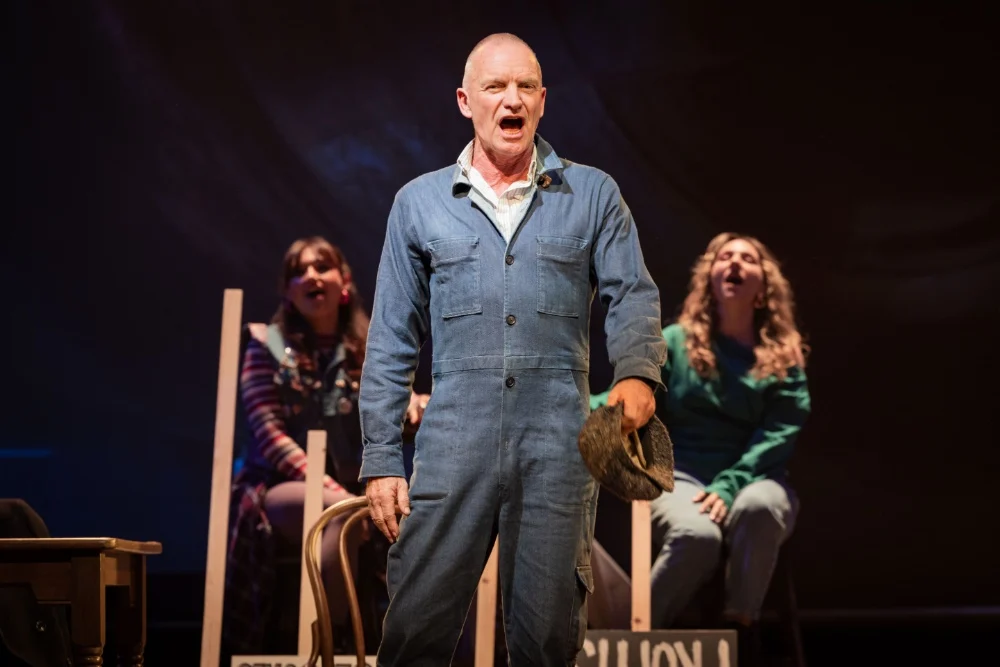
The landscape of the British West End is set to be transformed this autumn as one of music’s most enduring icons, Sting, brings his deeply personal magnum opus, The Last Ship, to the historic Theatre Royal Drury Lane. This newly adapted production, scheduled for a limited but prestigious run from September 22 to October 3, 2026, represents more than just a theatrical residency; it is the culmination of a decade-long creative journey that seeks to reconcile the artist’s global superstardom with his gritty, industrial roots in Northeast England.
Produced by Karl Sydow, this iteration of the musical promises a significant evolution from its previous incarnations. With a refreshed book by acclaimed playwright Barney Norris and a massive company of over 50 performers, the production aims to capture the scale and soul of a community on the brink of obsolescence.
Main Facts: The 2026 London Residency
The upcoming London engagement serves as the centerpiece of an ambitious international tour that has already seen the production grace stages in Amsterdam, Brisbane, and Paris. Before arriving at the Theatre Royal Drury Lane—a venue owned and operated by Andrew Lloyd Webber’s LW Theatres—the production will make a high-profile stop at the Metropolitan Opera in New York in June 2026, followed by a return to Amsterdam in the autumn.
A New Creative Vision
At the heart of the 2026 production is a "newly adapted" script. While the core narrative remains rooted in the shipbuilding town of Wallsend, the production features a new book by Barney Norris. Norris, known for his poignant explorations of English identity and community, draws upon the previous work of Lorne Campbell, which was itself an evolution of the original book by John Logan and Brian Yorkey.
Sting will lead the cast in the role of Jackie White, the iron-willed shipyard foreman. The character of White serves as the emotional and moral anchor of the story—a man whose physical health is failing just as the yard faces its terminal closure. Through White, the musical explores themes of legacy, the dignity of labor, and the painful transition from an industrial past to an uncertain future.
Technical and Musical Scale
The production is a technical heavyweight, featuring set and video design by "59 – a Journey studio" (part of the renowned 59 Productions). Known for their groundbreaking work on the London 2012 Olympic Opening Ceremony and various high-concept theatrical designs, the studio is tasked with recreating the towering, metallic atmosphere of the Swan Hunter shipyard.
Musically, the show blends the old with the new. Audiences can expect classic tracks from Sting’s 1991 album The Soul Cages, such as "Island of Souls" and "All This Time," alongside the haunting "When We Dance" and several brand-new compositions written specifically for this reworked version.
Chronology: The Evolution of "The Last Ship"
The journey of The Last Ship began long before it ever hit a Broadway stage. Its timeline is a reflection of Sting’s own lifelong effort to process his upbringing in the shadow of the giant vessels that once dominated the Tyneside skyline.
- 1991: The Seed of Inspiration: Following the death of his father, Sting released The Soul Cages, a somber, folk-inflected album that dealt heavily with his childhood in Wallsend and the imagery of the sea and the shipyards.
- 2011: Early Development: Sting began formal work on a stage musical, collaborating with Pulitzer Prize winner Brian Yorkey and Tony winner John Logan. The goal was to create a narrative that used his music to tell a story of community resistance.
- 2014: The Broadway Premiere: The Last Ship debuted at the Neil Simon Theatre in New York. Despite a relatively short run, it was a critical darling, earning two Tony Award nominations for Best Original Score and Best Orchestrations. During the run, Sting famously stepped into the role of Jackie White to bolster ticket sales, a move that highlighted his personal commitment to the project.
- 2018–2020: The UK and International Tours: A reworked version, directed by Lorne Campbell, toured the UK and eventually moved to Los Angeles and San Francisco. This version leaned harder into the political and social realities of the North East.
- 2024–2026: The Global Renaissance: The production entered a new phase of international touring, hitting major European and Australian cities, leading to the current "Expanded Edition" and the 2026 London residency.
Supporting Data: The Creative Powerhouse
The scale of the 2026 production is evidenced by the extensive list of industry veterans behind the scenes. This "mega-company" of 50+ performers is supported by a creative team designed to bridge the gap between traditional musical theater and modern cinematic spectacle.
The Creative Team
- Direction: Leo Warner, whose expertise in integrating video technology with live performance is expected to give the shipyard a living, breathing presence on stage.
- Visual Design: Jenny Melville (Set and Props), Loren Elstein (Costumes), and Adam Bassett (Lighting) are tasked with creating the stark, atmospheric aesthetic of 1980s Tyneside.
- Sound and Movement: Sound designer Tom Gibbons and choreographer Rebecca Howell provide the auditory and physical rhythm of the shipyard workers, emphasizing the "percussive" nature of industrial labor.
- Musical Supervision: Rob Mathes, a long-time Sting collaborator, oversees the orchestrations alongside Richard John, ensuring that the transition from rock and folk to the theatrical stage remains seamless.
The Expanded Edition Album
In a strategic move to coincide with the new production, Sting has released The Last Ship (Expanded Edition). This version of the album includes five brand-new recordings produced by Sting and Rob Mathes. The release serves as both a promotional tool for the London run and a definitive audio document of the musical’s evolution over the last fifteen years.
Official Responses: A Tribute to Wallsend
Sting’s public statements regarding the production have remained consistently emotive, focusing on the concept of "returning home." For the artist, The Last Ship is less a commercial venture and more a debt of honor to the community that raised him.
"I grew up in the shadow of the shipyard," Sting remarked during the announcement of the Drury Lane dates. "I’d watch thousands of men walk to work each morning, but I dreamed of something else… I dreamed of escaping, and I did everything in my power to get away from that life."
He continued, articulating the paradox of the emigrant artist: "But the farther I got, the more I realized I needed to understand where I came from and felt I had to give something back. The Last Ship is my tribute to the people and the place that shaped me."
Producer Karl Sydow has echoed this sentiment, emphasizing that the 2026 version is the "ultimate" version of the story, refined through years of touring and feedback to ensure it resonates with both local British audiences and international theater-goers.
Implications: The Cultural and Economic Impact
The arrival of The Last Ship at Theatre Royal Drury Lane carries several significant implications for the West End and the broader cultural landscape.
1. The "Star-Vehicle" as Artistic Validation
Sting’s decision to lead the cast in London reinforces a growing trend of high-profile musicians returning to the stage to anchor their own creative projects. While many "jukebox musicals" rely on celebrity names to mask thin plots, The Last Ship is an original work where the star’s presence is integral to the narrative’s authenticity. His involvement ensures high-profile visibility for a story that might otherwise be seen as "too regional" for a global audience.
2. The Revitalization of Industrial Narratives
In a West End often dominated by escapist fantasy and long-running classics, The Last Ship brings a grounded, socio-political weight to the stage. It joins a lineage of British storytelling—following in the footsteps of Billy Elliot and The Full Monty—that examines the human cost of deindustrialization. By placing this story in the opulent surroundings of Drury Lane, the production forces a dialogue between the "high art" of London theater and the "hard graft" of the North.
3. Technical Innovation in Theater
The involvement of 59 Productions suggests that the 2026 run will push the boundaries of how scale is represented on stage. The use of advanced video mapping and animation (led by Matt Taylor and Benjamin Pearcy) allows for the "ship" itself to become a character—a massive, spectral presence that looms over the cast. This fusion of technology and traditional storytelling is likely to set a new standard for touring productions.
4. Economic Boost for LW Theatres
For Theatre Royal Drury Lane, hosting a limited engagement with a global superstar like Sting is a significant "get." It diversifies the venue’s programming and attracts a demographic of music fans who may not be regular theater-goers. The short window of the run (less than two weeks) creates a "must-see" urgency that is expected to result in a total sell-out, further cementing the venue’s status as a premier destination for prestige limited-run events.
As the shipyard of Wallsend is rebuilt nightly on the stage of Drury Lane this coming September, The Last Ship will stand as a testament to the power of memory. For Sting, it is the closing of a circle; for the West End, it is a reminder that the most powerful stories are often those we spend our whole lives trying to run away from, only to realize they were the only stories worth telling.




Leave a Comment